North Carolina
Building for tomorrow’s storms: North Carolina updates flood strategy


North Carolina is beginning to plan for floods that have not happened yet.
State officials this year advanced the next phase of the state’s Flood Resiliency Blueprint, incorporating updated modeling that factors in heavier rainfall, future development and sea-level rise — a shift away from relying solely on historic data and FEMA’s regulatory maps.
“We can make decisions and plan for that future, not just the exposure to flooding that we see now,” said Stuart Brown, who manages the Flood Resiliency Blueprint for the North Carolina Department of Environmental Quality.
For a state that has endured record-breaking rainfall from Hurricane Helene in the mountains to Tropical Storm Chantal in the Triangle, the move reflects a growing recognition: past standards no longer capture present risk.
Beyond outdated flood lines
Multiple North Carolina studies have found that between 43% and 60% of flood damage occurs outside FEMA’s regulatory flood zones. Those maps shape insurance requirements and local zoning decisions, yet they are largely based on historical rainfall data.
“A lot of the regulatory floodplains really haven’t kept up with what we know is happening,” said Elizabeth Losos, executive in residence at Duke University’s Nicholas Institute for Energy, Environment and Sustainability.
Climate data show rainfall intensity in the Triangle has increased by about 21% since 1970. Warmer air holds more moisture, fueling heavier downpours that overwhelm drainage systems designed for a different climate.
“Fixing what we know is flooding right now is good,” Losos said. “It’s better than nothing, but it’s definitely not enough.”
Brown said the blueprint incorporates projections for future precipitation and development — a critical factor in one of the fastest-growing states in the country.
“Development can be an issue for flooding in two categories,” Brown said. “One is when that development is occurring in areas that are flood prone. The other is when that development is done in ways that don’t account for the additional stormwater that will be produced.”
Thousands of projects, limited dollars
Unlike states that rely on massive levee systems, North Carolina’s flood risk is scattered across river basins, coastal plains and rapidly developing suburbs. Brown said resilience here will require thousands of localized projects.
“We were asked by the General Assembly to provide specific, actionable projects,” Brown said. “We want to know what specific geography and what specific action is proposed.”
That planning push comes as federal support for flood research and mitigation is shrinking.
The Trump administration has proposed a roughly 30% cut to NOAA’s 2026 budget, targeting climate research and ocean services that provide the rainfall and coastal data states use to model flood risk. At FEMA, the administration has cut staff by more than 6%, reduced funding for local hazard mitigation projects and added new approval layers for grants.
For North Carolina, that means fewer dollars for buyouts, drainage upgrades and flood control projects — and less federal data to guide long-term planning — just as the state is trying to build a more forward-looking flood strategy.
Brown said North Carolina is trying to “leverage the limited dollars that we have in the state with any federal sources that are available” and embed resilience into routine investments in transportation, water treatment and conservation.
“Funding is always going to be an issue,” Brown said.
The policy gap
Researchers have long argued that resilience investments save money. Studies show every $1 spent on mitigation can yield $4 to $13 in avoided losses.
“The problem is that the policies don’t align the people who pay the cost with the people who get the benefit,” Losos said.
A developer may not directly benefit from downstream flood reduction. A town may shoulder upfront infrastructure costs while insurers, neighboring communities or future taxpayers capture part of the savings.
Without policy changes that align costs and benefits, resilience can remain politically and financially difficult.
“In the most severe cases, there are some communities that will have to eventually abandon if they don’t begin to think about how they can adapt to these conditions,” Losos said.
North Carolina now has updated tools to better measure future flood risk. Whether the state can secure stable federal support — and align its own policies with the risks ahead — will determine how effectively communities prepare for the next storm rather than recover from the last one.



The NC Lottery offers several draw games for those aiming to win big.
Here’s a look at Wednesday, July 8, 2026 results for each game:
Winning Powerball numbers from July 8 drawing
12-29-37-43-55, Powerball: 18, Power Play: 4
Check Powerball payouts and previous drawings here.
Winning Pick 3 numbers from July 8 drawing
Day: 2-9-0, Fireball: 5
Evening: 7-9-6, Fireball: 6
Check Pick 3 payouts and previous drawings here.
Winning Pick 4 numbers from July 8 drawing
Day: 8-9-6-6, Fireball: 6
Evening: 3-4-8-5, Fireball: 4
Check Pick 4 payouts and previous drawings here.
Winning Cash 5 numbers from July 8 drawing
07-13-19-23-33
Check Cash 5 payouts and previous drawings here.
Winning Double Play numbers from July 8 drawing
01-03-14-18-32
Winning Millionaire for Life numbers from July 8 drawing
16-18-43-48-50, Bonus: 01
Check Millionaire for Life payouts and previous drawings here.
Feeling lucky? Explore the latest lottery news & results
Are you a winner? Here’s how to claim your lottery prize
All North Carolina Lottery retailers will redeem prizes up to $599.
For prizes over $599, winners can submit winning tickets through the mail or in person at North Carolina Lottery Offices. By mail, send a prize claim form, your signed lottery ticket, copies of a government-issued photo ID and social security card to: North Carolina Education Lottery, P.O. Box 41606, Raleigh, NC 27629. Prize claims less than $600 do not require copies of photo ID or a social security card.
To submit in person, sign the back of your ticket, fill out a prize claim form and deliver the form, along with your signed lottery ticket and government-issued photo ID and social security card to any of these locations:
- Asheville Regional Office & Claim Center: 16-G Regent Park Blvd., Asheville, NC 28806, 877-625-6886 press #1. Hours: 9 a.m. to 5 p.m. Monday through Friday. This office can cash prizes up to $99,999.
- Greensboro Regional Office & Claim Center: 20A Oak Branch Drive, Greensboro, NC 27407, 877-625-6886 press #2. Hours: 9 a.m. to 5 p.m. Monday through Friday. This office can cash prizes up to $99,999.
- Charlotte Regional Office & Claim Center: 5029-A West W. T. Harris Blvd., Charlotte, NC 28269-1861, 877-625-6886 press #3. Hours: 9 a.m. to 5 p.m. Monday through Friday. This office can cash prizes up to $99,999.
- NC Lottery Headquarters: Raleigh Claim Center & Regional Office, 2728 Capital Blvd., Suite 144, Raleigh, NC 27604, 877-625-6886 press #4. Hours: 9 a.m. to 5 p.m. Monday through Friday. This office can cash prizes of any amount.
- Greenville Regional Office & Claim Center: 2790 Dickinson Avenue, Suite A, Greenville, NC 27834, 877-625-6886 press #5. Hours: 9 a.m. to 5 p.m. Monday through Friday. This office can cash prizes up to $99,999.
- Wilmington Regional Office & Claim Center: 123 North Cardinal Drive Extension, Suite 140, Wilmington, NC 28405, 877-625-6886 press #6. Hours: 9 a.m. to 5 p.m. Monday through Friday. This office can cash prizes up to $99,999.
Check previous winning numbers and payouts at https://nclottery.com/.
When are the North Carolina Lottery drawings held?
- Powerball: 10:59 p.m. Monday, Wednesday, and Saturday.
- Mega Millions: 11 p.m. Tuesday and Friday.
- Lucky for Life: 10:38 p.m. daily.
- Pick 3, 4: 3:00 p.m. and 11:22 p.m. daily.
- Cash 5: 11:22 p.m. daily.
- Millionaire for Life: 11:15 p.m. daily.
This results page was generated automatically using information from TinBu and a template written and reviewed by a Carolina Connect editor. You can send feedback using this form.
North Carolina
Damaged Flock camera in North Carolina town sparks online debate over surveillance tech

RUTHERFORDTON, N.C. (WLOS) — A damaged Flock Safety camera in Rutherfordton has reignited debate over the use of license plate reader technology, with thousands weighing in online after police shared a photo of the vandalized device.
The Rutherfordton Police Department posted an image of the damaged camera on social media, where the post quickly gained more than 20,000 comments. While some users condemned the vandalism, others praised the person responsible, with comments including “Not all heroes wear capes” and “Give them a medal.”
Local law enforcement officials said there is too much misinformation online about the cameras.
FLOCK CAMERA DAMAGED IN NORTH CAROLINA TOWN, PROMPTING POLICE STATEMENT
“We’re seeing a lot of misconceptions that these cameras collect more data than they actually do,” said Capt. Ryan Bailey with the Rutherford County Sheriff’s Office. “The camera itself is only capturing the vehicle traveling down the road.”
Bailey said Flock cameras do not record video. Instead, they take still images of passing vehicles and capture license plate information. According to the sheriff’s office, those images are automatically deleted after 30 days.
The department also says safeguards are in place to prevent misuse of the system. Deputies are required to enter a case number before searching the database, allowing administrators to audit searches and ensure the technology is being used appropriately.
JULY 8, 2026 – A Flock camera in Rutherford County, North Carolina. (Photo: WLOS Staff)
Despite those protections, opinions among residents remain divided.
“I don’t like that idea at all because of the over-abundance of electronics and interference in our privacy,” Rutherfordton resident Rachel Alexander said.
Others believe the cameras are a valuable investigative tool.
“I have no really negative opinion with them. I think they’re really helpful, especially with criminals and children abductions,” said local homeowner Phyllis Irvine.
POLL: WHAT DO YOU THINK ABOUT FLOCK CAMERAS?
The Rutherford County Sheriff’s Office says the cameras have also proven useful in locating vulnerable people, including those with Alzheimer’s disease, dementia or other cognitive disabilities who may have gone missing while driving.
Officials say the technology has become an important resource for investigations and emergency response across the county.
Flock cameras cost about $3,500 each. Law enforcement officials say anyone caught intentionally damaging one could face charges.
North Carolina
North Carolina Republican operative shaping the state’s early voting plans is reassigned

North Carolina state Auditor Dave Boliek has reassigned a staffer working on state election preparations following reporting illustrating how the longtime Republican operative was using his position to shape county’s early voting plans.
-
 Vermont8 seconds ago
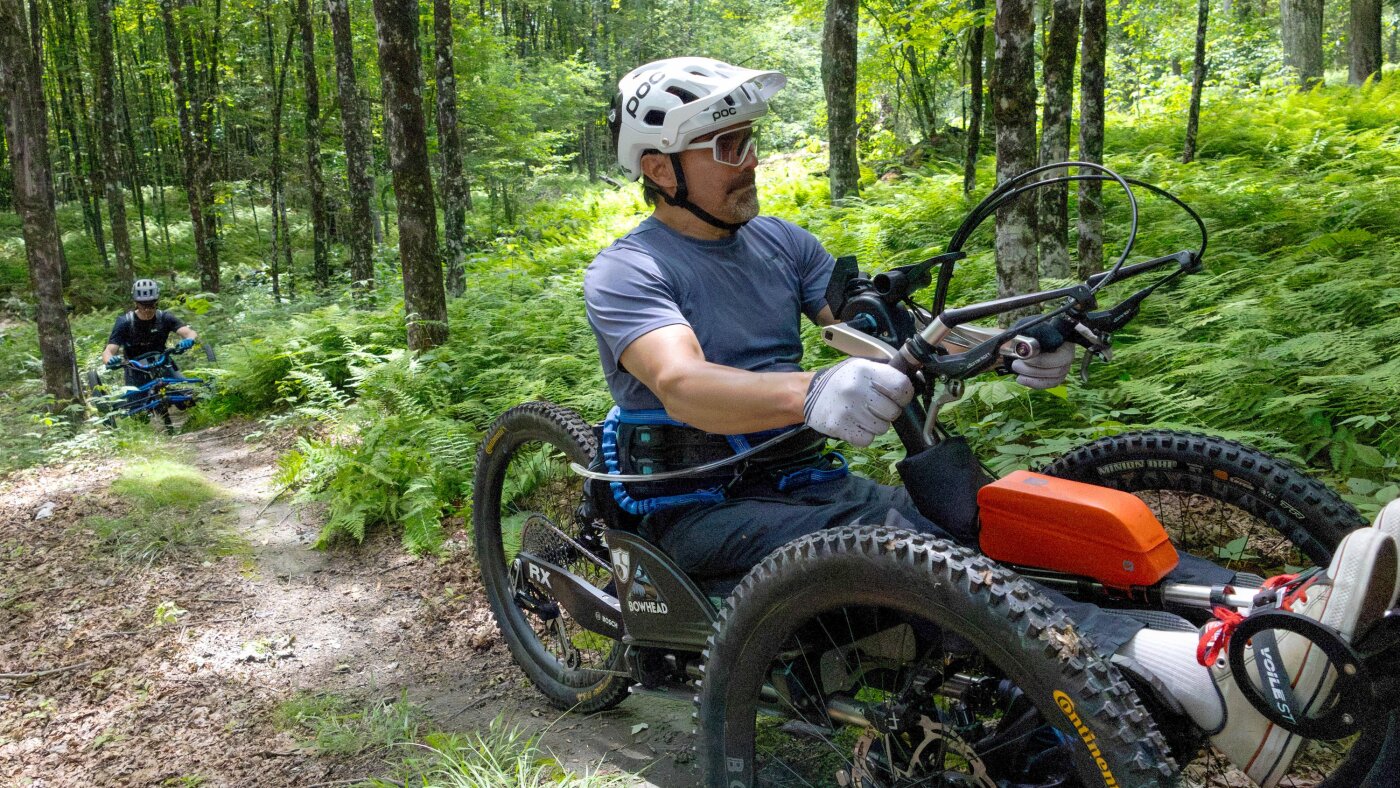
OUTDOOR ACCESS FOR DISABLED IN VERMONT
-
 Virginia5 minutes ago
4 indicted in Virginia double homicide; second victim ID’d as grandmother of 6
-

 Washington12 minutes ago
Washington Commanders are retiring Hall of Famer John Riggins’ No. 44
-

 Wisconsin15 minutes ago
Wisconsin State Patrol rides with truck and bus drivers to spot violations in five areas
-

 West Virginia20 minutes ago
West Virginia town fires entire police force after chief resigns, sergeant alleges evidence room break-in
-

 Wyoming27 minutes ago
WHP: July 5 single-vehicle rollover north of Riverton resulted in one death, one injury
-

 Crypto30 minutes ago
British Airline Jet2 Shares Jump 9% After $536M Fuel Hedge Gain Offsets Middle East Travel Fears
-

 Finance35 minutes ago
Treasury Pick Queried on Iran War Fallout to Face Senate Finance

