Northeast
From palace to prison: Venezuelan strongman Maduro locked in troubled Brooklyn jail

NEWYou can now listen to Fox News articles!
Nicolás Maduro and his wife, Cilia Flores, are spending their days for the foreseeable future at a notorious jail in Brooklyn known for housing high-profile defendants awaiting trial in New York City.
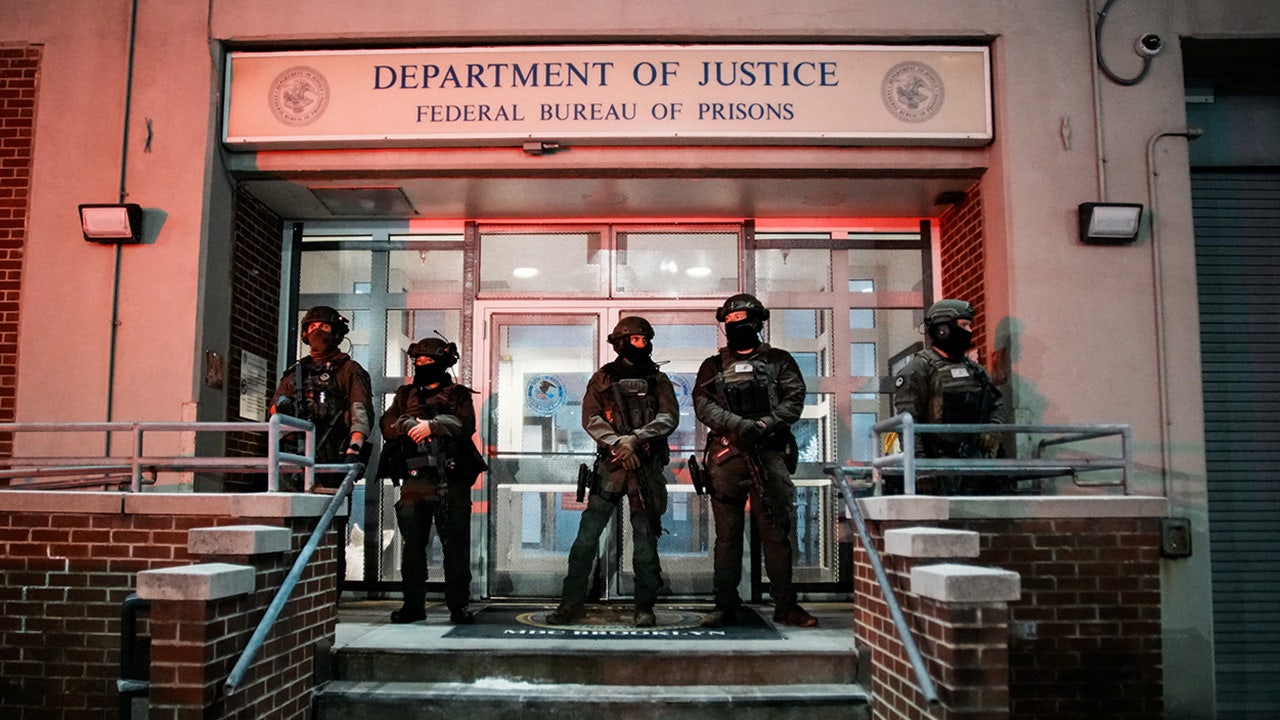
The Metropolitan Detention Center, known as MDC Brooklyn, is a sprawling, industrial-style facility that has faced a series of scandals in recent years involving assaults and poor prison conditions. Maduro, the Venezuelan leader arrested in his home in Caracas by the U.S. military over the weekend, is now being held at the jail on narco-terrorism conspiracy, cocaine importation and weapons charges.
MDC Brooklyn currently holds more than 1,300 inmates, according to the Bureau of Prisons. A BOP representative confirmed to Fox News Digital that Maduro and his wife were among that figure.
MADURO’S WIFE SUFFERED ‘SIGNIFICANT INJURIES’ IN DRAMATIC CAPTURE, ATTORNEY ALLEGES
Federal officers stand guard outside the Department of Justice next to the Metropolitan Detention Center in Brooklyn after the U.S. captured Nicolás Maduro and his wife, in New York City, Jan. 3, 2026. (Reuters/Eduardo Munoz)
MDC Brooklyn inmates include little-known defendants and prominent ones, and they face a range of mild to serious charges.
Maduro is likely to be held in what is known as the “VIP section” of the jail, according to Renato Stabile. Stabile is a New York-based criminal defense lawyer who represented former Honduran President Juan Orlando Hernández, who was also held in MDC Brooklyn before he was freed in December as a result of Trump granting him a controversial pardon.
Stabile told Fox News Digital the VIP section is part of the east side of the jail, where high-profile figures like Hernández, rap artist Sean “Diddy” Combs and convicted crypto fraudster Sam Bankman-Fried were once held. Others at MDC Brooklyn include Luigi Mangione, the 27-year-old accused of murdering a top health insurance CEO. Jeffrey Epstein’s associate, Ghislaine Maxwell, was also held there.
People celebrate in front of the Metropolitan Detention Center in Brooklyn on Jan. 3, 2026, after the capture of Nicolás Maduro. (Reuters/Eduardo Munoz)
Those on the east side will be “hanging out together every day and watching TV together and playing pingpong together and doing whatever they do on that side,” Stabile said. He said the west side, where general population inmates are held, might be more crowded but that treatment of them was likely otherwise the same.
One reason inmates are segregated based on their notoriety could be that they are more vulnerable to violence or extortion, he said.
MDC Brooklyn is a male and female jail, but the inmates are not intermixed by sex, so Maduro and his wife might not be able to interact much there, except during joint meetings with their lawyers.
AFTER MADURO, VENEZUELA POWER VACUUM EXPOSES BRUTAL INSIDERS AND ENFORCERS
NYPD officers stand guard on a blocked road outside the MDC Brooklyn on Jan. 5, 2026, in New York City. (Alexi J. Rosenfeld/Getty Images)
Maduro is being represented by New York-based attorney Barry Pollack, who previously represented WikiLeaks founder Julian Assange. Maduro and his wife pleaded not guilty in court on Monday and now await their next court appearance, slated for March 17.
MDC Brooklyn has repeatedly come under scrutiny for its troubles, including a week-long power outage in the winter of 2019 that left inmates in freezing conditions, multiple inmate murders and assaults in 2024, and several allegations of inhumane conditions, including inadequate medical staffing and unsanitary food.
Stabile said, in his view, the facility is “run fairly efficiently.”
“But I can tell you that the east side is run a lot more efficiently than the west side, just because there are less people,” he said, noting that lawyers can see their clients with less hassle.
Read the full article from Here



Boston, MA
Sonny Gray shines again, and the Red Sox make it two straight wins at the Angels to start grinding road trip – The Boston Globe

In Boston, even after a successful homestand, the Sox are 17-27 — thus the overall 39-48 record record that has them stuck in the bottom third of the league.
What’s up with that?
“That’s a really good question, because it doesn’t feel a whole lot different to me,” Connor Wong said. “I feel like we’re the same group of guys trying to do the same thing.”
Interim manager Chad Tracy said: “I just think we’re playing well on the road. Give us credit, too. We played well at home last, so hopefully it’s just a ‘we’re playing well’ thing. But we have done that the majority of the year.”
This one featured a little of everything: Home runs from Willson Contreras and Romy Gonzalez, a strong start from Sonny Gray, and three double plays turned by the infield.
The Angels (36-54) totaled four hits, and just one after the third inning.
The Red Sox have won seven of their past nine games overall.
“That was a fight,” said Gray, whose 2.61 ERA is second in the American League. “That was just one that you grind through and you try to figure out a way to get better as it goes on. It wasn’t easy, but I’m happy to win.”
That was an unexpected take from Gray, given that he held the Angels to one run and four hits in six innings. The righthander struck out seven and walked two.
Unlike in his previous outing, when he took a no-hit bid into the eighth inning against the Yankees, Gray eliminated the drama early. Josh Lowe homered — an estimated 437 feet to center field — in the second.
Gray’s most significant wobbling came immediately thereafter, when Jo Adell walked and Wade Meckler singled. Following a mound visit from pitching coach Andrew Bailey, Gray recovered by striking out Donovan Walton and Tyler Heineman, both flailing at sweepers well below the strike zone.
Across the rest of his night, Gray faced just one more than the minimum number of batters, using a pair of double-play grounders to help him stay efficient and effective.
“Definitely wasn’t at my best,” he said, referencing that he had trouble recovering “physically, mentally.” “Finally able to settle down there after the second.”
Before the game, Gray found out he was not selected for the All-Star Game, which he admitted was disappointing “for sure.”
“Used a lot of stuff for fuel tonight,” he said without getting specific. “Maybe that was a little part of something. I was a little bummed.”
Tracy pulled Gray after just 70 pitches because of the game situation.
“We had a sizable lead, full bullpen, some guys that haven’t thrown,” Tracy explained. “It felt like we had a pretty good handle on it. And after pushing him hard with the potential no-hitter last time, just felt like it was good to give him a little extra breather.”
The Red Sox struck early against left-handed starter Sam Aldegheri, who walked two of his first three batters — after getting ahead in the count, 1-2, on both. Contreras blasted a no-doubt, three-run home run to left field to boost the Sox to a fast, sizable lead after just one out.
That was the only hit Aldegheri allowed across four innings and 88 pitches, but he had twice as many walks (four) as strikeouts (two) and his ERA jumped to 5.08.
As soon as Aldegheri exited, the Sox blew it open against rookie reliever Samy Natera Jr., who had been quite good across his first month in the majors (0.84 ERA, 15 strikeouts in 10⅔ innings).
Anthony Seigler slapped a double inside the first-base line, and Ceddanne Rafaela drew a walk. Wilyer Abreu smoked a double off the right-field wall, scoring both. Rafaela hesitated coming around third base, but — after the Angels made a delayed throw to try to get Abreu at second — went for it.
With two outs, Gonzalez hammered a slider over the middle of the plate to left field. It eked over the short wall for a two-run homer, his first long ball of the year (in his fifth game).
“We … got three big swings from the big boys,” Tracy said. “Between Willson, Romy, and Abreu — all those are multiple-run extra-base hits, and those are huge. But it starts with the at-bats before and putting people on and taking our base when it’s given to us.”
Tim Healey can be reached at timothy.healey@globe.com. Follow him @timbhealey.

The 24-year-old Skenes joins Rip

-
 News48 seconds ago
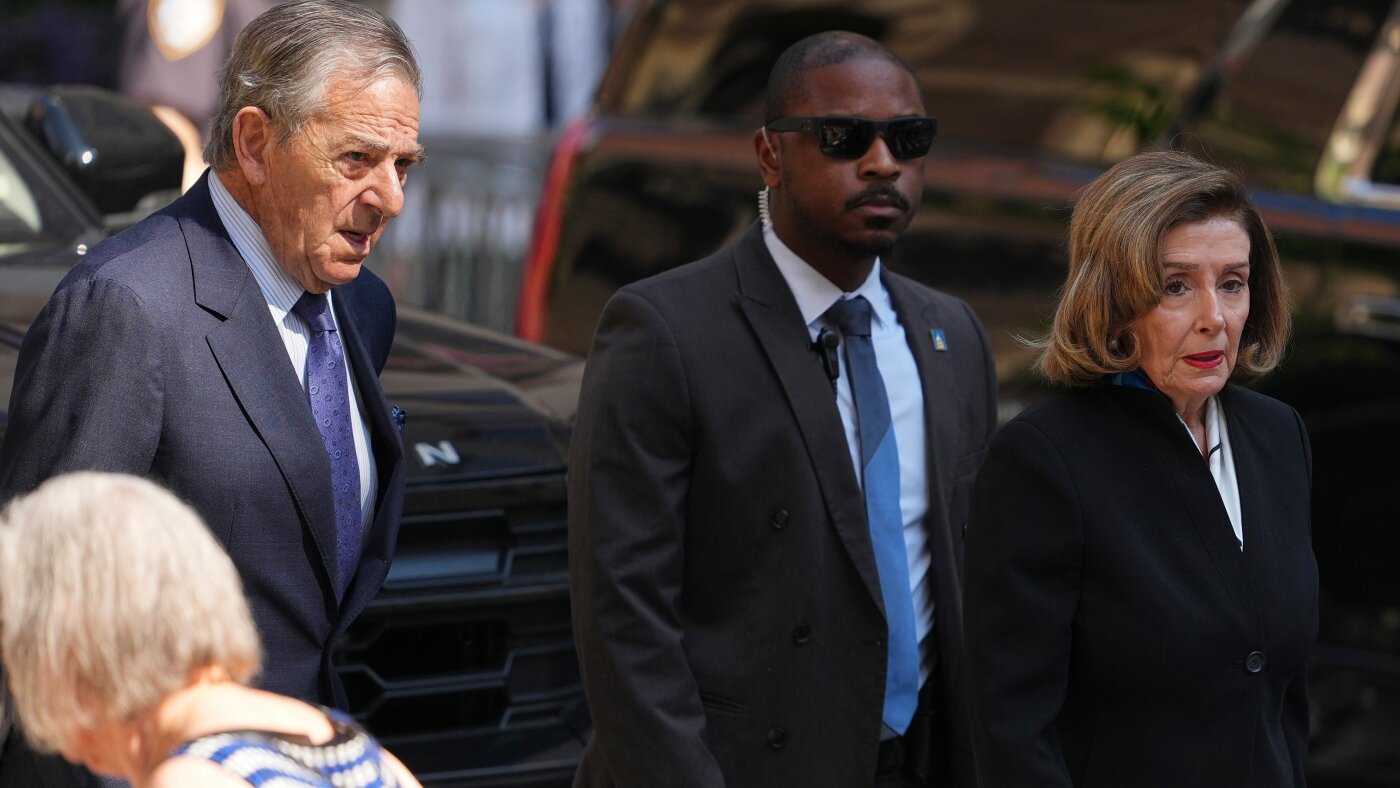
Paul Pelosi in hit-and-run in California, car left with major damage, authorities say
-

 Los Angeles, Ca1 hour ago
Firefighters battle Fourth of July blazes around Los Angeles
-

 Detroit, MI2 hours ago
Storm chances linger into the start of the week across Metro Detroit
-

 San Francisco, CA2 hours ago
Relay for America runs flag from San Francisco to D.C. in message of unity
-

 Dallas, TX2 hours ago
Cowboys newcomer already looks like a waste of money in Dallas
-

 Miami, FL2 hours ago
Police search for suspect after man is shot while on a boat near hotel in Fort Lauderdale on 4th of July
-

 Boston, MA2 hours ago
Sonny Gray shines again, and the Red Sox make it two straight wins at the Angels to start grinding road trip – The Boston Globe
-

 Denver, CO2 hours ago
Aldi expanding into Colorado, applies for permits at two Denver locations

