Milwaukee, WI
Significant moments of 2025 as seen by Milwaukee Journal Sentinel staff


A year is made of moments. Some of them are significant, and the world turns its eyes to what’s happening in Wisconsin. Big moments like the NFL Draft in Green Bay, August’s historic flooding, Brewers in the playoffs, a Milwaukee County judge charged with obstruction. But a year is made of quieter moments, too. The Milwaukee Journal Sentinel’s visuals staff documented life in Wisconsin in 2025. Throughout the year, their travels across Wisconsin brought national attention to local stories, showcased life and culture of the state, and revealed moments that connect us to each other.
Only in Wisconsin do cows get spa treatment for a photo shoot in an image captured by photographer Mark Hoffman. Scott Ash documented the most exciting day of the year for many a 17-year-old: prom. Sports reporter Dave Kallmann’s still image of speed skaters captures motion. Mike De Sisti perfectly (and creepily) frames 9-year-old Carlos Cannon in his Halloween costume.
And even in moments of chaos, an image can save a quiet moment. Angela Peterson photographed Sheena Scarbrough being comforted after her daughter’s killer was found guilty. Jovanny Hernandez followed stories of immigration throughout the year, including Judge Hannah Dugan’s obstruction charges and Yessenia Ruano’s decision to return to El Salvador after exhausting options in Milwaukee.
This is a curated selection of images chosen for their impact, artistry and ability to represent Wisconsin’s rich cultural diversity. Within this collection, you’ll find photographs that are historic, artistic and ones that simply make you smile. They demonstrate the staff’s skill and dedication in presenting an authentic perspective on life in Wisconsin.
Angela Peterson
This is my favorite photo of 2025 because of the raw emotion of these young men embracing each other after ending a group therapy session. They are part of Bridge to Brighter, an organization that offers housing and life skills to young men who are aging out of the foster care system. On this evening, reporter Bridge Fogerty and I were observing a listening session. The men, between the ages 18-24, spoke candidly about the hardships of growing up without a family. And we heard the pain in their voices as they shared experiences about living with strangers. We were touched by their shared bond and how they created their own family within the program.
− Angela Peterson
Mike De Sisti
Looking back forces me to realize just how much ground I’ve covered photographically in 2025. From the community’s reaction to the loss of beloved Brewers’ broadcaster Bob Uecker and the nonstop fascination with the newly graffitied lakeshore landmark Deep Thought, to the deportation of a schoolteacher with U.S.-born children and the tornadoes that tore through small Dodge County communities. It’s been a year.
But when I’m asked to pick a single favorite image, I keep coming back to my firefly.
It’s a photo I’d wanted for years. I’ve taken wide, long-exposure shots of the night sky and captured fireflies by stacking multiple images, but I’d never managed to catch one solitary bug lighting up. My attention span probably matches theirs. After six or seven minutes of waiting, I’d usually give up.
But on this warm July evening, I was in the backyard with my daughters, trying to coax our indoor cat, Emily, out of her carrier. As we sat there with treats in hand, waiting her out, darkness settled in and out came the fireflies.
I grabbed my camera. After a few minutes of chasing one around the yard, it finally settled on a blade of grass. I waited. It flashed a burst of green bioluminescent light, I fired off a couple frames, and it flew away.
“Got it!” I yelled, as my kids, either uninterested or simply used to me doing this, barely looked up. But it made my night.
Maybe even my year.
− Mike DeSisti
Mark Hoffman
This photo of Milwaukee Brewers catcher William Contreras (24) warming up before their National League Championship Series game against the Los Angeles Dodgers captures his work ethic. The graphic nature of the images works for me. It’s something you will not see on television. It’s a quiet moment. Capturing moments that would otherwise slip between the cracks is what makes still photojournalism work.
− Mark Hoffman
Jovanny Hernandez
An image of a young Ojibwe spearer captures a quiet moment in which a young man learns the traditions of his ancestors. Spearfishing is part of a long continuum of cultural knowledge, identity and the expression of treaty rights. A mark in Wisconsin’s history, from the controversial Walleye Wars to a new generation learning these skills.
This image captures the enduring connection between people, nature and history. I am honored to have been welcomed into the lives of the Lac du Flambeau Ojibwe Nation to document the importance of these relationships for future generations.
− Jovanny Hernandez
Scott Ash
I have been blessed to photograph many events and gatherings throughout my career. Once in a great while, I’ll be fortunate to capture a moment that transports the viewer back in time. A nostalgic reminder of childhood, family and community.
− Scott Ash
Hannah Schroeder
I have spent the majority of the past five months, since I started at the Journal Sentinel, covering the historic flooding in August that devastated the community and its aftermath. Up until this point, I would have chosen a flooding photo as my top photo of the year due to the impact on the community.
However, I recently moved from a small town in New England and studied in rural Ohio, both of which have informed my perspective as a community photojournalist. My favorite moments tend to be intimate, emotional moments that unfold at community events and in day-to-day life. Documenting notable moments around the city and state, like this image at St. Rita Church in West Allis, brings me pride as a journalist. I spoke with countless community members at this final church service who were raised, baptized and married in this church. You could already feel the community’s loss long before the church closed its doors. Though my image, I hope to convey the difficult emotions of the congregation on this day.
− Hannah Schroeder
Angelica Edwards
I made this image while working on a story with Alyssa Salcedo, where we shadowed students at Notre Dame School of Milwaukee’s boys’ and girls’ middle school campuses volunteering in their communities.After photographing a group of boys assembling winter clothes kits at St. Vincent de Paul on West Madison Street, I went over to School Sisters of St. Francis Sacred Heart Retirement Community in Burnham Park. That’s where I met the eighth-grade girls helping seniors with a coloring activity, which involved rolling a die and coloring in a section of a turkey with the color corresponding to the die number.
I went from table to table, observing the girls’ lead a coloring activity, and converse with the seniors. I noticed eighth-grader Tairy Ramirez coloring with 88-year-old Sister Catherine Ollmann and was drawn to their laughter and made a couple of images of them interacting with each other. I selected this photo because I love the endearing moment shared between them and feel like it captures the energy and excitement shared by all of the students and sisters in the room.
− Angelica Edwards



MILWAUKEE, Wis. – Several Milwaukee leaders are condemning recent Immigrations and Customs Enforcement activity in the city, though questions remain whether actions meant to limit the agency within city limits can be enforced.
The group led by U.S. Congresswoman Gwen Moore expressed anger at the nature of the at least 57 confirmed arrests made by ICE agents across Wisconsin during “targeted operations” that began in late June.
“They’re being kidnapped. They’re being disappeared. They’re being rushed through a judicial process without due process because they don’t have any money. And we’re here to decry that,” said Moore during a press conference July 9.
Back in April, Milwaukee Common Council members unanimously passed one of the key pieces of their “ICE Out MKE” package: an ordinance that prohibited ICE agents from wearing masks while working in the city. But the Department of Homeland Security has indicated they will not adhere to the ordinance, with representatives asserting the US Constitution’s Supremacy Clause allows for federal laws to supersede any local ordinance.
“State and local sanctuary politicians attempting to ban our federal law enforcement from wearing masks is despicable and a flagrant attempt to endanger our officers,” said an ICE spokesperson in a statement to WTMJ. “To be crystal clear: we will not abide by unconstitutional bans. The Supremacy Clause makes it clear that state and local sanctuary politicians do not control federal law enforcement.”
During the recent arrests, ICE agents were spotted by groups like Voces de la Frontera wearing masks despite the ordinance. Agents also used the Milwaukee Police Department District 2 parking lot for staging purposes, which is against another “ICE Out” city ordinance. A statement from MPD said they were not told in advance that ICE intended to use the parking lot, and then asked them to leave.
No citations have been written by Milwaukee Police against any agents who have violated the mask ban, with the department citing the need for legal clarity from City Attorney Evan Goyke.
“We’re waiting to see what the city attorney’s advice will be on that,” said Milwaukee Mayor Cavalier Johnson July 9 when asked by WTMJ if any of the “ICE Out” package is enforceable.
ICE says those arrested will remain in custody pending removal proceedings.
TOP STORIES FROM THE WTMJ NEWSROOM:

Milwaukee Police Department (MPD)
MILWAUKEE – A shooting in Milwaukee on Wednesday, July 8 left one person wounded.
11th and Locust
What we know:
According to the Milwaukee Police Department, a 23-year-old was shot around 6:30 p.m. near 11th and Locust.
The victim arrived at the hospital for treatment.
The circumstances leading up to the shooting are under investigation.
FREE DOWNLOAD: Get breaking news alerts in the FOX LOCAL Mobile app for iOS or Android
MPD tips
What you can do:
Milwaukee police are seeking information to identify a suspect in connection with this incident.
Anyone with information is asked to contact Milwaukee police at 414-935-7360 or to remain anonymous, contact Crime Stoppers at 414-224-TIPS or P3 Tips.
The Source: The information in this post was provided by the Milwaukee Police Department.

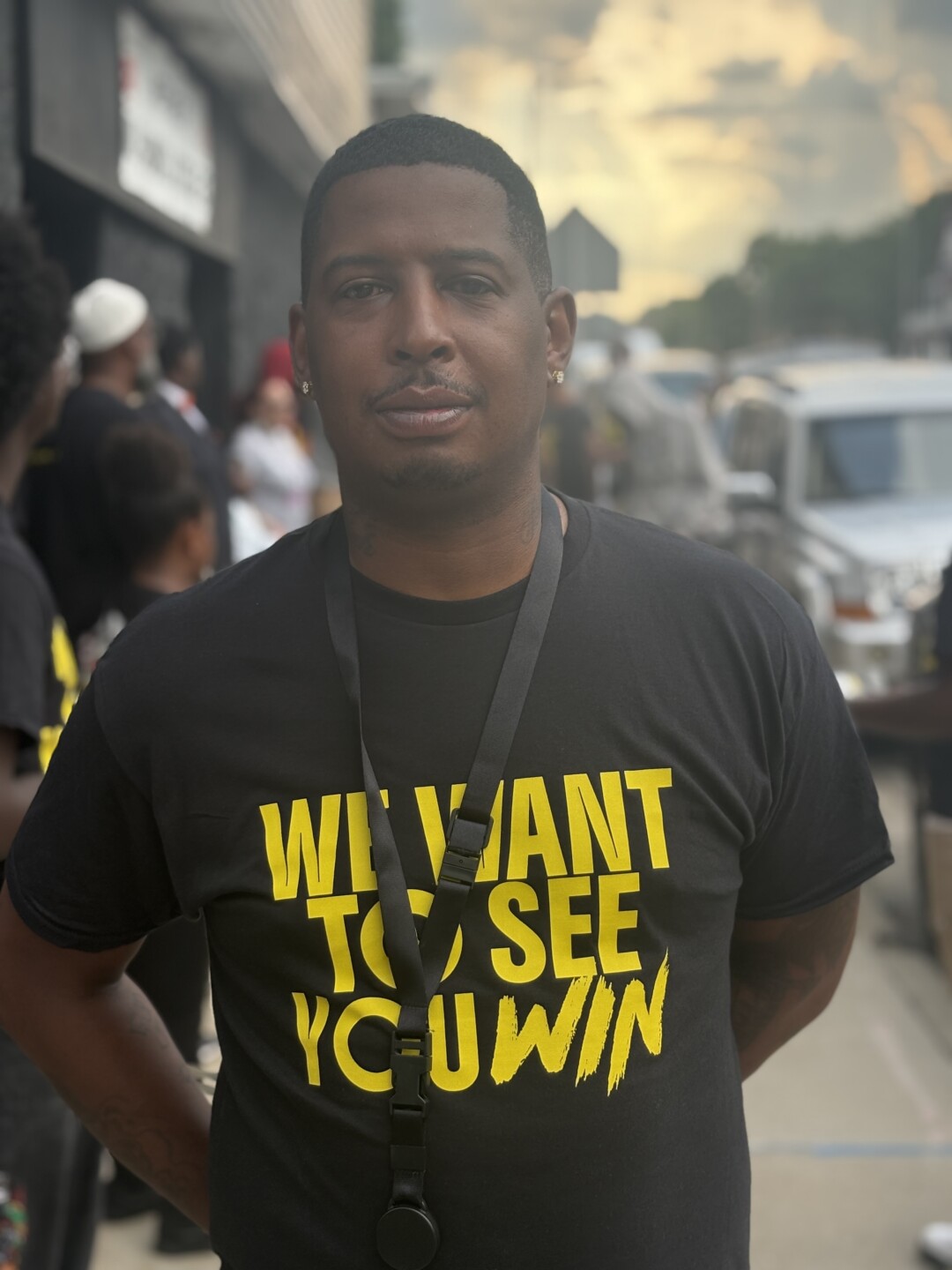
Milwaukee community members gathered at pop-up events across the northwest side Wednesday as part of “Peace on Every Block,” a week of activities aimed at building community, mentorship and sharing resources for violence prevention.
The week is organized by Advance Peace Milwaukee, Milwaukee Community Cross Roads and Milwaukee County Department of Health and Human Services.
“We want to see everybody win, and that’s the whole theme about it, about healing, coming together, stopping the violence,” Desilynn Smith of Uniting Garden Homes said.
Lorenzo Davis of Advance Peace said the northwest side was a deliberate focus for the effort.
“Because this is where the gun violence is happening, and we’re trying to end the gun violence in the city of Milwaukee. We really want to do what’s best for Milwaukee,” Davis said.
The Milwaukee Police Department reported a 30 percent drop in homicides during the first half of 2026 compared to the same period last year. But community members say that progress doesn’t always reflect what people are experiencing on the ground.
Watch: ‘Peace on Every Block’ brings Milwaukee community together to fight gun violence
‘Peace on Every Block’ brings Milwaukee community together to fight gun violence
“The data doesn’t lie, that’s true, but when it’s like every day we’re hearing about a shooting, or we’re so connected to it, and so many people connected to it, it just doesn’t appear that way,” Smith said.
The events come as Milwaukee has seen several violent deaths in recent days. 42-year-old Kristy Syed was found shot to death on Milwaukee’s south side.
The Medical Examiner’s Office also identified 19-year-old Savannah Lynn, who was killed after gunfire broke out following a fight on the Fourth of July.
Nine-year-old Jade Riser died after a shooting that happened near East Burleigh Street last Thursday.
Smith said healing is central to any lasting change.
“If we don’t heal, we can’t stop anything, because violence is actually the secondary emotion that is really driven off a lot of pain,” Smith said.
Davis said the young people in these neighborhoods are ready for something better.
“They want to see a better inside Milwaukee. They want to see a better chance for Milwaukee, and they want to do something better for themselves. So, these kids out here, we promote peace with them, and we’re going to back them, and we want to see them win,” Davis said.
Let’s talk:
Hey there! At TMJ4 News, we’re all about listening to our audience and tackling the stuff that really matters to you. Got a story idea, tip, or just want to chat about this piece? Hit us up using the form below. For more ways to get in touch, head over to tmj4.com/tips.
It’s about time to watch on your time. Stream local news and weather 24/7 by searching for “TMJ4” on your device.
Available for download on Roku, Apple TV, Amazon Fire TV, and more.
Report a typo or error // Submit a news tip
-

 Los Angeles, Ca1 hour ago
California teen e-biker baiting police to chase tracked by drone, arrested
-

 Detroit, MI1 hour ago
Our picks for state\nSenate from Wayne Co. | Endorsements
-

 San Francisco, CA2 hours ago
Man reported missing in San Francisco
-

 Dallas, TX2 hours ago
How to buy France World Cup semifinal soccer tickets in Dallas
-

 Miami, FL2 hours ago
Miami-Dade Schools names six semifinalists for superintendent
-

 Boston, MA2 hours ago
Lawsuit: ICE detained East Boston father despite legal status
-

 Denver, CO2 hours ago
Victor Marx wins GOP primary for Colorado governor, defeating veteran lawmaker after unorthodox campaign
-

 Seattle, WA2 hours ago
Widower of pregnant woman who was shot to death in Seattle sues homelessness authority

