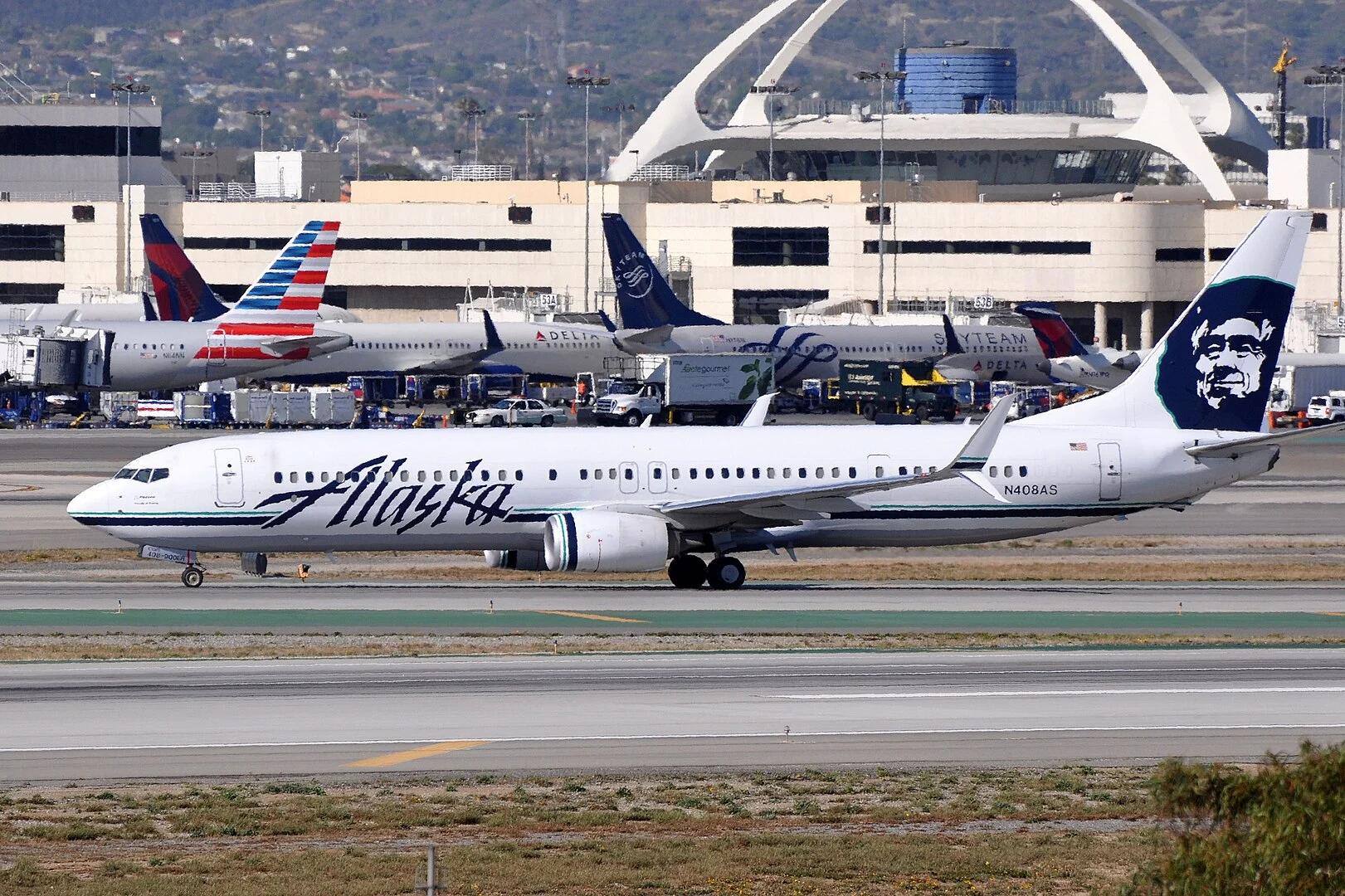
SEATTLE- An Alaska Airlines (AS) flight bound for Kahului, Hawaii (OGG), was forced to return to Seattle-Tacoma International Airport (SEA) following a mid-air pressurization emergency.
Flight AS825, operated by a Boeing 737-900, was en route to Kahului when it experienced a loss of cabin pressure roughly 220 nautical miles southwest of Seattle at 34,000 feet. The aircraft made an emergency descent and safely landed back at SEA about 90 minutes after takeoff.
Photo: By Eric Salard – N408AS LAX, CC BY-SA 2.0, https://commons.wikimedia.org/w/index.php?curid=43543100
Alaska Airlines Makes U-Turn to Seattle
On June 3, 2025, Alaska Airlines Flight AS825 departed Seattle-Tacoma International Airport (SEA) for Kahului International Airport (OGG), flagged by Aviation Herald.
The flight was operated by a Boeing 737-900, tail number N462AS. While cruising over the Pacific Ocean, the flight crew initiated an emergency descent from FL340 to 9,000 feet due to a pressurization malfunction.
The flight diverted back to SEA and landed without incident on Runway 34R.
Advertisement
The Federal Aviation Administration (FAA) confirmed that the crew reported a cabin pressurization issue and returned safely around 11:00 a.m. local time. The agency has launched a formal investigation into the incident.
A replacement aircraft, also a Boeing 737-900 (registration N468AS), resumed the journey to Hawaii and landed at Kahului approximately six hours behind schedule.
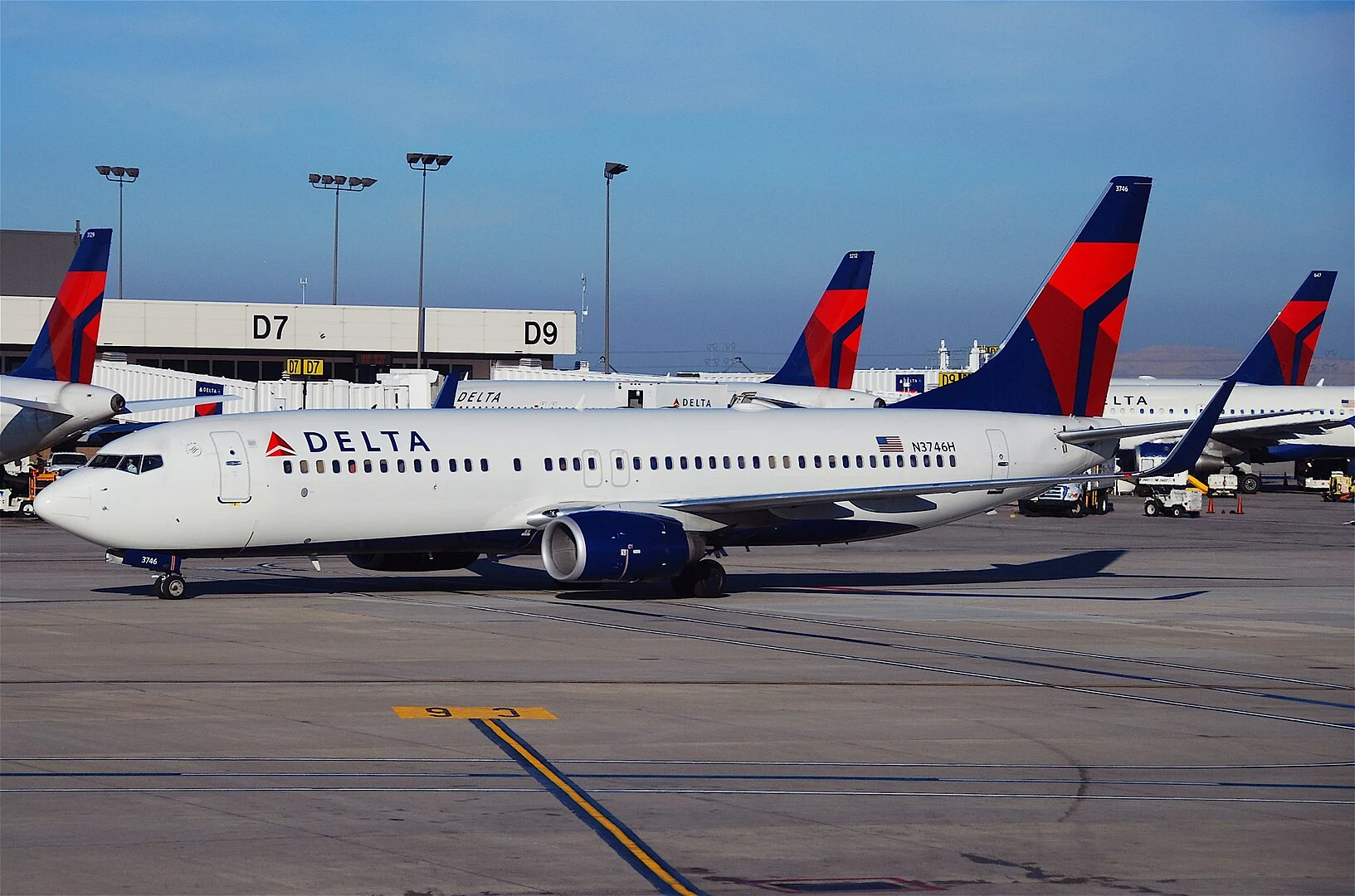
Photo: By Aero Icarus from Zürich, Switzerland – Delta Air Lines Boeing 737-800; N3746H@SLC;09.10.2011/621ai, CC BY-SA 2.0, https://commons.wikimedia.org/w/index.php?curid=26713097
Similar Incident
In a related incident earlier this year, Delta Air Lines (DL) experienced a pressurization emergency on Flight DL576.
The aircraft, a Boeing 737-800 (registration N399DA), departed from Mexico City International Airport (MEX) bound for Atlanta (ATL) on April 7, 2025. Shortly after takeoff, the aircraft failed to climb beyond 10,000 feet due to pressurization problems.
Complicating matters, miscommunication arose between the Delta flight crew and Mexico City ATC.
The pilots declared an emergency but also indicated they were not immediately returning to the airport. Their request for vectors to avoid terrain while completing checklists was confusing, especially given the high elevation of MEX (7,300 feet) and the mountainous surrounding terrain.
Advertisement
Key Factors Behind Pressurization Emergencies
Terminology Misuse: Use of non-standard emergency phrases can delay ATC response.
Altitude Limitations: High-elevation airports reduce vertical safety margins during emergencies.
Incomplete Communication: Failing to clearly articulate flight intentions under stress can create avoidable misunderstandings.
Checklist Protocols: Flight crews often need time and space to complete troubleshooting procedures before executing a return.
Both incidents underscore the critical need for clear, standardized communication and highlight how environmental and technical constraints can quickly escalate emergencies.
Stay tuned with us. Further, follow us on social media for the latest updates.
Join us on Telegram Group for the Latest Aviation Updates. Subsequently, follow us on Google News
By U.S. Wildland Fire ServiceonSmoke from the Jade Fire (#285) to west of Ambler as shown on this FAA Weather Camera at 5 p.m. on June 23, 2026.
9:50 p.m. Update, June 23, 2026: Another load of 12 smokejumpers is en route to join the 11 already working on the Jade Fire (#285), which is burning about 3 miles west of Ambler and west of the Kopshesut Fire. Two single‑engine water scoopers — highly effective in calming the Kopshesut Fire in its early days — along with personnel aboard an air attack platform, are working the incident. The air attack platform is used to coordinate airspace and relay information between aircraft and firefighters on the ground.
The larger multi‑engine water scoopers were requested but were unable to respond due to weather at Ladd Airfield on Fort Wainwright.
At about 8:42 p.m., the fire was reported at 10 acres and was torching and active on all sides. It was burning toward the Kopshesut Fire, which stands between it and Ambler
Advertisement
Use this link for an interactive map to zoom in and out for a closer look at the location of the fire: https://arcg.is/1XLmHm8
8:45 p.m., June 23, 2026: U.S. Wildland Fire Service contracted aircraft and smokejumpers are en route to Ambler after receiving reports of a new fire near the Kobuk River community.
Numberous reports from locals reporting the fire is west of the Kopeshusut Fire (#137) that escaped from the landfill June 4 and threatened the community before being contained last week.
More information will be released when it’s available.
Contact U.S. Wildland Fire Service Public Affairs Specialist Beth Ipsen at elizabeth_ipsen@ios.doi.gov or (907)388-2159 for more information.
Advertisement
A new fire broke out 3 miles west of Ambler Tuesday night. The Jade Fire is also west of the Kopshesut Fire that escaped the Ambler landfill on June 4 and was contained last week. Click on the map for a PDF version.Here’s a closer look at the Jade Fire (#285) burning west of the Kopshesut Fire and about 3 miles west of Ambler. Use this link for an interactive map to zoom in and out for a closer look at the location of the fire.
-USWFS-
U.S. Wildland Fire Service, P.O. Box 35005 1541 Gaffney Road, Fort Wainwright, AK 99703
Need public domain imagery to complement news coverage of the USWFS in Alaska? Visit our Flickr channel! Learn more online, and on Facebook.
‹ Delta Area fires receive rain as suppression efforts continue
Firefighters reach 50% containment on Starry Fire ›
Categories: Active Wildland Fire, AK Fire Info, US Wildland Fire Service
Weekly insights and analysis on the latest developments in military technology, strategy, and foreign policy.
Advertisement
The U.S. military has released new details about the massive Fightertown Recapitalization (FTR) program at Joint Base Elmendorf-Richardson (JBER), in Anchorage, southeastern Alaska. This is a huge effort valued at approximately $7 billion that would effectively create an entirely new fighter hub to support future Air Force operations in the strategically important Arctic and Pacific regions.
The details emerged in a special notice announcing an upcoming virtual industry day, where government officials plan to brief contractors on the scope of the program and gather feedback on construction risks, industry capabilities, and acquisition strategies before moving toward a formal procurement process.
A U.S. Air Force F-22 Raptor from Joint Base Elmendorf-Richardson flies over the Joint Pacific Alaska Range Complex. U.S. Air Force photo by Staff Sgt. James Richardson
While the notice, from the U.S. Army Corps of Engineers, is intended primarily as market research, it offers one of the clearest looks yet at the scale and ambition of the Fightertown recapitalization effort.
According to the notice, existing airfield facilities cannot support the program’s requirements, prompting the selection of a new site to expand the current airfield infrastructure. Rather than a collection of isolated projects, the government describes the effort as a “complete campus approach” intended to synchronize facility construction with aircraft procurement, personnel movements, and logistical requirements.
Advertisement
The envisioned campus would include aircraft hangars, squadron operations facilities, corrosion control facilities, maintenance shops, and other aviation support infrastructure. Extensive airfield improvements are also planned, including new taxiways, aprons, shoulders, and specialized aircraft operating surfaces.
A picture of a so-called “elephant walk” readiness exercise at Joint Base Elmendorf-Richardson showing 24 of the resident 3rd Wing’s F-22s, as well as a C-17 and an E-3. U.S. Air Force
Highly likely to be included in the recapitalization efforts will be measures to help reduce vulnerability and ensure critical operations could continue in wartime. After all, in a potential fight against China or Russia, JBER would be high on the list of priority targets in the opening phases of a large-scale conflict. As we have repeatedly outlined in the past, aircraft shelters with varying degrees of hardening are suddenly very much back on the agenda in response to growing drone and missile threats.
Beyond flight-line infrastructure, the project encompasses a substantial support ecosystem. Plans call for a munitions complex, petroleum operations facilities, warehousing and supply functions, dining facilities, visitor control infrastructure, firefighting facilities, training centers, simulators, and housing for unaccompanied airmen.
The government also notes that the campus design remains flexible and could ultimately involve modifications to, or demolition of, existing facilities as planning progresses.
Rather than relying solely on traditional military construction contracting approaches, the Army Corps of Engineers says the program intends to leverage authorities provided in the Fiscal Year 2026 National Defense Authorization Act. Those authorities could allow the use of Other Transaction Authority (OTA), Progressive Design-Build (PDB), and other alternative execution methods.
The sprawling Joint Base Elmendorf-Richardson (JBER), in Anchorage, southeastern Alaska, as seen in a satellite image from May of this year. Google Earth
The notice explicitly states that the government intends to capitalize on private-sector innovation while avoiding what it describes as costly and time-consuming federal contracting burdens. It also emphasizes that the execution strategy will encourage industry partners to propose novel technical and construction solutions.
The scale of the investment underscores Alaska’s growing importance as a hub for U.S. airpower. JBER already serves as one of the Air Force’s premier fighter installations and occupies a critical geographic position between North America, the Arctic, a part of the world that has only grown in strategic significance in recent years, and the Indo-Pacific theater, where strategic planning is highly focused on a potential future conflict with China.
Advertisement
Joint Base Elmendorf-Richardson hosts the headquarters of the 11th Air Force, the service’s top command in Alaska, and its 3rd Wing, which operates a mix of F-22 Raptor stealth fighters, E-3 Sentry Airborne Warning Control System (AWACS) radar planes, C-17 Globemaster III airlifters, and C-12 light utility aircraft. It is also home to the Alaska Air National Guard’s 176th Wing, which has additional C-17s, as well as HC-130 Combat King rescue aircraft and HH-60 rescue helicopters.
HH-60W Jolly Green II helicopter aircrew assigned to the 210th Rescue Squadron, 176th Wing, Alaska Air National Guard, hoist a simulated downed pilot during a full mission profile training exercise at Malemute Drop Zone, Joint Base Elmendorf-Richardson, Alaska, March 31, 2026. Alaska National Guard photo by Alejandro Peña
In addition, in 2023, the Air Force announced the creation of the 55th Operations Group, Detachment 1 at the base, as a detachment of the 55th Wing at Offutt Air Force Base in Nebraska.
“The new detachment will… serve as a strategic launch and recovery point for RC-135V/W Rivet Joint operations and exercises in the region,” according to the Air Force.
The move reflected increased demand for RC-135V/W Rivet Joint spy plane sorties in the Pacific, with JBER being well-positioned for these aircraft to gather intelligence on areas of interest in the northern end of the Pacific and the increasingly strategic Arctic region.
In the future, the strategic location of JBER, as well as its current status as one of the few F-22 bases, suggests that it could well eventually host the F-47 sixth-generation stealth fighter, the first of which is expected to make its first flight sometime in 2028. The F-47 could therefore well end up as the centerpiece of the Alaskan Fightertown, in keeping with the vision for the jet serving as a critical force multiplier that can bring together other crewed and uncrewed assets. With that in mind, at least some of the Fightertown Recapitalization program may be specifically tailored to the requirements of the F-47.
Importantly, JBER also serves as the focal point for the Red Flag-Alaska and Northern Edge exercises.
Advertisement
The Red Flag-Alaska exercises can take place up to four times a year and mirror those flown over the Nellis Range Complex in Nevada, with some differences. Namely, the ranges in Alaska, many of which are instrumented, are enormous, and can include a more varied array of assets.
A U.S. Air Force E-3 Sentry takes off during exercise Red Flag Alaska 26-1 at Joint Base Elmendorf-Richardson, Alaska, April 29, 2026. U.S. Air Force photo by Tech. Sgt. Joseph Miller
From JBER and other bases in the region, Red Flag-Alaska participants have access to the Joint Pacific Alaska Range Complex (JPARC). Covering an area of more than 67,000 square miles and providing 77,000 square miles of airspace above, JPARC is the “largest instrumented air, ground and electronic combat training range in the world,” according to the Air Force. It is regularly used to provide a realistic training environment for full-spectrum engagements, ranging from individual skills to large-scale joint engagements.
JPARC’s role could grow further in the coming years as the Air Force pushes large-scale exercises further and further out into the broad expanses of the Pacific. Other range complexes further down along the West Coast are seeing increasing use, as well. Even very large overland ranges, such as the sprawling Nevada Test and Training Range (NTTR) adjacent to Nellis Air Force Base, are increasingly constrained when attempting to replicate modern scenarios based on ever-growing adversary anti-access and aerial denial (A2/AD) bubbles.
Meanwhile, Northern Edge also occurs in and around Alaska every two years, with these large-scale events being used to test and evaluate new systems and capabilities from across the U.S. military.
One of the Air Force’s tiny force of semi-retired F-117 Nighthawk stealth jets, now used for test and evaluation purposes, at Elmendorf during Northern Edge 2023. U.S. Air Force
In the past, the Air Force has described Northern Edge as a demonstration of “the U.S. commitment to the region by building interoperability, advancing common interests and a commitment to our allies and partners in ensuring a free and open Indo-Pacific,” as well as showcasing U.S. ability to defend the homeland from and throughout Alaska.
As planning advances, we will learn more about what this new Alaskan Fightertown will look like. What is already clear is that the Air Force and the Pentagon are preparing for a long-term expansion and modernization effort on a scale rarely seen at an operational fighter base.
More details could emerge during the industry day scheduled for June 30, when government officials will provide a comprehensive update on the program and solicit feedback from industry partners on how to execute one of the Air Force’s biggest military infrastructure projects.
Advertisement
Update: 3:45 PM ET –
“We are deliberately investing in Pacific Air Force’s critical infrastructure by replacing and upgrading operations and maintenance facilities in addition to making repairs to existing buildings and funding mission-ready materiel, storage, and sustainment necessary for homeland defense and Agile Combat Employment operations,” a U.S. Air Force official has now told us in response to our queries for more information about the Fightertown plan. “We are also extending the runway and building a Joint Integrated Test and Training Center at JBER.”
“We are in the design stage now and will have a better idea of timelines once we receive an appropriation,” they added.
By Alaska Division of Forestry & Fire Protectionon
The Starry fire picked up today and the Fairbanks Area initial attack helicopter dropped buckets of water during the heat of the day.
Despite the brief uptick in fire activity, the fire remained at 575 acres and resources were able to get hose completely around the fire.
Pioneer Peak Hotshots Forrest Boynton and Trapper Gephart, cut saw line around the west side of the Starry Fire. – Sam Allen, DFFP
Crews on the East and South side off the fire swept 200 foot outside of the fire’s edge, and found no heats. A grid is planned for tomorrow on the North side of the fire.
Advertisement
The City of Anderson is still at evacuation level, “Go.”
The Denali Borough has issued a ‘Ready’ evacuation order for “North 40” further west and across the Nenana River from Anderson, Alaska because of two other wildland fires in the wider area. The “North 40” includes residents north of Lightning Avenue and between the Teklanika River and the Nenana River.
The Type 3 Incident Management Team running the Starry Fire is prepared and planning to take on other wildfires in the area should it become necessary to engage.
‘Ready’ is the first step in the “Ready. Set. Go.” Statewide evacuation planning. Residents are encouraged to prepare necessary items such as pets, medication and important documents and monitor evacuation updates.
Firefighters completed a dozer line around the fire yesterday, they were helped in part by a burn scar from the 2013 Clear Air Force Base Fire, which helped slow the fire down.
Firefighters from Elmendorf Air Force Base helped secure a two-acre slop-over on the south side of the Starry Fire. – Sam Allen, DFFP
“The dozer line is not a scalpel,” Pioneer Peak Hotshot Sup. Kris Baumgartner. Fire activity could pick up and through embers across the line.
Advertisement
Two federal contract crews, Moose Heart and Clearwater, are expected to arrive Tuesday.
‹ DFFP responding to a new fire east of Delta
Categories: Active Wildland Fire, AK Fire Info, Alaska DNR – Division of Forestry & Fire Protection (DFFP)






 100vw, 700px”/><figcaption class=) A new fire broke out 3 miles west of Ambler Tuesday night. The Jade Fire is also west of the Kopshesut Fire that escaped the Ambler landfill on June 4 and was contained last week. Click on the map for a PDF version.
A new fire broke out 3 miles west of Ambler Tuesday night. The Jade Fire is also west of the Kopshesut Fire that escaped the Ambler landfill on June 4 and was contained last week. Click on the map for a PDF version. burning west of the Kopshesut Fire and about 3 miles west of Ambler.
” data-large-file=”https://i1.wp.com/akfireinfo.com/wp-content/uploads/2026/06/map_gad_jadefire2_20260623.png?w=700&ssl=1″ width=”700″ height=”540″ fifu-data-src=”https://i1.wp.com/akfireinfo.com/wp-content/uploads/2026/06/map_gad_jadefire2_20260623.png?w=700&ssl=1″ alt=”A red dot marks the spot of the new fire next to a much larger fire as shown in a large pink blob.” class=”wp-image-48634″ srcset=”https://i1.wp.com/akfireinfo.com/wp-content/uploads/2026/06/map_gad_jadefire2_20260623.png?w=700&ssl=1 700w, https://akfireinfo.com/wp-content/uploads/2026/06/map_gad_jadefire2_20260623.png?w=150 150w, https://akfireinfo.com/wp-content/uploads/2026/06/map_gad_jadefire2_20260623.png?w=300 300w, https://akfireinfo.com/wp-content/uploads/2026/06/map_gad_jadefire2_20260623.png?w=768 768w, https://akfireinfo.com/wp-content/uploads/2026/06/map_gad_jadefire2_20260623.png?w=800 800w, https://akfireinfo.com/wp-content/uploads/2026/06/map_gad_jadefire2_20260623.png 1056w” sizes=”(max-width: 700px) 100vw, 700px”/><figcaption class=) Here’s a closer look at the Jade Fire (#285) burning west of the Kopshesut Fire and about 3 miles west of Ambler. Use this link for an interactive map to zoom in and out for a closer look at the location of the fire.
Here’s a closer look at the Jade Fire (#285) burning west of the Kopshesut Fire and about 3 miles west of Ambler. Use this link for an interactive map to zoom in and out for a closer look at the location of the fire.


 100vw, 600px”/><figcaption class=) Firefighters from Elmendorf Air Force Base helped secure a two-acre slop-over on the south side of the Starry Fire. – Sam Allen, DFFP
Firefighters from Elmendorf Air Force Base helped secure a two-acre slop-over on the south side of the Starry Fire. – Sam Allen, DFFP


