Movie Reviews
‘Highest 2 Lowest’ Review: Denzel Washington and Spike Lee Reunite in Dazzling Thriller Suffused With Lush New York City Vibes


A single card credit at the end of Spike Lee’s hugely entertaining crime thriller Highest 2 Lowest reads: “Inspired by the master, Akira Kurosawa.” That tribute feels not in the least like someone paying lip service. Reinterpreting the giant of Japanese cinema’s 1963 classic, High and Low, a tense police procedural with a sharp dissection of social class structures, Lee and screenwriter Alan Fox handle the material with the utmost care and respect. At the same time, they transpose the narrative spine to an environment Lee knows intimately, allowing the director to make the film his own, with wit, high style and kinetic energy to burn.
Highest 2 Lowest is Lee’s first feature set and shot in New York since 2012’s Red Hook Summer, and that absence seems to have reignited his love for the city as a visual playground in ways that vibrate throughout.
Highest 2 Lowest
The Bottom Line All highs, no lows.
Venue: Cannes Film Festival (Out of Competition)
Release date: Friday, Aug. 22
Cast: Denzel Washington, Jeffrey Wright, Ilfenesh Hadera, A$AP Rocky, Aubrey Joseph, Dean Winters, LaChanze, John Douglas Thompson
Director: Spike Lee
Screenwriter: Alan Fox, based on the novel King’s Ransom, by Ed McBain, and the Akira Kurosawa film High and Low
Rated R,
2 hours 14 minutes
That impression is planted instantly by the stunner of an opening — set to “Oh, What a Beautiful Mornin’” from Oklahoma! Cinematographer Matthew Libatique’s cameras glide in swoon-inducing wide shots around Manhattan and Brooklyn, kissed by pastel morning light. Conspicuously, the frame catches a large all-caps pink neon at the top of a building that reads simply, “WELCOME,” which might be a subtle nod to the pink factory smoke in Kurosawa’s otherwise B&W original.
The mobile camera eventually settles on a luxury apartment block in Dumbo, panning up to find Denzel Washington, as music industry mogul David King, talking business on his cell on the penthouse balcony. Right away we can see he’s a man bristling with confidence, beaming from ear to ear about what he believes is a sure-thing deal set to go through.
This is Washington’s fifth movie with Lee, and they clearly have a shorthand that helps them dance to each other’s rhythms. The collaboration this new movie most recalls is another foray into genre filmmaking, the 2006 heist caper Inside Man, less for the crime elements than the precision-tooled plot engine, snappy pacing and crackling energy.
The talented Libatique also shot that film, but his work here is next-level; it’s a great-looking movie with a sumptuous visual sheen that looks the way good cashmere feels. Lee shakes up the compositions with playful flourishes like wipes using the logo of David’s record company, split screen with a row of guns as the dividing line, and a stylized insert conceived like a music video and performed by a singer behind bars in an orange jumpsuit, magically flanked by twerking backup dancers.
When David’s elegant wife Pam (Ilfenesh Hadera) asks him for their usual fat-check donation to a city museum whose board she sits on, he tells her to hold off and rein in expenses for a while. This is not something she’s used to hearing.
Their teenage son Trey (Aubrey Joseph), however, is used to hearing disappointments and broken promises from his dad. David hasn’t gotten around to listening to a demo for a female artist that aspiring music manager Trey hopes he will sign, and he offers a pat apology when he rushes off to a business meeting rather than staying to watch Trey and his best friend Kyle (Elijah Wright) at basketball practice. (In one of several winks at fellow basketball junkies, Lee casts former Boston Celtics and L.A. Lakers player Rick Fox as one of the team’s coaches).
The meeting that pulls David away is an audacious plan to up his shares to a majority stake in Stackin’ Hits and take back control of the company he spent 25 years building up to chart domination, peaking in the early 2000s. Needing to psych himself up, he tells his driver, Paul (Jeffrey Wright, Kyle’s father onscreen and off), “I need a theme!” Paul obliges by blasting the evergreen McFadden & Whitehead disco hit “Ain’t No Stoppin’ Us Now” on the car stereo.
Wearing a sharp suit and killer shades, he strides into the company’s office building as if he already owns everything. But he meets opposition when veteran board member Patrick (Michael Potts) informs him they have decided it’s time to sell to a larger music biz outfit that has been circling for a while. He later reveals to Pam, who’s skeptical, that he’s mortgaged the penthouse and their house in Sag Harbor to take out a hefty loan and wants to pursue the deal, despite the wishes of the uncooperative board.
But when a call comes, revealing that Trey has been kidnapped, the company takeover bid gets nudged aside by the family crisis. A team of detectives — led by Earl Bridges (John Douglas Thompson), Bell (LaChanze) and Higgins (Dean Winters), the latter a smug white dude who immediately causes friction with David — sets up operations in their dining room to trace calls. The kidnapper demands a $17.5 million ransom, otherwise threatening to kill Trey.
Pam says of course they’ll pay and David agrees. But when Trey is found and it emerges that the kidnapper got the boys mixed up and took Kyle instead but has not changed his terms, David hesitates, $17.5 million being a lot to pay for someone else’s kid — even his godson, the child of his right-hand man. Far more than halting David’s business plans, that amount of money would wipe them out.
Among the most significant changes is the reconception of the driver character. In Kurosawa’s version, the chauffeur was an exceedingly meek man who got down on the floor to beg his stern shoe-manufacturer boss, played by the great Toshiro Mifune, to save his son. Paul is pugnacious, especially with the detectives when his criminal past prompts them to question him as a subject. He’s also not one to bow and scrape with David, even though he’s indebted to him for giving him a job and a fresh start.
One of the key themes of Fox’s screenplay is attention as currency. This plays out on social media with an outpouring of love for beloved industry figure David when his son appears to be in danger, but shifts abruptly when the full story emerges, generating unfounded headlines like “Nepo Kid Trey Set Up Friend for Kidnapping.”
David does eventually agree to pay, based on the assumption that the cops will catch the criminal and retrieve the money. A dolly zoom underscores what a sobering risk this is for David, especially with the suits at Stackin’ moving to strongarm him out of the company and even threatening legal action.
The second part of the movie kicks into high gear with an exhilarating train set-piece that might represent some of Lee’s most technically astounding direction. The kidnapper demands that David handle the cash drop-off himself on a Manhattan-bound 4 train, with further details to be communicated on his cell.
Lee makes the action more propulsive by staging it against the backdrop of Puerto Rican Day celebrations, with hundreds dancing to a live performance by Latin music great Eddie Palmieri and his orchestra, blocking access to a strategic subway stop. The situation on the train is equally chaotic after a noisy mob of baseball fans get on at Yankee Stadium.
The exchange doesn’t quite go as planned, and the kidnapper and his crew are way more organized and forward-planning than the detectives anticipated, repeatedly throwing them off the trail with decoys and swaps between motorcyclists all clad in the same head-to-toe black. It’s a tremendously exciting sequence, expertly sustained.
The kidnapper honors his promise to release Kyle, who turns up dazed but otherwise unharmed in a Bronx skate park after being bound and gagged somewhere in a basement bathtub for days. He’s unable to help much with clues, but he is able to hum a few notes of a rap tune that was thumping through the walls on repeat.
This proves invaluable to David, with his famous ear for music, but when he traces the singer through a shady contact of Paul, the cops are dismissive of his findings, Higgins more than anyone. David and Paul decide to track down the singer — one of countless struggling artists denied a foot in the door at Stackin’ — on their own, without waiting for law enforcement to catch up.
Of course, the movie swivels onto familiar Hollywood ground when Washington’s character becomes almost an action hero, despite prickly edges and an unsympathetic demeanor that make him almost an antihero. But damned if it doesn’t make for gripping fun, ushering in an amusing turn from Isis “Ice Spice” Gaston and a blindingly charismatic one from A$AP Rocky, playing characters best not discussed, for spoiler reasons.
One scene sure to be an audience favorite has David and his antagonist facing off on either side of the glass wall in a recording studio, sparking a hilarious impromptu rap battle of sorts. The dynamic is echoed soon in a prison visit, in which Lee narrows the height of the frame to squeeze the characters’ tense interaction.
The film is packed with great music, starting with Howard Drossin’s mood-shifting score, which ranges from melancholy piano to cascades of jazz, and two electrifying performances that add a massive charge. One of those is the title song, a big-build power anthem belted to the heavens by singer Aiyana-Lee. And the cast is top-to-toe excellent, with special honors to Washington, Jeffrey Wright and A$AP Rocky, who follows his work in If I Had Legs I’d Kick You with further proof of a megawatt scree presence.
Lee’s adaptation doesn’t match the complexities of class and hierarchy and even dynamics in a marriage that are such a fascinating part of the Kurosawa. Then again, he’s not trying to, and this is a universe away from the disappointment of Oldboy, his 2013 remake of the Park Chan-wook thriller. The director is in the role of the flashy, panache-y showman here, and he plays it to perfection, delivering a big, highly polished chunk of movie that’s pure enjoyment.



The Isolate Thief, 2026.
Directed by John Suits.
Starring Mackenzie Foy, Odeya Rush, Joe Pantoliano, Sean Bean, Jack Kesy, Ty Simpkins, Bryan Martin, and Martin Sensmeier.
SYNOPSIS:
A young woman struggles to conceal the gold she stole from violent outlaws who have seized control of her remote outpost, outwitting them amid a deadly winter where survival becomes a game of cunning and betrayal.

Set at a Union outpost in frigid temperatures, John Suits’ The Isolate Thief transcends what was likely a small budget with a fittingly chilly, oppressive look, and an ensemble that sneaks up on you as not only packed but smartly cast. Front and center is Mackenzie Foy shedding her Twilight and Disney-oriented roots for gritty period-piece work that she handles capably and convincingly, whether it be fending off wolves at the outpost, bandaging a wound, playing a deceitful game for survival, or wielding a firearm.
That’s only the start, though, as Joe Pantoliano shows up as a harmless graverobber only to re-enter the picture as the hostage of a group of Union soldiers led by Sean Bean on a search for gold thought to be discovered by him, which in reality has been hidden away by Mackenzie Foy’s parentless (her father recently died in the war, meaning she is all alone at the outpost), grieving, underestimated caretaker waiting for the right moment to make a break with the gold for San Francisco. The merciless candor with which the Union soldiers are comfortable torturing the drifting graverobber should also be enough to signal that something is off about the group and that our hero probably shouldn’t trust them.

Without giving too much away, Ada (Mackenzie Foy) is up against a violent group of outlaws posing as Union soldiers under orders from Sean Bean’s Fiddler, who will stop at nothing for this gold (accompanied by fellow evildoers played by a range of underappreciated names such as Ty Simpkins and Jack Kesy). In the forest, she also stumbles across a badly injured Emily (Odeya Rush), who has a connection to these outlaws, reduced to being treated as a sex object (they refer to her as an unflattering term for a prostitute, which feels inaccurate given that such a term would imply she has a choice rather than having her agency regularly taken as it is here), so broken by her experiences with them that she advises Ada to give in to their demands as defying them typically results more horrifying outcomes.
Even if the screenplay from Kevin Lefler doesn’t necessarily crackle the way a pressure-cooker story like this should (there’s a lot of The Hateful Eight in the film’s DNA, but without anywhere near that level of character and thematic complexity), the cast elevates the material and provides a quiet intensity simmering underneath the casual conversations and deceptions that we know will eventually blow up in Ada’s face. It’s also a story that isn’t afraid to go to some fairly bleak places and put these women through the wringer as they fight back and try to make it out alive.

What it boils down to is a simplistic cautionary tale of ruthless, misogynistic outlaws underestimating the women they are up against. That is also desperately felt when the women turn the tables in the third act. Effectively accomplishing what it sets out to do. A freezing locale is used for atmospheric advantage (the ground is frozen solid, meaning graves can’t be dug, to give an idea of just how cold it is) while allowing Mackenzie Foy to tap into some new acting tools demonstrating resourcefulness, alongside Sean Bean believably going from calm to terrifying on a dime. The Isolate Thief is a feminist period-piece Western that organically empowers through familiar, albeit competent and engaging, storytelling, culminating in some tense battle-of-the-sexes action.
Flickering Myth Rating – Film: ★ ★ ★ / Movie: ★ ★ ★
Robert Kojder
https://www.youtube.com/watch?v=embed/playlist

When I spend time around fellow writers, regardless of their achievements, conversation is much the same as in any other context. When I watch groups of fictional writers in films, they are continually striving to outdo one another, to show off their brilliant intellects. It’s a constant process of trying too hard, and it’s exhausting. To his credit, Dustin Hoffman, who plays established literary genius David in this torrid tale of family conflict, doesn’t come across this way, rising above the clumsy script thanks to his patient approach. The same cannot be said of the other actors, all of whom have proved their talent elsewhere yet seem seduced by the notion that this is how intelligent people behave.
The plot here is fairly simple, and not without potential. David’s son Jacob (Tom Sturridge) is a copywriter and successful creator of jingles, but after his wife Elise (Alison Brie) wins a major award, he starts getting insecure, wanting to prove that he can make it as a proper literary type. The obvious way to do this seems to be to write a biography of David, but David has no interest in engaging with this. He provides a number of reasonable justifications for this. Underlying them is the fact that we all tend to frame ourselves in different ways for different people. What one might be willing to say to the great anonymous public is not necessarily something one might feel able to say to one’s son.

This stalemate is broken by the arrival of John (André Holland, fresh from the similarly awkward – but smarter – The Dutchman), an old friend of Jacob whom David remembers fondly. At Elise’s instigation, a secret deal is made: John will look after the increasing fragile older man during the day and, in the process, extract his stories from him, giving them to Jacob for his book. John agrees to this because he needs the money Jacob offers him, and it seems like a sweet deal. It immediately sets up a power imbalance, however.
Complicating matters further are John’s past as a literary protégé who failed to fulfil his promise; the fact that he was once in a relationship with Elise, whose dissolution she regrets; and the pressure that she’s under to match her great success, from an agent who subscribes to the popular but rather tedious belief that inspiration is most easily found in bad behaviour.
Another way writers in films differ from those in the real world is that for them, critical success comes with money, so they don’t have to write very much. A good deal of this film is spent listening to them whine about how hard it is, as if under the misapprehension that it’s not really a form of work. Sturridge is particularly unfortunate; between this and Jacob’s whining about issues with his parents, he doesn’t get much else to do. Brie has a little more to work with as the film flirts with the idea that we’re caught up in Elise’s imaginary scenarios, but this doesn’t really convince. Holland manages to salvage something, but it’s only Hoffman who is really able to interject some energy into proceedings – ironic given that he spends a lot of his scenes in a haze of cannabis smoke.
It’s not terrible. Writer/director Alex Vlack frames scenes nicely enough and all the technical work is carried out to a good standard. There’s just little reason for viewers to invest. Like its characters, it’s intent on trying to communicate cleverly, but has very little to say.
Reviewed on: 04 Jul 2026
Movie Reviews
1986 Movie Reviews – About Last Night, Big Trouble in Little China, The Great Mouse Detective, Howling II, Psycho III, Under the Cherry Moon | The Nerdy

Welcome to an exciting year-long project here at The Nerdy. 1986 was an exciting year for films giving us a lot of films that would go on to be beloved favorites and cult classics. It was also the start to a major shift in cultural and societal norms, and some of those still reverberate to this day.
We’re going to pick and choose which movies we hit, but right now the list stands at nearly four dozen.
Yes, we’re insane, but 1986 was that great of a year for film.
The articles will come out – in most cases – on the same day the films hit theaters in 1986 so that it is their true 40th anniversary. All films are also watched again for the purposes of these reviews and are not being done from memory. In some cases, it truly will be the first time we’ve seen them.
This time around, it’s July 4, 1986, and we’re off to seeAbout Last Night, Big Trouble in Little China, The Great Mouse Detective, Howling II, Psycho III, and Under the Cherry Moon.
About Last Night
St. Elmo’s Fire was awful. This feels like a make-good for two of the actors.
Danny Martin (Rob Lowe) meets Debbie Sullivan (Demi Moore) and their chemistry is electric and immediate. They waste no time becoming serious, and moving in together, despite neither of them having ever had a serious relationship. They quickly discover it’s not quite as easy as just sharing an apartment like you do with a roommate.
I didn’t love the movie (mainly due to Jim Belushi’s Bernie character), but I did enjoy it far more than I anticipated.Moore and Lowe’s on-screen chemistry really clicked far more than most on-screen couples.
It’s a good character study, and keeps you engaged. Is it essential viewing? That’s up to you.
Where to watch: Available to stream.
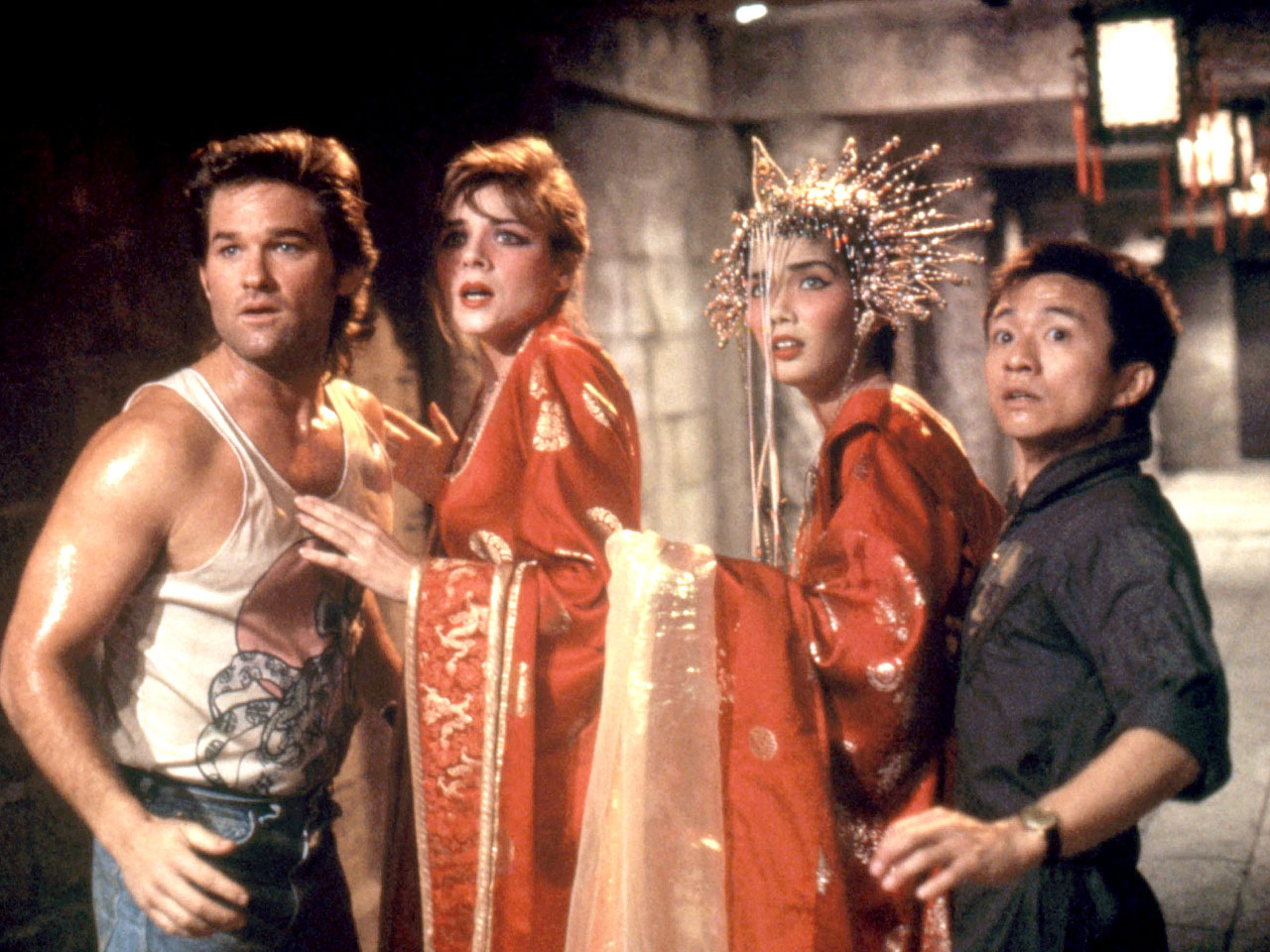
Big Trouble in Little China
If there was ever a poster child for a movie that found a second life in rentals and on cable, this is it.
Jack Burton (Kurt Russell) is a over-the-road trucker with a lot of thoughts on life and how important reflexes are. While making a delivery in Chinatown, he gets sucked into a situation with an ancient Chinese evil trying to regain its humanity, and all Jack really wants is to get his truck back.
John Carpenter wasn’t quite a household name, but with films such as Halloween, The Thing and Escape From New York to his name, people were taking notice. Teaming with Russell for another outing seemed like it would be another win, but this one proved just a little too odd for mainstream audiences. Once it got into our homes, however, everyone fell in love with it.
As Jack Burton always says, it’s a must-see for any 80s journey.
Where to watch: Available to stream.

The Great Mouse Detective
I had never seen it, and as Disney films go, I would have been fine keeping it that way.
Set in Longon in 1897, a young mouse named Olivia Flaversham witnesses her toymaker father get kidnapped. She seeks out Basil of Baket Street, also known as the Great Mouse Detective. Along with David Q. Dawson, recently returned from serving in the military in Afghanistan, the three of them try to stop Professor Ratigan from replacing the Queen.
It’s just a Sherlock Holmes story, but with mice. I didn’t find anything that compelling about it. It was pretty enough to look at, but the story just left me fairly empty.
Where to watch: Available to stream.

Howling II
I… have a lot of thoughts.
Following up on the end of the The Howling, Ben White (Reb Brown) buries his sister Karen White, and quickly learns she was a werewolf. He teams up with werewolf hunter Stedan Crosscoe (Christopher Lee) to take down Stirba (Sybil Danning), the queen of the werewolves who is about to celebrate her 1,000th birthday, and stop the spread of the werewolf curse.
On paper it sounds fine, in execution it is just… horrible. Poorly lit, horrible acting, low-grade effects, and costuming that leaves you more confused than anything else.
Avoid at all costs.
Where to watch: Available to stream.

Psycho III
I have to admit, so far these sequels haven’t been horrible.
Following up shortly after the vents of Psycho II, Norman (Anthony Perkins) is still hiding the body of Emma Spool, and having issues again with seeing “Mother.” He hires drifter Duane Duke (Jeff Fahey) to run the motel. He also meets Maureen (Diana Scarwid), a nun on the run after she accidentally kills one of her sisters. With a new woman in his life, Mother has some thoughts on what Norman should be doing.
In general I actually enjoyed this new outing in the franchise, although it feels it missed some opportunities at the end of the story of Norman and Maureen working together. What if Maureen had actually been the one manipulating Norman this time? There was another movie lurking in the background that sadly never gets broached.
What we did end up with, however, was entertaining.
Where to watch: Available to stream.

Under the Cherry Moon
This film was unfairly maligned.
Christopher Tracy (Prince) and Tricky (Jerome Benton) as wooing women in France in hopes of getting enough money to head back to Miami one day. When Christopher hears about Mary Sharon (Kristin Scott Thomas) inherting a trust fund of $50 million for her 21st birthday, she becomes his next mark, but little does he know how it will end for him.
Following Purple Rain, Prince could do no wrong in Hollywood and was given a blank check for his next film. Audiences and critics did not warm to this film as it wasn’t Purple Rain 2 and it lived with a bad reputation for years.
I hadn’t seen it in 35 years or more when I watched it for this report, and… I really enjoyed it. It’s over-the-top, but in the right way. Prince was clearly paying homage to the silent movie romance films, and it works for what it is. Is he a great actor? No. Does it work for this film? Yes.
Honestly, this may be one of the most enjoyable films I’ve had in this project in several weeks. It’s worth a reassessment.
Where to watch: Available to stream.
1986 Movie Reviews will continue on July 11, 2026, with Club Paradise.
-

 Georgia2 minutes ago
Georgia Agriculture Commissioner Tyler Harper calls on public to report yellow-legged hornet secondary nests
-

 Hawaii4 minutes ago
First Alert Forecast: Classic Hawaii trade wind weather
-

 Idaho4 minutes ago
‘Landman’ star Ali Larter says life in Idaho is ‘simpler’ after ditching Los Angeles
-

 Illinois16 minutes ago
Our Chicago: Celebrating America’s 250th birthday in Illinois
-

 Indiana19 minutes ago
Fever vs. Aces Prediction, Odds, Best WNBA Prop Bet for Sunday, July 5
-

 Iowa24 minutes ago
2027 Recruiting Class Shaping Up To Be Special One for Iowa State Football
-

 Kansas32 minutes ago
2026 K-State Football Early Opponent Preview, Game 6: Kansas
-

 Kentucky32 minutes ago
Recovery operations underway to find possible drowning victim on Kentucky Lake | NewsRadio 1230 AM/99.3 FM | Hopkinsville’s News Leader

