World
G7 Foreign Ministers Agree on Ukraine Policy Amid Tensions Over Trump Tariffs


Despite high tensions between the Trump administration and some of America’s closest allies over tariffs and Ukraine, foreign ministers from the Group of 7 industrialized democracies who were meeting this week in Canada forged common ground in a communiqué that glossed over many of their sharp differences.
Top diplomats from Canada, the host of the gathering, the United States, Britain, France, Germany, Italy, Japan and the European Union meeting at the idyllic resort town of La Malbaie in Charlevoix, Quebec, presented a cautiously united front, notably on Ukraine, a key point of divergence since President Trump took office.
In a statement released on Friday, the group affirmed its support for Ukraine’s sovereignty and committed to supporting the “political aspirations” of Israelis and Palestinians, although it did not mention support for a two-state solution.
Reaching some consensus on Ukraine and Russia was considered a feat given Mr. Trump’s public criticism of Kyiv, although the group’s language on the subject was less vehement than in past years.
Secretary of State Marco Rubio found himself among allies in difficult circumstances, especially with his Canadian hosts, who resent Mr. Trump’s talk of annexing their country and turning it into “the 51st state.”
That rhetoric, which loomed over the 48 hours that ministers spent together in Quebec, drew a sharp rebuke from Canada’s foreign minister, Mélanie Joly, who told reporters on Friday that she had told Mr. Rubio that “Canada’s sovereignty is not up to debate, period.”
“There’s no argument, there’s no conversation about it, there’s no need to talk about it,” she added. “You’re here, you respect us, you respect our sovereignty, you’re in our country, you respect our people. Period.”
Canada has also been more assertive in demanding that allies stand up for its sovereignty, but ministers in Quebec walked a fine line between supporting Canada and avoiding getting on the wrong side of Mr. Trump.
Annalena Baerbock, the German foreign minister, and Kaja Kallas, the top European Union diplomat, posted photos of themselves dressed in red and white, Canada’s national colors. “We’ve got your back,” their post, addressed to Ms. Joly, said.
Mr. Trump on Thursday threatened to slap 200 percent tariffs on European Union exports of alcohol, a message that went down badly with France and Italy, the bloc’s major alcohol-exporting nations among the Group of 7.
And more tariffs are looming on April 2, as Mr. Trump has promised a comprehensive reboot in the United States’ trade relationship with the world, applying what he calls “reciprocal” tariffs on trading partners globally.
At the center of the storm was Mr. Rubio, making his first appearance at an international summit since he became Mr. Trump’s top diplomat.
It was an awkward assignment for Mr. Rubio, given the anger and confusion over Mr. Trump’s policies among the officials at the meeting, and there were signs that he was not eager to spend more time with them than necessary. Mr. Rubio was notably absent from a Wednesday social event at which other ministers nibbled on s’mores and from another event on Thursday that featured Canadian maple taffy.
Complicating the situation for Mr. Rubio was the shadow of Mr. Trump’s talk of annexing the gathering’s host nation.
When asked by reporters on Monday about the president’s recent talk that a 1908 treaty delineating the U.S.-Canada border could be torn up, Mr. Rubio briefly seemed at a loss for words. He then dismissed the topic by saying that it was “not on the agenda” for the Group of 7 gathering.
Asked again on Wednesday about Mr. Trump’s threats, Mr. Rubio emphasized points of unity between the United States and Canada, adding: “It is not a meeting about how we’re going to take over Canada.”
Mr. Trump returned to the subject on Thursday, telling reporters in the Oval Office that “Canada only works” as an American state. The border treaty, he added, had created “an artificial line” that “makes no sense.”
On Friday, Ms. Joly and Mr. Rubio each made comments characterizing the relationship between their two countries in nearly identical ways: “We won’t let things that we don’t agree on stop us from agreeing on other things,” Ms. Joly said.
The group’s final statement affirmed Ukraine’s “territorial integrity and right to exist,” and referred to Russian “acts of aggression.” But it was milder than the G7’s previous leaders’ statement, in November 2024, which proclaimed “unwavering support for Ukraine for as long as it takes” and called Russia “the sole obstacle” to peace.
As he flew back from Canada, Mr. Rubio announced he was expelling the ambassador to the United States from South Africa, Ebrahim Rasool. Mr. Rubio wrote on social media that the ambassador was a “race-baiting politician who hates America” and Mr. Trump. He added that “we have nothing to discuss with him and so he is considered PERSONA NON GRATA.”
Mr. Rubio made his comments above a re-post of an article from Breitbart, a conservative news site, on remarks Mr. Rasool made on Friday at an institute in Johannesburg. The article highlighted Mr. Rasool saying Mr. Trump was leading a “supremacist” movement against “the incumbency.”
Mr. Rubio said on social media last month that he would not attend the meeting of top diplomats from the Group of 20 nations in South Africa, criticizing the South African hosts for having a focus of the meeting be on “solidarity, equality and sustainability.”
Mr. Trump has signed an executive order to help the resettlement in the United States of white South African Afrikaners farmers who have had their land taken by the government, even though that is not a widespread practice in South Africa. He also ordered the federal government to cut off all aid to South Africa.
Edward Wong contributed reporting from Washington



Published on
Hungary’s opposition Fidesz party has called for a demonstration on Thursday after Prime Minister Péter Magyar submitted a constitutional amendment to remove the country’s president, Tamás Sulyok.
ADVERTISEMENT

ADVERTISEMENT
Magyar, who won a landslide victory in April’s election, ending Viktor Orbán’s 16 years in power, has repeatedly called for the removal of the official appointed by his predecessor, whom he calls “Orbán’s puppet”.
Magyar’s amendment, filed on Saturday, states that “the mandate of the incumbent President of the Republic shall terminate on the day following the entry into force of the amendment to the Fundamental Law”.
The governing Tisza Party holds a supermajority in parliament, meaning the amendment is expected to pass. According to sources in the Hungarian parliament, the vote could take place as early as next week, but this has not been officially confirmed.
The constitutional changes would also remove four constitutional judges by setting their retirement age at 70, and limit parliamentary deputies to a 12-year mandate.
President Sulyok has said he has no intention of resigning, describing Magyar’s move as a threat to democracy.
“The question is whether this force will sweep away internationally recognised and required principles of the rule of law, as well as genuine representative democracy,” Sulyok said in a statement on Sunday.
Magyar pledged repeatedly during his election campaign to remove the president from office. He argues that Sulyok failed to fulfil his constitutional duties and did not stand up for opposition supporters during Orbán’s time in power.
“Viktor Orbán failed the Hungarian people, and Tamás Sulyok, whom he appointed, failed the Hungarian Republic,” Magyar said in June.
Fidesz has said the president’s removal would pave the way for tyranny, and has called for a demonstration on Thursday in support of Sulyok.
“The Tisza Party crosses all boundaries – human, moral and legal,” said Orbán. “Hungarian voters did not authorise this.”
The opposition argues that Sulyok was elected in accordance with the constitution, and that his removal would amount to personalised legislation.
A delegation from the Council of Europe’s Venice Commission, an advisory body specialising in constitutional affairs, visited Hungary last week and met both the president and government officials. Its findings have not yet been made public.
The European Commission has said it is monitoring the constitutional amendment process in Hungary.


NEWYou can now listen to Fox News articles!
One of the leading American institutes devoted to research on the Islamic Republic’s nuclear program sounded an alarm this week over the regime’s uninspected underground site in the Zagros Mountains.
Inspectors from the International Atomic Energy Agency (IAEA) have not been allowed to visit the secret site, known as Pickaxe Mountain.
The highly fortified facility is casting serious doubt on Iran’s willingness to abide by the terms of the memorandum of understanding (MOU) reached with the Trump administration. The United States, together with Israel, launched Operation Epic Fury Feb. 28, 2026, targeting Iran’s nuclear and missile capabilities.
Experts from the Washington-based Institute for Science and International Security (ISIS) argue that halting work at Pickaxe Mountain and allowing IAEA inspectors access would be a key good-faith measure to test whether Iran is prepared to abandon its pattern of deception.
OBAMA-ERA INSPECTION FLAWS IN IRAN COULD PERSIST AS EXPERTS WARN OF NUCLEAR BLIND SPOTS
A satellite image shows an overview of the Pickaxe Mountain tunnel complex in Natanz. (Vantor/Handout via Reuters)
Spencer Faragasso, a senior fellow with the group who covers Iran, North Korea, illicit trade, and nuclear issues, wrote on X: “Important update by us at @TheGoodISIS. The ongoing work at Pickaxe Mountain is deeply concerning. This work has continued steadily since at least 2020. In my view, this is a hedge by Iran in case negotiations fail — they will then have a nuclear facility in a late stage of construction. We assessed that Pickaxe is likely large enough to hold an enrichment plant.”
Iran has used facilities at Natanz, Fordow and Isfahan to enrich uranium, the key material for a nuclear weapons program.
Faragasso added, “If Iran is serious about negotiating, it should halt construction at Pickaxe Mountain as a token of good faith. But what can be expected from a regime as brutal and conniving as Iran’s?”
The institute posted a detailed analysis of new satellite imagery from late June 2026 showing continued activity at Pickaxe Mountain.
TRUMP ADMINISTRATION UNVEILS SWEEPING TERMS OF PROPOSED IRAN AGREEMENT
Vice President JD Vance prior to a meeting between the United States, Iran, Pakistan and Qatar at the Bürgenstock luxury hotel complex overlooking Lake Lucerne, Switzerland, June 21, 2026. (Fabrice Coffrini/Keystone via AP)
The institute wrote that “at Pickaxe Mountain, vehicle activity can be seen on the roads leading to the open set of Western tunnel portals, indicating that construction inside the tunnel complex, as well as hardening of the tunnel entrance, are ongoing. The MOU signed between the United States and Iran requires that Iran maintain the status quo, which should prohibit construction at any nuclear-related facility, including Pickaxe Mountain.”
In late June, the IAEA declined to answer a detailed Fox News Digital query on whether it would seek access to the Pickaxe Mountain facility. According to the satellite imagery obtained by the institute, “at Natanz, little activity can be seen. The access points to the below-ground enrichment halls have not been repaired.
“The personnel entrances remain destroyed, and vehicle entrances remain severely damaged. A single vehicle can be seen on the road outside of the Pilot Fuel Enrichment Plant (PFEP), which was destroyed in June 2025 but was later covered by Iran.”
As U.S.-Iran talks opened Sunday in Switzerland, and a dispute over who controls and monitors billions of dollars in potentially unfrozen Iranian assets emerged. (Fabrice Coffrini/Pool via Reuters)
The institute also reported, “As of June 29, 2026, there is no observed activity at Esfahan. The tunnel portals remain backfilled with dirt.” ISIS tracked developments at the Fordow site, buried inside a mountain north of the holy Islamic city of Qom.
“At Fordow, as earlier reported by the Institute, between May 10 and May 18, Iran added passive defensive measures in the form of earthen/rocky mounds and other objects on the roads leading to the tunnel entrances. The alternating placements of the piles/objects are very precise, which creates a series of chicanes, indicating they are not intended as obstructions but rather to prevent rapid ingress and egress by any vehicle toward the tunnels.”
CLICK HERE TO DOWNLOAD THE FOX NEWS APP
The institute added, “The June 21 Vantor image shows that the objects along the road remain there. The tunnel portals also remain backfilled with dirt” at Fordow.
Fox News Digital sent questions to the State Department and the Iranian Mission to the United Nations.
-

 Technology4 minutes ago
Fake Booking.com travel credit scam targets travelers
-
 Business11 minutes ago
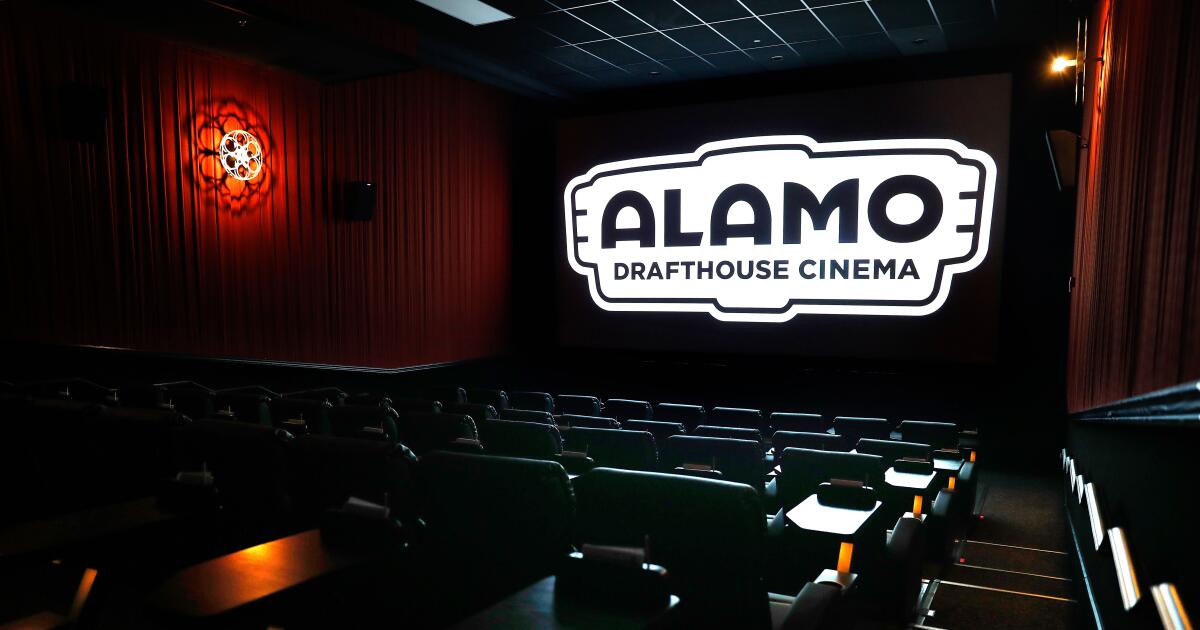
Many indie festival films struggle to get distribution. Alamo Drafthouse is trying to change that
-
 Entertainment14 minutes ago
AI actor Tilly Norwood to star in first movie
-
 Politics26 minutes ago
Trump says he disputed U.S. star player’s suspension, calling it ‘stain’ on World Cup
-
 Science29 minutes ago
14 propositions that could remake California taxes, housing, healthcare and elections
-
 Sports34 minutes ago
Lakers lose Rui Hachimura, who signs two-year deal with the Clippers
-

 World44 minutes ago
Hungary could vote to oust president as early as next week
-

 New York2 hours ago
How a Museum Security Guard and Artist Lives on $51,000 in Parkchester

