Hawaii
UH Hilo hosts conference, aims to revitalize Olelo Hawaii


HONOLULU (HawaiiNewsNow) – The University of Hawaii at Hilo is hosting a conference to revitalize the Hawaiian language.
On Monday and Tuesday, UH Hilo is hosting He Olelo Ola, an event that invites indigenous language specialists from around the world, providing a unique opportunity to observe instruction of Olelo Hawaii from preschool to the PhD level.
Experts will discuss the future of the Hawaiian language along with endangered languages worldwide.
This year’s theme, No Anei Ko Kakou Ola (our identity is from this place, connecting back to the homeland), highlights the link between olelo Hawaii revitalization and similar efforts among Native American and Indigenous communities globally.
Panel discussions will focus on supporting Hawaiian speaking communities and connecting with the Native Hawaiian diaspora.
Discussions will also highlight how UH Hilo prepares students to navigate life in communities where Indigenous languages remain minority languages in their own lands, similar to olelo Hawaii.
Known as the Hilo Field Study, participants will explore UH Hilo’s Hawaiian language college which is home to the nation’s only BA to PhD Olelo Hawaii medium program.
The tour will also include a visit to Nawahiokalaniopuu, the largest Indigenous language medium school in the U.S., where students receive a full preschool-through-12th-grade education entirely in Olelo Hawaii.
UH Hilo linguists said Hawaiian speaking communities in Hilo share many similarities with diaspora communities in large cities where families often have mixed racial and linguistic identities in an increasingly globalized world.
Copyright 2025 Hawaii News Now. All rights reserved.



Three convicted sex offenders were arrested on Hawaii Island last week for allegedly failing to comply with sex offender registry requirements.
Multiple law-enforcement agencies conducted checks in Kona on registered sex offenders who had been identified as potentially out of compliance with the state’s Sex Offender Registry laws, according the Department of the Attorney General.
As a result of the three-day operation, several individuals were brought back into compliance, and three West Hawaii men were arrested for allegedly failing to comply with the requirements.
The three men who were arrested are Joseph Debus, 56, of Kailua-Kona, Garth Coleman, 53, of Holualoa and Alexsandr Skelcey, 34, of Kailua-Kona.
Debus was convicted of second-degree sex assault in Hawaii in 1993 and sentenced to five years probation with a year in jail. Coleman was sentenced to 20 years in prison for first-degree assault in 2000 after a jury trial in Hawaii. And Skelcey was convicted in Michigan in 2012 of assault with intent to commit sex assault.
“Sex offender registration requirements exist to protect our communities and ensure law enforcement knows where convicted offenders are living,” Tom Alipio, chief of the AG department’s Investigations Division, said in a press release. “Compliance operations like this send a clear message that we will actively monitor the registry, investigate violations and work closely with our law enforcement partners to hold offenders accountable when they fail to meet their legal obligations.”
HPD Chief Reed Mahuna said, “Operations like this allow us to verify that offenders are maintaining strict compliance with registration laws and those who aren’t will be addressed immediately. We will continue to leverage these multi-agency partnerships to keep our island communities safe,”
Members of the public can look up publicly available offender information and subscribe to notifications at sexoffenders.ehawaii.gov/coveredoffender/.
Anyone with information regarding a registered sex offender who may be violating registration requirements is encouraged to contact the Department of the Attorney General’s Investigation Division at (808) 586-1240 or their local law enforcement.

A brush in North Kona, near the Ulu Wini Apartments, has closed a portion of Hina Lani Street, between Route 190 and Ane Keokalole Highway.
According to Hawai‘i Island police, the road is expected to be closed for the next three hours and motorists are advised to avoid the area.
Hawai‘i Fire Assistant Chief Chris Carvalho confirmed at least two engines, two brush trucks, Chopper 2 and a medic vehicle responded to the blaze that started in some bushes.
No evacuations or injuries have been reported at this time.
At 11:09 a.m., an AlertWest camera, installed by Hawaiian Electric in wildfire-prone areas, showed smoke billowing above the Keahuolu Courthouse. As of 12:06 p.m., that smoke appears to have dissipated.
This is a developing story. More information will be provided as it becomes available.
Hawaii
Chinese communist party member arrested in Hawaii on visa fraud charge | Honolulu Star-Advertiser

-
 Entertainment58 seconds ago
Lucas Museum to give free annual passes to South L.A. neighbors, host community preview day
-
 Lifestyle6 minutes ago
Meow Wolf taps famed L.A. animation house for its new Los Angeles venue
-
Politics13 minutes ago
Column: Trump decries ‘communism’ while his government takes ownership of companies
-
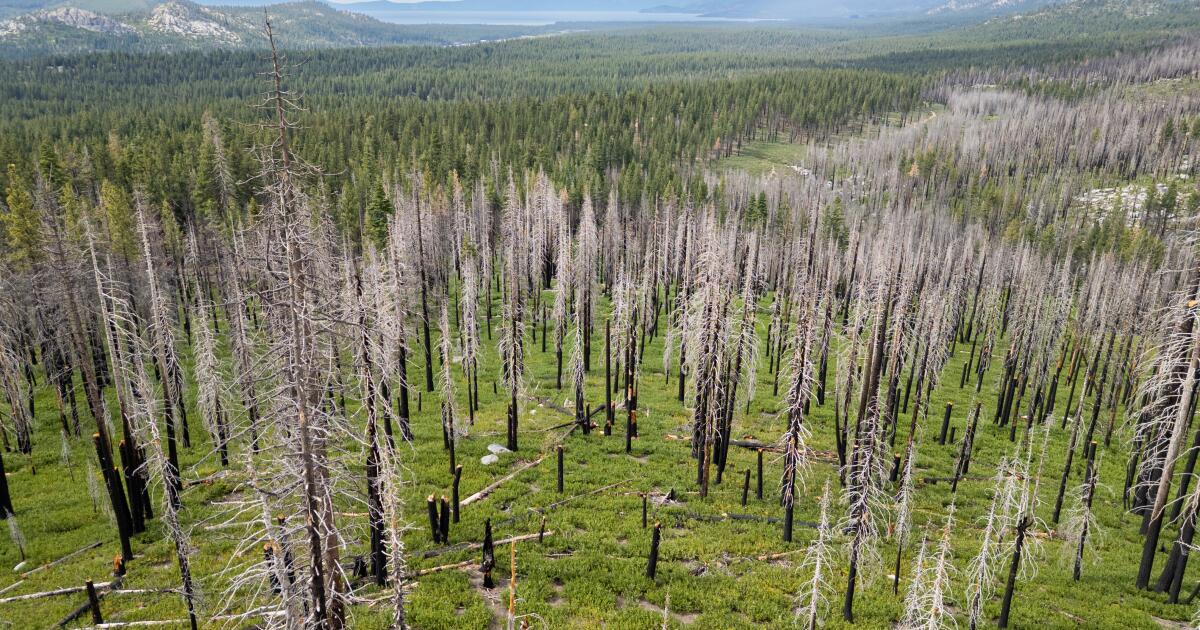 Science16 minutes ago
‘I’d rather my house burn down than get cancer’: Herbicide use upends California’s fight to save forests
-
 Sports21 minutes ago
Dodgers scheduled to visit White House in late July to celebrate 2025 World Series win
-

 World31 minutes ago
Former US Olympian pleads not guilty in DC reflecting pool vandalism case
-
 News58 minutes ago
Former Olympian pleads not guilty in reflecting pool vandalism charges
-

 Los Angeles, Ca2 hours ago
Heat advisory, beach hazards in effect as Southern California sizzles


