World
Trump’s Executive Order to End E.V. Subsidies Draws Pushback


If President Trump has his way, the auto industry’s transition to electric vehicles will soon slam into reverse. He will erase tax credits for electric-vehicle purchases, federal grants for chargers, and subsidies and loans to help retool assembly lines and build battery factories.
Executive orders issued by Mr. Trump on Inauguration Day amount to a sweeping repudiation of a centerpiece of former President Joseph R. Biden Jr.’s multibillion-dollar program to address climate change, which Republicans cast as a campaign to ban gasoline cars.
The orders also present a challenge to automakers that have invested billions of dollars in electric vehicles, in part because the Biden administration encouraged them to. But some of the orders appear to bypass Congress or federal rule-making procedures, which could make them vulnerable to lawsuits and even resistance from within the Republican Party.
While framed as a way to revive the American auto industry, the orders could cause U.S. carmakers to fall behind if they scale back their electric-vehicle programs while Asian and European automakers continue perfecting the technology, analysts say. Already, 50 percent of car sales in China are electric or plug-in hybrids, and Chinese automakers like BYD are selling more cars around the world, taking customers away from established car companies, including American manufacturers.
An executive order entitled “Unleashing American Energy” and signed by the president on Monday instructs federal agencies to immediately pause disbursement of funds allocated by Congress that were part of the Biden effort to push the auto industry toward vehicles with no tailpipe emissions.
Among other things, the funds helped states to install fast chargers along major highways and provided tax credits of up to $7,500 for buyers of new electric vehicles and $4,000 to buyers of used models. The credits effectively made the cost of buying some electric cars roughly on par with prices for cars with gasoline or diesel engines.
Mr. Trump also rescinded an aspirational Biden executive order that called for 50 percent of new vehicles sold in 2030 to be fully electric, plug-in hybrids or vehicles that run on hydrogen fuel cells.
And Mr. Trump said the administration would seek to revoke California’s authority to establish air-quality standards that are stricter than federal rules. That would have a broad effect. California is aiming for 100 percent of new-car sales to be electric by 2035, and some of its standards are copied by at least 17 other states.
“The impact of this will be significant,” said Shay Natarajan, a partner at Mobility Impact Partners, a private equity firm that invests in sustainable transportation.
If demand for electric vehicles flags, as it has in other countries like Germany that cut incentives, she noted, carmakers could be left with costly, underused electric-vehicle and battery factories.
“Federal funding for E.V. and battery manufacturing will be harder to access, increasing the risk of stranded capital for manufacturing projects already underway,” Ms. Natarajan said in an email.
Representatives of the fossil-fuel industry celebrated the president’s action, while environmentalists lamented what they said was a serious setback to efforts to cut greenhouse gas emissions and reduce urban air pollution caused by cars.
“This is a new day for American energy,” Mike Sommers, the president of the American Petroleum Institute, said in a statement, “and we applaud President Trump for moving swiftly to chart a new path where U.S. oil and natural gas are embraced, not restricted.”
Katherine García, a transportation expert at the Sierra Club, said: “Rolling back vehicle emission safeguards harms our health, our wallets and our climate. We will fight him at every turn of the road.”
But the end effect may not be as broad as the forceful language in Mr. Trump’s executive orders suggests.
Funds to encourage electric-vehicle sales and manufacturing were enshrined in legislation that the president cannot unilaterally repeal. Mr. Trump also cannot revoke rules that the Treasury Department and other government agencies established to determine how the money would be handed out merely with a stroke of the pen. Any attempt to short-circuit the laborious process of proposing new regulations that includes seeking comments from the public will almost surely invite credible legal challenges.
The Department of Energy has agreed to lend billions to carmakers like Rivian, which will receive $6 billion for a factory near Atlanta to produce electric sport utility vehicles. The loan agreements, some finalized in the waning days of the Biden administration, are binding contracts.
Much of the money has flowed to congressional districts in states like Georgia, Ohio, South Carolina and Tennessee where Republicans dominate local politics. Their representatives may hesitate to repeal laws that have brought their districts jobs and investment. That is a challenge for Republican leaders wrangling slim majorities in the House and Senate.
Ultimately, individuals and families will decide what cars they buy. Electric vehicles and plug-in hybrids are gaining market share not only because of subsidies, but also because they offer rapid acceleration and lower fuel costs. Cars that run on fossil fuels have been losing share, though that could change if financial incentives are removed from battery-powered cars and trucks.
The abrupt shift in political direction presents a quandary for automakers. Some may welcome promises by the president to rescind emissions and air-quality standards that force manufacturers to sell more electric cars than they might like. But elimination of federal subsidies could upset their financial planning when most are struggling to earn or increase profits.
The about-face on electric-vehicle policies adds to a climate of uncertainty and peril heightened by the president’s promise to impose 25 percent tariffs on goods from Canada and Mexico, which are major suppliers of cars and car parts to the United States.
The U.S. auto industry “will be shattered by tariffs on assembled vehicles or parts at this level,” Carl Weinberg, chief economist at High Frequency Economics, said in a note to clients Tuesday.
Some carmakers seemed to applaud the president’s actions, while others were noncommittal.
“President Trump’s clear focus on policies that support a robust and competitive manufacturing base in the United States is hugely positive,” Stellantis, which owns Dodge, Jeep, Ram, Chrysler and other brands, said in a statement.
Mary T. Barra, the chief executive of General Motors, congratulated Mr. Trump on Monday on X and said that the company “looks forward to working together on our shared goal of a strong U.S. automotive industry.”
There is no sign that Elon Musk — the chief executive of Tesla and head of what Mr. Trump is calling the Department of Government Efficiency — is using his influence to blunt the attack on electric vehicles. Tesla accounts for slightly less than half the electric cars sold in the United States, and almost all its vehicles qualify for $7,500 tax credits.
Four of the 16 cars and trucks that can be purchased with the help of that tax break are made by Tesla. G.M. is the only automaker that has more eligible models, at five. No other company has more than two qualifying vehicles.
Mr. Musk has previously said that the government should get rid of all subsidies and that Tesla would suffer less than other automakers. But analysts note that Tesla’s sales and profits would be hit hard if Mr. Trump successfully repealed or truncated the electric-vehicle tax credit, California’s clean-air waiver and other such policies.
Tesla did not respond to a request for comment.
During an appearance before Trump supporters in Washington on Monday, Mr. Musk, who is also the chief executive of SpaceX, exulted that the president had promised to send astronauts to Mars. “Can you imagine how awesome it will be to have astronauts plant the flag on another planet for the first time?” Mr. Musk said. He did not mention cars.



As Europe braces for hotter summers, cities are reopening rivers once written off as polluted waterways. From Paris to Copenhagen, local authorities are investing in cleaner, swimmable rivers to adapt to rising temperatures and meet citizens’ needs.
Marine Le Pen, the leader of France’s far-right political party, launched her fourth bid for the presidency on Wednesday. Her campaign rally comes a day after a court upheld her embezzlement conviction and shortened a ban on her eligibility to run for public office.

NEWYou can now listen to Fox News articles!
As Iran, Russia’s war with Ukraine and NATO’s defense spending dominate the organization’s summit in Ankara, one issue that has escaped the media glare is the increasingly antisemitic rhetoric coming from Turkish leaders.
As relations between Turkey and Israel continue to hit new lows, a war of words between the two nations has erupted.
In a July 2 interview with CNN Türk, Turkish Foreign Minister Hakan Fidan said Israel has “become a burden that humanity can no longer bear,” The Jerusalem Post reported.
Fidan also said Israel is representative of “humanity’s common problems,” and asked other countries to apply pressure to the Jewish State, according to Israel National News.
ISRAELI OFFICIAL SAYS EU SANCTIONS REVEAL ANTISEMITISM HIDING BEHIND ‘SOCIALLY ACCEPTABLE MASK’
Anti-Israel protesters rally in Istanbul, Turkey, Feb. 17, 2024, over the ongoing war between Israel and Hamas. (AP Photo/Khalil Hamra)
In a press statement, Israeli Foreign Minister Gideon Sa’ar called Fidan’s words “a clear call for genocide. The Jewish people know very well what happens when such words are allowed to go unchallenged. The first step on the road to genocide is dehumanization.
“This is a sentence that sounds very familiar to sentences from about 100 years ago,” Sa’ar added. “To speak about a people as a ‘problem for humanity.’ What do you do with a ‘burden that you can no longer bear?’” he asked.
Sinan Ciddi, a senior fellow at the Foundation for Defense of Democracies and director of FDD’s Turkey program, told Fox News Digital Fidan’s statement was “some of the vilest rhetoric to come out of any statesman since the Holocaust.”
Turkish President Tayyip Erdoğan speaks during a rally in solidarity with Palestinians in Gaza amid the ongoing conflict between Israel and the Palestinian Islamist group Hamas in Istanbul, Turkey, Oct. 28, 2023. (Dilara Senkaya/Reuters)
SIGN UP FOR ANTISEMITISM EXPOSED NEWSLETTER
Ciddi said escalated anti-Israel rhetoric in Turkey “goes all the way back to 2008,” when President Recep Tayyip Erdoğan “began the process of ripping apart the bilateral relationship between Israel and Turkey. But, after Oct. 7, it just went into overdrive,” he said. “I have never heard any Arab leader utter the words that Foreign Minister Fidan has said.”
Yet Erdoğan has condemned antisemitism; the Turkish Minute reported that he told Turkish religious minority representatives at an Ankara dinner in March that “just as Islamophobia is a crime against humanity, antisemitism is also a crime, an evil that cannot be considered reasonable or legitimate.”
Despite his recent condemnation, he and other ministers have continued with their rhetoric against the Jewish state.
In June, Turkish Interior Minister Mustafa Ҁiftҁi said the world would “witness the liberation of Jerusalem,” according to the Times of Israel.
WHO IS TURKEY’S RECEP TAYYIP ERDOĞAN? HOW NATO’S MOST UNPREDICTABLE LEADER KEEPS REINVENTING HIMSELF
In May 2021, the Times of Israel reported that Erdoğan called Israelis “murderers,” claiming they were “only satisfied by sucking their [victims’] blood.” At the time, the State Department spokesperson issued a strong condemnation of Erdoğan’s “antisemitic comments regarding the Jewish people,” calling them “reprehensible.”
In May 2025, Erdoğan invoked similar language, accusing Israel of being “a terror state that feeds on the blood, lives and tears of the innocent,” Israel National News reported.
Israeli Foreign Minister Gideon Sa’ar, right, and Israeli Ambassador to the U.N. Danny Danon speak to journalists ahead of a United Nations Security Council meeting at U.N. headquarters on August 5, 2025 in New York (Angela Weiss/AFP via Getty Images)
Anti-Israel sentiment in Turkey has infiltrated far beyond leadership. A Pew Research poll from June found that Turkey had the highest level of anti-Israel sentiment of any polled country, with 91% of the population holding “very unfavorable” views on Israel, 6% holding an “unfavorable” view, and just 1% expressing any favor of Israel.
In response to questions about whether the State Department plans to respond to antisemitic statements from Turkish leadership, a spokesperson told Fox News Digital that “Turkey is a longstanding and valued NATO ally, and we continue to engage on all aspects of our important and multi-faceted relationship.”
Ciddi said there are “numerous channels” for the State Department and Trump administration to reprimand Turkey for its unchecked hatred.
“The president could obviously pull aside a Turkish counterpart and demand an apology,” he explained, while the State Department could address the comments or place Turkey on a watchlist.
CLICK HERE TO DOWNLOAD THE FOX NEWS APP
NATO leaders participate in a summit in The Hague, Netherlands, June 25, 2025. (Handout/Latin America News Agency via Reuters Connect)
As the two-day NATO summit winds down in Ankara, Ciddi said Turkey “is going to try and overshadow anything else” and “promote itself as the sort of premiere NATO ally, so we need to watch out for Turkey’s whitewashing of its human rights record.
“We cannot safeguard our allies’ democratic norms, rights and practices if we don’t hold member states like Turkey accountable for the threats that it presents.”
The Turkish Embassy in Washington, D.C., did not respond to Fox News Digital’s request for comment.
-
 Entertainment55 seconds ago
Justin Baldoni and wife break silence after ‘It Ends With Us’ legal battle with Blake Lively
-
 Lifestyle4 minutes ago
A meal with an animated Mona Lisa? Immersive dining goes high tech — but will L.A. eat it up?
-
 Politics9 minutes ago
Nexstar launches its first digital subscription service with The Hill Insider, aimed at political junkies
-
 Science16 minutes ago
Not everyone is leaving California. A new commercial battery maker just landed in Sacramento
-
 Sports19 minutes ago
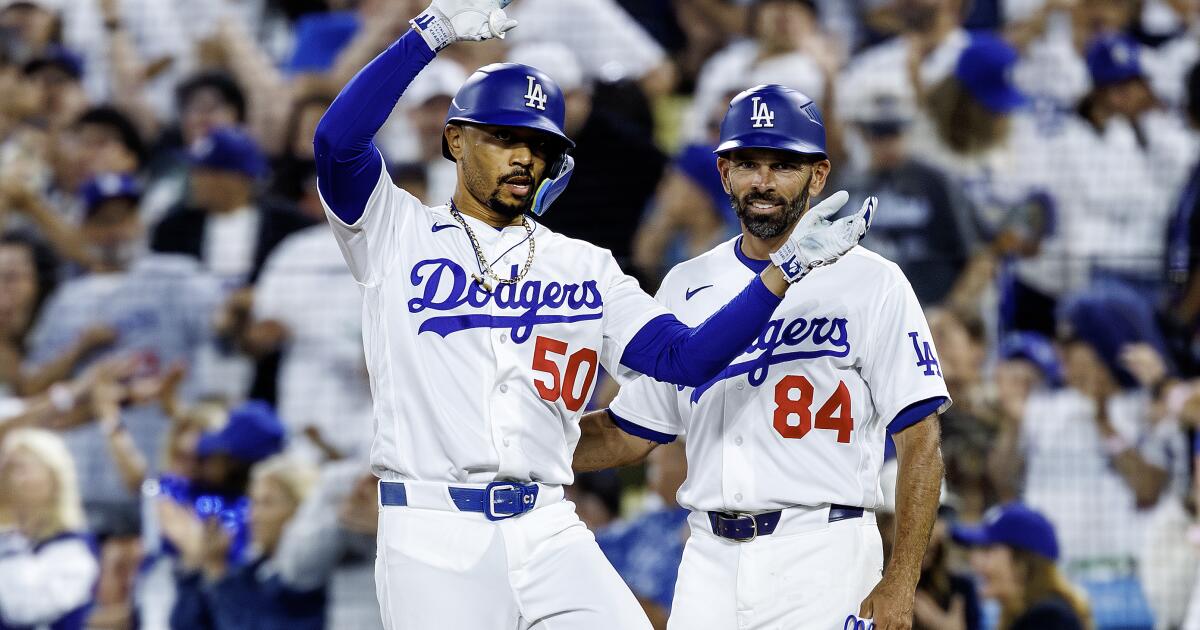
Mookie Betts’ eighth-inning single gives Dodgers the win over the Rockies
-
World31 minutes ago
From sewers to swimming sites: how Europe's cities reclaim their rivers
-

 News1 hour ago
Three more people charged with damaging Reflecting Pool after Trump’s multimillion-dollar restoration | CNN Politics
-

 Los Angeles, Ca2 hours ago
Loved ones search for missing 34-year-old Southern California woman

