West
Scott Peterson arrest months after Laci disappeared Christmas Eve may have been strategic: former homicide cop

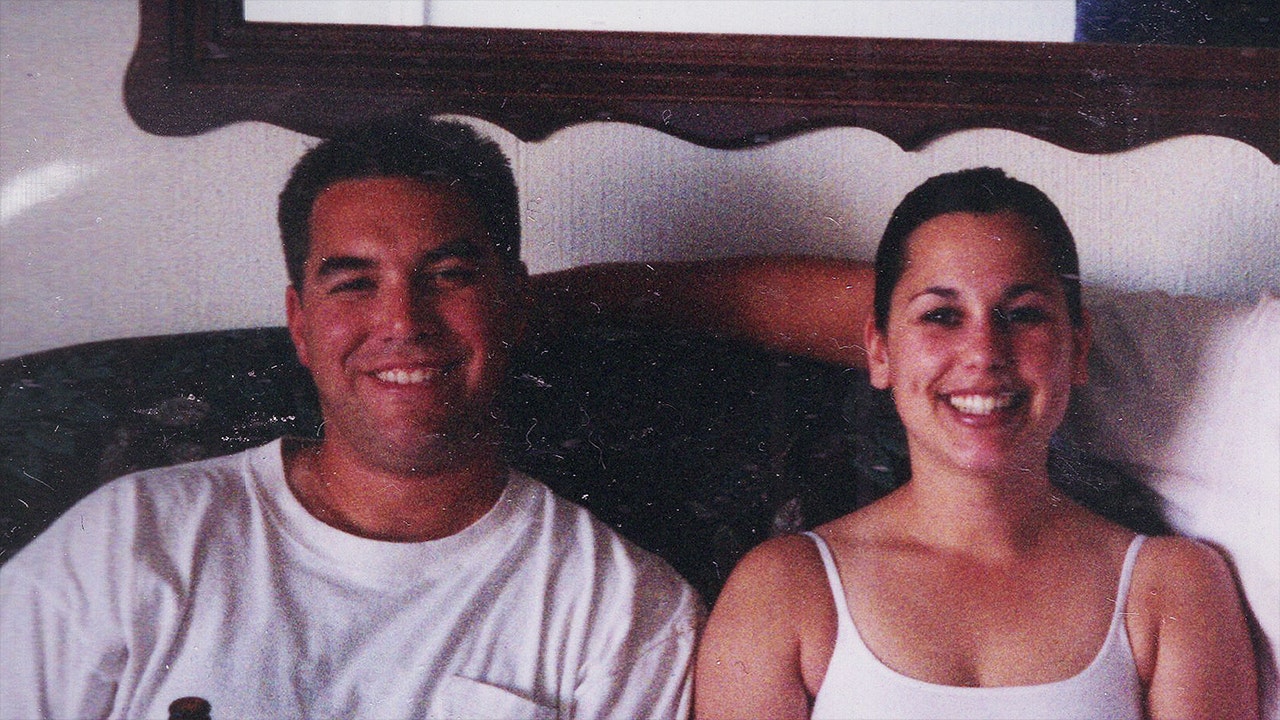
Laci Peterson, 27, disappeared on Christmas Eve, 2002, and her husband, Scott Peterson, was charged with murder, just days after her remains were found months later.
Law enforcement officers don’t always wait to find a body before bringing a murder charge, though, like in the cases of missing Texas realtor Suzanne Simpson and missing Massachusetts real estate executive Ana Walshe. Fox News contributor and former Washington, D.C., homicide detective Ted Williams explained why investigators sometimes pursue charges before a body is found.
As authorities continue to search for Simpson, a 51-year-old mom of four who disappeared more than two months ago, her husband, Brad Simpson, remains behind bars, accused of killing his wife of 22 years. Unlike in the Peterson case, law enforcement did not wait to find Suzanne’s remains before charging Simpson with murder.
“Homicides are like a puzzle,” Williams told Fox News Digital. “Investigators are forever putting together pieces of the puzzle, and once they feel that they have enough evidence – circumstantial evidence or physical evidence – they will then move forward.”
SUZANNE SIMPSON’S DNA FOUND ON MURDER SUSPECT HUSBAND’S SAW THAT CAN CUT METAL
Missing Texas mom Suzanne Simpson is pictured with her husband Brad Simpson. (Facebook/Suzanne Simpson)
Scott Peterson and Laci Peterson in a still photo appearing in the docuseries “American Murder: Laci Peterson.” (Courtesy of Netflix)
Laci Peterson was seven-and-a-half months pregnant at the time she vanished on Christmas Eve in 2002 from the Modesto home she shared with Scott, sparking a widespread search for the mom-to-be. Four months later, in April 2003, a pedestrian found her unborn son’s decomposed body in the San Francisco Bay, and authorities found Laci’s remains in the Bay the following day.
Within a week of the discoveries, authorities arrested and charged Scott Peterson with two counts of capital murder in the deaths of his wife and unborn son.
“I think in the case of Scott Peterson, they were still gathering evidence . . . they wanted to wait, and they had time on their side. And while gathering the evidence, they were able to make a very concrete case against Scott Peterson,” Williams said.
FOLLOW THE FOX TRUE CRIME TEAM ON X
The former homicide detective explained why, in cases like Peterson’s, law enforcement might wait until a body is found before bringing a homicide charge, elaborating on the risk involved in charging an individual too soon.
“Investigators have to get it right the first time,” he said. “Once a person is charged with murder, then they are put on trial, and if they are found not guilty and later found to have actually committed the murder, they can’t be charged a second time because of what we define in this country as double jeopardy.”
Double jeopardy refers to a clause in the Fifth Amendment to the U.S. Constitution, which prohibits anyone from being prosecuted twice for the same crime.
WHAT SCOTT PETERSON’S RECENT COURT WIN COULD MEAN FOR HIS YEARSLONG QUEST FOR FREEDOM
Scott Peterson, left, was convicted of murdering his wife and unborn son. (REUTERS/Lou Dematteis LD/MR, California Dept. of Corrections)
Williams said investigators must gather enough evidence to sustain a murder charge, given that they only have “one shot.”
“That’s the key . . . investigators realize that the evidence in order to go forward with a murder charge has to be strong,” he added.
“Prosecutors realize that they only get one bite of the apple,” Williams said. “If a jury comes back and finds the person not guilty of the crime of murder, and they later subsequently find evidence that shows that the person did, in fact, commit the murder . . . because of double jeopardy in our country…they cannot retry that person again, that that person will have gotten off with the killing.”
In another homicide investigation in Massachusetts, Ana Walshe, a mother of three young children and a real estate professional who worked in Washington, D.C., disappeared on New Year’s Day 2023 and was reported missing a few days later. Though her body was never recovered, her husband, Brian Walshe, was charged in his 39-year-old wife’s murder.
TRIAL DATE SET FOR BRIAN WALSHE, ACCUSED OF MURDERING MISSING REAL ESTATE EXECUTIVE WIFE
Brian and Ana Walshe raise a toast on their wedding day in the lounge of L’Espalier in Boston, Massachusetts on Monday, Dec. 21, 2015. (Obtained by Fox News Digital)
Ana Walshe holds her three children in an October 2022 Instagram post. (Ana Walshe/Instagram)
Williams explained why, unlike with the Peterson investigation, authorities in both the Simpson and Walshe cases did not wait to find the victims’ remains before bringing murder charges against the suspects.
“Over a period of time, if investigators realize that they are not going to find or come up with a body, but that they believe that they have enough physical evidence to move forward, they will move forward, and they will present that to a prosecutor, and that prosecutor will make a decision as to whether he or she wants to go forward with charges,” he said.
On Dec. 3, Brad Simpson was indicted on two first-degree felony charges – murder and aggravated assault with a deadly weapon causing serious bodily injury to a family member. He was also indicted on charges of tampering with a corpse, two additional counts of tampering with physical evidence, and possession of a prohibited weapon.
SIGN UP TO GET THE TRUE CRIME NEWSLETTER
Suzanne and Brad Simpson allegedly fought after a night out at The Argyle in San Antonio, Texas.
“In the case of Suzanne Simpson, it appears as though investigators have come up with physical as well as circumstantial evidence to show that she is no longer here. And as a result of that, they have moved forward,” Williams said.
Suzanne Simpson’s DNA was reportedly found on a “reciprocating saw” that Brad Simpson is accused of hiding, according to indictment records obtained by Fox News Digital and KABB reporting. Authorities said there are no signs of Suzanne being alive since her husband allegedly assaulted her on Oct. 6, and that this has been verified by her cellphone records, financial records, family, friends and co-workers.
A neighbor reportedly saw Simpson assault his wife the night of her disappearance and later heard screams coming from the woods nearby, while the couple’s five-year-old child told a school counselor that on the evening of Oct. 6, her father allegedly had “pushed her mother against the wall, hit (physically) her mother on the face and hurt her mother’s elbow inside their residence” and also “turned off her mother’s phone because they were fighting,” according to the affidavit.
GET REAL-TIME UPDATES DIRECTLY ON THE TRUE CRIME HUB
The home of Suzanne and Brad Simpson in San Antonio, Texas, Tuesday, Nov. 12, 2024. Suzanne Simpson disappeared under suspicious circumstances. (Kat Ramirez for Fox News Digital)
Investigators tracked Simpson’s unusual behavior in the days after his wife vanished, including shutting down his phone, driving with suspicious items in the bed of his truck, going to a dump site and cleaning his truck at a car wash.
“There is a bottom line and a common thread,” Williams told Fox News Digital. “Among all of these cases . . . they happened in various jurisdictions, and those jurisdictions handle homicides differently, but all homicides are based on the evidence . . . that investigators over a period of time are able to come up with.”
Fox News’ Audrey Conklin contributed to this report.
Read the full article from Here

San Francisco, CA
Crash on freeway in Millbrae leaves driver dead after reportedly overturning multiple times, CHP says

A driver died Thursday evening after reportedly overturning multiple times and being ejected from the vehicle in Millbrae, authorities said.
The California Highway Patrol said the crash happened around 7 p.m. on southbound Highway 101 at Millbrae Avenue.
Officers said they received a report that a vehicle had overturned multiple times and that an occupant was possibly ejected.
At the scene, officers found a man, who was determined to be the driver of a white Toyota Camry, lying in the road with major injuries. He was taken to a hospital where he later died, officers said.
It was determined that a second vehicle was involved in the crash and no one was injured in the second vehicle.
The CHP said the driver of the Camry was not wearing a seatbelt.
Three lanes of southbound Highway 101 were closed for an extended period.

The Denver Nuggets are running it back with at least one free agent from last year’s team. According to Shams Charania of ESPN, the Denver Nuggets have re-signed point guard Tyus Jones.
Free agent guard Tyus Jones has agreed to a one-year deal to return to the Denver Nuggets, sources tell ESPN. Jones played a reserve role after joining Denver on the buyout market last season, and enters his 12th NBA season as his agent Kevin Bradbury of LIFT Sports Management… pic.twitter.com/OxPTfX8C7l
— Shams Charania (@ShamsCharania) July 2, 2026
Jones played 11 regular season games for Denver last year and got into 3 post-season contests as well. The Nuggets are desperately lacking in point guards who can handle the rock, especially after they decided not to pick up the fourth-year option on fellow point guard Jalen Pickett. Denver liked Jones and his ability to handle on-ball pressure better in the playoffs, and obviously feel there is utility in having him on the 15-man roster for his passing acumen and mistake avoidance despite being a target at just 6 feet tall. They did not draft a point guard, so it’s possible Jones is the first PG off the bench for the Nuggets – but in recent years they’ve relied on players like Bruce Brown to shoulder some of those duties as well even if they’re not pure point guards, so it remains to be seen just how much court time Jones is going to get.
His 5:1 assist-to-turnover ratio in his career points to his high floor in ball security though, and the Nuggets have proven time and again over the past several years that they can be truly great if they don’t have silly turnovers. Jones comes back to the Mile High looking to help the Nuggets minimize their mistakes so they can maximize their talent.
Welcome back, Tyus!

Quentin Mosby apparently has decided he’s better off playing his high school basketball on the shores of the Gulf Coast rather than just up the street from Lake Washington.
At IMG Academy, rather than the Lakeside School.
In South Florida, rather than North Seattle.
On Thursday, multiple basketball websites reported the 6-foot-2 Mosby, after two years at academic-minded Lakeside, will transfer and play his final two seasons at sports-centric IMG in the coastal community of Bradenton.
It appears Mosby simply needed a step up in basketball competition after averaging 30.4 points per game for Lakeside as a sophomore and continuing his high-scoring ways with Seattle Select on the Under Armour All-Star circuit this summer at a 24.5 clip.
The forseeable drawback to this arrangement is the University of Washington basketball program, which made him a scholarship offer last month, will now have to conduct a long-distance courtship of this savvy player rather than just head to a local gym.
NEWS: 2028 4⭐ Quentin Mosby will transfer to IMG Academy (FL) for his junior season of high school, sources told @LeagueRDY.
Mosby currently leads the UAA U17 in scoring and has picked up offers from Utah, Georgia Tech, Washington and Stanford amongst others.
A major stock… pic.twitter.com/3v7rjB1ZnX
— Sam Kayser (@KayserHoops) July 2, 2026
Mosby is clearly a mature player with the ball in his hands, able to go to the hoop with authority as well drain 3-pointers from around the perimeter.
Yet he largely was a one-man show at a school that counts its most famous alums as Microsoft founders Bill Gates and Paul Allen, Batman actor Adam West, McCaw Cellular founder Craig McCaw, Washington Governor Booth Gardner, Space Needle owner David Skinner and Arizona Diamondbacks outfielder Corbin Carroll.
Typical of his dominance in the 3A Metro League, Mosby came up with a 40-point, 10-assist performance in Lakeside’s 83-77 overtime victory over Franklin this past January.
His father Dre Mosby reportedly played for Spokane’s John Rogers High School and led the Greater Spokane League in scoring at 20-plus points per game in 1997 after moving with family members from Southern California. He’s now a Seattle gym owner and a fitness trainer.
So good at such a young age, this young Mosby just keeps getting more offensive-minded, showing no reluctance at all to take on older players. He holds offers from Georgia Tech, Stanford, Seattle University, Utah and Weber State, with others such as Gonzaga making contact.
So now, if all goes as planned, it’s on to Florida to see where that will take his game and then whether he’ll come back to play his college basketball in his hometown.
Follow
-

 News19 minutes ago
Bessent on Trump’s crypto earnings: “I don’t think there’s an appearance problem”
-

 Los Angeles, Ca2 hours ago
Boy, 17, with autism accused in murder of 4-month-old girl at Claremont daycare
-

 Detroit, MI2 hours ago
Brief rally not enough for Tigers vs Rangers as win streak ends at 3
-

 San Francisco, CA2 hours ago
Crash on freeway in Millbrae leaves driver dead after reportedly overturning multiple times, CHP says
-

 Dallas, TX2 hours ago
Paige Bueckers, Azzi Fudd do the usual in Hartford, win. This time with Dallas Wings
-

 Miami, FL2 hours ago
World Cup-inspired art exhibit transforms Miami’s Wynwood with interactive soccer experience
-

 Boston, MA2 hours ago
Stairlift brings relief to residents stuck in building with broken elevator
-

 Denver, CO3 hours ago
Free agent point guard Tyus Jones re-signs with the Denver Nuggets – Denver Stiffs

