Virginia
Take a Moonlit Trip Into a Wild Shenandoah Valley Cave


Moonlight falls bright and dappled through the cedars as we shimmy into a narrow passage beneath the overhang of a hillside boulder that, in the shaky glow of my 13-year-old daughter Zoë’s headlamp, looks like the probable home of a rogue mountain lion.
“Don’t worry, I’ve been in here a thousand times and can assure you there are no lions, tigers, nor bears,” echoes the voice of Outdoor Adventure Experiences guide, Derek Young, 60, from the opening.
“Famous last words,” I tell Zoë as we maneuver into a long craggy tunnel that opens to five, six, then ten feet high as we go. Inside the air is a chilly 54 degrees and wet. The walls and floors glisten with moisture and otherworldly limestone formations that seem to have oozed or bubbled into place then hardened. For the next hour, we climb, crawl, creep, or repel up, down, and forward through a subterranean maze of natural staircases, knee-deep springs, jagged ledges, pits, tunnels, and thin passages that open here and there onto cavernous rooms filled with stalactite or stalagmite pillars that gleam eerie and spectacular in the beam of our headlamps.
We reemerge muddy, elated, and panting onto the starry, moon-bright Bridgewater hillside about two-and-a-half hours later. “Quite a different experience from a visit to Luray, huh?” chuckles Young.
The veteran spelunker has been leading small-group guided tours—night or day—through wild caves in the Shenandoah Valley and eastern West Virginia for more than 35 years. Most entrances sit on private lands or those managed by the National Forest Service and require special permissions or permits to access. While the karst systems* boast features and formations similar to those in show caves like Luray Caverns or Grand Caverns, these are totally undeveloped. There’s been no digging or blasting to open up corridors; there are no paved walkways, handrails, electric lights, or formal staircases. Excursions are physically demanding, last two to five hours, and range in ability level from beginner to expert.
“I don’t do this to get rich,” says Young. “I do it because I love it,” adding that the caves are precious natural resources, and “I want to introduce people to them and help them appreciate something beautiful they probably didn’t even know was here.”

Young was raised in Manassas. He was introduced to caving as a first-year student at James Madison University by a local pastor.
“He took me to this very spot,” says Young. An adventure similar to ours left him “blown away.” He remembers thinking, “This is the coolest thing ever,” and begged the pastor: “‘Please, please, please take me to every cave you know about!’”
The experience ignited a lifelong passion. Young explored five wild caves with the pastor then looked for more. He studied geology and took drives through mountain areas searching for limestone cliffs, outcroppings, and caps. When he spotted promising features, he’d stop at a post office, country store, or at nearby homes to ask about caves.
“Believe it or not, that’s how I found probably 80 percent of the caves I’ve been in,” says Young, who’s explored about 30 noteworthy systems in Virginia, West Virginia, and Kentucky to date. He founded Outdoor Adventure Experiences in 1988 and now does about 50 private tours a year in 14 different caves, in addition to offering guided canoeing, kayaking, and rafting trips—mostly throughout the Shenandoah Valley and Alleghany Highlands. While he enjoys leading adventures for adults, kids and teens are his favorite.
Back in the Bridgewater field, Zoë beams. And almost on cue, she begs me to take her on another trip.
“You know, geologists say there are likely as many unexplored caves in Virginia as there are ones we know about,” Young tells her. He says it fills his heart with joy to know she could be the first to crawl or step foot in one of them. OutdoorAdventureExperiences.com
This article originally appeared in the October 2024 issue.



CLARKSBURG, W.Va. (WBOY) — West Virginia has plenty of state symbols, be it the black bear as the state animal, the cardinal as the state bird or the rhododendron as the state flower, but did you know that the Mountain State also has its own official gun?
The Hall Flintlock Model 1819 was first manufactured in Harpers Ferry by John H. Hall in 1811 and was adopted by the United States Army in 1819, making it the first breech-loading rifle ever adopted by a country’s military.
-

Model 1819 Hall Breechloading Rifle presented by Congress to Gustavous A. Bird for his participation in the Battle of Plattsburgh 9/11/1814 by John C. Bird via the Smithsonian Institution -
Model 1819 Hall Breechloading Rifle presented by Congress to Gustavous A. Bird for his participation in the Battle of Plattsburgh 9/11/1814 by John C. Bird via the Smithsonian Institution


All of this information is listed in Senate Concurrent Resolution 7, which was introduced and passed during the 2013 West Virginia Legislative session, and officially recognizes the Model 1819 as the official firearm of the State of West Virginia.
On top of being created in West Virginia, the resolution also points out that the rifle saw use during the Civil War, an event that directly led to West Virginia’s statehood.
While having an officially recognized state firearm may seem far-fetched, West Virginia is not the only state that has one. As a matter of fact, a fifth of the states in the country have officially designated a state firearm, including West Virginia’s neighbors in Kentucky and Pennsylvania.

CHARLOTTE, N.C. — In this world of college football, with the transfer portal and recruiting battles, bad blood is present more than ever before between head coaches.
That’s not the case between the Virginia Tech head coach and Clemson head coach Dabo Swinney, however. In fact, Franklin revealed at ACC Kickoff on Thursday that the two are actually close friends, dating back to their time at the Nike trip that various coaches take over the summer.
“Dabo’s my guy,” Franklin said on Thursday. “We go way back. We’ve been on the Nike trip for a long time. His wife and my wife are friends.”
The long-time Penn State head coach is making the move to the ACC after being fired from the Nittany Lions in October. 12 seasons of being with the program had Franklin hold a 44-21 record against top 10 opponents, an impressive record for a new conference foe of Swinney’s.
But when that trip comes around, there’s a camaraderie between Swinney and Franklin and both of their wives. In fact, the two hang out with each other instead of the other coaches at times. It simply comes to an “edgy” time in college athletics that raises tempers.
“I’m going to be honest, I wouldn’t say we’re necessarily like the type of people that love a lot of other coaches and a lot of other programs,” Franklin said. “It’s hard when you just compete year-round.”
On Swinney’s end, there are a few who could immediately come to mind among Clemson fans. Perhaps the most recent would be Ole Miss coach Pete Golding, who played the most significant role in the tampering of former linebacker Luke Ferrelli.
It’s a select list of coaches who make the good side of the Tigers’ head coach, and Franklin is certainly on that list. On the other hand, Hokies’ head coach has Swinney on his own shortlist.
“Obviously, tremendous respect for what he has built at Clemson and what he’s done at Clemson, and what he’s done for the ACC,” he said.
The two will see that close relationship face off at Memorial Stadium this upcoming season. Clemson will host the Hokies on Oct. 24 in what could be a potential title-eliminator for the ACC Championship.
Of course, the last game that we’ve seen the Tigers play in was against Franklin’s former team in Penn State at the Bad Boy Mowers Pinstripe Bowl. That game ended in a 22-10 contest that saw a foundation of Franklin players end Clemson’s season in disappointment.
Swinney will see many of those players once again in October, including starting quarterback Ethan Grunkemeyer, in that contest. The anticipated Hokie starter recorded 260 yards and two passing touchdowns on the Tigers in the Bronx that day.
Although friends become foes, another ACC coach has given Swinney his flowers for what he’s been able to do for the conference. In the upcoming moments, Franklin will look to prepare his team to prove itself on one of the biggest stages in the ACC, while Swinney looks to put his team back at the top of a conference he’s dominated for over 15 years.
Follow

MARTINSVILLE, Va. (WSET) — Extreme drought conditions in parts of Virginia have prompted an emergency drought warning for a wide swath of the region, including Bedford, Campbell, Charlotte, Franklin, Halifax, Henry, Mecklenburg, Patrick, Pittsylvania and Roanoke counties, along with the cities of Danville, Roanoke, Salem and Martinsville.
The governor has warned that if conditions worsen, she will activate mandatory nonessential water-use restrictions.
In Martinsville, city leaders have issued a voluntary water conservation notice and are urging residents and businesses to cut back where they can. The request comes as local businesses that rely heavily on water say the drought is already affecting day-to-day operations.
SEE ALSO: Botetourt County residents adjust daily routines as voluntary water restriction continues
John Hughes, owner of John’s Car Wash, said the dry conditions have hit his business hard in recent weeks. “For the last 3 weeks, it’s been hitting pretty hard. We done three yesterday and haven’t done anything today with the drought and hot weather. Yeah, I’m really concerned about it,” Hughes said.
Restaurants are also feeling the strain. David Kitzmiller, an owner of Be Wiched, said water is essential for routine tasks such as washing dishes and preparing some menu items.
“We use a lot of water for washing dishes and some of our recipes if they limit us in anyway defiently can’t produce and its a scary aspect,” Kitzmiller said.
Kitzmiller added that cutting back is not always realistic for businesses that must meet sanitation needs. “Not really feasible for a business that depends solely relies on water to wash their dishes, so that can’t definitely be an impact there,” he said.
City leaders emphasized that the conservation request is voluntary for now, but they are encouraging everyone to do their part by taking shorter showers, turning off the faucet when it is not in use, washing only full loads of laundry, and limiting outdoor watering whenever possible.
-

 Los Angeles, Ca7 minutes ago
LADWP begins long-term repairs after West Hollywood water main rupture
-

 Detroit, MI31 minutes ago
Livestream: Mayor Sheffield, Detroit health chief to address wildfire smoke threat
-
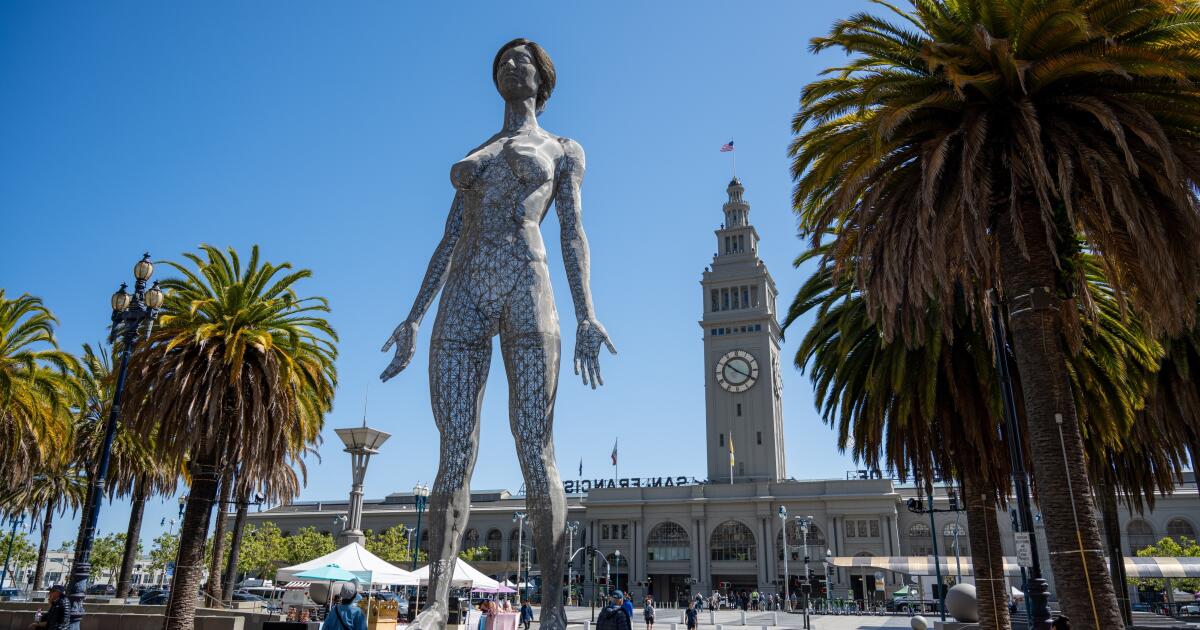 San Francisco, CA43 minutes ago
A sculpture of a giant naked woman goes on sale in San Francisco. Bring a crane
-

 Dallas, TX49 minutes ago
No ‘straight answer’: Why Pioneer Cemetery is the latest battleground at City Hall
-

 Miami, FL55 minutes ago
TSA hosts news conference ahead of World Cup third place match at Miami Stadium
-

 Boston, MA1 hour ago
ICE Boston arrests Barbados national during targeted operations in Attleboro
-

 Denver, CO1 hour ago
Denver Broncos training camp is 2 weeks away
-

 San Diego, CA1 hour ago
Daily Business Report: July 17, 2026, San Diego Metro Magazine

