California
In special session, California lawmakers try to balance taking on Trump with problems like cost of living

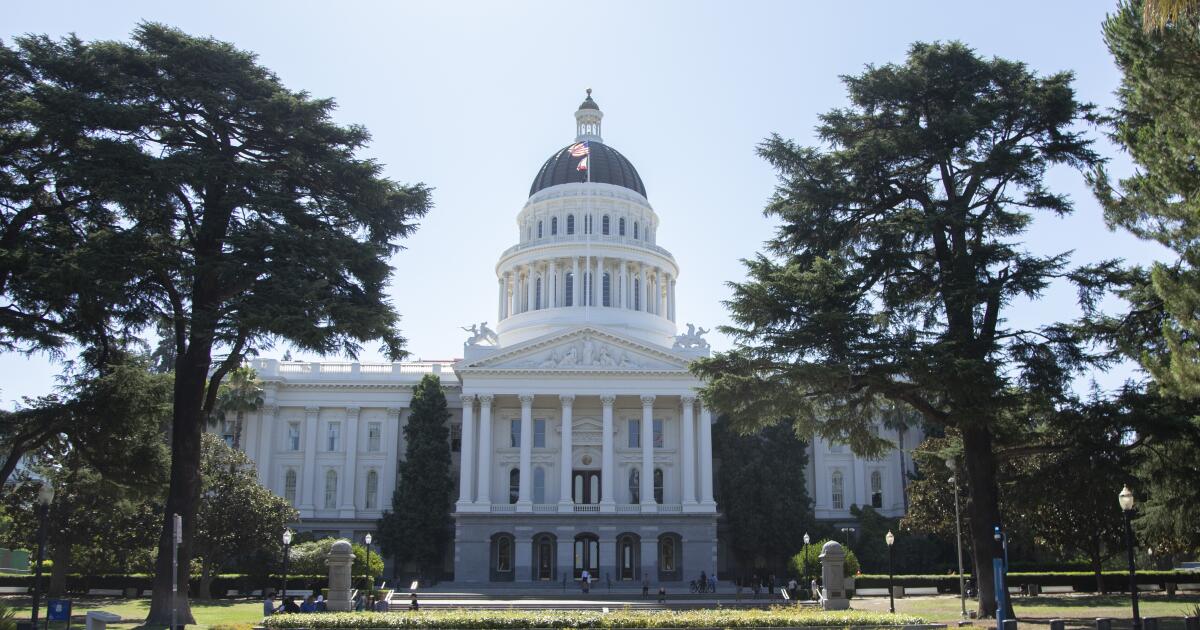
SACRAMENTO — California lawmakers met at the state Capitol Monday to devise a plan to shield the state from President-elect Donald Trump’s conservative policies, including his vows to repeal environmental protections and initiate mass deportations.
The goal of the special legislative session called by Gov. Gavin Newsom is to establish a $25 million fund for legal challenges to federal polices that the governor said could “harm the state,” including when it comes to civil rights, abortion access and immigration.
But with Trump’s return as president, the politics of leading the resistance are trickier as Democrats assess how they lost the White House and grapple with why support for Trump in California increased since the 2020 election despite his felony convictions, pattern of lies and role in the insurrection at the U.S. Capitol after his loss to President Biden.
Legislative leaders — under pressure to prove that the special session is more than just political theater, as alleged by some Republicans — tried to balance their concerns about a second Trump term with state issues important to constituents such as the rising cost of living.
As the Legislature welcomed 35 new members — including a record number of women — Democrats, who maintain a supermajority, said the legal preparation was a necessary precaution. During Trump’s first term as president, California filed more than 100 lawsuits against the federal government, winning protections for undocumented people who came to the U.S. as children and securing clean air rules.
“If Washington, D.C., refuses to tackle climate change in the coming four years, mark my word that California will continue to lead as we always have,” Senate Pro Tem Mike McGuire (D-Healdsburg) said on the Senate floor Monday. “Because here in the Golden State, we fight to lift up every person, no matter your background, no matter your skin color, who you are, who you love and how you identify.”
As lawmakers introduced bills that tighten up abortion rights and further affirm California as the Trump antithesis, California leaders were more tempered in their messaging and put their focus on bipartisan pocketbook issues.
“Our constituents don’t feel that the state of California is working for them,” Assembly Speaker Robert Rivas (D-Hollister) said Monday, pointing to last month’s election, in which voters rejected progressive backed measures and revoked prison reform laws.
Rivas reduced the limit of bills allowed to be introduced and requested that all proposals focus on “affordability and prosperity.”
The speaker vowed to continue to protect Californians from any federal overreach targeting their rights.
“If LGBTQ people come under attack, if hard-working immigrants are targeted, if women’s reproductive freedom is threatened, we will fight back with everything we have,” Rivas said.
California Atty. Gen. Rob Bonta said if the Legislature approves the legal fund, it will be used to pay attorneys and other staff ready to take action in court immediately if Trump does anything the state believes is unlawful.
The proposed $25 million is “a start,” Bonta said.
“If there are no cases for us to bring because the Trump administration is acting completely lawfully, we won’t use any of it. We don’t expect that, based on what he did in the past — what he has said he will do,” Bonta said at a news conference in Sacramento on Monday. “Under Trump 2.0, we believe we will need to use all of it.”
California has been here before. Eight years ago, the legislative session kicked off with a similar motto, as Democratics rushed to thwart Trump’s policies, introducing bills that aimed to protect immigrants from deportation threats similar to proposals coming from the administration now.
“Californians do not need healing. We need to fight,” then-Assembly Speaker Anthony Rendon (D-Paramount) said in December 2016, calling Trump’s appointments then “white nationalists and antisemites” who “have no business working in the White House.”
Republicans tried to block the approval of the special session that kicked off Monday, painting it as an out-of-touch strategy and urging Democrats to avoid panic and resist egging on the federal government.
“The people of California sent a clear message during this election season. They are done with the majority party’s failure to address the most important issues we face and they are ready for a return to commonsense, solution-focused governing,” said Senate Minority Leader Brian Jones (R-Santee). “We are thrilled to see Californians standing up against the Democrat machine and declaring, ‘enough is enough.’”
Even Newsom — an ever-willing Trump foe — has shifted his messaging after Republicans won the White House, Senate and House in the November election. In a statement on Monday, the governor said the special session is about “setting this state up for success” regardless of who is in the White House.
“We will work with the incoming administration, and we want President Trump to succeed in serving all Americans,” Newsom said. “But when there is overreach, when lives are threatened, when rights and freedoms are targeted, we will take action.”
Assemblymember Isaac Bryan (D-Los Angeles) introduced a bill on Monday that would repeal taxes on car seats and baby wipes — a bill he said “pro family” Republicans should support. He said members of his party need to “slow down” as they promise to lead the Trump resistance, and focus on policy that helps people instead of talking points.
“I think it’s different this time. No one’s growing their base attacking Trump right now,” Bryan said. “You can do real policy work and not just play politics with it.”

California
Mother, daughter found ‘alive and well’ after going missing on Southern California hiking trail

A mother and daughter who went missing after going for a hike on a difficult trail in San Bernardino County’s San Gorgonio Wilderness have been found “alive and well,” the sheriff’s department announced Friday.
The San Bernardino County Sheriff’s Department told KTLA they were uninjured and “walked out on their own.”
Krystal Meyers, 41, and her daughter Alexis Meyers Martinez, 21, were hiking on the Vivian Creek Trail Thursday but didn’t return, according to the San Bernardino County Sheriff’s Department.
They were last known to be at the 10,300-foot elevation mark above the High Creek switchbacks at 11 a.m., according to the San Gorgonio Search and Rescue team.
The Vivian Creek Trail is widely considered one of the more strenuous and hazardous routes in the San Gorgonio Wilderness.
The U.S. Forest Service says it’s the shortest and steepest route to the summit of Mount San Gorgonio and requires experienced mountaineering skills.
Officials did not provide any further details about the circumstances surrounding their disappearance.

BAKERSFIELD, Calif. (KBAK/KBFX) — The California Highway Patrol is urging drivers to stay focused on the road as they head out for Fourth of July celebrations.
The holiday weekend can be a dangerous time on our roads as millions of drivers are expected to travel.
CHP Officer Jorge Toro joined Eyewitness News Mornings to share how drivers can stay safe behind the wheel.
Officer Toro also highlighted the importance of sober driving over the holiday.
BE THE FIRST TO COMMENT
He says anyone hosting a party should make sure all of their guests get home safely, ensuring anyone who may be impaired doesn’t drive.

California is returning a stretch of rugged Mendocino County coast to the Indigenous nations whose ancestors once stewarded its shores.
State transportation officials recently approved the transfer of Blues Beach and the surrounding bluffs to Kai Poma, a nonprofit founded by representatives of the Sherwood Valley Band of Pomo Indians, Round Valley Indian Tribes and Coyote Valley Band of Pomo Indians.
The transfer of 136 acres just south of the community of Westport will mark the first time land managed by the California Department of Transportation has been returned to Indigenous tribes.
“This is beyond huge,” said J. Carlos Rivera, tribal chairman of the Sherwood Valley Band of Pomo Indians. “It’s enormous from our tribal perspective that we are basically obtaining the land that our people once lived on before colonization.”
California purchased the swath of rocky cliffs and windswept shoreline in the 1960s to expand the construction of Highway 1 and create a scenic viewpoint for highway travelers, according to a California Coastal Commission report.
More recently, public access has been largely unregulated, and summer weekends and holidays have drawn large groups who camp and party on the beach, at times driving through sensitive areas, damaging cultural sites and leaving behind trash, the report states.
Kai Poma plans to conduct cultural and archaeological resource studies and environmental surveys and then prepare a resource management plan for the property, according to planning documents. The nonprofit and the Coastal Commission have drafted a public access management plan that states the land will be open from sunrise to sunset.
Rivera described the entire property as a sacred site. The coastal waters are used by tribal people for seaweed and abalone gathering, and the shores host youth cultural camps, he said. “Protecting the land, it has a deeper meaning for us because we’re connected to the land,” he said.
The effort to acquire the land took years — and required a change in state law. Caltrans lacked the ability to transfer land to tribal governments until 2021, when Gov. Gavin Newsom signed a bill sponsored by state Sen. Mike McGuire (D-Healdsburg) that enabled the transfer, according to a news release issued at the time. The law also bars commercial activity on the property and requires public access be maintained.
“With 136 acres now officially transferred into tribal stewardship, one of the most spectacular stretches of the Mendocino Coast will be forever protected,” McGuire said in a statement.
“This agreement, the first of its kind in California, gives these three dynamic Native American tribes the rightful opportunity to reclaim sacred lands and cultural traditions on this special piece of earth. And it’s about damn time.”
The land transfer cleared its last regulatory hurdle June 26 with the approval by the California Transportation Commission, said Neil Thapar, an attorney who works as an advisor and legal consultant to Kai Poma. Caltrans staff will next record the deed transferring the title from the state of California to Kai Poma, which is expected to happen any day, he said.
-

 Massachusetts3 minutes ago
American flags
-

 Minnesota10 minutes ago
New LeBron James Rumors Reveal Wolves Free-Agent Pitch to NBA Icon Amid ‘Ramped Up’ Contract Pursuit
-

 Mississippi13 minutes ago
Mississippi Lottery Mississippi Match 5, Cash 3 results for July 3, 2026
-
Missouri17 minutes ago
Missouri Lottery Mega Millions, Pick 3 winning numbers for July 3, 2026
-
Montana25 minutes ago
Montana Lottery Mega Millions, Big Sky Bonus results for July 3, 2026
-

 Nebraska27 minutes ago
NEBRASKA REACTS Survey Results: Husker Football Plus a Concert? Here’s What You Said
-

 Nevada33 minutes ago
Exclusive | California’s illegal fireworks trade fueled by nefarious interstate pipeline
-

 New Hampshire40 minutes ago
Fireworks Near Me: July 4th Events Around Concord For 2026

