Midwest
New look at 'Mad Butcher’s' murder victims could uncover more about mysterious serial killer

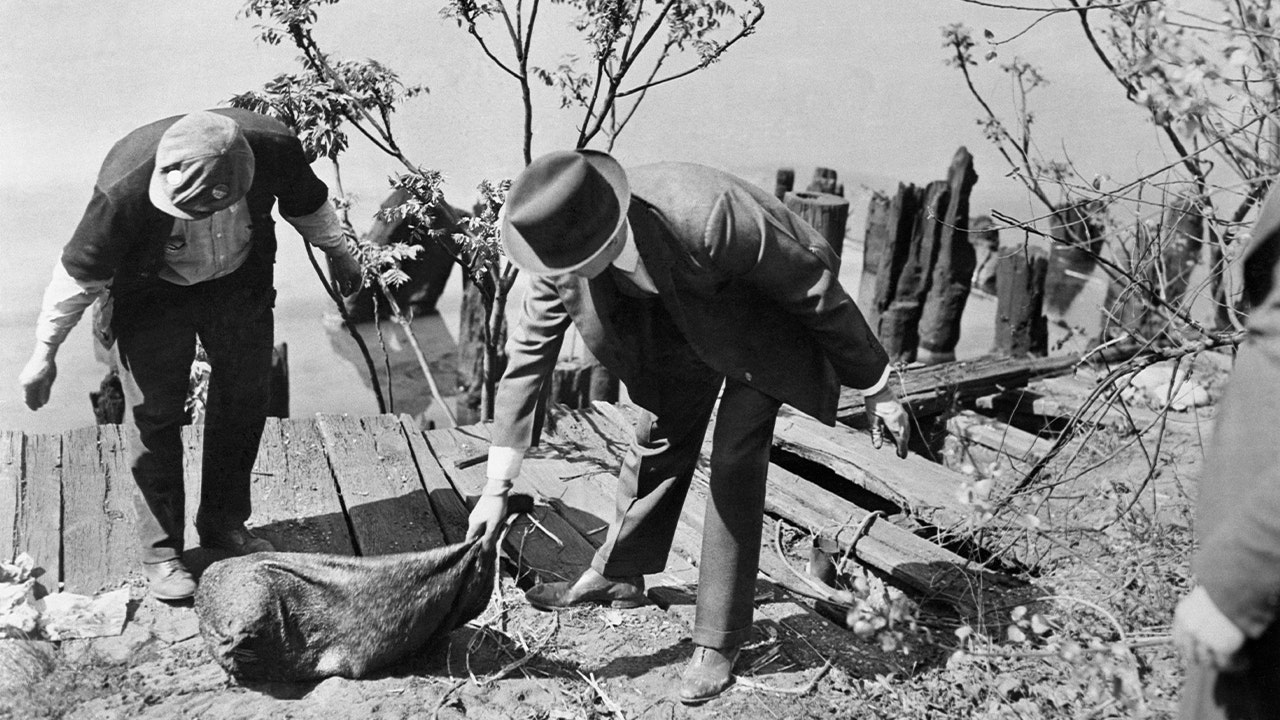
Authorities in Cleveland are pairing with a nonprofit to identify body parts left behind by one of America’s oldest known serial killers using genetic genealogy almost a century after they were found.
The “Torso Killer,” also known as the “Mad Butcher of Kingsbury Run,” murdered at least 12 people between 1935 and 1938, according to the Cleveland Police Museum website. But recent research has suggested there could have been 20 or more total victims, Cleveland.com reported.
Just two of the killer’s victims were identified. The bodies were rarely found whole, often missing heads that were never recovered.
Those who did have heads, which were located a distance from the rest of their bodies, according to the Cleveland Police Museum, are believed to have been drifters who weren’t recognized in disseminated sketches.
MOM OF NEW YORK GIRL WHO WAS KIDNAPPED RESCUED OVER 47 HOURS REFLECTS ON YEAR SINCE TERRIFYING EXPERIENCE
Cleveland Police, puzzled since 1934 about the identity of Cleveland’s “Mad Torso Murderer,” had a new problem to solve when bridge tenders on the murky Cuyahoga River dragged from the water five portions of a woman’s body. (Bettmann/Getty Images)
Two victims tied to the unknown killer were positively identified, according to the museum, as Edward Andrassy and Florence Polillo.
Andrassy, a 28-year-old white man, was found decapitated, emasculated, wearing only socks and drained of blood in July 1939. His fingertips identified him, the museum said.
HOUSES OF HORROR: MURDERS LEAVE HAUNTS PASTS IN THESE HOMES
Police searching the crime scene found the corpse of a woman, likely in her 40s, who was never identified. Parts of Polillo, a waitress and barmaid, were found wrapped carefully in newspaper in January 1936. The rest of her body, with the exception of her head, was recovered in another location 10 days later. She was also identified by her fingerprints.
Dental records allowed for the “unofficial” identification of a third victim, Rose Wallace. But, according to the museum, police were unable to make a definitive determination.
Although an arrest was never made, police believe a surgeon named Francis E. Sweeney, who would have had the expertise and equipment to dismember bodies, was responsible for the killings. He was questioned by police for a week but never confessed, according to the Cleveland Police Museum. However, after he committed himself to an institution, the murders came to a halt.
The DNA Doe Project, a nonprofit organization that carries out and helps fund genetic genealogy testing in cold cases, has paired with the Cuyahoga County Medical Examiner’s Office in an attempt to put names to some of the 10 unidentified victims.
CRIME SCENE CLUE COULD HELP SOLVE YOUNG DAD’S CAMPING TRIP MURDER AS KILLER REMAINS ON THE LOOSE
Detectives and a coroner examine bones of two murder victims found at the East 9th Street Lakeshore Dump Aug. 16, 1938, in Cleveland. (Bettmann/Getty Images)
Genetic genealogist CeCe Moore told Fox News Digital there is a “very high likelihood that the DNA Doe project will be successful in identifying these individuals.”
SIGN UP TO GET TRUE CRIME NEWSLETTER
“In 1938, there was no such thing as DNA testing. It was not even something they probably could have imagined. And, so, the advancements that we’ve seen over the almost 100 years are just unfathomable to the people who originally worked on this case, undoubtedly,” she said.
“You know, in the ‘80s is when DNA started being looked at for criminal applications. In the ’90s is when it really started coming into use in the United States. But it really took quite a while before it was accepted. I mean, we can look just back at the O.J. Simpson case, for instance, you know, where the jury didn’t understand DNA well enough to really weigh it as heavily as we would today. So, it has really come leaps and bounds. And then, in the last six years, we’ve had another leap forward with investigative genetic genealogy.
“Direct to consumer DNA testing was introduced in the year 2000 by a company called Family Tree DNA. It was the first time that we could test our own DNA to learn more about our family tree and our genetic heritage,” Moore explained. “That became what is now called genetic genealogy. That is the marriage of using DNA testing and genealogical records.
“So people have been genealogists for decades, for hundreds of years, really using records to build family trees. And we’re really fortunate today that we have billions of records online that are digitized so most of us can build our family trees way back in time from the comfort of our own home.”
GET REAL-TIME UPDATES DIRECTLY ON THE TRUE CRIME HUB
Thus far, two of the bodies have been exhumed. One, which WOIO-TV characterized as the killer’s “most famous” victim, is known as the “Tattooed Man.”
Left near railroad tracks in the summer of 1936, the unknown man’s head was found about 1,500 feet away from his body. Even after police fingerprinted him and widely disseminated pictures of his six tattoos, including the names “Helen” and “Paul,” according to the Cleveland Police Museum, he was never identified.
At the Great Lakes Exposition of 1936, more than 100,000 people saw a display featuring a plaster cast of the man’s head and images of his tattoos, but no one reported recognizing him.
The second body that will be tested was found on Cleveland’s lakefront in the summer of 1938 and is believed to be the killer’s sixth victim.
Kingsbury Run is indicated on this map by dots locating 10 of the 11 torso murders, which occurred there in the 1930s. (Bettmann/Getty Images)
A single anonymous donor is funding the lab costs, DNA Doe told CBS News. Although the remains may be contaminated or degraded because of their age, Jennifer Randolph, the nonprofit’s executive director of case management, said that DNA Doe has identified older remains before.
“We’ll figure out who the DNA relative matches are. We’ll build their trees, find those common ancestors and, then, you know, build forward or maybe look a little bit back, to see who the unidentified individual is,” Randolph told WOIO-TV.
“So, there could still be living people who know, you know, that these are individuals who were missing from their family and nobody knew whatever happened to them,” Randolph said. “And regardless of that piece, especially given how, you know, they died, they deserve the dignity and justice of being memorialized with their names.”
Moore told Fox News Digital scientists will face a host of challenges working with such old remains.
“We are dealing with degradation, potential contamination from bacteria. It’s very difficult to work on what we would call ‘ancient remains,’” Moore explained. “When you work with very old cases, you are almost certainly dealing with degradation where you can’t analyze all the DNA.
“Some of that DNA is going to be missing. And then, with contamination, we see bacteria actually inserts its own genome into the human genome. And, so, you have to have skilled scientists who are able to remove that bacterial genome, separate it from the human genome before we can perform our investigative genetic genealogy.”
FOLLOW THE FOX TRUE CRIME TEAM ON X
But even older remains have been identified using the practice, Moore said, citing at least one victim of the 1921 Tulsa Race Massacre whose family was finally notified in July of this year.
According to Fox 59, World War I veteran C.L. Daniel was identified as one of the victims of the 1921 tragedy, and his family was notified 103 years later.
“I have some inside information on that, and it’s been really, really difficult to get the DNA that is needed to perform investigative genetic genealogy from those very old remains,” Moore said. “But there has been some success, and it’s taken sometimes multiple rounds at the lab before they finally were able to get that DNA that was viable for our work. That’s pretty comparable, and it’s been very difficult.”
Read the full article from Here


CLEVELAND, Ohio (WOIO) – Cleveland is gearing up to host the Cleveland Marathon Sunday.
Over 13,000 runners are expected to participate in the half marathon and full marathon.
The marathon and half marathon will begin at 7 a.m., and the 26.3 After Mile Party will be from 8 a.m. to 2 p.m.
Here are the road closures starting Sunday at midnight:
- St. Clair Avenue – from East 6th Street to Ontario Street – until 3:00 p.m.
Here are the road closures starting Saturday at 6 a.m.:
- St. Clair Avenue – from East 6th Street to West 9th Street – until 3:00 p.m.
- West 9th Street – from St. Clair Avenue to Superior Avenue – until 3:00 p.m.
- Superior Avenue – from West 9th Street to East 18th Street – until 7:30 a.m.
- East 9th Street – from Superior Avenue to Euclid Avenue – until 7:30 a.m.
- Euclid Avenue – from East 9th Street to East 22nd Street – until 7:30 a.m.
- East 22nd Street – from Euclid Avenue to Payne Avenue – until 8:00 a.m.
- Payne Avenue – from East 22nd Street to East 18th Street – until 8:00 a.m.
- East 13th Street – from Payne Avenue to Chester Avenue – until 8:00 a.m.
- Chester Avenue – from East 13th Street to East 12th Street – until 8:00 a.m.
- East 12th Street – from Chester Avenue to Superior Avenue – until 8:00 a.m.
- East 18th Street – from Superior Avenue to Lakeside Avenue – until 8:00 a.m.
- Lakeside Avenue – from East 18th Street to West 3rd Street – until 8:30 a.m.
- East 9th Street – from Lakeside Avenue to Erieside Avenue – until 8:30 a.m.
- Erieside Avenue – from East 9th Street to West 3rd Street – until 8:30 a.m.
- West 3rd Street – from Erieside Avenue to Lakeside Avenue – until 9:00 a.m.
- West 9th Street – from Lakeside Avenue to Front Avenue – until 9:00 a.m.
- Old River Road – from Front Avenue to Carter Road – until 9:00 a.m.
- Scranton Road – from Carter Road to Starkweather Avenue – until 9:30 a.m.
- West 14th Street – from Kenilworth Avenue to Buhrer Avenue – until 9:30 a.m.
- Buhrer Avenue – from West 14th Street to West 11th Street – until 9:30 a.m.
- West 11th Street – from Buhrer Avenue to Clark Avenue – until 9:30 a.m.
- Clark Avenue – from West 11th Street to West 14th Street – until 9:30 a.m.
- Kenilworth Avenue – from West 14th Street to West 11th Street – until 9:30 a.m.
- West 11th Street – from Kenilworth Avenue to Starkweather Avenue – until 9:45 a.m.
- Starkweather Avenue – from Scranton Road to Jefferson Avenue – until 9:45 a.m.
- Jefferson Avenue – from Starkweather Avenue to Professor Avenue – until 9:45 a.m.
- Professor Avenue – from Jefferson Avenue to Fairfield Avenue – until 9:45 a.m.
- Fairfield Avenue – from Professor Avenue to West 11th Street – until 9:45 a.m.
- Abby Avenue – from West 11th Street to West 19th Street – until 10:00 a.m.
- Lorain Avenue/Carnegie Bridge – from West 20th Street to Ontario Avenue – until 10:30 a.m., RTA traffic only
- Ontario Avenue – from Carnegie Avenue to Huron Road – until 10:30 a.m. with northbound traffic maintained, one lane southbound maintained
- West Huron Road – from Ontario Avenue to Superior Avenue – until 10:30 a.m.
- Detroit Avenue – from Superior Avenue to Lake Road Street – until 2:00 p.m., hard closure until noon then partial as necessary for runner right of way
- Shoreway – from East 55th Street to West Boulevard – from 2 a.m. until 3 p.m.
- Edgewater – from West Boulevard to West 115th Street – until 2 p.m.
- West 115th Street – from Edgewater to Lake – until 2 p.m.
- Lake – from West 117th Street to Shoreway Entrance until 2:30 p.m.
- Lake – from Detroit Avenue to West Boulevard – until 11:15 a.m.
- Clifton Blvd. – from Lake to West Boulevard – until 11:15 a.m.
- West Boulevard – from Clifton Blvd. to Edgewater – until 2 p.m.
Rolling closures are approximate and based on the time the last runner passes through an intersection. Closures may be adjusted as necessary.
Below is the information for parking.
- Public lots will be available throughout downtown, see clevelandmarathon.com for the full list
- Notes:
- Lot access may be restricted during the races
- Check Rates and hours in advance
- Notes:
- The only parking available at the Huntington Garage will be surface parking on Level 3
- Ride RTA to skip the traffic
Here is where you can cheer on the runners:
Copyright 2025 WOIO. All rights reserved.


WABASH, Ind. (WISH) — A motorcyclist is dead in Wabash County after striking a utility pole in the early hours of Saturday morning.
State police say just before 3 a.m., officers with the Wabash County Police Department attempted to stop a motorcycle after the rider ran a red light.
The motorcycle did not stop and “fled at a high rate of speed.” Just moments later, the motorcycle traveled off the roadway near the intersection of Miami Street and Walter Street, and struck a utility pole.
Despite life-saving efforts, the rider was pronounced dead at the scene.
The person’s name has not yet been released by the Wabash County Coroner’s Office.
State police are actively investigating the incident, and no further information has been released.
-

 Washington, D.C2 minutes ago
National Moral Monday: Prophetic Witness Outside the White House | Repairers of the Breach
-

 Cleveland, OH8 minutes ago
Plan ahead: Road closures and where to watch the Cleveland Marathon
-

 Austin, TX14 minutes ago
Texas Softball Keeps Cruising in Austin Regional, Shuts Out Wisconsin
-

 Alabama20 minutes ago
‘They may draw racist maps, but we are the south’: thousands rally in Alabama for Black voting rights
-

 Alaska26 minutes ago
Royal Caribbean Changes Disembarkation Port for Alaska Cruise – Cruise Industry News
-

 Arizona32 minutes ago
Arizona high school band to perform at America’s 250th birthday parade
-

 Arkansas38 minutes ago
Courtney Deifel press conference: Arkansas softball coach, players recap 9-1 win over USF at NCAA Fayetteville Regional | Whole Hog Sports
-

 California44 minutes ago
Governor’s Race: Katie Porter speaks 1-on-1 on strengths, criticisms and priorities for California