Louisiana
Louisiana High School Football Scores – Week Four


Here are the high school football scores from Week 4 for the state of Louisiana:
Airline 47, Evangel Christian Academy 42
Alexandria 43, Opelousas 40
Amite 29, St. Helena 26
Ascension Episcopal 42, Rosepine 8
Avoyelles 46, Buckeye 0
Barbe 21, Carencro 13
Bastrop 28, St. Frederick Catholic 27
Baton Rouge Catholic 31, West Monroe 14
Belle Chasse 17, Bonnabel 6
Bowling Green 27, Columbia Academy, Miss. 14
C.E. Byrd 35, Ehret 14
Calvary Baptist Academy 56, D’Arbonne Woods 7
Captain Shreve 53, Benton 35
Central – B.R. 27, Cecilia 0
Chalmette 36, Booker T. Washington 6
Claiborne 46, Union Christian Academy 0
Covenant Christian Academy 45, Hannan 3
Covington 28, Northshore 0
De La Salle 10, St. Charles Catholic 0
DeQuincy 56, Lakeview 0
Delcambre 43, Vinton 42, OT
Denham Springs 20, East Ascension 17
Destrehan 39, East St. John 16
Donaldsonville 48, East Iberville 8
Dutchtown 49, Prairieville 0
E.D. White 60, Ellender 0
Evadale, Texas 34, Acadiana Christian 6
Franklinton 61, Fontainebleau 13
Glenbrook 36, Cedar Creek 16
H.L. Bourgeois 42, Patterson 0
Hahnville 51, Terrebonne 32
Haynesville 51, Plain Dealing 0
Holy Savior Menard 15, Abbeville 14
Homer 32, North Webster 22
Huntington 56, Haughton 27
Iota 48, Pine Prairie 7
Iowa 41, Wossman 18
Jeanerette 16, Loreauville 15
Jena 46, Winnfield 0
Jennings 35, Northwest 14
Jesuit 17, Brother Martin 5
Kaplan 37, Breaux Bridge 0
Karr 45, Holy Cross 20
Kentwood 35, Loranger 34
Kinder 22, Eunice 16
LaSalle 50, Block 30
Lafayette Renaissance 42, Landry/Walker 32
Lake Charles College Prep 55, Mansfield 34
Lakeshore 43, Northlake Christian 16
Leesville 41, Pineville 13
Loyola Prep 50, Southwood 0
Lutcher 48, Assumption 0
Mandeville 56, Slidell 14
Mangham 47, Beekman 6
Minden 28, Woodlawn (SH) 6
Neville 30, St. Thomas More 7
Newman 44, Willow School 0
North Caddo 46, Magnolia Excellence 6
North DeSoto 38, Shreveport Northwood 21
North Iberville 50, Centerville 7
Northside 33, North Vermilion 31
Oak Grove 49, Rayville 0
Oberlin 56, East Beauregard 28
Parkway 40, Natchitoches Central 12
Pine 28, Pearl River 20
Plaquemine 41, Brusly 18
Pope John Paul 42, Ben Franklin 7
Port Allen 63, Helix Mentorship Academy 0
RHS 34, Comeaux 20
River Oaks 52, Riverdale Academy 0
Riverfield 28, Greenville Christian, Miss. 26
Riverside Academy 67, St. Thomas Aquinas 0
Rummel 14, John Curtis Christian 7
Saint Paul’s 25, Kennedy 22
Sam Houston 46, Sulphur 7
Shaw 31, Lafayette Christian Academy 8
Silliman 41, Adams County Christian School, Miss. 35
South Lafourche 29, South Terrebonne 22
Southern Lab 56, Delhi 6
Southside 28, Lafayette 0
St. Amant 39, Scotlandville 38
St. Edmund Catholic 47, North Central 8
St. James 35, Ponchatoula 13
St. Michael 30, Belaire 19
Teurlings Catholic 42, Westgate 20
Tioga 59, Richwood 22
Union Parish 28, Green Oaks 0
Vermilion Catholic 41, Erath 34
Walker 36, Live Oak 18
West Ouachita 29, Sterlington 28
West St. John 60, Houma Christian 0
Westlake 42, DeRidder 28
White Castle 48, Red River 30
Woodlawn (BR) 57, West Feliciana 37


NEW ORLEANS (WVUE) – Louisiana’s summer heat is becoming harder to ignore, with rising temperatures, higher humidity and thousands of heat-related emergency room visits in recent years.
Across all 64 parishes, average summer temperatures have risen since 1970, according to Climate Central, a nonprofit research group.
In 2023, Louisiana reported a record-breaking 88 heat-related deaths, according to the Louisiana Department of Health. More than 6,100 people went to emergency rooms that year because of heat-related symptoms.
Tony Coker felt how quickly that heat can become dangerous while working his landscaping job last week.
Coker was among a crew cutting grass near LSU’s School of Public Health in New Orleans. He said the heat forced him to stop working.
“I got to a point, I was like, ‘OK guys, you’re going to have to finish. I’m done. My stomach is hurting. I’m sitting down for a minute and I’m going to go home,’” Coker said.
During Louisiana’s often-brutal summers, Coker takes steps to protect himself while working his landscaping job.
“I got this hat on. It’s a little hotter with long sleeves, but it keeps the sun off the body. I wear sunscreen to make sure to get as much protection as possible, you know 100 SPF,” Coker said.
Heat safety
Heat illness in Louisiana
Heat-related illness has sent thousands of people to emergency rooms in Louisiana in recent years.
Heat-related deaths
- 2023: 88 deaths
- 2024: 53 deaths
- 2025: 31 deaths
Emergency room visits
- 2023: 6,187 visits
- 2024: 4,471 visits
- 2025: 4,194 visits
- 2026: 935 visits as of June 30
Signs of heat illness
- Heavy sweating
- Weakness or dizziness
- Nausea
- Headache
- Muscle cramps
- Confusion
- Fainting
How to stay safe
- Drink water before you feel thirsty
- Take breaks in shade or air conditioning
- Wear lightweight, loose-fitting clothing
- Limit strenuous activity during the hottest part of the day
- Check on older adults, children and people without reliable air conditioning
Call 911 if someone is confused, faints, stops sweating or shows signs of heat stroke.
Source: Louisiana Department of Health
According to Climate Central, a nonprofit research group, the average annual temperature in New Orleans has risen by 4.5 degrees since 1970.
The group’s newest summer analysis shows the warming is not limited to New Orleans. Among Louisiana cities analyzed, Shreveport has seen the largest increase in average summer temperatures since 1970, at 4.3 degrees, followed by New Orleans at 4.1 degrees. New Orleans, however, saw the largest increase in hotter-than-normal summer days, with 53 more days above normal than in the early 1970s.
Climate Central’s parish-level data shows average summer temperature increases ranging from 1.4 degrees in Avoyelles and Evangeline parishes to 3.1 degrees in Bienville, Bossier, Caddo, Sabine and Terrebonne parishes.
In Orleans Parish, average summer temperatures have risen by 2.5 degrees since 1970, according to Climate Central’s parish-level data.
“It was relatively cool in the 1950s, 1960s, 1970s and then we went on this rapid warming trend, mimicking what’s going on across the globe, and it’s been very hot,” said Dr. Barry Keim, professor and program director of environmental health, climate and sustainability at LSU Health Sciences Center New Orleans.
Keim, a climatologist, said Louisiana’s humidity makes the heat feel even worse. He said humidity levels have also risen since the 1970s.
“Bottom line is, not only are the temperatures getting warmer, the humidity is going up, and then when you put the two together it just makes it feel horrible out here,” Keim said.
As the Fourth of July approaches, Keim said there will not be much relief in the form of rain. Louisiana is expected to stay hot and humid.
Forecasts show highs mainly in the low to mid-90s across Louisiana on Independence Day, with heat index values expected to reach the 100s in parts of the state and scattered afternoon storms possible
Copyright 2026 WVUE. All rights reserved.


Watch as Shreveport Regional Airport unveils Visitor Center
Visit Shreveport-Bossier and regional partners celebrate monumental tourism growth and unveiling of a new state-of-the-art Visitor Information Center.
Louisiana is expanding the fishing limit for its signature saltwater game fish as part of the state’s American 250 celebration, Gov. Jeff Landry and his Wildlife and Fisheries Secretary Tyler Bosworth announced.
Bosworth signed a declaration of emergency to increase the red snapper bag limit from four fish per person to five fish per person for three days from July 2 to July 5 on Independence Day weekend.
“The celebration of America’s 250th birthday is a time to reflect on the blessings and abundant resources we have in our country and here in Louisiana, the Sportsman’s Paradise,’’ Bosworth said. “Increasing our red snapper limit to five fish is a way we’d like to thank the anglers of our state as they enjoy this special holiday with family and friends.’’
Landry is an avid angler, hunter and outdoorsman.
“The increase in the red snapper limit for the holiday weekend is a great way to celebrate America’s 250th birthday,” the governor said in a statement. “I look forward to seeing anglers across our state celebrating our nation’s independence in Sportsman’s Paradise.”
Louisiana is considered the epicenter of red snapper fishing in the Gulf of America, with Venice and Grand Isle as the state’s premier launching spots to reach the most prolific snapper grounds in the Gulf.
Venice is often call the “Red Snapper Capital.”
The state’s extensive offshore oil and gas rigs and artificial reefs provide exceptional access to massive populations for snapper, which are prized for their fight and taste.
Bosworth encourages anglers to reduce barotrauma while fishing for red snapper and other reef fish by using descending devices to return fish to a survivable depth before being released. See the LDWF barotrauma webpage for more information.
The bag limit will revert to four fish per person, per day on July 6.
For additional questions regarding the current red snapper season, go to the agency’s Red Snapper webpage.
Greg Hilburn covers state politics for the USA TODAY Network of Louisiana. Follow him on Twitter @GregHilburn1.

BATON ROUGE, La. (WAFB) – A 53-year-old Louisiana man will serve 22 years in prison following a child sex crimes case that included possession of handmade childlike sex dolls — items that state lawmakers have since moved to ban.
Sabine Parish prosecutors say Yancy Elie Normand was sentenced after investigators received a tip that he forced someone to view child sexual abuse material. A search of his home allegedly uncovered more than 200 illegal files — including child sexual abuse material and bestiality — along with two handmade childlike sex dolls.
New state law bans child sex dolls
Louisiana lawmakers passed a law banning the possession, trafficking, and importation of child sex dolls statewide in 2024. State Sen. Beth Mizell said the push began after conversations with Homeland Security about human trafficking during the Super Bowl in New Orleans, at a time when the state had no specific law covering the dolls. The measure passed with near-unanimous support.
“I think the importance is that it’s a precursor to actual crimes against children,” Mizell said.
Mizell said the issue extends well beyond Louisiana’s borders.
“It’s a nationwide problem…when you look at just the volume of child abuse cases, to the point where our Attorney General now has multiple task forces in place all over the state,” Mizell said.
Task force expands statewide reach
The Louisiana Attorney General’s Office says protecting children remains the focus of its Louisiana Internet Crimes Against Children Task Force. Supervisory Special Agent Chris Masters leads the group, which now includes more than 80 agencies and 250 detectives.
Masters said the dolls are often misunderstood by the public.
“When people hear sex doll, they think of the blow-up thing. These things are thousands of dollars, and they’re anatomically appropriate to a child,” Masters said. “They’re gonna look like a child. It’s not just what you think on TV.”
Masters said coordination across agencies is essential to the task force’s work.
“It’s completely impossible if law enforcement is not together on the same page with the same type of training, the same access, the same type of equipment,” Masters said. “We can tend to continue expanding our partnerships until there is no safe haven for any sex predator or child predator in this state.”
Lawmakers urge parents to monitor children’s online activity
Mizell said the volume of harmful material accessible online makes parental awareness critical.
“You have access to abhorrent material online in your hand all day, every day,” Mizell said. “Pay attention. Don’t be afraid to look at your child’s phone.”
Click here to report a typo. Please include the headline.
Click here to subscribe to our WAFB 9 News daily digest and breaking news alerts delivered straight to your email inbox.
Watch the latest WAFB news and weather now.
-

 World5 minutes ago
World’s oceans experience hottest June ever, scientists say more heat ahead
-
 News32 minutes ago
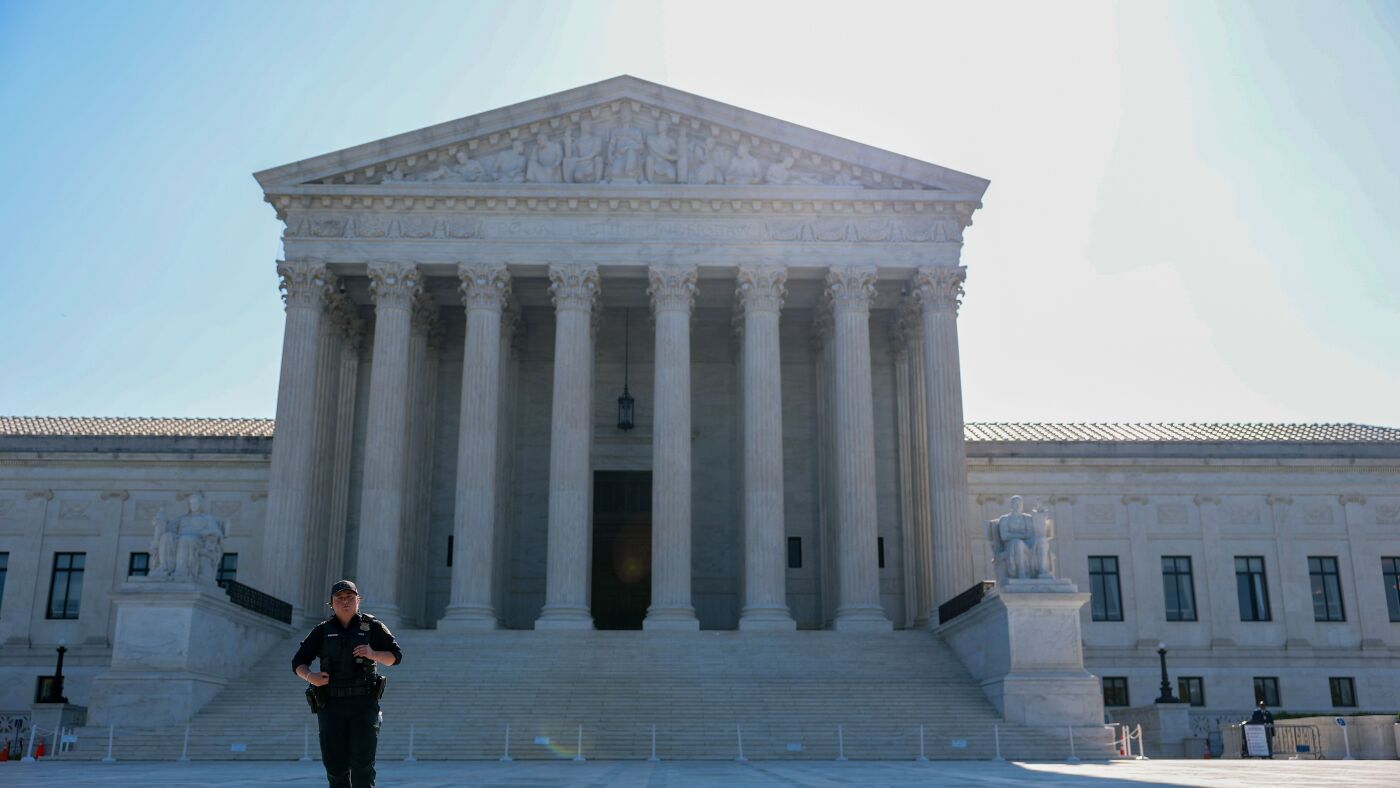
What the Supreme Court did on the final day of its term
-

 Los Angeles, Ca2 hours ago
Los Angeles County man convicted of sex trafficking, abusing woman he was dating
-

 Detroit, MI2 hours ago
Detroit Tigers tee off on New York Yankees with 5 homers in win
-

 San Francisco, CA2 hours ago
Popular brewery shutters San Francisco location amid industry woes
-

 Dallas, TX2 hours ago
Eight arrested after repeated attempts to enter World Cup matches without tickets
-

 Miami, FL3 hours ago
Reports: Heat add potent bench scorer in Tim Hardaway Jr.
-

 Boston, MA3 hours ago
Boston Pops gearing up for major July 4th celebration: ‘You only turn 250 once’ – Boston News, Weather, Sports | WHDH 7News

