World
Netherlands to ask opt-out from EU asylum rules 'as soon as possible'


The four-party cabinet in the Netherlands has vowed to establish “the strictest asylum regime ever” to curb irregular migration.
The Dutch government of Prime Minister Dick Schoof has confirmed its intention to ask “as soon as possible” for an opt-out clause from the European Union’s migration and asylum rules, an unprecedented move from a founding member state.
The plan, previewed in July after Schoof took office, is considered far-fetched and symbolic, with little to no chance of succeeding as it would require re-tweaking highly sensitive legislation and could open the floodgates for similar demands.
It is unlikely that other capitals would be willing to accommodate The Hague’s wish: excluding the Netherlands from the bloc’s migration system would inevitably cause a wave of asylum seekers towards neighbouring countries, creating a crisis scenario.
However, the request represents a new brazen attempt by an EU country to challenge established laws in a desperate quest to curb irregular migration. It comes on the heels of Germany’s decision to re-establish border controls on all of its nine land borders, casting doubt over the functioning of the passport-free Schengen Area.
“The government will announce in Brussels as soon as possible that the Netherlands wants an opt-out of European asylum and migration regulations,” reads the government programme unveiled on Friday afternoon.
“As long as” this opt-out clause is not granted, the programme adds, the country will focus on implementing the New Pact on Migration and Asylum, the all-encompassing reform the EU completed in May after almost four years of hard-fought negotiations.
The Pact’s main novelty is a system of “mandatory solidarity” that will give countries three options to manage asylum seekers: relocate a certain number of them, pay €20,000 for each one they reject, or finance operational support. The Netherlands will choose financial support rather than reception, the programme confirms.
In anticipation of the Dutch announcement, the European Commission made it clear that all member states are bound by existing rules and that any exemption to their compliance should be negotiated before – not after – they are approved.
“We have adopted legislation. It’s adopted. You don’t opt out of adopted legislation in the EU,” a spokesperson said earlier in the day on Friday. “That’s a general principle.”
In May, the Netherlands voted in favour of all the laws that make up the New Pact.
The overhaul will take two years to enter into force. Member states have to submit implementation plans before the end of the year, detailing the administrative, operational and legal steps they intend to take to make the laws a reality.
‘Strictest regime ever’
The programme presented on Friday was agreed upon by the four parties that make up the ruling coalition in the Netherlands: the far-right, nationalist PVV; the conservative-liberal VVD; the populist, pro-farmers BBB; and the upstart, centre-right NSC.
Schoof, a technocrat, does not belong to any of them and was surprisingly picked as a consensus figure to captain the new political era.
The opt-out proposal is included in a wider chapter devoted to migration that features an extensive raft of measures meant to build up the “strictest asylum regime ever,” one of the key promises underpinning the cabinet.
The government argues the Netherlands can no longer cope with the “large influx” of asylum seekers asking for international protection, many of whom enter the EU through another member state and then travel across borders until arriving in Dutch territory.
 ADVERTISEMENT
About 48,500 asylum seekers and family members entered the country in 2023. Syrian, Turkish, Yemeni, Somali and Eritrean were among the most common nationalities.
According to the programme, the government will introduce emergency legislation with broad powers to freeze asylum applications and deport people without residence permits, “including by force.” Asylum seekers will be asked to return to their country of origin as soon as it is considered “safe,” a concept contested by NGOs.
The Netherlands also plans to work with “like-minded and surrounding countries” to manage a sudden influx of irregular migrants and build a “mini Schengen” area to intensify security surveillance.



DUBAI, United Arab Emirates (AP) — A tanker came under attack traveling through the Strait of Hormuz taking the route closest to Oman, the British military said Friday.
The report from the United Kingdom Maritime Trade Operations center described the strike as happening early Friday and involving a projectile hitting the vessel.
The UKMTO said the ship sustained minor damage to its port side.
“All crew are safe and accounted for, no environmental impact has been reported and the vessel is continuing to its next port of call,” the UKMTO said.
Iran has been attacking tankers traveling on the route near Oman but did not immediately acknowledge any attack.
THIS IS A BREAKING NEWS UPDATE. AP’s earlier story follows below.
DUBAI, United Arab Emirates (AP) — The United States expanded its airstrike campaign against Iran early Friday by hitting more bridges and collapsing a tower at a key Iranian port, part of U.S. President Donald Trump’s threats to start striking infrastructure to pressure Tehran to ease its chokehold on the Strait of Hormuz. Iran launched new missile attacks against U.S.-allied nations in the Middle East, including Qatar, a key mediator in the war.
The interim ceasefire agreed to last month has collapsed, and the region has endured days of back-and-forth attacks by the U.S. and Iran as they battle for control of the strait. Iranian officials say U.S. strikes have killed dozens of people and wounded hundreds of others, with new casualties reported in Friday’s strikes.
When the U.S. and Israel launched the war on Iran on Feb. 28, Tehran effectively closed the strait to shipping traffic, a move that sent the price of oil soaring and gave Iran major leverage in negotiations.
Speaking in a primetime address to the American public, Trump insisted the war was going well.
“We are likewise winning big in Iran, and you will see the fruits of that labor very, very shortly,” Trump said.
Bridges and a port tower hit in Iran
The U.S. airstrikes hit bridges overnight into Friday in Iran’s southern Hormozgan province, killing at least seven people, Iranian state television reported. The attacks hit Bandar Khamir, a city on Iran’s coast on the Strait of Hormuz.
The highway and railway bridge strikes appeared aimed at cutting off Bandar Abbas, Iran’s main port, from roads leading into the Islamic Republic’s central region onward to Tehran, the capital.
While other routes still are open, the U.S. strikes could expand further, potentially disrupting both the movement of military materiel and goods needed for Iran’s 90 million people.
The U.S. military’s Central Command said it hit dozens of targets in its latest airstrikes, which concluded at dawn Friday, the sixth night in a row of American attacks.
The strikes also collapsed a tower at Iran’s Chabahar port on the Gulf of Oman, a key trade route for landlocked, neighboring Afghanistan, the state-run IRNA news agency reported.
U.S. Defense Secretary Pete Hegseth shared the image of the surveillance tower collapsing, part of his effort to assert American control over the strait. That image had circulated social media via activists prior to Hegseth sharing it.
Chabahar port, which Iran had been running with support from India, has been a repeated target of American airstrikes. Iranian state media acknowledged a third round of strikes on the facility without immediately acknowledging the tower’s collapse.
Iran described the tower as overseeing commercial traffic into the port. However, Iran’s paramilitary Revolutionary Guard also operates at ports across the country.
Iran retaliates by targeting Qatar, a mediator in the war
On Friday, Qatar twice warned the public to take shelter as a barrage of Iranian missiles targeted the nation. People heard explosions overhead as air defenses fired to intercept the missiles. Qatar’s Interior Ministry said falling debris wounded a child.
Qatar, along with Pakistan, is a key mediator in trying to reach an end to the Iran war. But talks have broken down over Iran’s chokehold on the Strait of Hormuz.
Iran also targeted Bahrain and Kuwait early Friday. Jordan’s military said it intercepted three incoming missiles Friday morning launched by Iran.
Explosions also could be heard Friday morning in Irbil and Sulaymaniyah in northern Iraq’s semiautonomous Kurdish region as air defenses targeted incoming fire. There was no immediate word on any damage.
Strikes come as Iran and US vie for Strait of Hormuz
Trump has returned in recent days to his threats to target Iranian power stations and bridges to try to compel Iran to loosen its hold on the strait, through which about a fifth of all oil and natural gas traded once passed in peacetime. The U.S. also reimposed a naval blockade on Iranian ports to halt its shipments of crude oil.
Week-to-week cargo shipments through the strait dropped by almost a quarter at the beginning of the month, according to maritime data firm Lloyd’s List Intelligence. And that was before the recent surge in tit-for-tat attacks.
Given the risks, some oil shippers are transiting the strait with their location devices turned off, but many are just staying put, Lloyd’s said Thursday. A growing amount of the region’s energy is being shipped through pipelines, but not nearly enough to offset the decline in shipping through the strait.
U.S. forces have redirected three commercial vessels trying to run the blockade, disabled one that did not comply and boarded another “to ensure full compliance,” the U.S. military’s Central Command said in a post on X.
___
Associated Press writers Amir Vahdat in Tehran, Iran, Annika Wolters in Rayong, Thailand, and Stella Martany in Irbil, Iraq, contributed to this report.

NEWYou can now listen to Fox News articles!
UNITED NATIONS — The Democratic Republic of Congo does not view growing American involvement in its critical minerals industry as a contest with China, the country’s foreign minister told Fox News Digital, arguing that Kinshasa needs multiple partners to transform its vast natural wealth into prosperity for its people.
“I don’t like talking about competition. I like talking about complementarity,” Foreign Minister Thérèse Kayikwamba Wagner said in an exclusive interview at the United Nations.
U.S. President Donald Trump, Secretary of State Marco Rubio and Vice President JD Vance meet Democratic Republic of the Congo Foreign Minister Thérèse Kayikwamba Wagner in the Oval Office at the White House in Washington D.C., June 27, 2025. (Ken Cedeno/Reuters)
“A country as big as the USA, but also a country as big as the DRC and as big as China, they do not develop just with one single partner,” she added. “They develop with different partnerships that respond to different needs and that bring different expertise to the table.”
CHINA’S GRIP ON RARE-EARTH MAGNETS COULD CRUSH US DRONE INDUSTRY BEFORE IT GROWS
The comments come as the Trump administration seeks to increase American access to Congo’s copper, cobalt, lithium, gold and other strategic resources, while reducing U.S. reliance on mineral supply chains dominated by China.
A strategic partnership signed by Washington and Kinshasa Dec. 4, 2025, calls for increased economic cooperation, investment and the development of secure and transparent critical-mineral supply chains. The agreement accompanied a broader regional framework linking economic integration to efforts to end decades of conflict between Congo and Rwanda.
TRUMP ADMIN BACKS BOLIVIA STATE OF EMERGENCY AS LEFTIST EX-LEADER’S LOYALISTS FRACTURE NATION
Excavators and drillers at work in an open pit at Tenke Fungurume, a copper and cobalt mine 110 km (68 miles) northwest of Lubumbashi in Congo’s copper-producing south Jan. 29, 2013. (Reuters/Jonny Hogg/File Photo)
A separate arrangement involving DR Congo’s state mining company Gécamines and commodities trader Mercuria could give U.S. buyers priority access to some copper and cobalt supplies, Reuters reported Dec. 5, 2025. The U.S. International Development Finance Corporation also expressed interest in taking a strategic stake in the partnership.
Kayikwamba Wagner said relations between the U.S. and DR Congo were taking “a more concrete shape” based on mutual economic interests.
She said Kinshasa welcomed “more U.S. interests in the DRC” that could help the country turn its mineral wealth into “tangible transformations for the lives of Congolese,” while also delivering benefits to American partners.
Speaking separately at a high-level U.N. meeting on critical minerals Tuesday, Kayikwamba Wagner warned that the global shift toward clean energy must not reproduce an economic model in which raw materials leave Africa while processing, technology and most of the profits remain elsewhere.
“The global energy transition must not become another extractive transition,” she said. “If it merely replaces one form of dependency with another, it will have fallen short of its promise.”
She called for foreign partnerships to support local processing, infrastructure, technology transfers, research, industrialization and access to financing — not simply secure supplies of raw materials.
CHILL COMING FROM TRUMP’S SUMMIT WITH XI IS PROOF OF A NEW COLD WAR WITH CHINA
M23 rebels stand with their weapons in Kibumba, in the eastern of Democratic Republic of Congo, Dec. 23, 2022. (AP Photo/Moses Sawasawa)
The minerals push is closely connected to the U.S.-mediated peace process between the DRC and Rwanda. The countries initially signed a peace agreement in Washington June 27, 2025, before presidents Félix Tshisekedi and Paul Kagame reaffirmed the deal and signed related economic agreements on Dec. 4. The framework was intended both to reduce fighting and attract Western investment to a region rich in cobalt, copper, tantalum and other minerals.
Kayikwamba Wagner acknowledged that the agreement had not ended the violence but said Washington’s willingness to impose consequences for violations showed that the process remained meaningful.
“This is a 30-year conflict we’re dealing with,” she said. “It’s not going to happen overnight.”
She praised the administration for sanctioning the Rwanda Defense Force and senior Rwandan officials over what the Treasury Department described as their support for the M23 rebel group. Treasury said in March that the RDF had supported, trained and fought alongside M23 as it seized territory and strategic mining locations in eastern Congo. Rwanda has repeatedly denied supporting M23.
“I find it encouraging to see that we have with us a partner that is not willing to give up at the first obstacle,” Kayikwamba Wagner said.
She was in New York as the DRC, which holds the Security Council presidency for July, elevated the connection between natural resources, armed conflict and sexual violence.
Kayikwamba Wagner said rape and other forms of conflict-related sexual violence had risen sharply in areas held by M23 and Rwandan forces, affecting women and girls as well as men and boys.
Victims in occupied areas, she said, often lack access to courts, healthcare or other avenues for redress.
“This is also one of the reasons why we continue to be mobilized against this illegal occupation of eastern DRC,” she said, arguing that restoring state authority was essential to providing survivors with justice and medical care.
CLICK HERE TO DOWNLOAD THE FOX NEWS APP
President Donald Trump arrives for a signing ceremony with Rwandan President Paul Kagame and Democratic Republic of Congo President Felix-Antoine Tshisekedi at the Donald J. Trump Institute of Peace Dec. 4, 2025, in Washington. (AP Photo/Evan Vucci)
In her U.N. remarks, she cited the Rubaya mining area, which is under M23 control and supplies a significant share of global tantalum demand. She said U.N. experts estimated that at least 1,400 tons of coltan were smuggled into Rwanda during the first year after the mines were seized, generating approximately $800,000 per month for the armed group.
The Treasury Department imposed additional sanctions on June 25 against a network it accused of working with M23 to smuggle minerals from eastern Congo into Rwanda, saying the action was intended to support the Washington peace framework and improve transparency in regional mineral supply chains.

The UK has appropriated its last working steelworks, following fears its former Chinese owners would shut it down.
Published On 17 Jul 2026
Beijing has warned the United Kingdom that its nationalisation of British Steel has “severely undermined” Chinese companies’ confidence in investing in the UK.
The UK nationalised the loss-making company on Thursday in what the government said was a move taken to protect national interests.
list of 3 itemsend of listRecommended Stories
British Steel is the only source of primary steelmaking in the UK. It supports approximately 2,700 jobs across its main steelworks in Scunthorpe and across the wider supply chain.
The company’s former owner, Jingye – which is among the 100 biggest companies in China – bought British Steel for 70 million pounds ($94m) in 2020. By 2025, Jingye said it was losing 700,000 pounds ($942,000) every day.
British Steel’s nationalisation has been in the works for more than a year.
In March 2025, Jingye carried out a consultation that concluded that the British Steel furnaces were not financially sustainable. The following month, it emerged that Jingye had cancelled orders for a key material used in the steelmaking process, stoking fears that it was planning to shut down the blast furnaces.
That month, the UK government seized operational control of British Steel from Jingye to stop that from happening. The Chinese company retained ownership, but lost operational control.
Thursday, though, saw ownership officially transfer to the UK government, which says it will appoint an independent valuer to “assess whether any compensation is payable” to Jingye.
The process has angered Beijing. The expropriation of British Steel “seriously damaged” Jingye’s legitimate rights and interests and “severely undermined” Chinese companies’ confidence in investing in the UK, China’s Ministry of Commerce said in a statement on Friday.
The UK, the ministry said, has “forcibly” taken over the company and “disregarded” Jingye’s contributions to the British economy and society.
The ministry urged the UK to fulfil obligations under the China-UK Investment Protection Agreement and said it would assist Chinese companies in protecting their rights.
-

 Los Angeles, Ca8 minutes ago
LADWP begins long-term repairs after West Hollywood water main rupture
-

 Detroit, MI32 minutes ago
Livestream: Mayor Sheffield, Detroit health chief to address wildfire smoke threat
-
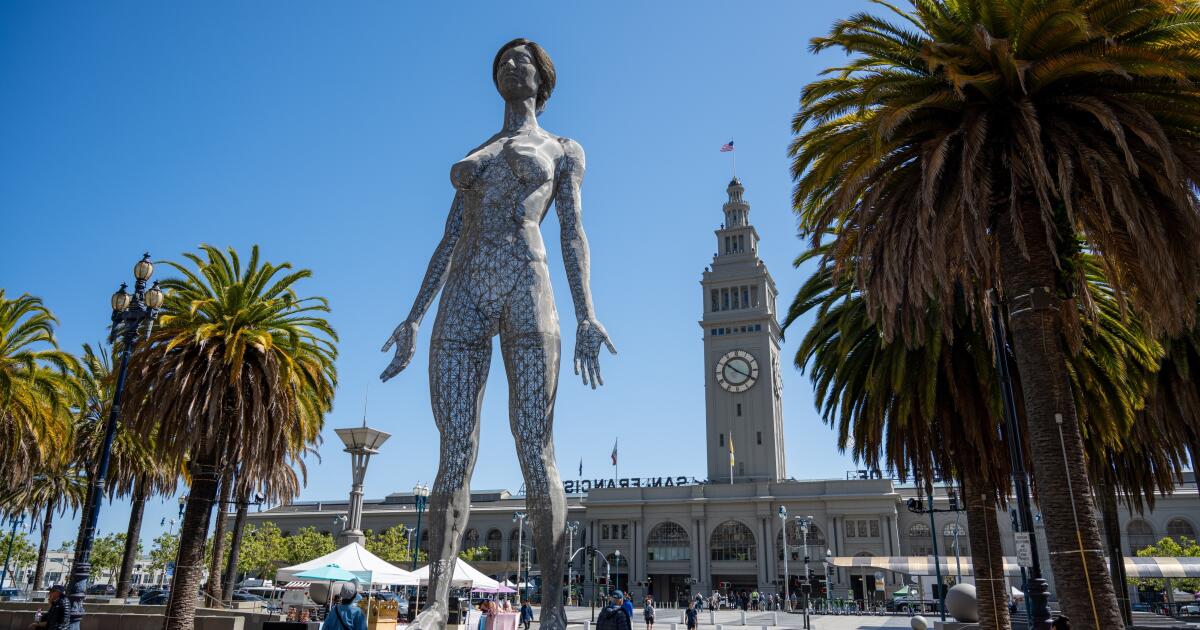 San Francisco, CA44 minutes ago
A sculpture of a giant naked woman goes on sale in San Francisco. Bring a crane
-

 Dallas, TX50 minutes ago
No ‘straight answer’: Why Pioneer Cemetery is the latest battleground at City Hall
-

 Miami, FL56 minutes ago
TSA hosts news conference ahead of World Cup third place match at Miami Stadium
-

 Boston, MA1 hour ago
ICE Boston arrests Barbados national during targeted operations in Attleboro
-

 Denver, CO1 hour ago
Denver Broncos training camp is 2 weeks away
-

 San Diego, CA1 hour ago
Daily Business Report: July 17, 2026, San Diego Metro Magazine

