Hawaii
Naka Nathaniel: The Voyage to Becoming the Breadbasket of the Pacific


Hawaii has some of the best food-growing conditions on the planet, yet it’s well known that we import more than 80% of what we eat.
Importing jacks up prices, contributes to climate change and puts everyone at risk if there’s a disruption to the supply chain.
It qualifies as one definition of insanity that a place as abundant as Hawaii imports so much food at higher costs and greater harm and risk to ourselves and the planet.
We can continue to lament how we fell into such a precarious place or we can find ways to feed ourselves in ways that are healthy, affordable and delicious. Hawaii can become the breadbasket of the Pacific.
It’s a challenge to wean ourselves off of imported food. But it’s doable.
Keala Kahuanui is up for that challenge.
In 2007, when she was a young crew member on Makali’i’s voyage to the far-western reaches of Micronesia, the leadership of the double-hulled sailing canoe designated her to be the cook.

Makali’i, slightly smaller than the Oahu-based Hokule’a, was stocked with canned goods from Costco and supplies from food banks. This was an important and symbolic voyage. Makali’i was to travel to the home island of Mau Piailug, the Micronesian navigator from Satawal who taught Hawaiians the lost skills of long-distance voyaging.
Every six hours, Kahuanui would prepare for the crew shift changes. This was when everyone aboard would eat together. She was responsible for nourishing her crewmates.
When a crew member didn’t care for another meal of Spam and decided to pass on eating and chose to sleep, Kahuanui understood that as the cook, she needed to up her game. Crewmates skipping meals meant that they’d go 12 hours without food and that could impair their abilities to effectively carry out their tasks and jeopardize the safety of the voyage.
Using what was available, she made a mixed vegetable stir fry with Spam and shoyu sugar and her crewmate was nourished.
She fed her crew for 27 days, however one part of the voyage to Satawal was incredibly painful for her. Every other day, when she had the stamina, she’d take a 5-gallon bucket of empty cans and opala and she’d throw the trash in the water and hope that the refuse would quickly sink.
When she emptied the bucket, she worried about the dolphins, malolo and squid she saw swimming alongside the canoe.
“It was so eha (painful),” she said. The alternative was worse: bringing their trash to a tiny Pacific atoll with no refuse station.
Kahuanui resolved to do better next time.
And she has.
This is why voyaging is so important to Hawaii. We are saltwater people and being on the ocean helps us more clearly understand who we are and what our roles and responsibilities are.
Kahuanui and the Makali’i crew, which sails under the umbrella of the Hawaii island nonprofit organization Na Kalai Wa’a, took up the challenge of its renowned navigator, Chadd Paishon.
Five years ago, before a voyage to Mokumanamana, an island 500 miles northwest of Makali’i’s home harbor of Kawaihae, Paishon asked: Could Makali’i be provisioned for a long-distance voyage solely with food grown and gathered on Hawaii island?
Kahuanui, and the island community, stepped up to the challenge.

As food raised on the island arrived, she studied various food preservation techniques.
“I get on YouTube and I listen and learn,” she said. And then she came across warnings of deadly bacteria.
“I need a kumu, I need somebody real to teach us this,” she said. “I can’t be learning this on YouTube. We could kill people.”
With the help of food preservationists, Kahuanui not only learned how to can meals like luau stew, but she has also learned to freeze dry foods grown on Hawaii island. With a little hot water, she can feed a crew with foods that are both nutritionally and spiritually nourishing.
She says it gives her chicken skin to think about what her work represents.
“It’s hope in a jar,” she said. “We would not get the same effect with a can of Spam. These jars (of locally grown food) are the confirmations that I want for our people — this is what they need.”
Kahuanui has become so skilled in provisioning that she will be traveling to Turin, Italy, at the end of September to speak at the Slow Food Terra Madre Conference.
“Slow food” was a movement started in Europe to counteract fast food. It’s dedicated to creating a culinary situation that is beneficial to both the food provider and the consumer.
Before she shares her manao with the Italians and the rest of the world, she will present at the Council of Native Hawaiian Advancement conference, in Waikoloa, Sept. 17-19.
Kahuanui already shared her knowledge with other canoe families from across the Pacific at this summer’s FestPAC in Honolulu. Na Kalai Wa’a’s canoe, Mauloa, was the centerpiece of the exhibition at the convention center.
The canoe was there to embody a proverb, an olelo noeau: The canoe is an island and the island is a canoe.
What has happened on the canoe now needs to happen on the island.
Kahuanui responded to a vision and made something significant happen. She fed a canoe crew with food exclusively raised on Hawaii island. Now, the island needs to feed itself.
A new vision is for Hawaii island in the coming decade is to make true strides toward not only feeding itself, but being able to share its abundance with the rest of its oceanic neighbors.
For those who live above us in the Northern Hemisphere, this is the season of harvest, so I’m going to spend the rest of this month writing about the steps needed to make our island home the breadbasket of the Pacific.

Sign up for our FREE morning newsletter and face each day more informed.


HONOLULU (KHON2) — Various celebrations — beyond the usual fireworks and barbecues — marked the U.S.’s 250th anniversary on Independence Day.
From regatta to an annual Japanese tradition on Oʻahu, here’s four other events that took place on this July 4.
84th Regatta
To start off the morning, the 84th Walter J. Macfarlane Memorial Canoe Regatta was held at Waikiki Beach.
“Today there’s a swell. It’s not huge, but it’s not flat, so I mean it’s like a perfect requirement day, there’s excitement, there’s enough activity to keep it, first the variable, and keep everybody on their toes, and it makes for close races,” said Jim Foti with the Lanikai Canoe Club.
Canoe paddlers of all ages hit the water for a full day of racing.
“We have had some really fun races this morning,” said Siana Austin Hunt, president of the Oahu Hawaiian Canoe Racing Association. “Our kids did really well. We also had some great finishes with a lot of crews finishing on the same wave.”
The regatta is a tradition that is recognized as the longest-running outrigger canoe races in the world.
America250
Kapiolani Park served as the backdrop for America’s once-in-a-lifetime celebration commemorating 250 years. The free event brought families together for food, music, performances and special recognition for our military and veterans.
“There’s a lot of people that’s been going around the different booths and the different venues and enjoying themselves, listening to the music every hour on the hour, and at the same time they’re looking at some of the auditory, tasting the various different types of food, and just enjoying yourself and relaxing,” said Lynn Mariano, commissioner of Hawaii America250 Commission.
La Hoʻihoʻi Ea
While many celebrated Independence Day, others gathered at Iolani Palace to reflect on a different perspective of Hawaiʻi’s history into statehood.
The event highlighted La Hoʻihoʻi Ea, or Sovereignty Restoration Day, which commemorates the history of the Hawaiian Kingdom and encouraged a discussion about Hawaiian sovereignty and self-determination.


“We’re here to reclaim our place to retell our stories and to resound the message of Hawaiian sovereignty restoration,” said Imai Winchester, lead organizer for La Hoʻihoʻi Ea.
The free event included cultural performances, music, educational exhibits, speakers and family activities. It was the first of a month-long series of events that will lead up to a celebration on July 26 at Thomas Square.
Organizers said it’s an opportunity to learn, reflect and celebrate Hawaiian identity.
Mōʻiliʻili Summer Fest
An annual Japanese tradition fell on the 4th of July this year. The popular Mōʻiliʻili Summer Fest drew in thousands to the Old Varsity Theater parking lot on University Avenue.


Now in its 13th year, the event prides itself on having one of Honolulu’s largest bon dances — and no obon festival is complete without taiko drums and andagi.
One of the booths was prepared to sell thousands of the deep-fried treat, with proceeds supporting Hawaii’s young athletes.
The festival is held every first Saturday of July.

HONOLULU (HawaiiNewsNow) – Partly to Mostly Sunny skies with windward and mauka showers drifting leeward at times. Most of the rainfall will be light and in the overnight to early morning hours with an increasing trend on Tuesday and stronger trends on Thursday and Friday; which is good because we need to beneficial rainfall.
View the latest weather conditions here.
Trade winds will continue blowing from the east all week while a high-pressure system sits north of Hawaii, keeping conditions mostly stable. On Tuesday, a weak weather system moving in from the east will bring some extra showers across the islands, but nothing major. A more significant system arrives Thursday through Friday—it’s actually the leftover remains of a tropical cyclone—and will bring noticeably heavier rain, especially on the windward sides of the islands (the sides facing the trade winds) and on mountain slopes, with humidity increasing as well. The highest rainfall will happen Thursday through Friday, though overall rainfall amounts will stay limited due to large-scale stability in the atmosphere.
A Small Craft Advisory now in effect for all Hawaiian waters (a warning for smaller boats to be cautious). A new long-period swell from the south-southwest is already moving in and will boost south shore surf heights to near-High Surf Advisory levels through Monday before gradually fading. East-facing shores will remain rough and choppy throughout the week from the strong winds, while north-facing shores will stay relatively flat. These windy conditions and Small Craft Advisories will continue through the entire week.
Download the HNN Weather app from the Apple App Store or Google Play for the latest updates from your First Alert Weather Team: chief meteorologist Jennifer Robbins, meteorologist Drew Davis, and weather anchors Guy Hagi, Ben Gutierrez, and Billy V.
Copyright 2026 Hawaii News Now. All rights reserved.

HONOLULU (HawaiiNewsNow) – A woman has died after a crash that shut down the H-1 Freeway westbound in Honolulu Saturday.
According to the Honolulu Police Department, officers responded to a single-vehicle crash just before 6 p.m. near the Aala Street overpass.
Sources said a woman in her late 20s was pronounced dead at the scene.
First responders remain on scene, and the investigation is ongoing.
The city said via HNL Alert that all westbound lanes of the freeway near the Aala Street overpass are closed and access is restricted to emergency vehicles only.
Officials said those on the H-1 West are being diverted off the freeway at the North School Street cutoff.
Drivers are asked to avoid the area.
Copyright 2026 Hawaii News Now. All rights reserved.
-

 Delaware1 minute ago
Body of missing 19-year-old tuber recovered from Delaware River in Hunterdon County – WRNJ Radio
-

 Florida8 minutes ago
Why the Red Sox are sending Roman Anthony to Florida (and to another doctor) – The Boston Globe
-

 Georgia10 minutes ago
324 impaired drivers arrested in Georgia during holiday weekend
-

 Hawaii16 minutes ago
PHOTOS: 4 ways locals celebrated July 4 this year
-
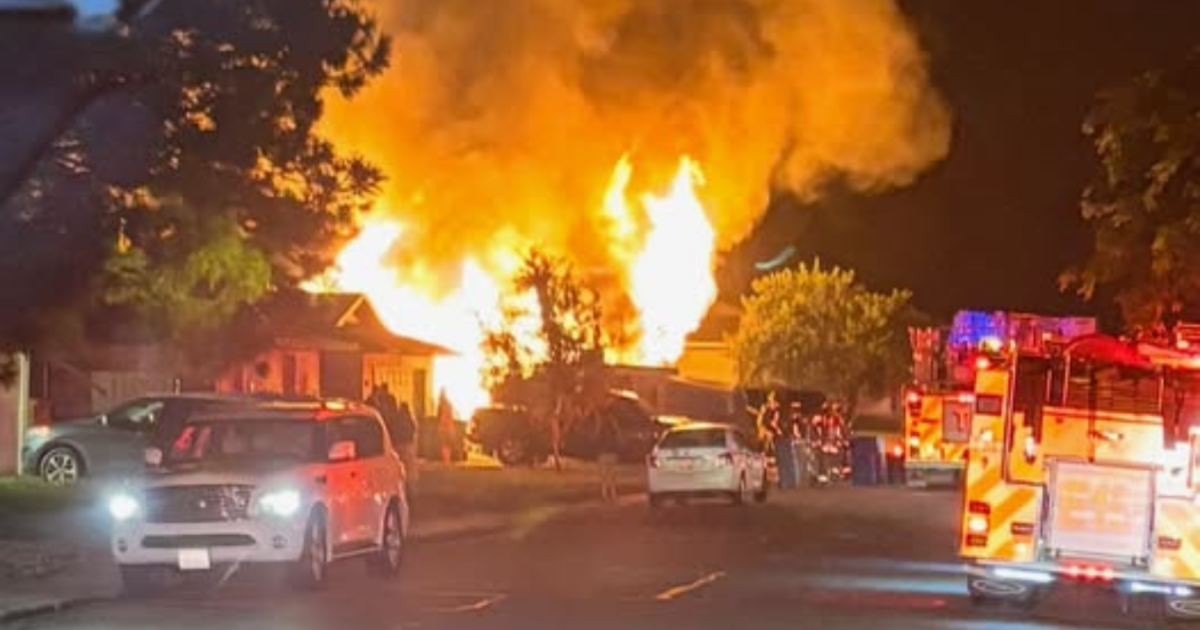 Idaho23 minutes ago
Residents displaced after Boise home found fully engulfed in flames, fire officials say
-

 Illinois26 minutes ago
26-Year-Old Woman Killed In I-55 Crash, Coroner Says
-

 Indiana31 minutes ago
Fever take down Aces 84-68, led by Kelsey Mitchell’s 27 points
-

 Iowa38 minutes ago
14-year-old Dyersville girl dies in July 4 Clear Lake watercraft crash

