Northeast
Kamala Harris picks Tim Walz: Did she decide Josh Shapiro was too Jewish to be VP?

NEWYou can now listen to Fox News articles!
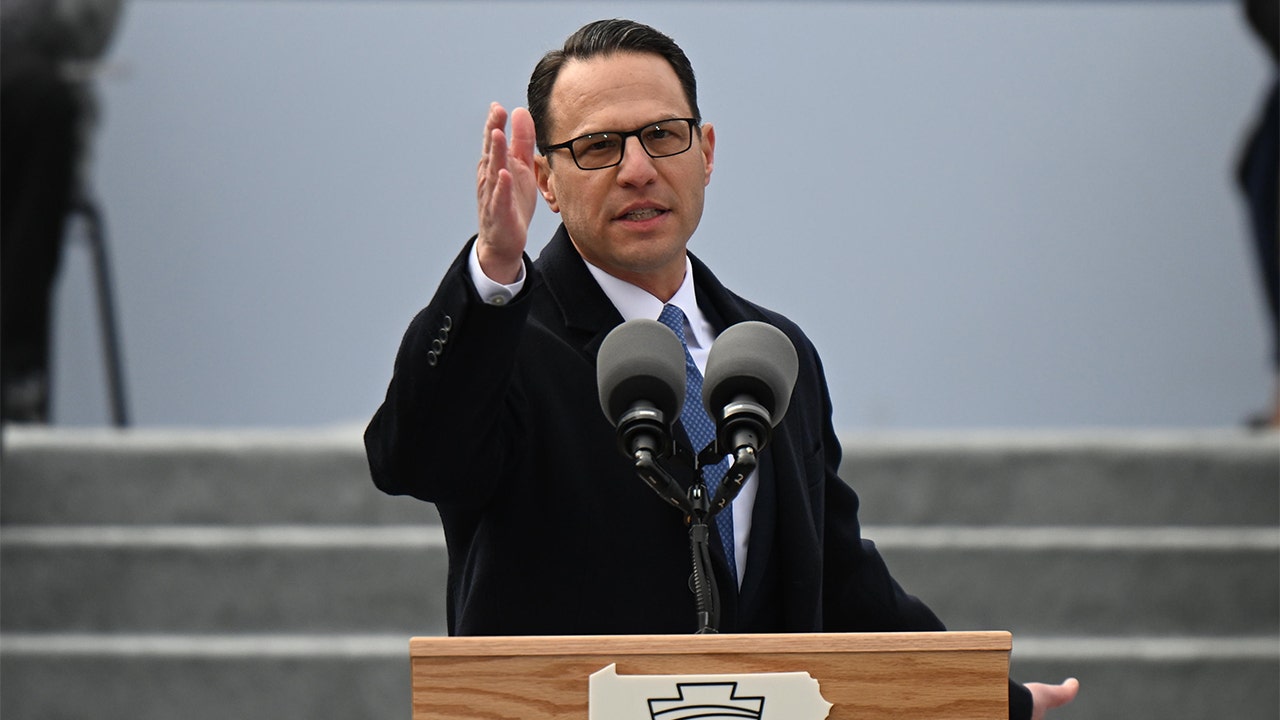
Last Friday night, as Pennsylvania Gov. Josh Shapiro was lighting the Shabbat candles, he was the clear and obvious favorite to be tapped as Democratic presidential nominee Kamala Harris’ running mate. But that was not to be. And on Tuesday, it sure looks like that is because he was a little too Jewish.
Yes, the vice-presidential nomination passed over Shapiro as if he had lamb’s blood painted over his door, landing instead on Midwest Protestant Tim Walz — an anodyne pick less likely to offend those who hate Israel or for that matter Jews.
In the lead up to the snub of Shapiro, which Harris chose to commit in his hometown of Philadelphia, many voices in and around the party, both Jewish and not, warned that this choice of Walz would smack of obvious and odious antisemitism.
VICE PRESIDENT KAMALA HARRIS NAMES MINNESOTA GOV. TIM WALZ AS HER RUNNING MATE
First, John King, and then several additional anchors on CNN, expressed concern that Shapiro’s views on Israel were being singled out. This was happening even though they hardly differed from any other potential V.P. candidate. Still, his status as a practicing Jew could prove disqualifying for some progressive voters.
Minnesota Gov. Tim Walz has been chosen by Democratic presidential nominee Kamala Harris as her running mate. (AP Photo/Carolyn Kaster)
These concerns were echoed throughout social media by Jewish celebrities and activists, including the extremely liberal actor Josh Malina, who wrote “Shapiro’s views on Israel are in line with the other VP contenders. Shapiro, however, is…well, Jewish. This feels like unforced anitsemitism, Cynthia,” in response to far-left actor Cynthia Nixon on X.
Even some Democrats currently in office agreed.
“The Anti-Israel activists who have been falsely accusing the Biden-Harris Administration of funding ‘genocide’ are suddenly fine with Vice President Harris, as long as she declines to choose Governor Shapiro as a running mate,” New York Democratic Rep. Ritchie Torres said on X, adding, “These hypocrites are full of s— and their antisemitic dog whistling should be given no veto power over the selection of a presidential running mate.”
VP SHORT-LISTER SHAPIRO ON DEFENSE OVER ISRAEL AFTER DECADES-OLD COLLEGE PAPER SURFACES
Where, by the way, is his fellow New Yorker and most powerful Jew in Washington, Sen. Chuck Schumer on all of this? Honestly, since the horrendous Hamas attacks in Israel on Oct. 7, it’s as if the Senate minority leader has resigned, or gone into hiding.
Needless to say, now that Shapiro’s vice-presidential dreams have burned out like the last candle on Hanukkah, most on the left will forget all about their outrage. Just as many have forgotten how outraged they were over the potential ouster of Joe Biden from the ticket.
Pennsylvania Gov. Josh Shapiro was on Democratic presidential nominee Kamala Harris’ short list as a possible vice presidential running mate. (Mark Makela/Getty Images)
It all just gets memory holed and we move on. At least that is what they hope, but there is a problem, which is that Republicans have noticed this antisemitism, too.
PROGRESSIVES FOR HARRIS CALL HOST URGES ‘SOLIDARITY’ AMONG ‘COMRADES’ AMID CRITICISMS OVER ISRAEL-HAMAS WAR
On Tuesday, just hours before the announcement, GOP vice presidential nominee JD Vance took to the radio airwaves in an interview with Hugh Hewitt and said, “They will have not picked Shapiro frankly because of antisemitism in their own caucus, in their own party… The far left doesn’t like the fact that he is a Jewish American.”
The senator from Ohio is not without evidence in advancing this claim, as we saw in the spring when many Democrats, such as New York Rep. Alexandria Ocasio-Cortez and her band of girl boss communists fawned all over antisemitic college occupiers who threatened and harassed Jewish students.
We saw this bigotry when Minnesota Democrat Rep. Ilhan Omar, who openly lobbied for Walz against Shapiro, said that all Jews care about is the “Benjamins.”
Were there other reasons that Harris might have opted against Shapiro? Yes. Perhaps he may have more gravitas than she does. Walz is popular but not overshadowing. He’s more like a sitcom dad, but the timing is everything here.
CLICK HERE FOR MORE FOX NEWS OPINION
It was not until Shapiro seemed to be a lock for Harris’ running mate that these concerns about his Jewishness popped up and that his record on Israel was thrust in the spotlight, even though it mirrors everyone on the short list and even Kamala Harris herself.
It is almost impossible to believe that Shapiro, a popular governor in the most key battleground state in the entire nation, would have been denied this rich political prize if his last name was Smith, or, well, Harris.
Gov. Josh Shapiro came very close to becoming Kamala Harris’ running mate. He lost out to Minnesota Gov. Tim Walz on Tuesday. (Gilbert Carrasquillo/GC Images)
In the early 20th century, there was division between long-established, well-assimilated and educated Jews and the newcomers from the shtetls of Eastern Europe with their foreign garb and loud, obvious religious observance.
I can remember my great-grandmother, fully of the fancier faction, sometimes shaking her head when discussing the newcomers and muttering, “too Jewish.”
The Democrats now face a similar issue. It is fine to be a Jew in the party if that means you like Woody Allen movies, eat Chinese food on Christmas and get all the references on “Curb Your Enthusiasm.” But the candle lighting, and the bread? Do that only in the privacy of your own home.
This year the Democratic Party hung a sign on the door to the vice presidency saying, “Jews Need Not Apply” – at least not those who are obvious about, and proud of, their religious faith.
It is a dark and ugly reality, but one we must stay focused on. Because when antisemitism takes root, it is a fast-growing and very dangerous weed that spreads when good people look away.
CLICK HERE TO READ MORE FROM DAVID MARCUS
Read the full article from Here


GMC and their flagship Yukon brings all-around excellence with this week’s tester: the 2026 GMC Yukon Denali Ultimate
This cousin to the Chevrolet Tahoe provides all of the space, comfort, style and luxury anyone could want.
In 2026, the GM brand worked wonders on their existing fleet and added nice trim levels to keep the competition always thinking about what they’re doing next.
Our Glacier White Tricoat tester was flawless and completely destroys the competition in the American Luxury market.
Known for its high MSRP and resale values, the Yukon Denali Ultimate has a base price of $103K and is powered by a 6.2L ECOTEC3 V8 engine and 10-speed automatic transmission. With 420 horsepower and 460 lb-ft of torque, our weeklong tester had a 8,400 pound towing capacity.
The Yukon Denali Ultimate had a slew of standard features including a 16.8-inch premium infotainment system, 24-inch wheels and a 15-inch head-up display. Upgrades include second-row captains seats, BOSE performance sound system with 22-speakers and Night Vision – all totaling an additional $7,090. Boasting a Woodland Mahogany interior, the Yukon Denali Ultimate is certainly classy for all consumers and exemplifies the American Luxury that GMC provides.
In Grasso’s Garage, the Flagship GMC Yukon Denali Ultimate is the real deal. It looks stellar, rides good, and has good values. Although pricey for most consumers, the usage in this category is second to none. I was able to fit six adults on our way to dinner and heard a ton of compliments on its comfort and style, in addition to its spaciousness.
The GMC Yukon has a long-lasting history in the fleet, and in my opinion, having the Denali Ultimate package added is just the way it has to be to experience its full offerings.
Grasso’s Garage is here for you! Looking for more auto reviews or are you in the market for a new car? Head to https://www.bostonherald.com/tag/automotive/. Also, for honest input, reach out to me directly: marc.grasso@bostonherald.com.
2026 GMC Yukon 4WD Denali Ultimate
MSRP: $103,900
MPG: 14 city / 18 highway / 16.2 as tested
As Tested: $113,785


Police are investigating a double homicide in the Frog Hollow section of Hartford, officials said.
According to officials, police were notified by citizens of a large fight that happened on Madison Street near Zion Cemetery just after 7 p.m. When officers got to the scene, they found a man in his 30s unresponsive and suffering from a stab wound.
The man was rushed to a nearby hospital, where he was later pronounced dead.
While at the scene, investigators learned that two others were taken to an area hospital via private car.
One of them was another man in his 30s suffering from a gunshot wound and was in critical condition. He was later pronounced dead. A 17-year-old was the second one taken to the hospital via private car, but his injuries were non-life-threatening, officials said.
According to officials at the scene, investigators do not believe the public is in danger and are reviewing surveillance footage in the area as part of the investigation.
Neither man has been identified by officials at this time.
No arrests have been made at this time, police said.
-

 Los Angeles, Ca37 minutes ago
Family of boy, 8, killed by falling tree branch at Calabasas park to get $14.6M
-

 Detroit, MI59 minutes ago
The worst Detroit sports uniform from every pro team
-

 San Francisco, CA1 hour ago
Discovery Bay driver arrested for San Francisco fatal vehicle collision | Contra Costa Herald
-

 Dallas, TX1 hour ago
Erling Haaland’s Dallas Western wear purchase goes viral
-

 Miami, FL1 hour ago
Miami’s FIFA Fan Fest draws thousands to Bayfront Park to watch Team USA win World Cup match against Bosnia
-

 Boston, MA1 hour ago
2026 Yukon Denali Ultimate gets pricey, but tops the charts
-

 Denver, CO1 hour ago
Nuggets Sign Marvin Bagley to 1-Year Deal: What It Means
-

 Seattle, WA2 hours ago
FOURTH OF JULY 2026: Here’s where Seattle Parks will leave the lights on longer

