Wyoming
American distance jockey is abandoned in Mongolia after getting too sick to ride in 620-mile race: ‘They told me to ride it out’


A Wyoming-based extreme distance jockey was left to fend for herself in Mongolia after race organizers “couldn’t give a crap” about what happened to her when she fell too sick to compete in the 620-mile trek across the East Asian country.
Dede Anders, 49, was a last-minute entry in the Mongol Derby and arrived in Mongolia on Aug. 1 after race organizers reached out to her last month when another competitor dropped out, she told the Cowboy State Daily.
From the nation’s capital of Ulaanbaatar, Anders took an eight-hour trip to the race starting point and was all set to take the lengthy ride across the Mongolian Steppe.
The race — self-proclaimed as the world’s toughest horse race — recreates the horse messenger system developed by Genghis Khan in 1224, according to The Mongolian Derby’s website.
However, on Monday, two days before the race was set to start, she became violently ill.
“It’s a lot of gastrointestinal stuff,” Anders told the outlet. “I was throwing up and stuff like that.”
The race — which usually takes 10 days to complete as riders navigate through wicked terrain and spend, on average, around 13 hours a day in the saddle — was now out of the question given her condition.
Even worse, when Anders tried to seek medical help at the base camp, she was shocked by the lack of empathy or care the race’s medical staff showed for one of their registered riders.
“Two medics looked at me. They told me I needed nothing but did nothing for me. They told me to ride it out,” the lifelong horse racer told the outlet.
Anders, a US Army medic veteran with a doctorate in medical science and emergency medicine from Lincoln Memorial University in Harrogate, Tenn., was astonished that a race that claimed to have “an international team of highly experienced medics” did so little to help her.
“One of the medics didn’t even touch me or ask me any questions,” she told the outlet.
“The other one took my pulse for a couple of seconds. They didn’t take my vitals, didn’t ask if I was diabetic or what medications I was taking. All they told me was it would pass in 24 hours.”
Anders then met with the Mongol Derby’s race director, Katherine, to tell her she wouldn’t be racing because of how sick she became.
“Katherine came to my yurt and talked to me at least twice,” Anders said. “I told her I was sick both days.”
During this time, she claims the race provided her with no medical care but instead drove her back to Mongolia’s capital, where a driver stranded her at a hotel.
“They put me in a vehicle for eight hours sick with a GI bug, with a driver who barely spoke English,” Anders told the outlet.
“I had to use Expedia from base camp to book a hotel, had the driver stop in the city, and get my passport so I could finally check into the hotel.”
She claims being “dumped off” back in the capital was the thing only organizers of the derby did to help her while ill.
“I was too ill to get on a horse for 620 miles,” Anders shared. “But I was also too ill to get in a car for eight hours and be dumped off into a city without a passport or a flight home.”
Now alone and still dealing with illness in a foreign country, Anders’ trouble continued when she struggled to find a flight back to the US.
“I had to call home and have my boyfriend book a flight for me because I didn’t have cellphone reception,” she said. “Seattle is the closest I could get. I just want to get back to the US.”
The experienced rider couldn’t find a flight back to the US until Aug. 11, and once she lands in Seattle, she will need to make other travel arrangements to get back to Wyoming.
As she waits to return home, Anders said she has emailed race organizers about her feelings about how she was treated but hasn’t “received a response.”
“I paid around $30,000 to go over for this thing,” the rider said. “My entry fee alone was almost $17,000, and I didn’t even get my blood pressure taken when I was sick.”
Prior to the drama, Anders told Cody Enterprise that she was making “payments of about $900 per month” to foot the cost of the race she once considered a “lifelong dream.”
Missing out on the Mongol Derby, which she described as “kind of a mess” and “not very organized,” is the least of her concerns now, given how apathetic the race’s medical staff was while she was ill.
“I work in the ER, and I have my doctorate in emergency medicine,” she told the outlet.
“You couldn’t swing a cat and hit a medic over there. I don’t know what the holdup was, but I was definitely blown off for whatever reason.”



Wyoming
Wyoming authorities call on Rocky Mountain Power to explain role in massive November power outage

by Dustin Bleizeffer, WyoFile
The massive, multiple-utility power outage last fall that left some 250,000 customers across parts of Wyoming, South Dakota and Montana without electricity was the result of miscommunication and inadequate procedures during planned maintenance that required de-energizing a power line in southcentral Wyoming, according to a report.
The Nov. 13 incident left thousands of homes and businesses without power for 9.5 hours — longer, in some cases — and knocked out a coal-powered generator outside Glenrock. The unit at the Dave Johnston Power Plant remains offline, leaving Rocky Mountain Power to backfill some 300 megawatts of electricity — enough to power about 225,000 homes.
Without expressly assigning blame to any one party, the report — conducted by the Western Electricity Coordinating Council and the North American Electric Reliability Corporation — indicates a series of communication breakdowns between PacifiCorp (parent company of Rocky Mountain Power), the Western Area Power Administration and, to some degree, electrical grid coordinating teams.
While it’s unclear whether authorities such as the North American Electric Reliability Corporation might pinpoint fault and assess penalties, the Wyoming Public Service Commission has called on Rocky Mountain Power to appear at a hearing scheduled for 2:30 p.m. Wednesday. The commission wants to hear from the utility about “the specifics and details of the event and report,” a public notice announced, and it “may consider and take any action that is in the public interest.”
The hearing at the Public Service Commission’s office located at 2515 Warren Avenue, Suite 300, in Cheyenne, will also be livestreamed at this link.
What happened
According to the 49-page report published in June, PacifiCorp and the Western Area Power Administration were coordinating maintenance on their respective systems that, together, required temporarily de-energizing PacifiCorp’s Aeolus–Clover 500 kilovolt line, which runs east-west and is anchored, in part, by a substation near Medicine Bow.
The effort also required curtailing some local wind energy from feeding the grid, according to the report. But on the day of the planned maintenance, Nov. 13, there was confusion about whether the Western Area Power Administration would scrap its work, so wind energy wasn’t curtailed as originally planned.

” data-large-file=”https://i0.wp.com/oilcity.news/wp-content/uploads/2020/08/Screenshot-2020-08-25-at-4.40.10-PM.png?fit=780%2C439&ssl=1″ alt=”” class=”wp-image-109941″/><figcaption class=) Wind turbines near Cheyenne poke into a colorful sunrise in January 2025. (Tennessee Watson/WyoFile)
Wind turbines near Cheyenne poke into a colorful sunrise in January 2025. (Tennessee Watson/WyoFile)
The report indicates that modeling tools might have failed to accurately measure local grid conditions, so when the power line was de-energized, “power flow rapidly redistributed throughout the northeast portion” of the local grid. “Within six seconds,” according to the report, “an electrical island formed and collapsed, causing widespread effects across that portion of the interconnection.
“The disturbance,” the report continues, “culminated in the loss of more than 4,800 [megawatts] of generation from coal, natural gas, photovoltaic and wind resources.”
The cascading power failure began at about 12:45 p.m. on a Thursday, dragging down portions of service territories operated by Rocky Mountain Power, Black Hills Energy, Montana-Dakota Utilities and some rural electric co-ops.
The report points to failures in communication, process deficiencies and inadequate modeling tools. Wind energy was not “identified as a contributing factor,” according to the report. It credits both battery storage and wind energy throughout the impacted area for supporting “a faster frequency recovery across the interconnection” and for providing “readily available capacity during system restoration.”
This article was originally published by WyoFile and is republished here with permission. WyoFile is an independent nonprofit news organization focused on Wyoming people, places and policy.
Related
Wyoming
First Alert Weather Days through Sat. for excessive heat, possibly through Wednesday for fire danger

-

 Virginia4 minutes ago
Pete Eshelman appointed to Virginia Tourism Authority by Gov. Spanberger
-
 Washington10 minutes ago
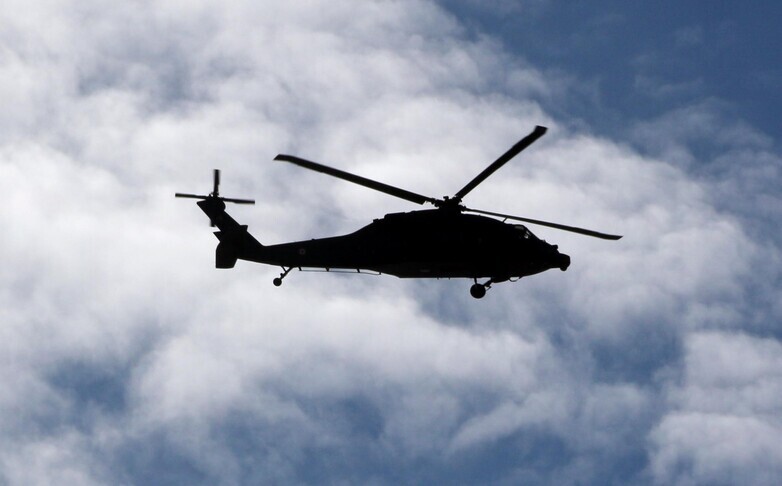
US Air Force helicopter makes precautionary landing in Washington
-

 Wisconsin16 minutes ago
Wisconsin Lottery Powerball, Pick 3 results for July 13, 2026
-

 West Virginia22 minutes ago
West Virginia Wildlife Center’s popular ‘Rendezvous’ celebration returns this month
-

 Wyoming28 minutes ago
July 13 recap: Wyoming news you may have missed today
-

 Crypto34 minutes ago
Why Early Legal Action Matters After a Cryptocurrency Investment Scam
-

 Finance40 minutes ago
Goldman Sachs Sets $1 Trillion M&A Record
-

 Fitness46 minutes ago
HFA Submits Comments to USTR Regarding Trade Policy – Health & Fitness Association

