West
Kamala Harris played key role in helping man become 1st illegal immigrant with law license: report

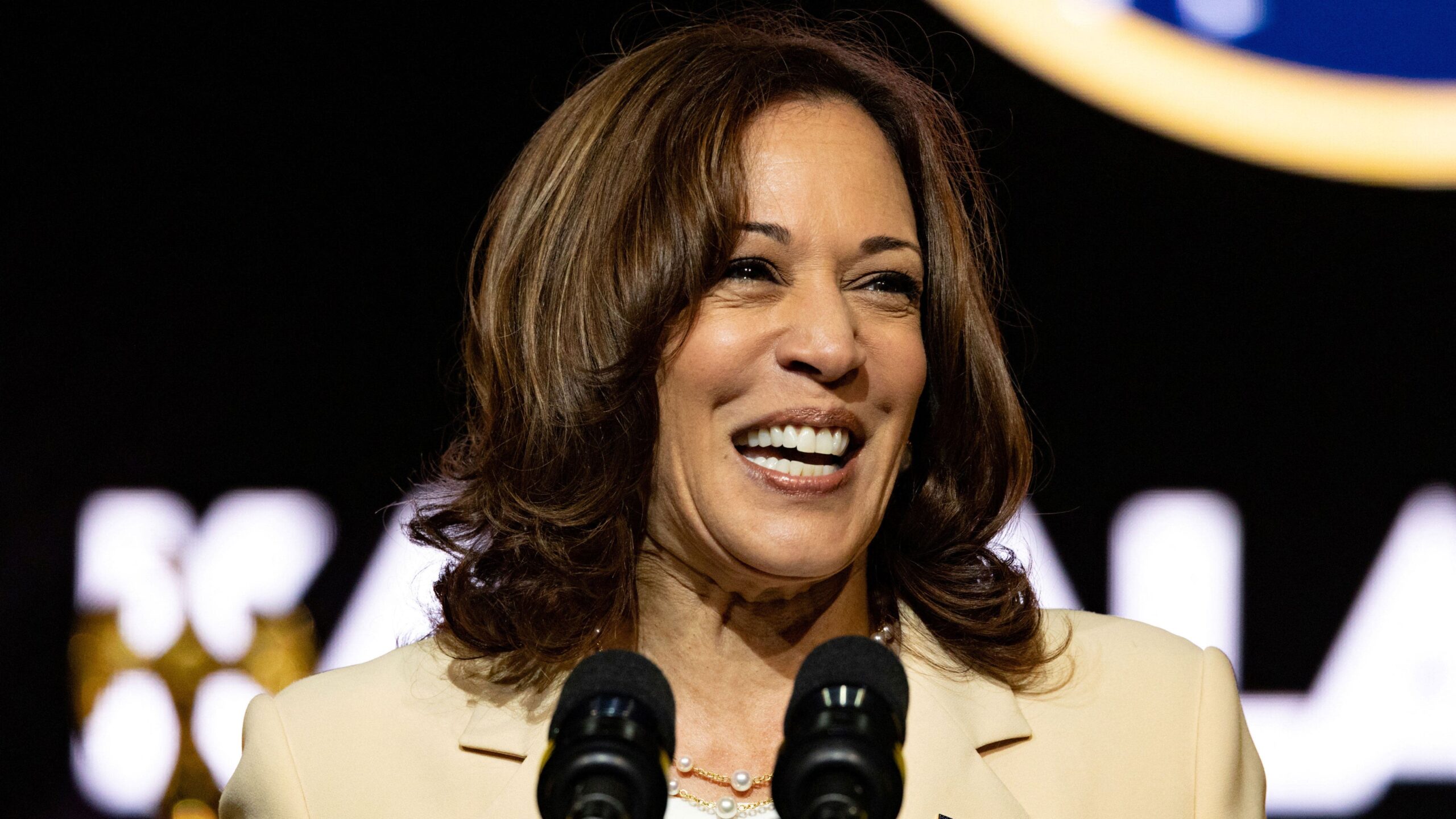
Vice President Kamala Harris was vital in a push to help an undocumented Mexican immigrant become the first licensed attorney in U.S. history.
Harris, then-California’s attorney general, came out in support of the case of Sergio Covarrubias Garcia, who in 2012 was fighting a legal battle to earn his license as an attorney, according to a report from the Sacramento Bee on Wednesday.
Garcia, whose parents permanently moved from Mexico to Northern California when he was 17, had been in a yearslong struggle to achieve his dream of becoming an attorney, with his case eventually making it all the way to the California Supreme Court.
According to the report, Garcia worked in almond fields, at a grocery store, received two degrees at a community college and a paralegal certificate from California State University, Chico. He would later go on to complete law school and pass the bar exam on his first try in 2009. However, the California Supreme Court initially blocked him from obtaining his license.
KAMALA HARRIS SUPPORTERS UNSURE WHEN ASKED ABOUT VP’S POLICY ACCOMPLISHMENTS
Vice President Kamala Harris. (Reuters/Hannah Beier)
The battle was highly publicized, attracting the attention of the Obama administration, who publicly opposed his case, with the Obama Justice Department arguing that a 1996 law was “plainly designed to preclude undocumented aliens from receiving commercial and professional licenses issued by states and the federal government.”
While Harris serves today in the President Biden administration, she publicly bucked President Obama’s administration, where President Biden was then serving as vice president, going so far as to write a brief backing Garcia’s legal case and provided him an attorney from her office to argue on his behalf in front of the state’s Supreme Court.
The state bar, civil rights groups and Latino lawmakers in the state all came out in support of Garcia, the report notes, though Harris’ endorsement “made the difference,” Kevin Johnson, the dean of UC Davis’ law school, told the Sacramento Bee.
“When the highest law enforcement officer of a state weighs in and says this is legal, this is permissible, this is possible, the Supreme Court of the State of California listens,” said Johnson, who also represented the State Bar of California in support of Garcia’s case. “She could have ducked and covered and tried to avoid any political controversy. But she sided with the State Bar of California and Sergio Garcia, so, I respect her for that.”
In an amicus brief filed by Harris in support of Garcia, the then-attorney general staked out an opposite position to the Obama administration, arguing that the undocumented migrant receiving a license to practice law was in line with state and federal policies that “encourage immigrants, both documented and undocumented, to contribute to society.”
Former President Obama, left, and President Biden arrive at a ceremony to unveil the official Obama White House portraits at the White House on Sept. 7, 2022 in Washington, D.C. (Photo by Kevin Dietsch/Getty Images)
HOW LONG WILL THE KAMALA HARRIS HONEYMOON IN THE POLLS AGAINST DONALD TRUMP LAST?
“It is not a crime either to be present or to work in the United States without immigration status, and Garcia has never been charged with the crime of unlawful entry,” Harris’ office wrote in the brief. “In fact, Garcia has been forthright about his immigration status with federal officials and has been approved for a visa when one becomes available.”
The state’s Supreme Court ultimately sided with Harris unanimously, making Garcia the nation’s first undocumented attorney and inspiring a 2014 state law that allowed immigrants without legal status to apply for professional licenses.
The highlighting of Garcia’s case comes as Harris has entered the spotlight as the presumptive Democratic nominee for president, with her record on immigration attracting particular attention after she was handed the task of solving the “root causes” of illegal migration by Biden in 2021.
Garcia, who now practices law in Chico, California, told the Sacramento Bee that Harris took a big risk by taking his side in the case over a decade ago.
“There was absolutely nothing she could gain from supporting me and a lot to lose,” Garcia said.
Vice President Kamala Harris was tasked early on in the Biden administration with addressing the root causes of mass migration from Central and South America. (REUTERS/Kevin Mohatt/Pool)
However, he now expresses some disappointment in how the Biden administration has handled immigration and outreach in the Latino community. Garcia, who said he will still support her bid for president, hopes Harris will now push for immigration reform and to “shine for the immigrant community” by helping the 11 million undocumented immigrants who currently live in the United States.
“I hope if she gets to become president that she gets to show to the rest of the country, and especially the rest of the Latino community, the person that she showed me,” Garcia said.
The Harris campaign did not immediately respond to a Fox News Digital request for comment.
Read the full article from Here

San Francisco, CA
San Francisco rolls out heightened security measures ahead of World Cup knockout match, 4th of July

The city of San Francisco is taking heightened police and security measures in advance of two major events in the Bay Area this week – the 4th of July and the first knockout round of the FIFA World Cup.
Mayor Daniel Lurie hosted a press conference Monday to address the public on how the city plans to manage the overlapping swarms of soccer fans and 4th of July revelers.
“No matter the occasion, our top priority, and my top priority, remains the same: keeping San Francisco residents and visitors alike safe,” said Lurie.
The two events would be major draws for crowds independently, but combined, and with special occasions marking both, the city wants to ensure that security is a top priority.
The World Cup has already brought hundreds of thousands of people from across the country and the world to the Bay Area, but this week’s game at Levi’s Stadium in Santa Clara is especially notable for the San Francisco as the host city and the United States as a host nation. The stadium, renamed San Francisco Bay Area Stadium for the duration of the World Cup, will host the knockout round match between the U.S. and Bosnia and Herzegovina on Wednesday.
Official fan zones and watch parties for the U.S. match, as well as for Mexico’s match against Ecuador on Tuesday, will be held at multiple locations in San Francisco, including at Thrive City at the Chase Center and at the Pier 39 Fan Zone.
This year’s 4th of July in San Francisco, which already boasts large crowds across the city each year, will have another draw as the city prepares to celebrate the nation’s 250th birthday. The city will be hosting a fireworks show on the Golden Gate Bridge on Saturday night – only the third time that pyrotechnics have ever been set off from the iconic San Francisco landmark. Fireworks will be launched off the two towers of the bridge and from barges in the water.
The Golden Gate Bridge show will be the only official one in the city – fireworks are illegal in San Francisco.
Authorities advised attendees to use public transportation and to leave plenty of time on both ends of their travel for traffic and delays. Caltrans has announced road closures and detours on U.S. Highway 101 and the entire Golden Gate Bridge for the fireworks show.
San Francisco Police Chief Derrick Lew said the department is collaborating with multiple state and local agencies to keep people safe, and that police officers have had their days off cancelled to meet the staffing needs that July 4 will require.
“This week will be safe because that’s what we’ve been doing every day,” Lurie said. “It is a glorious time to be here in San Francisco.”
Lurie cited past heavily attended events like Sunday’s San Francisco Pride Parade and Super Bowl 60 in February as examples of the city’s successful management of major crowds.

The Nuggets are declining Jalen Pickett’s fourth-year team option for the 2026-27 season, releasing him from his contract, league sources told The Denver Post.
Former Nuggets general manager Calvin Booth drafted Pickett with the 32nd overall pick in 2023. The 6-foot-2 reserve combo guard has struggled to break into Denver’s everyday rotation throughout his first three years in the league.
His $2.41 million salary next season would’ve offered the Nuggets a sliver of cap relief, but they chose instead to move on from the former Penn State star. Monday was the deadline to make a decision on his option.
Pickett, 26, averaged 5.2 points, 2.3 rebounds and 2.3 assists in 16.1 minutes per game last season. He appeared in 50 games, highlighted by a career-high 29-point, seven-assist performance in January to lead the Nuggets in an upset over Philadelphia without their entire starting lineup.
Pickett is shooting 38.7% from the 3-point line on two attempts per game in his first three years. He also boasts a sturdy 3.63 career assist-to-turnover ratio.
But he’s remained a deep bench option under two different head coaches in Denver, from Michael Malone to David Adelman. Booth was fired in April 2025. Then, new co-general managers Jon Wallace and Ben Tenzer signed veteran point guard Tyus Jones off the buyout market late last season when the Nuggets wanted ball-handling depth. Jones received playoff minutes over Pickett during their first-round series against the Timberwolves.
Want more Nuggets news? Sign up for the Nuggets Insider to get all our NBA analysis.

Skip to content
-
 Business1 minute ago
Rocket Lab enters satellite communications market with $8-billion deal
-
 Entertainment6 minutes ago
Jesús Ortiz Paz and Jimmy Humilde took their legal dispute to Instagram. Here’s the breakdown
-

 Lifestyle13 minutes ago
Inside Hearts On Fire’s Plan For a New Era of Diamond Jewellery
-
 Politics16 minutes ago
Anthropic partners with California to expand AI use by government workers
-
 Sports28 minutes ago
Lions release cornerback Terrion Arnold soon after judge sets his bond at $1 million
-

 World36 minutes ago
EU will ‘come to its senses’ on Israel, former Netanyahu adviser says
-
 News1 hour ago
Senate Ethics Committee dismisses complaint against Sen. Ruben Gallego
-

 New York2 hours ago
Read the Indictment of Malik Beasley

