Washington
UK police special enquiry team to examine role of Washington Post chief in email deletions


A British police special enquiry team is examining allegations that Will Lewis, now the chief executive of the Washington Post, presided over the deliberate destruction of emails at Rupert Murdoch’s UK newspaper business when he worked for the company 13 years ago.
The Met has told the former Labour prime minister Gordon Brown that its standing unit responsible for high-profile cases is reviewing a complaint he had submitted about Lewis after fresh disclosures emerged during civil actions relating to the phone-hacking scandal.
The letter, seen by the Guardian, is signed by the Met’s most senior officer, Mark Rowley, and tells Brown: “Please be assured that the contents of your letter, dated 2 May 2024, is being considered by the Met’s special enquiry team.”
The police chief adds: “The issues you raise are complex and will take time to consider against investigations that have already taken place.”
Brown’s original letter to Rowley had urged him to review new evidence relating to “the concealment and destruction of up to 30 million emails, hard drives and documents” – and police to launch an investigation “into the destruction of evidence” and “the cover-up that followed”.
In response, Brown, writing in the Guardian, questions whether Lewis is an appropriate leader for the flagship US newspaper owned by the billionaire founder of Amazon, Jeff Bezos – accusing Lewis of displaying a “lack of ethics” when he worked for Murdoch during the hacking scandal.
“Blazoned across the top of every edition of the Washington Post is the statement, ‘Democracy dies in darkness.’ But what if the publisher himself is a master of the dark arts?” Brown says.
The former PM goes on to accuse Lewis of trying to mislead British detectives investigating phone hacking at the News of the World in the summer of 2011 – by telling police that Brown himself was behind a plot to steal emails of senior executives at the tabloid’s UK owner, Murdoch’s News International.
“I have only recently discovered how Lewis attempted to accuse me of a crime I did not commit,” Brown says. He accuses Lewis of being engaged in a “complete fabrication”.
“While Lewis has always claimed that he was Mr Clean Up, these new allegations point to a cover-up,” he says.
Documents disclosed in high court civil actions this week include a minute taken by the Met police of a meeting detectives had with Lewis on 8 July 2011. Detectives were inquiring into the deletion of emails belonging to senior executives at Murdoch’s newspaper company.
In the meeting, Lewis justified the deletions by accusing Brown of “controlling” a plot with the former Labour MP Tom Watson to obtain the emails of Rebekah Brooks, the then chief executive of News International, through a third party. Lewis was the company’s general manager at the time.
“We got a warning from a source that a current member of staff had got access to Rebekah’s [Brooks’] emails and had passed them to Tom Watson MP,” Lewis told the police, who told officers he went on to meet the individual behind the claim.
“The source repeated the threat,” Lewis continued, according to the police memo. “Then the source came back and said it was a former member of staff and the emails had definitely been passed and that it was controlled by Gordon Brown.”
Brown writes that the police officer who headed the initial hacking investigation, Sue Akers, now regards this explanation as unbelievable, citing comments she made to the New York Times earlier this month. “Gordon Brown was obviously one of the victims,” she said. “The thought that he would do that is ludicrous.”
A spokesperson for the Washington Post said that Lewis declined to comment. He has consistently denied allegations of wrongdoing.
Lewis has enjoyed a high-flying career before and after the hacking scandal. He remained at News International until 2014, then moved on to another senior role in the Murdoch empire, as chief executive of Dow Jones, publisher of the Wall Street Journal, until 2020.
Lewis was picked by Bezos to become chief executive of the Washington Post last year, and he caused controversy at the US paper by trying to appoint an old ally, the Briton Robert Winnett, as editor. After a furore, Winnett eventually decided not to take up the job.
In June, Bezos sent a memo to staff at the newspaper, defending Lewis: “Team – I know you’ve already heard this from Will, but I wanted to also weigh in directly: the journalistic standards and ethics at The Post will not change.”
Brown said he now he believed the Met police memo demonstrated that Lewis “gave the game away” because “his explanation conceded that the emails were destroyed to prevent them being seen”.
The email archives of a handful of senior executives at Murdoch’s UK operation, including those of Lewis and Brooks, had been deleted a few months earlier in January 2011, during a period in which allegations of phone hacking at the News of the World were growing.
Brown writes: “The destroyed emails that the police wanted were likely to have revealed much more of News Group’s intrusion into the private lives of thousands of innocent people, not least ordinary families hit by tragedy, and almost certainly would have added to what I have only recently discovered about what happened to me.”
Back in July 2011, Lewis told police that Brooks was anxious about her emails becoming public, because of her professional relationship with Tony Blair, Brown’s predecessor as prime minister. “She was a Tony Blair supporter whilst she was editor of the Sun,” Lewis told officers.
“They were very good friends. There was potential for that to be used against her in a negative way,” Lewis said.
Civil actions relating to alleged phone hacking have been running in the English courts for more than a decade. Murdoch’s News Group has paid out hundreds of millions and settled more than 1,300 lawsuits relating to hacking at the now-closed News of the World, but always rejected allegations of wrongdoing at the Sun.
Brown writes in the Guardian he already knew that the Sunday Times had, among other things, “accessed information about my mortgage from my building society, had reverse engineered my telephone number, had faked my voice to secure personal information about me from my lawyer, and had paid an investigator to break into the police national computer to find out what personal information about me was available.”
But he claims he now knows the intrusion went much further than that.
“More recently, I have been given information that the Murdoch group also paid investigators to break into other personal accounts of mine – including bank, gas and electricity – suggesting that nothing was out of bounds.” Brown explains.
Murdoch’s goals were political and commercial, the former prime minister argues. The media mogul wanted to take full control of Sky television, buy control of ITV, “neuter the BBC” and “control much of the highly profitable UK telecoms industry, all of which the Conservatives were ready to go along with”.
A spokesperson for Murdoch’s News UK said that Brown had only seen “partial information” from the civil cases and “does not have access to all material including detailed statements served by the defence”.
They added: “He is seeking to persuade the Met to take sides in a public debate.”
It was “strongly denied” that News International “sought to impede or worse conceal evidence from the Met” by deleting emails, the spokesperson added.
They cited a Crown Prosecution Service statement from December 2015, which said: “There is no evidence to suggest that email deletion was undertaken in order to pervert the course of justice.”

Washington
Whoopi Goldberg, Kerry Washington and More Celebrate Opening Night of The Whoopi Monologues

Kara Young, Dominique Fishback, Kecia Lewis, Kerry Washington and Danielle Pinnock
(Photo by Sergio Villarini for Broadway.com)
The Whoopi Monologues opened on July 13 at Lincoln Center Theater’s Mitzi E. Newhouse Theater, reimagining Whoopi Goldberg’s 1984 one-woman show as an ensemble piece. The cast, which features Kerry Washington, Kara Young, Dominique Fishback, Kecia Lewis and Danielle Pinnock, assembled on opening night to serve red carpet glam. Cedric The Entertainer, Don Cheadle, Angela Bassett, Ana Navarro and Goldberg herself also turned up in their finery. Scroll down for some hot shots of the stars in attendance and check out the full gallery below!

Get Tickets to The Whoopi Monologues!

Diyar Guldogan
14 July 2026•Update: 14 July 2026
A US Air Force helicopter made a precautionary landing in northwest Washington, DC late Monday, local media reported.
The incident occurred at approximately 9.25 p.m. (0125GMT Tuesday) when a UH-1N Huey helicopter assigned to the 1st Helicopter Squadron at Joint Base Andrews, Maryland landed along Foxhall Road near Whitehaven Parkway NW, close to the Georgetown Reservoir.
All four crew members who were on board are safe, according to media reports.
Maintenance personnel and law enforcement officials remained at the scene into the early hours of Tuesday as authorities assessed the aircraft and investigated the circumstances surrounding the landing.

See what a ‘super’ El Niño could bring
USA TODAY Network reporter Brandi D. Addison breaks down what a strong El Niño could mean for weather patterns across the country.
It may be the middle of July, but the Old Farmer’s Almanac is already looking ahead to the fall with cooler temperatures ahead.
The Almanac, which has been one of the most trusted weather prediction sources for more than two centuries, recently released its fall forecast, showing a wide range of weather throughout the United States.
But what about in the Washington DC region? Here’s what the Almanac says.
What is the fall weather forecast in the Washington DC area?
DC sits along the Almanac’s Atlantic Corridor, and that region should expect a “cool, dry” fall, according to the forecast.
“Expect cooler and wetter conditions than usual this fall,” the Old Farmer’s Almanac says. “Below average temperatures are forecast, along with an uptick in precipitation over traditional averages.”
Last year, DC received 6.53 inches of rain during September, October and November — significantly lower than the city’s 30-year average of 10.50 inches, according to the National Weather Service.
September’s average temperature was 72.2 degrees, with October at 60.3 and November at 49.9 degrees. The season had an average temperature of 60.8 degrees, slightly below the 30-year average of 61.0 degrees.
What does the Farmer’s Almanac say about winter in Washington DC?
In its long-range forecast, the Almanac forecasts above average temperatures this winter in DC with snowfall below normal.
“The coldest periods will occur in mid- to late-December and early and late January,” it says. “The snowiest periods will be in late December, early January, and late February.”
The Old Farmer’s Almanac says it is 80% accurate, but a 2017 University of Illinois study found it to be just 52% accurate.
-
Science31 minutes ago
New Winged Robot Can Fly and Swim Like a Puffin
-
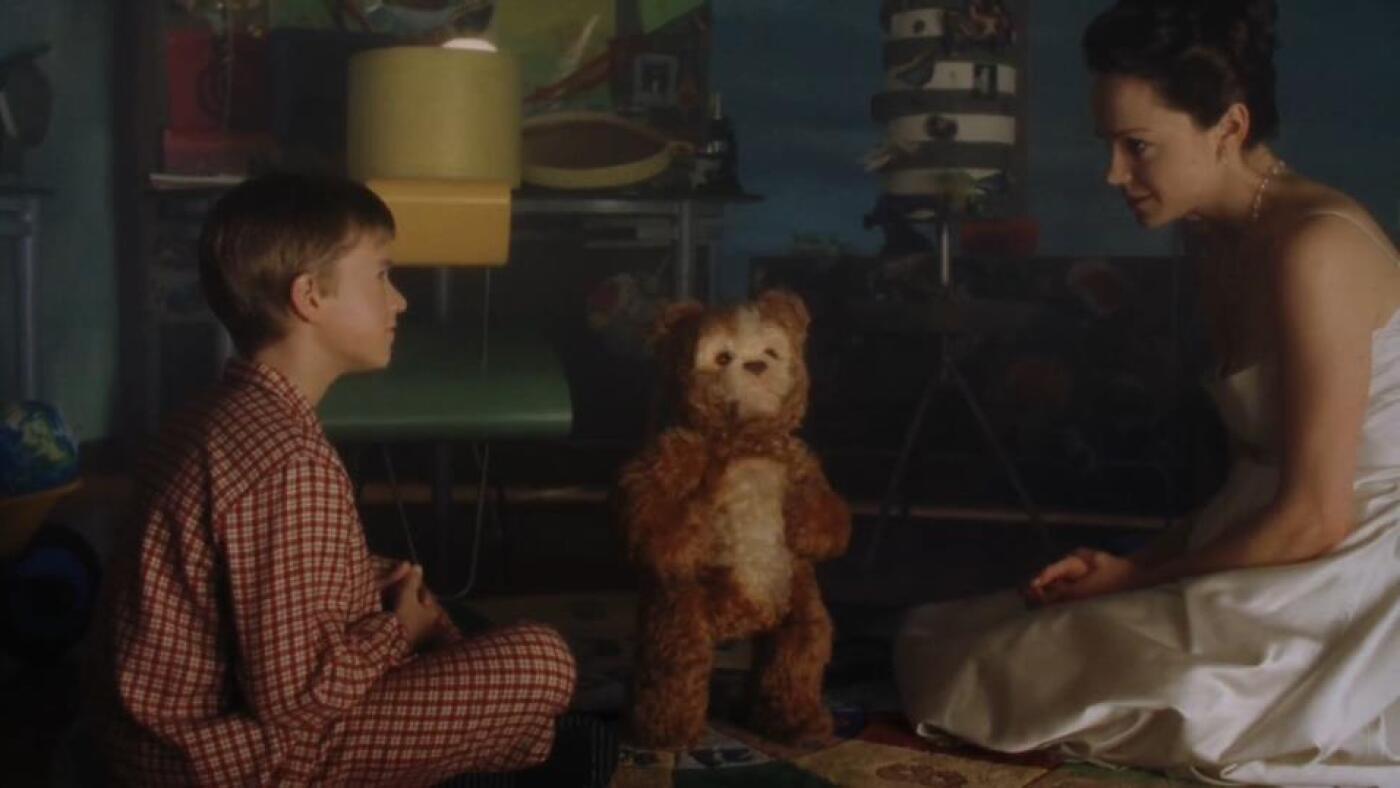 Lifestyle55 minutes ago
‘The Trojan Teddy Bear’: The promise and peril of childhood in the age of AI
-

 Technology1 hour ago
Google and Epic give up fighting — third-party Android app stores are coming next week
-

 World1 hour ago
FBI snares an American heir indicted for allegedly bankrolling anti-cop, pro-Hamas communist revolution
-

 Politics1 hour ago
Biden special counsel’s ‘runaway train’ scooped up sensitive lawmaker info: ‘Abuse of power’
-

 Health1 hour ago
‘Miracle on the Hudson’ hero Captain ‘Sully’ Sullenberger reveals Alzheimer’s diagnosis
-

 Sports2 hours ago
American League stars outshine National League in 96th MLB All-Star game
-

 Technology2 hours ago
Before you connect another smart TV, tablet or phone, lock it down

