Mississippi
Court says voting ban for felons in Mississippi can be altered by lawmakers, not judges


(AP) – Mississippi legislators, not the courts, must decide whether to change the state’s practice of stripping voting rights from people convicted of certain felonies, including nonviolent crimes such as forgery and timber theft, a federal appeals court ruled Thursday.
The state’s original list of disenfranchising crimes springs from the Jim Crow era, and attorneys who sued to challenge the list say authors of the Mississippi Constitution removed voting rights for crimes they thought Black people were more likely to commit.
A majority of judges on the 5th Circuit Court of Appeals wrote that the Supreme Court in 1974 reaffirmed constitutional law allowing states to disenfranchise felons.
“Do the hard work of persuading your fellow citizens that the law should change,” the majority wrote.
Nineteen judges of the appeals court heard arguments in January, months after vacating a ruling issued last August by a three-judge panel of the same court. The panel had said Mississippi’s ban on voting after certain crimes violates the U.S. Constitution’s prohibition against cruel and unusual punishment.
In the ruling Thursday, dissenting judges wrote that the majority stretched the previous Supreme Court ruling “beyond all recognition.” The dissenting judges wrote that Mississippi’s practice of disenfranchising people who have completed their sentences is cruel and unusual.
Tens of thousands of Mississippi residents are disenfranchised under a part of the state constitution that says those convicted of 10 specific felonies, including bribery, theft, arson and bigamy, lose the right to vote. Under a previous state attorney general, who was a Democrat, the list was expanded to 22 crimes, including timber larceny — felling and stealing trees from someone else’s property — and carjacking.
About 38% of Mississippi residents are Black, according to the Census Bureau. Nearly 50,000 people were disenfranchised under Mississippi’s felony voting ban between 1994 and 2017, and about 59% of them were Black, according to an expert who analyzed data for plaintiffs in a lawsuit challenging the ban.
To have their voting rights restored, people convicted of any of the crimes must get a pardon from the governor, which rarely happens, or persuade lawmakers to pass individual bills just for them with two-thirds approval. Lawmakers in recent years have passed few of those bills. They passed 17 this year and none in 2023.
In March, a Mississippi Senate committee leader killed a proposal that would have allowed automatic restoration of voting rights five years after a person is convicted or released from prison for some nonviolent felonies. The bill passed the Republican-controlled House 99-9, but Senate Constitution Committee Chairwoman Angela Hill said she blocked it because “we already have some processes in place” to restore voting rights person by person.
In 1950, Mississippi dropped burglary from the list of disenfranchising crimes. Murder and rape were added in 1968. Two lawsuits in recent years have challenged Mississippi’s felony disenfranchisement.
Attorneys representing the state in one lawsuit argued that the changes in 1950 and 1968 “cured any discriminatory taint.” The 5th Circuit Court of Appeals court agreed in 2022, and the Supreme Court said in June 2023 that it would not reconsider the appeals court’s decision.
People who challenged Mississippi’s felony voting ban are “exploring next steps” after Thursday’s ruling, said Jon Youngwood, co-chairman of the litigation department at the Simpson Thacher & Bartlett law firm.
“We are heartened by the opinion of the six dissenting judges, which encapsulates the importance of this case,” Youngwood said in a statement. “As they write, voting is ‘the lifeblood of our democracy.’ Denying broad groups of our citizens, for life, the ability to have a role in determining who governs them diminishes our society and deprives individuals of the full rights of representative government.”
The 5th Circuit is one of the most conservative appeals courts. It is based in New Orleans and handles cases from Louisiana, Mississippi and Texas.
The 19 judges who heard the arguments in January include 17 on active, full-time status, and two on senior status with limited caseloads and responsibilities.
The majority opinion was written by Judge Edith Jones, who was nominated by Republican former President Ronald Reagan and is still on active status. The result was agreed to by the 11 other active judges appointed by GOP presidents. A nominee of Democratic President Joe Biden, Judge Irma Ramirez, voted with the majority to reject the earlier panel decision.
The dissent was written by Judge James Dennis, who was nominated by former President Bill Clinton and now is on senior status. He was joined by Senior Judge Carolyn Dineen King, nominated by former President Jimmy Carter, and five other Democratic nominees on active service with the court.
Dennis, King and Jones made up the three-member panel whose 2-1 decision was reversed.
Copyright 2024 The Associated Press. All rights reserved.



Odds of winning the Powerball and Mega Millions are NOT in your favor
Odds of hitting the jackpot in Mega Millions or Powerball are around 1-in-292 million. Here are things that you’re more likely to land than big bucks.
The Mississippi Lottery offers several draw games for those aiming to win big.
Here’s a look at July 16, 2026, results for each game:
Winning Mississippi Match 5 numbers from July 16 drawing
02-09-28-33-35
Check Mississippi Match 5 payouts and previous drawings here.
Winning Cash 3 numbers from July 16 drawing
Midday: 8-1-2, FB: 5
Evening: 8-7-4, FB: 5
Check Cash 3 payouts and previous drawings here.
Winning Cash 4 numbers from July 16 drawing
Midday: 2-0-5-6, FB: 5
Evening: 5-3-9-0, FB: 5
Check Cash 4 payouts and previous drawings here.
Winning Cash Pop numbers from July 16 drawing
Midday: 14
Evening: 10
Check Cash Pop payouts and previous drawings here.
Feeling lucky? Explore the latest lottery news & results
Story continues below gallery.
Are you a winner? Here’s how to claim your lottery prize
Winnings of $599 or less can be claimed at any authorized Mississippi Lottery retailer.
Prizes between $600 and $99,999, may be claimed at the Mississippi Lottery Headquarters or by mail. Mississippi Lottery Winner Claim form, proper identification (ID) and the original ticket must be provided for all claims of $600 or more. If mailing, send required documentation to:
Mississippi Lottery Corporation
P.O. Box 321462
Flowood, MS
39232
If your prize is $100,000 or more, the claim must be made in person at the Mississippi Lottery headquarters. Please bring identification, such as a government-issued photo ID and a Social Security card to verify your identity. Winners of large prizes may also have the option of setting up electronic funds transfer (EFT) for direct deposits into a bank account.
Mississippi Lottery Headquarters
1080 River Oaks Drive, Bldg. B-100
Flowood, MS
39232
Mississippi Lottery prizes must be claimed within 180 days of the drawing date. For detailed instructions and necessary forms, please visit the Mississippi Lottery claim page.
When are the Mississippi Lottery drawings held?
- Cash 3: Daily at 2:30 p.m. (Midday) and 9:30 p.m. (Evening).
- Cash 4: Daily at 2:30 p.m. (Midday) and 9:30 p.m. (Evening).
- Match 5: Daily at 9:30 p.m. CT.
- Cash Pop: Daily at 2:30 p.m. (Midday) and 9:30 p.m. (Evening).
This results page was generated automatically using information from TinBu and a template written and reviewed by a Mississippi editor. You can send feedback using this form.
Mississippi
Mississippi homeowners blame a noisy data center plant for sleepless nights. The mayor’s advice? “Consider selling.”

It was 4 a.m. on a Sunday and 46-year-old Jason Haley was once again wide awake.
The suburban silence that Haley had grown used to in his two decades as a resident of Southaven, Mississippi, had, for the last few months, been replaced by a constant whirring, like an airplane hovering over his home, he said.
The noise keeping Haley awake was coming from a plant powering Elon Musk’s xAI data centers in the area, according to a lawsuit filed in June against the company and its subsidiary, MZX Tech. Haley and two other Southaven residents, who live within a mile of the plant, allege in the suit that “near-constant” noise and vibrations are causing negative physical and psychological health effects.
The filing comes amid growing resistance toward data center development, with the majority of Americans opposing local construction of a data center, according to a Gallup poll published earlier this year.
Similar disputes are playing out across the country, like in Mount Pleasant, Wisconsin, where a lawsuit this month filed by residents alleges a data center emits “unreasonable and excessive noise” onto residents’ properties and in Lowell, Massachusetts, where noise from a data center’s cooling center “disrupts neighbors’ sleep,” according to an April suit.
There are more than 4,000 data centers in the U.S., according to a recent United Nations report. To power the data centers, developers are building their own plants, sometimes with little warning to residents like Haley.
Haley reached out to Southaven Mayor Darren Musselwhite about the noise in emails he shared with CBS News. In one last November, he urged Musselwhite to drive through the neighborhood “and take a listen to the constant high pitch noises.”
“I am aware of the noise and working on a solution with xAI officials,” Musselwhite had responded to Haley an hour later. “It is a problem,” he said in another email later in the day.
But soon, another sleepless night rolled around and Haley was emailing the mayor again.
“Anyone else I can reach out to?” Haley wrote to Musselwhite. “It’s almost 4 am and I can hear it from my bed. The high pitch and roaring combined is full force at this time. My ears are ringing. I can’t live in this. How was this ever approved?”
“I don’t care that this is Elon’s project”
Just north of Southaven, which sits on the Mississippi-Tennessee border, xAI’s data center Colossus went online in Memphis in September 2024. The company dubbed it “the world’s largest AI supercomputer.”
By late July 2025, Musk was announcing that another data center, Colossus 2, was set to begin operation in the area within weeks.
Days later, an announcement popped into the Facebook feeds of Southaven residents: An energy facility that had been dormant for decades will be revived to support xAI’s expanding data center operations in the area, Musselwhite said.
The post was met by a flood of comments, with some lauding the development and others expressing concern about the plant’s impact on the environment and strain on local resources.
Meanwhile, Haley started hearing sounds.
“My first thought was somebody’s got a leaf blower going all the time,” he said.
By December, the noise had become a fixture. He started getting headaches, stopped getting sleep and slipped into feelings of hopelessness and depression. The noise was inescapable, he said, and despite his best efforts to drown it out (sleeping with earplugs, getting a box fan for white noise), it continued to drone on.
So Haley began speaking up — at city government meetings, on Facebook and through TikTok, where he posts videos of himself measuring the noise with a sound meter. He later became involved in a grassroots coalition called Safe and Sound, drawing awareness to concerns surrounding xAI’s undertakings in the region.
The “activist” label is one he’s reluctantly accepted.
“I’ve never been into any kind of activism, never really kept up with politics a whole lot,” he said. “I’m just a guy that has a problem with this noise, and started speaking out and trying to raise awareness.”
When he emailed Musselwhite about the noise again in December, his message came with a disclosure: “I am not a republican or democrat, I don’t care that this is Elon’s project. I didn’t know whose it was when I started complaining about the noise that started in August.”
Musselwhite responded a few days later.
“As I mentioned to you in the public meeting, you seem to be a reasonable person,” he said. “I will give you some unsolicited advice from an older man, be careful with whom you associate so you don’t damage your credibility.”
By January, xAI was expanding its footprint with a third data center in Southaven, MACROHARDDR. As residents like Haley continued pushing back online and in city meetings, Musselwhite had a new message.
Southaven, he said in a Facebook post, was “under attack by all who choose to oppose Elon Musk because of his high-profile political stances.” He warned residents to “beware of the smokescreen of radical politics.”
In his emails to Haley, Musselwhite continued to acknowledge the noise as a problem.
“The noise issue is one of my highest priorities and I have been in detailed discussions with xAI and many independent professionals to resolve this,” he wrote in March.
But in the same email, he offered Haley more advice: “I know they want houses for employees, so you may want to consider selling your home.”
CBS News made multiple attempts to speak with Musselwhite and did not receive a reply.
Migraines, ringing ears and sleepless nights
Moving isn’t Haley’s preference, but he said he is in the financial position to do so if he chooses.
That’s not the case for everyone.
A little over a decade ago, 31-year-old Taylor Logsdon bought a home for her growing family in Southaven and began building her life around it.
“We loved it here,” she said. “It was peaceful, it was quiet, didn’t have to worry about nothing.”
But that was before the noise, so loud, she said, that it sometimes shakes her home. Logsdon, who is also involved in the Safe and Sound coalition and is suing xAI with Haley and one other Southaven resident, said she has experienced migraines and anxiety as a result of the noise.
She said she has persistent ringing in her ears and so do her children. A full night of sleep has become rare for the family.
“I would move tomorrow if I could,” she said, adding that she needs to save money before she can afford to move.
Her children, all under the age of 13, are having trouble staying awake at school.
“One of them is extra angry all the time — never, never has been that way, but he’s just irritable like all the time,” she said. “I feel like I’m snappier too.”
xAI spent millions of dollars trying to mitigate the sound with a sound wall, a berm and evergreen trees, Musselwhite said in a February Facebook post.
“It still hasn’t helped. It hasn’t even put a dent in it,” Logsdon said.
People living in areas where there is “constant humming or buzzing” report headaches, stress and sleep disturbance, said Dr. Samoon Ahmad, a clinical professor of psychiatry at New York University.
A 2023 study found that environmental noise exposure can lead to adverse associations for cardiovascular disease and mortality, diabetes, hearing impairment, neurological disorders and adverse reproductive outcomes.
“People think of annoyance as an abstract term,” Ahmad said. “It’s not an abstract term because it has real physiological ramifications.”
The World Health Organization recommends less than 40 decibels of annual average nighttime noise outside of bedrooms to prevent adverse health effects. Haley has recorded noise levels over 60 decibels as late as 10:15 p.m. from his Southaven backyard.
Musk’s Memphis
Even before Logsdon and Haley decided to take action against xAI, Musk’s growing presence in the Memphis area garnered attention from advocacy groups over health and environmental concerns.
The National Association for the Advancement of Colored People filed a lawsuit in April against xAI claiming the Southaven plant emits “significant” amounts of harmful pollutants from its 27 gas turbines, which has since increased to 59, according to a court filing reviewed by CBS News. The NAACP has also filed an appeal to challenge the Mississippi Department of Environmental Quality’s decision to issue an air permit allowing the Southaven plant to operate 41 permanent methane gas turbines. An independent study found their operation would increase air pollution in an area already grappling with a disproportionate number of asthma-related emergency room visits.
CBS News has reached out to xAI for comment.
Musk’s investment in the latest Southaven data center brings his company’s contribution to the area to $20 billion, according to the office of Mississippi Gov. Tate Reeves. The governor called it “the largest economic development project in Mississippi’s history.”
Musk’s financial footprint has also extended beyond the data centers — MZX Tech donated over $1.3 million to the Southaven Police Department in February, according to the donation agreement obtained by CBS News, and has offered half-priced Starlink for those in the Memphis region.
But Logsdon says the cost to her and her family’s health has her wondering why it feels like her city is willing to “hurt the few to get the benefits.”
“We were not a failure town before,” Logsdon said. “It’s not like our economics were terrible here.”
Southaven had a median household income of over $70,000 in 2024, according to the U.S. Census Bureau — $20,000 more than the state average.
Logsdon, currently a stay-at-home mom, will be searching for work this fall so she and her husband can start saving up to move away from the plant. For now, her goal is a full night’s sleep.
“I hope that my family can go back to having our normal,” she said. “Being able to sleep at night, being able to enjoy my backyard, being able to go swimming.”

GPS data from the Mississippi Department of Marine Resources, obtained by CBS News, tracks the movements of the boat that carried Nolan Wells to Horn Island on July 4. Wells was found dead after going missing following an outing on the island.
The vessel left a dock at approximately 9:56 a.m. that morning and arrived at Horn Island at 11:14 a.m. CBS News has previously reported that Wells was not on the boat when it departed the island.
According to the GPS data, the boat left Horn Island at 4:31 p.m. and returned to its original departure dock. It then traveled into Fort Bayou around 5:52 p.m. before returning to the dock at 6:06 p.m.
Later that evening, the boat went to the Fort Bayou boat launch at 7:19 p.m., according to the MSDMR report. From there, it traveled over land — presumably towed by a vehicle — to the Biloxi, Mississippi, residence of the boat’s owners.
The MSDMR report indicates that the boat’s owner, his mother and one other individual who was reportedly with Wells on the day of the incident have cooperated with the investigation.
The department’s report ends on July 5, following notification that the Jackson County Sheriff’s Office would take over as the lead investigative agency.
Wells, 18, was last seen on July 4 on Horn Island, where he had taken a boat trip with friends to celebrate the holiday, officials said. Wells traveled to the island with his friends but did not return to the mainland with them that afternoon, Jackson County Sheriff John Ledbetter has said.
He was last seen on the island at 3 p.m., according to attorney Ben Crump’s office. His mother reported him missing later that night and a search began.
His body was discovered July 6 off the coast of the island, which is about 10 miles south of the Mississippi mainland, following a search that involved the U.S. Coast Guard, the Mississippi Department of Marine Resources and the National Park Service.
Dental records confirmed the body was Wells, Jackson County coroner Bruce Lynd told CBS News. An autopsy took place on July 7, Lynd said, but the results were not immediately made public. Wells’ body was flown to Washington, D.C., for an independent autopsy, according to Crump.
Wells’ parents have said they don’t believe their son would’ve stayed behind on the island by choice when his friends left by boat.
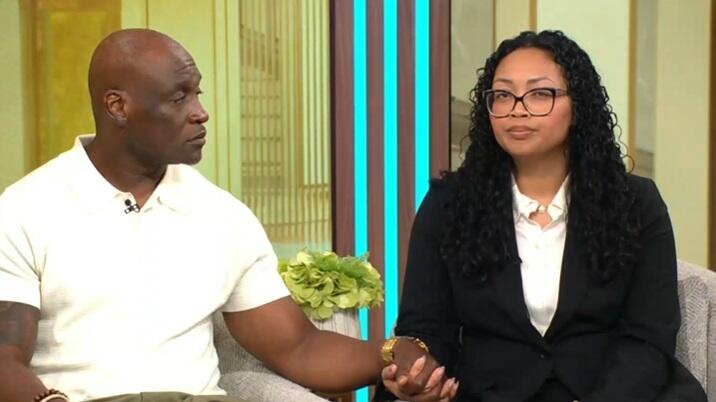
“No, he wouldn’t. Nolan always stays with the group,” Elmore Wonsley, Nolan’s father, told “CBS Mornings” last week. “If you be with me, you come back with me. So that I don’t understand, and with me being a parent, if I was in that situation, I would have told them, ‘You’re going to get back on this boat with me because I don’t want to answer to your parents if something happens to you.’”
When directly asked if he believed Nolan was left behind on the island, his father responded, “Yes. I don’t believe he decided to stay on the island by himself. It just doesn’t — that’s not his character.”
Wells went to Ocean Springs High School and was a rising sophomore on Southwest Mississippi Community College’s football team. Crump said Wells was a good swimmer.
-

 Illinois1 minute ago
Hillsboro grad, Springfield golfer Alex Eickhoff 2nd at state amateur
-
Indiana7 minutes ago
Where to watch Seattle Storm vs Indiana Fever on July 17: TV channel, start time and streaming
-

 Iowa13 minutes ago
US House Speaker campaigning in Iowa responds to President’s election fraud claims
-

 Kentucky25 minutes ago
June unemployment rate shows slight increase in Kentucky Center for Statistics latest report
-

 Louisiana31 minutes ago
How Louisiana football’s Lunch Winfield has embraced his QB1 role
-

 Maryland43 minutes ago
Great nature trails for hiking, beachcombing on Maryland’s Lower Shore
-

 Michigan49 minutes ago
Michigan’s upcoming Aug. 4 primary: What’s on my ballot?
-

 Massachusetts55 minutes ago
Noah Kahan Backs Massachusetts Bill Limiting Ticket Resale Prices

