Lifestyle
Skateboarders, weavers, kite makers: A Smithsonian party for 'Indigenous voices'


Bolivian women skateboarders — wearing traditional garb — demonstrate their skills on the half pipe.
Ben de la Cruz/NPR
hide caption
toggle caption
Ben de la Cruz/NPR
It’s a rather unusual skateboard lesson.
Little girls are lined up to learn to balance on a board on a half-pipe ramp. The teachers are young women from Bolivia, in their teens and 20s, wearing traditional garb as a tribute to female strength. Their outfits do not seem as if they are ideal for skateboarding: Each skateboarder wears a beribboned bowler hat and a poofy skirt. Among the eager disciples is Poppy Moore. She’s only 2, she’s from Virginia and she’s brought her own helmet for her very first skateboarding experience.
The scene was on the final day of this year’s Smithsonian Folklife Festival. The theme: “Indigenous Voices of the Americas.” There was skateboarding and more: kite-making, marimba-playing, textile-weaving, singing and dancing. The Washington Monument and the U.S. Capitol framed the festival tents on a breezy, blue-sky July day.

Members of a female skating collective from Bolivia offered lessons at the Smithsonian’s Folklife Festival.
Ben de la Cruz/NPR
hide caption
toggle caption
Ben de la Cruz/NPR
For Goats and Soda coverage, we focused on the Latin American contingent since we cover countries of the Global South. As we interviewed the artisans it became clear that they aren’t just local talents. They reach out far beyond their homelands, touching hearts and minds — and even mentoring a new generation of skateboarders.
We spoke to some of the artists who shared their voices at this year’s festival. It was an honor to meet them and witness their creativity. And we’d like to introduce them to you.
Hats off to these hat-wearing skateboarders
In their white bowler hats and Bolivian pollera skirts, the Indigenous all-female skateboard group ImillaSkate showed off their moves at the Folklife Festival —- and also taught beginner tricks to visitors.
“Imilla” means young girl in the Aymara and Quechua language. The skaters, from Cochabamba, Bolivia, say they formed the skating group in 2019 and were inspired by their mothers and grandmothers to wear the traditional garb, along with long twisted braids.

Bolivian skateboarders get ready for a demo.
Ben de la Cruz/NPR
hide caption
toggle caption
Ben de la Cruz/NPR
“We inherit the clothing,” says Deysi Tacuri Lopez, “and also the struggle and strength that they give us.”
“We want a lot of young girls and boys to join in on skateboarding and at the same time, to recognize their cultural identity,” she adds.
Pamela Moore brought her family to attend the Folklife Festival and her daughter Poppy went to skate for the first time at the skate workshop.
Moore’s family is Bolivian but she was born and raised in Virginia. She was delighted to see the Bolivian contingent at the festival and to see her daughter skate with the group. She says Poppy, who turns 3 this summer, was very proud of her achievement.
Guys appreciate the skaterboarders, too. Aaron Davis of Washington, D.C., a member of the skateboarding nonprofit The D.C. Wheels, praised Imilia Skate’s ability to transcend cultural and gender barriers to illustrate the best of the skateboarding life.
“It’s a way of life, and I relearned that from watching,” says the 28-year-old. He was impressed that, even though the Bolivian skaters don’t speak English, they were able to share “the foundation” of skateboarding with folks so they “can go on and express themselves in their own ways with their skateboard.”
Along the way, there are skateboarding life lessons to impart, too.
“It doesn’t matter how many times you fall,” says María Belén Fajardo Fernández. “The important thing is that you stand up and continue trying.” — K.T.
A song of survival
We’re still here.
It’s a universal theme in song lyrics — remember Elton John’s 1983 hit “I’m Still Standing”? And “Survivor” by Destiny’s Child. And of course Gloria Gaynor’s “I Will Survive.”
This past Monday afternoon, two young men from Brazil’s Indigenous peoples sang their survival song. It was composed by the grandfather of Tambura Amondawa, one of the performers.

Tambura Amondawa (left) sports the bright yellow-orange feathers of the macaw that is their symbol of his clan. At right is Tupi Kawahin, who wears the deep blue feathers of his clan’s mutuanaguera bird symbol. Together they sang a song, composed by Tambura’s grandfather, celebrating the survival of their Indigenous community.
Ben de la Cruz/NPR
hide caption
toggle caption
Ben de la Cruz/NPR
The singers each wear a meaningful tiara of feathers — Tambura, whose last name is the name of his clan, sports the bright yellow-orange feathers of the macaw that is their symbol. Tupi Kawahin, from a neighboring clan, is crowned with the deep blue feathers of his clan’s mutuanaguera bird.
They blow into what look like wooden flutes but are in fact hollow tubes to amplify their voices and echo the sound of the wind. And they sing in their native language:
“The sun is going down and coming up. The sun is still rising. We are still here.”
For these men, the words speak of a life-and-death situation for their clans, who live on the Uru Eu Wau Wau land in central Brazil bordering Bolivia. In the mid-1980s their community had what Tambura says was its first contact with “non-Indigenous” people. These interlopers wanted the rubber and wood from trees grown on the Indigenous lands. They wanted the land, too.
There were conflicts, Tambura says. And the Amondawa people were exposed to diseases they’d never encountered.
Members of the clan died in skirmishes but mainly, says Tambura, from disease. He thinks the clan’s numbers dropped to about 20 people. “We suffered a lot,” he says.
But … they are still here. And rebounding, marrying and having children. No one knows exactly how many Amondawa there are now, he says — his guess is about 150. Tambura, 33, and his wife have three kids. The clan has lost some territory but the government guaranteed their right to traditional lands in the ’80s and ’90s.
Today, they farm and hunt to sustain themselves. And their immune systems are able to fight off diseases, aided by vaccines — the Brazilian government has made vaccination of Indigenous people a priority. Tambura boasts that he’s even had the COVID vaccine.
As he describes the clan’s life, Tambura mentions a recent leader who was a woman. I say that’s a progressive sign. He says matter-of-factly that she was the smartest person in the village — “that’s how leaders are chosen — who knows best.”
His grandfather who wrote the song he sang is proud that Tambura sings it but was a bit worried when Tambura took off for Washington, D.C., to head to the festival in faraway Washington, D.C. “He doesn’t like his family to go away. He likes his grandson to be there with him.” A universal grandfatherly trait.
An anthropologist is translating Tambura’s Portuguese into English during the interview. (She does not speak his Indigenous language.) She says she’s going to ask him a question herself — some people in Brazil criticize Indigenous people for heading to the hospital at the slightest sign of any symptoms of illness.
Does he think his clan is too quick to seek medical attention? “With what we have been through,” says Tambura, “we are very cautious.” -M.S.
Bobbin and weaving
It takes a lot of concentration to weave myriad threads into a textile of many colors.
“I’m better at dyeing,” admits Diana Hendrickson of Peru, who helps run the Center for Traditional Textiles of Cusco, a Peruvian city. Hendrickson, whose dad is American and mom is Peruvian, works to find a bigger market for the weavings.

Master weavers from Peru wear their creations as they demonstrate the art of weaving at the Folklife Festival.
Ben de la Cruz/NPR
hide caption
toggle caption
Ben de la Cruz/NPR
Part of the weaving contingent at the Folklife Festival, she inspects the big bubbling cauldrons of water where color is extracted from native plants – and crushed beetles.
The beetles congregate on cacti, she says. Women weavers used to harvest the bugs by hand. Now as weaving has become more of a business, bags of crushed beetles are sold at local markets.
The women, some of whom cannot read and write, learned to weave from older family members, says Hendrickson. They not only earn a living but also put children and grandchildren through school – although the economic crisis in Peru has taken a bite out of their income.
“We support ourselves with that work,” says Marina Maza Huaman. “Sometimes we make more and [sometimes] there are no buyers.”
Their labor is more than a vocation. “Our lives, our history gets poured into what we make,” says Hendrickson.
And they take great pride in their creations. Huaman is wearing a multicolored woven vest with … many buttons. How many?
“Eight hundred!” she says with a broad smile.
The magic of the marimba
A 16-year-old stands over a wooden marimba, wielding a mallet in each hand, striking the wooden bars to create a cheerful melody .Hollow mini-gourds beneath the keyboard amplify the sound.
Kevin Cabrera Sanchez, who lives in Virginia, was at the Folklife Festival representing his Guatemalan roots. The marimba is said to date back to the 1500s in Guatemala and in 1978 was declared the country’s national instrument.
Kevin Cabrera Sanchez plays the marimba at the Smithsonian Folklife Festival in Washington, D.C.
Sanchez learned to play the marimba from a teacher who now lives in Guatemala and by watching videos. He doesn’t use sheet music —- “it’s very difficult to hold onto the music,” he says.
Like many musicians, he says that muscle memory is the key to his fast and fluid musicianship, with weeks of practice.
The xylophone-like instrument originated in Africa and crossed the ocean as enslaved peoples were brought to the Americas.
The wooden marimba is not your typical instrument, Sanchez adds. To keep it in tune, he says, the wooden keys must be shaved a bit.

The deft musical hands of 16-year-old Kevin Cabrera Sanchez play a tune on a Guatemalan marimba at the Folklife Festival. It’s the national instrument of Guatemala.
Ben de la Cruz/NPR
hide caption
toggle caption
Ben de la Cruz/NPR
Sanchez says he’s grateful to be at the event and excited to learn more about how different cultures represent themselves at the festival.
“I’m always open to new cultures,” says Sanchez. “It’s always interesting to learn how civilizations express themselves through art and music”
I ask for one more song and he gladly obliges, taking the music in his head and turning it into sweet and mellow notes that fill the Washington, D.C., air. “Do you want to be a musician?” I ask. The realist in him says that’s a difficult dream and he says he’s not sure he will pursue it. -K.T.
A kite is born
A giant kite is being born.
And it’s causing a bit of stress for Ubaldo Sanchez.

Ubaldo Sanchez is about to launch a traditional Guatemalan kite at the Folklife Festival.
Ben de la Cruz/NPR
hide caption
toggle caption
Ben de la Cruz/NPR
An artist from Guatemala who now lives in Virginia, he’s intently putting the finishing touches on a colorful, six-sided giant kite — a barrilete gigante — at the Smithsonian Folklife Festival. It’s about 5 feet by 5 feet and is emblazoned with the theme of the festival — “Indigenous Voices.” He’s painting 20 symbols to represent the Maya calendar and mark the 20th anniversary of the National Museum of the American Indian. The museum is depicted in the kite’s center as is the Smithsonian logo.
When I visit him in his festival tent, he is painting a bright red tree of life.
Sanchez came to the U.S. in the year 2000 at the age of 16.

This painting, “Dance of the Deer” by Ubaldo Sanchez, depicts a traditional Maya ceremony held before hunting deer. The characters in the painting are Sanchez’s grandfather (at left wearing the deer head); his young nephew Kevin Cabrera Sanchez (also in a deer costume) and Sanchez himself dressed as a jaguar.
Ben de la Cruz/NPR
hide caption
toggle caption
Ben de la Cruz/NPR
Recognized as a gifted young artist in his home country and then in his new American high school, he has gone on to make not only kites but murals, sculpture, pottery and paintings. President Barack Obama selected one of Sanchez’s paintings, New Dawn, a portrait of Obama, for the White House collection.
As Sanchez dips his brush in bright acrylic paints, he explains that in Guatemala, giant kites are flown on the Day of the Dead, November 1, to send love and support to community ancestors.
He does finish the kite before the festival closing hour of 5:30 p.m., but there aren’t enough skilled kite flyers to ensure a safe launch. “We really have to have seven or 10 people to hold it when the wind is strong,” he says. But he does send a smaller kite soaring into the skies.

At the Folklife Festival, Ubaldo Sanchez painted Maya symbols on a giant kite honoring the 20th anniversary of the National Museum of the American Indian. Its building is depicted in the center of the kite, which is being donated to its collection.
Ben de la Cruz/NPR
hide caption
toggle caption
Ben de la Cruz/NPR
Though he’s been in the U.S. for over 20 years, Sanchez says he maintains strong ties with his homeland. Earning his living by painting houses and doing his art as well, he’s set up a fund to provide scholarships for kids in Guatemala. In 2017, the government honored him with the presidential medal called the “La Orden del Quetzal” (the name of the national bird of Guatemala) for his art and his community service.
And if I may share a personal note: I see on Sanchez’s bio sheet that he went to the high school in Arlington, Va., where my wife, Marsha Dale, for years taught English as a Second Language to hundreds of students. They’d often write her notes at year’s end thanking her for helping them learn the language they needed to succeed in their new home and expressing gratitude that she insisted that they do their homework.
I ask if perhaps he was in her class.
Ubaldo Sanchez’s face lights up with a big grin: “I remember Miss Dale!” He says he wouldn’t have been able to do what he’s been doing without his English teachers, including my dear wife. -M.S.


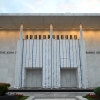
The Kennedy Center on June 28, with its facade signage still covered by a tarp and scaffolding.
Alex Wroblewski/AFP via Getty Images
hide caption
toggle caption
Alex Wroblewski/AFP via Getty Images
On Wednesday, a federal appeals court denied President Trump’s request to stop the removal of his name from Washington, D.C.’s Kennedy Center. The signage on the building has been covered with tarp and scaffolding since June 13, but in a court filing last month, the center’s current executive director said that Trump’s name has been removed.
In their decision, three judges from the U.S. District Court of Appeals for the District of Columbia Circuit said that the president had failed to prove that the arts center would be “irreparably injured” without Trump’s name attached to it.

NPR requested comment from the Kennedy Center, but did not receive an immediate reply.
This latest round of court decisions is part of the ongoing litigation filed by Rep. Joyce Beatty, D-Ohio, against President Trump and the board of the Kennedy Center. In a statement emailed Wednesday to NPR, Beatty said: “Today’s ruling again affirms that this administration’s efforts to rename the Kennedy Center were unlawful. His name no longer desecrates this sacred memorial, which belongs to the American people. Now it is time for the Trump administration to accept this, comply with the law, and take the tarps down.”
In previous court filings, Trump’s legal team had asserted that removing the president’s name from the arts complex, both on the physical building and in its digital materials, would inflict irreparable harm in both time and money already spent. In the denial, the three judges — Patricia Millett, Robert Wilkins and Gregory Katsas — wrote that since Trump’s name has already been removed, “a stay would not avert those harms.”
Furthermore, Trump had claimed that without his name attached, future fundraising would be threatened “and [will] contribute to the financial decline of the Center.” In response, the appeals judges wrote: “Appellants, however, have failed to support this assertion with any specific facts or evidence. They offer only the conclusory assertions of the Kennedy Center’s Executive Director that were made in a factually unsupported declaration.” The center’s current executive director, Matt Floca, specializes in physical plant management.
The presiding judge in the case, Christopher R. Cooper, has ordered that the center provide him a status report on the center’s operation and programming before the end of this month. As of Wednesday, the center’s calendar lists a small roster of programs, including outdoor free movie screenings, workshops for children, and five free live performances in July on its Millennium Stage. In the past, the Kennedy Center presented over 2,000 arts and education events each year, including free daily Millennium Stage performances.

Lifestyle
A meal with an animated Mona Lisa? Immersive dining goes high tech — but will L.A. eat it up?

My dinner course is served. It is a Campbell’s-inspired soup can, lightly angled so strands of broccoli are peeking out. I lift the can to uncover a slow-braised short rib and mashed potatoes. An American dish to represent an American artist, here Andy Warhol.
The room is overtaken with projections, scenes of bustling New York traffic paired with bachelor-pad-like guitar riffs. Shown on a wall above a dinner table is a selection of Warhol silkscreens. It’s a Friday night in West Hollywood, and I’m surrounded by a mix of out-of-towners and those celebrating an anniversary. And while this is a special occasion, we’re urged to get a little messy with our food — to use our hands, to paint with a salad, to draw on a cookie.
The main course: A tomato soup can? “7 Paintings” is an immersive event that occasionally hides dishes in artist-inspired presentations.
(Christina House / Los Angeles Times)
Play is the primary side dish at “7 Paintings,” a tech-infused dinner theater that aims to be a crash course in fine art. That selection of veggies paired with multiple mini cups of colorful dressings? Guests are encouraged to mix and match the vinaigrettes into a mess of hues, a nod to abstractionist Jackson Pollock. And yellowfin tuna with dashes of avocado and taro chips? That’s an edible tribute to Banksy, of course. What does raw fish have to do with stenciled street art? It’s bold, heavily angled and has a short shelf life? Maybe? Perhaps don’t overthink it.

Even the paper is edible.
(Christina House / Los Angeles Times)
“Have you ever eaten a painting before?” says Nadine Beshir, the Dubai-based creator of “7 Paintings.” “We try to get people out of their comfort zones and eating paper. I want to bring out the child in them.”
“7 Paintings,” held at Sunset House L.A. through the end of August, is the latest example of immersive dining to arrive in this city. These experiences often involve guest participation and are accentuated with advanced multimedia technology and sometimes theatrical elements.
Worldwide, there have been standouts. For instance, Eatrenalin at Germany’s Europa-Park, a dining room-meets-ride where participants are whisked around the space on trackless “floating chairs,” has just received a coveted Michelin star. Ibiza’s Sublimotion has similar haute ambitions, pairing 12 diners together in a room that will come alive with otherworldly projections and performers. At times, diners will win don virtual reality headgear.
But tech-driven immersive dining experiences have never quite taken off in Los Angeles as a trend. Last year, the Gallery, where fantastical cityscapes and projections surrounded downtown L.A. diners, stood just a couple months before the concept was abandoned.

“7 Paintings” pairs food with art and music. It’s “fun dining, not fine dining,” says its founder.
(Christina House / Los Angeles Times)

Bartender Luca Famulari shakes a cocktail at the immersive dining event.
(Christina House / Los Angeles Times)
“The economics of a restaurant are not the same as the economics of theater and the challenge of combining the two lies in thinking outside the box with respect to pricing and cost structure, such that the customer perceives high value from both the food and the experience,” says the Gallery co-founder Daren Ulmer.
Entrepreneurs keep aiming for that careful balance. “Le Petit Chef and Friends” is currently running at Tangier at downtown’s Hotel Figueroa, an event in which a fully animated film is projected on our plates and tables. Long-running pop-up event Fork N’ Film leans more dinner and movie, pairing dishes directly inspired by what is happening on screen. Upcoming films include “Ratatouille” and “Lilo and Stitch.”
The field comes with challenges. “The costs are very high,” says Joanna Garner, an immersive designer and former creative director with experiential art firm Meow Wolf. Garner has been experimenting herself with communal, immersive dinner events, and her next, the flirtatious “Please Open Your Mouth,” is set for July 11. (No tech there, as Garner is after a more sensual, adult-focused gathering.) Tickets for her event are $150 and a spot in the “7 Paintings” dining room runs $175, priced on par with a number of city’s most acclaimed restaurants.
There is also the reality that all public dining is in some fashion immersive, usually requiring varying combinations of engagement, communication and presentation. And then, are all these added elements distracting?

An animated Mona Lisa sits on the wall as guests enjoy their meals. Throughout the dinner, the painting provides factoids on various artists.
(Christina House / Los Angeles Times)
Throughout “7 Paintings,” for instance, an animated Mona Lisa, situated on the wall next to the main dinner table, will provide brief biographical details of each artist represented.
“Being able to nail the food, and nail the story, those are two very difficult threads to weave,” Garner says. “I do think, ultimately, people come to a dinner table to talk to the people at the table and to have intimate experiences. To have an experience where you’re constantly being taken away from the food, I’m not so sure if that’s what people are looking for.”
Food is framed as a star of “7 Paintings” but tasting it is just one component. At one point, we must uncover a cheese course in a tiny treasure chest, the code for the lock hidden in the projections (don’t stress, it’s not a hard puzzle). Beshir highlights the Pollock-inspired salad course, which is accentuated with a jazz soundtrack, as the thesis of the evening.
1

2

1. A guest uses a silicon brush to apply sauces onto an entree, a nod to abstractionist Jackson Pollock. 2. Projections fill up the dining table during meals.
“This course is really about getting people to free their minds from preconceived ideas,” Beshir says. “Like, you have to eat with a fork and knife, or the salad comes and then the dressing. No, the dressing comes and then the salad, and it’s trying with big brushes to paint the way he did. A lot of people do not understand Abstract Expressionism, and they think it’s people just splashing colors around. But when you understand the link between the rhythm of the music and painting, you live it. We give you time to paint with your salad dressing.”
In L.A., Beshir has partnered with nightlife impresario Kim Kelly, who is plotting a “Sleep No More”-inspired walk-around theatrical show for the Sunset House venue later this year. “7 Paintings,” however, is fully seated, and purposefully a little silly. Beshir and Kelly have been evolving it during its L.A. run, recently adding a stronger painting component by giving guests their own canvas to work on throughout the evening. Each night crowns a winner.
“Everyone comes over to look at their art,” Kelly says. “It just kind of changed the whole thing, to be honest. People are now being creative throughout the entire evening. Instead of just watching and occasionally painting, you’re now painting the whole time.”
As for what, perhaps, soba noodles with edamame and mushrooms have to do with Pablo Picasso, or why Salvador Dali gets an unexpected dessert course of a white chocolate potato souffle, Beshir clarifies the goal of the evening. While the animated Mona Lisa will provide backstories on each painter, this isn’t an educational night. “It’s fun dining, not fine dining,” Beshir says.
And by the end of my night, strangers were socializing, showing off their painted cookie creations, sharing Banksy tidbits and asking for recommendations on various vinaigrette combinations. Ultimately, it’s an evening of discovery, packed with surprises like finding an entire course hidden under a canvas.

Darryl Mayes of Charlotte, N.C., left, and Taylor Smith of North Hollywood, right, uncover their course.
(Christina House / Los Angeles Times)
“We try not to have too much sophistication, like fried ants or something. I’m personally very adventurous in how I eat, but if I want to have this in 100 cities around the world, I cannot be too meticulous.”
And Beshir has big goals.
“I want this be your movie and dinner thing,” Beshir says. “I want people to be waiting for our next show, and to be able to afford to come every couple months.”
And to come home not with leftovers, but perhaps a painting of their own.

Matthew Rhys was nominated for his role in Widow’s Bay.
Apple TV
hide caption
toggle caption
Apple TV
The 2026 Emmy nominations are here. We’re unpacking the record-breaking nominations for Hacks, plus a big day for Widow’s Bay, The Pitt, and The Bear. We’ll also talk about the snubs and make some early predictions of who will win.
Connect with Pop Culture Happy Hour:
Letterboxd / Facebook
Our weekly newsletter
Support Pop Culture Happy Hour+
-

 Massachusetts7 minutes ago
Is new construction right for you? There are benefits to buying a brand-new home in Massachusetts.
-

 Minnesota10 minutes ago
Where to watch Cleveland Guardians vs Minnesota Twins: TV channel, start time, streaming for July 9
-

 Mississippi15 minutes ago
Where Ace Reese, Mississippi State signees appear in latest MLB mock drafts
-

 Missouri22 minutes ago
Missouri Farm Bureau to host agritourism conference in Hermann | Fulton Sun
-
Montana24 minutes ago
Montana Lottery Powerball, Lotto America results for July 8, 2026
-

 Nebraska30 minutes ago
Nebraska softball coaching staff finalized with a contract extension
-

 Nevada37 minutes ago
Odd and beguiling ‘Rose of Nevada’ will haunt viewers
-

 New Hampshire40 minutes ago
New Hampshire Gov. signs law requiring schools to out trans kids

