Kansas
Engaging with Kansas politics might be complicated. But it's easier than this board game. • Kansas Reflector


With election season bearing down on us like an overzealous predator animal, I’d like to take a quick moment to focus on responsibility.
The chattering class, of which I’m a longtime member, likes to chatter about the responsibility of both politicians and the news media. Lawmakers and journalists should tell us the truth, but they owe us more than mere facts. They should, commenters emphasize, dedicate themselves to principles of representative democracy and civic virtue.
The ultimate responsibility, though, rests on the shoulders of a far larger group. I’m talking about voters. That’s right, the millions of men and women, young and old, Black and white and every color in between, who cast their ballots in primary and general elections. You all have a job to do as well.
A fair number of you have been falling short.
I know you all assume I’m writing about a certain New York real estate developer-turned-politician. He shadows a lot of these conversations. But let’s set him and his strongman act aside. Here in Kansas, voters have enabled a system that stymies exactly the policies that they tell pollsters they want.
They want an expanded Medicaid program. They want recreational marijuana — not even medical marijuana — legalized. They want schools fully funded and a sensible tax structure. Their responses remain consistent over the years, at least according to Fort Hays State University’s Kansas Speaks Poll. Yet these same voters have continued to elect supermajorities of hardcore conservative Republicans to the House and Senate who stand squarely against all of these proposals.
Voters have chosen this course.
What’s the matter?
None of this should come as a surprise. We’ve been doing this in Kansas for decades, and a particularly well-known book lays it all out. Yes, Thomas Frank’s “What’s the Matter with Kansas?” captured hearts and minds and attention two decades ago. Yet the elections keep coming, and the choices keep being made.
Washburn University political science professor Bob Beatty pointed to Frank’s work in trying to explain why voters choose politicians who pursue policies contrary to their interests.
“A political party can be effective in making certain issues that might not affect a lot of people be prioritized over issues that these people might support and also may influence them directly,” Beatty wrote me in an email.
In other words, GOP candidates weaponize issues such as immigration, election security, crime and “critical race theory” — all non-factors in Kansas — to advance other goals.
But perhaps there’s a simpler explanation, according to the professor.
“Party identification is the greatest indicator of vote choice, still, in American elections, according to all data,” Beatty wrote. “Primaries in Kansas feature very low turnout, especially for legislative races, and the people who do turn out tend to be more conservative (sometimes much more conservative) than the general population. So, if a conservative Republican wins a primary, even if they’ve got a more moderate district overall, then party ID will kick in.”
Analysis from KFF shows that only 59% of eligible voters in Kansas actually cast ballots in the 2022 elections. That means 41% of those older than 18 who could potentially cast a ballot chose not to do so when Election Day rolled around.
Crunching data from the Kansas Secretary of State’s Office and the Census Bureau shows that a substantial number of Kansans don’t even register. Roughly 2.25 million people in the state were above the age of 18 as of July 1, 2023. Only 1.95 million had registered to vote. That works out to about 300,000 going unregistered.
You can’t have a say if you don’t raise your voice.

Our priorities
Over the weekend, several friends and I played a gigantic strategic board game called Twilight Imperium.
In the game, you play one of several alien races battling for power and influence in the galaxy. Playing requires not only understanding two books’ worth of rules, but navigating plastic spaceships across a map assembled from hexagonal tiles. As gameplay progresses, you also draw dozens of cards with potential actions and ways to score points, both publicly and secretly.
Playing a full game of Twilight Imperium can take seven to eight hours, although that’s a best-case scenario if all players know the game well and can leap into action. Our particular game took 10 hours, spread across a Saturday evening and Sunday afternoon.
Believe me, this does have to do with voting. Please bear with me.
Intensely complicated strategy board games may not be your idea of a good time. But many people become intensely involved in various hobbies. Folks of all ages play complex and absorbing video games, which transport them to other worlds while including dense screens full of statistics. A different group of enthusiasts play fantasy sports, in which building and adjusting your own team throughout a season can involve detailed research and even spreadsheets.
We don’t play Twilight Imperium or video games or fantasy football because these pursuits earn us a salary. We enjoy them. We blow off steam and spend time with friends. Yet you cannot ignore that doing so involves learning and manipulating reams of intricate data that have nothing to do with our day-to-day lives.
So why can’t we take a fraction of that absorption and critical thought and put it toward our shared civic conversation?
Why don’t voters step up to participating in their state and nation’s government with the same enthusiasm as they do toward drafting their fantasy team?
Once upon a time, perhaps when “What’s the Matter With Kansas?” came out, a certain ignorance of the internet or 24/7 news cycle could be excused. The world had changed quickly. Yet we’ve now lived more than three decades with the web, two decades with social media and 17 years with the iPhone. If you don’t understand the technology by now, that’s on you.
Multiple resources online separate fact from fiction. Reporters and news sources across the country, including Kansas Reflector, tackle this work every day. If you want to separate legitimate news from misinformation and disinformation, you can.
Each one of us has a responsibility to our state, country and shared future. Each one of us — including voters — should take that seriously.
Clay Wirestone is Kansas Reflector opinion editor. Through its opinion section, Kansas Reflector works to amplify the voices of people who are affected by public policies or excluded from public debate. Find information, including how to submit your own commentary, here.



One of the top prospects in the 2027 boys’ high school basketball recruiting class recently trimmed his list of suitors, and the Kansas Jayhawks find themselves firmly in the mix.
KU is one of eight schools to make the cut for 2027 five-star small forward Demarcus Henry, according to On3 National Basketball Reporter Joe Tipton. His list of eight includes some of the best programs in the country: Kansas, Ohio State, Kentucky, North Carolina, BYU, Arkansas, UConn, and Louisville.
The 6-foot-7 Charlotte, North Carolina, native is one of the best players in the 2027 class. He’s currently ranked as the No. 5 player overall and the No. 1 player at his position, according to the most recent On3.com 2027 player rankings.
As a junior this past year at Compass Prep High School in Chandler, Arizona, Henry averaged 15.5 points, 8.2 rebounds, and 2.2 steals per game as he helped lead his team to a 25-3 record.
He followed that up with an impressive performance at the NBPA Top 100 camp this summer, leading all attendees in scoring (20.0 points per game) and rebounding (9.3 rebounds per game). He was also a member of the 2026 USA Men’s U18 National Team that earned a silver medal at the FIBA U18 AmeriCup earlier this summer in León, Mexico.
When speaking about his game, Henry mentions his versatility and how he’s developed over the past year.
“I’m just very versatile,” Henry told Rivals in a previous interview. “I can play one through four and just help my teammates and hit shots and play defense. I watch a lot of KD (Kevin Durant) and Paul George. How they score it, and how they could shoot off the dribble, shoot off the catch. I’ve gotten tougher and just more aggressive when I transferred AZ Compass and just being able to get downhill, I feel like that’s really developed for me.”
When asked about what he’s looking for in a potential home at the college level, Henry says he wants to be challenged and grow his game for the NBA.
“What I’m looking for in school is someone that just pushes me to be better,” Henry said. “Help me grow into the person I know I can be and someone who will help me reach my potential. I want to play for a coach that will hold me accountable and help me make me uncomfortable and keep growing and keep getting better and just help me reach the NBA, which is my ultimate goal.”
Early Contenders
Right now the early favorite to land Henry may be the basketball program with the least amount of notoriety of the final eight schools – and that is Ohio State.
Henry has a lot of familial ties to the university as his older brother Chris Henry Jr. is a five-star incoming freshman wide receiver for the Buckeyes football team this year, and his older sister Seini Henry is a talented women’s basketball player at Ohio State.
He’s already taken an unofficial visit to the school and has also taken an unofficial visit to BYU. Thus far, they are the only schools to have received a visit.
Follow

The Royals have been linked to shortstop Jacob Lombard out of Gulliver Prep (Fla.) — if he makes it that far — left-hander Gio Rojas out of Stoneman Douglas (Fla.) HS, outfielder Eric Booth Jr. out of Oak Grove (Fla.) HS, UC Santa Barbara right-hander Jackson Flora and Georgia Tech outfielder Drew Burress, among others. Maybe they shake up the board and go with Huntington Beach (Calif.) HS left-hander/outfielder Jacob Grindlinger, who is just 17 years old after reclassifying for this year’s Draft and has legitimate upside as a two-way player. Grindlinger is No. 16 on MLB Pipeline’s Top 250 Draft prospects list and is rising on boards as Draft day nears.
Prep players usually mean a lot of upside but with more risk, while college players bring a higher floor and more experience — often with a chance to move quickly. Over the full Draft, the Royals are going to value both.
“There’s a good mix of high school and college,” Bridges said. “To tell you the truth, our range is pretty broad. There’s a clear-cut four players, five players in this Draft, and then believe it or not, where we’re picking, you can go a number of different directions. So we have a pretty good balance of what we’re looking at, both high school and college.”
The Kansas Lottery offers several draw games for those aiming to win big.
Here’s a look at July 7, 2026, results for each game:
Winning Mega Millions numbers from July 7 drawing
02-31-35-36-63, Mega Ball: 12
Check Mega Millions payouts and previous drawings here.
Winning Pick 3 numbers from July 7 drawing
Midday: 4-2-9
Evening: 2-7-9
Check Pick 3 payouts and previous drawings here.
Winning 2 By 2 numbers from July 7 drawing
Red Balls: 07-26, White Balls: 12-18
Check 2 By 2 payouts and previous drawings here.
Winning Millionaire for Life numbers from July 7 drawing
27-43-48-49-50, Bonus: 02
Check Millionaire for Life payouts and previous drawings here.
Feeling lucky? Explore the latest lottery news & results
Are you a winner? Here’s how to claim your lottery prize
All Kansas Lottery retailers will redeem prizes up to $599. For prizes over $599, winners can submit winning tickets through the mail or in person at select Kansas Lottery offices.
By mail, send a winner claim form and your signed lottery ticket to:
Kansas Lottery Headquarters
128 N Kansas Avenue
Topeka, KS 66603-3638
(785) 296-5700
To submit in person, sign the back of your ticket, fill out a claim form, and deliver the form along with your signed lottery ticket to Kansas Lottery headquarters. 128 N Kansas Avenue, Topeka, KS 66603-3638, (785) 296-5700. Hours: 8 a.m. to 5 p.m., Monday through Friday. This office can cash prizes of any amount.
Check previous winning numbers and payouts at Kansas Lottery.
When are the Kansas Lottery drawings held?
- Powerball: 9:59 p.m. CT Monday, Wednesday and Saturday.
- Mega Millions: 10 p.m. CT Tuesday and Friday.
- Pick 3 Midday/Evening: 1:10 p.m. and 9:10 p.m. CT daily.
- 2 By 2: 9:30 p.m. CT daily.
- Lucky for Life: 9:38 p.m. CT daily.
- Lotto America: 9:15 p.m. CT Monday, Wednesday and Saturday.
- Super Kansas Cash: 9:10 p.m. CT Monday, Wednesday and Saturday.
- Millionaire for Life: 10:15 p.m. CT daily.
This results page was generated automatically using information from TinBu and a template written and reviewed by a Kansas editor. You can send feedback using this form.
-
 Vermont1 minute ago
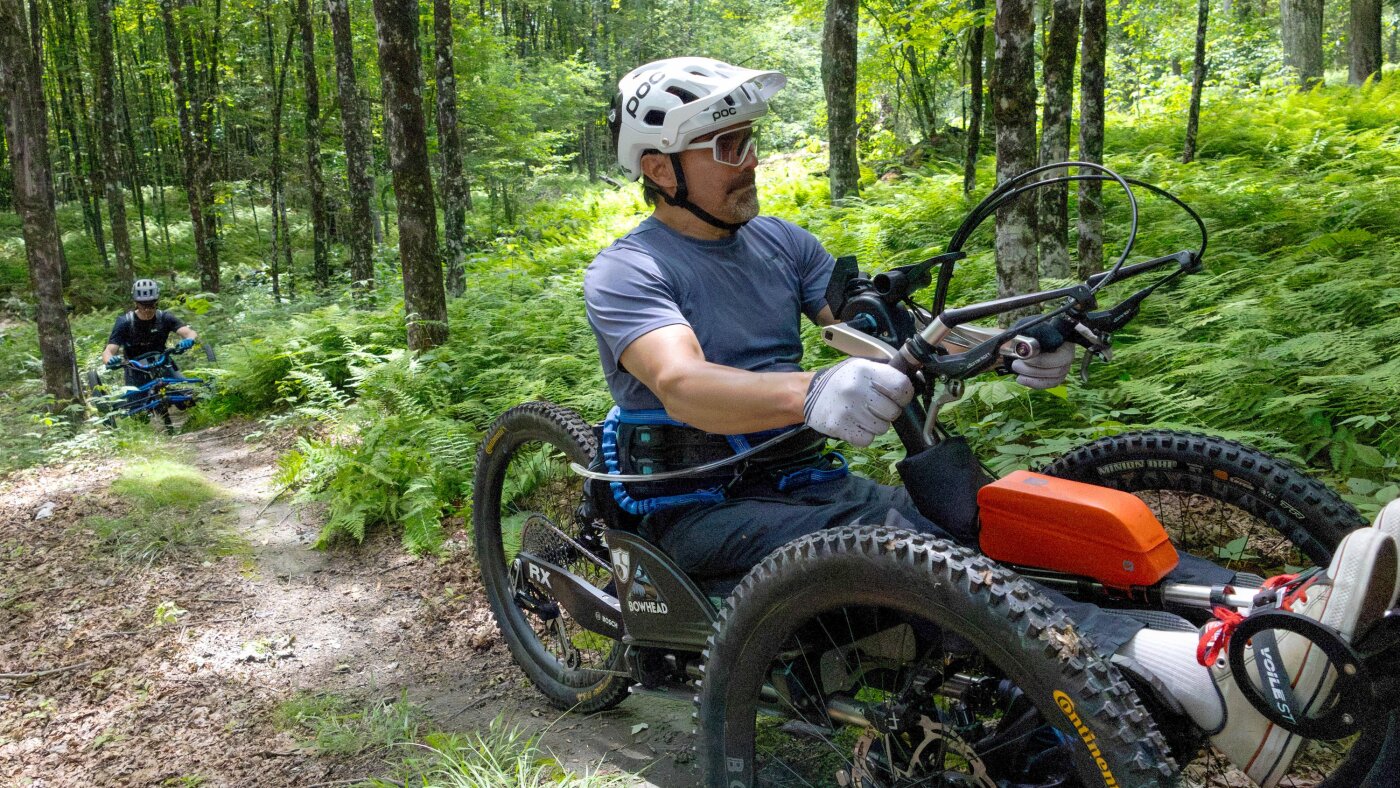
OUTDOOR ACCESS FOR DISABLED IN VERMONT
-
 Virginia6 minutes ago
4 indicted in Virginia double homicide; second victim ID’d as grandmother of 6
-

 Washington13 minutes ago
Washington Commanders are retiring Hall of Famer John Riggins’ No. 44
-

 Wisconsin16 minutes ago
Wisconsin State Patrol rides with truck and bus drivers to spot violations in five areas
-

 West Virginia21 minutes ago
West Virginia town fires entire police force after chief resigns, sergeant alleges evidence room break-in
-

 Wyoming28 minutes ago
WHP: July 5 single-vehicle rollover north of Riverton resulted in one death, one injury
-

 Crypto31 minutes ago
British Airline Jet2 Shares Jump 9% After $536M Fuel Hedge Gain Offsets Middle East Travel Fears
-

 Finance36 minutes ago
Treasury Pick Queried on Iran War Fallout to Face Senate Finance

