Arizona
Indigenous advocates work to combat fake sober living homes in Arizona


Jade Lara was five months pregnant in January 2022 when she arrived at a group home in San Tan Valley with the promise of daily classes and group therapy to help her with sobriety. However, when she arrived, she was met with a lack of assistance and care and provided with only one therapy session a week held at a different center.
Lara noted the men in the co-ed home were given the freedom to “come and go,” often coming back clearly intoxicated. The situation turned dangerous the night she was sent to another center in Maricopa County, where an intoxicated man wouldn’t leave her or the other woman in the house alone.
“I was just like, no, this is enough,” Lara said. “I got my bag and then I used the last of my money that I had to get an Uber out of there because I was like, ‘I don’t trust this place.’”
GET THE MORNING HEADLINES DELIVERED TO YOUR INBOX
Lara was in the second center for a week before she left, walking the streets of Phoenix before a friend connected her with a reputable sober living home.
Lara, who is Navajo, is one of thousands of individuals who have fallen victim to a Medicaid scheme primarily affecting Indigenous communities. After legislation tackling the problem failed to pass this session, individuals are taking the issue into their own hands to protect vulnerable members of the community.
Goodyear Police Officer Scott Daniel, who serves on the city’s crisis intervention team, told lawmakers in February that he has seen many similar instances at group homes in the Valley.
“Noncompliant sober living homes are a growing concern within our cities and have been since 2019,” he said at an Arizona Senate Health and Human Services Committee meeting. “I myself have gone on numerous occasions and witnessed various issues with people coming out. We find them passed out in front of their homes and neighboring homes and backyards. There’s no one around, and if there is, there’s only one person … who is clearly not a behavioral specialist, or any type of specialist.”
Nearly a year after Gov. Katie Hobbs and Attorney General Kris Mayes announced a crackdown on a Medicaid scheme exploiting vulnerable Indigenous individuals, residents of tribal communities across the state are still calling on lawmakers to combat the issue.
The scam has involved unlicensed centers in Arizona that target individuals in tribal communities who are dealing with substance abuse or struggling with mental illness and lure them in with false promises of assistance at rehab centers or sober living centers. Officials say this scheme has cost the state an estimated $2.8 billion, according to 12 News.
Scammers exploit the Arizona Health Care Cost Containment System (AHCCCS) by creating pop-up centers across the Valley that take advantage of the American Indian Health Program and collecting thousands of dollars a day in federal funds for bogus or shoddy services.
The Arizona Department of Health Service’s annual sober living report substantiates the magnitude of the problem, lawmakers say. From 2021 to 2023, the issuance of new sober living licenses surged from 52 to 470, while complaints soared from 94 to 446 – an increase of over 370%. Moreover, enforcement actions against licensed homes by the department skyrocketed from 97 to over 2,000 during the same period.
How advocates are working to protect the Indigenous community
Reva Stewart, a Navajo activist who has been working to locate missing community members and bring this issue to the attention of authorities, describes her efforts as a “full-time second job.”
Stewart is the founder of Stolen People, Stolen Benefits, a grassroots organization focused on raising awareness of the issue and bringing victims home. With the assistance of fellow advocate Coleen Chatter, Stewart has tracked down numerous individuals and raised over $10,000 to pay for food and bus tickets to get them home to their families after leaving fraudulent rehab centers.
Stewart’s involvement in the issue came after her cousin was picked up by an unmarked van in Farmington, New Mexico.
“She told me that they had picked her up in Farmington and they had picked up four people all at the same time. And on the way down, they told her … whatever they could to convince her that they were just going for a day trip,” Stewart said. “So she got in and they bought alcohol for them. She said they just pretty much kept them intoxicated all the way down.”
Upon arriving at a group home in Phoenix, her cousin was told to sign up for AHCCCS benefits, but when she refused to provide personal information, she was forced to leave with no way of getting back to New Mexico.
According to Stewart, this is a common mark of the scam – targeted individuals are often found on the street or at bus stops, flea markets and medical centers. They are picked up in SUVs or unmarked vans and left with no means to get back to their homes.
Stewart said she believes Native communities are being targeted because of their high missing and murdered population.
“They see that they’re homeless and they’ve got alcohol problems, and with our huge, huge missing and murdered Indigenous women, people, families, everything, (they think) that we’re not going to find them. They think that they don’t have families behind them and that if they’re unsheltered on the reservation, nobody cares,” Stewart said.
According to a 2021 report by the state health department, Native Americans are 500% more likely to experience alcohol-induced deaths and have a 20% higher likelihood of dying from drug-induced deaths than the average Arizonan.
Mandy Hagen, who started working with advocates to address the issue in October 2022, has heard of numerous instances of abuse in behavioral health facilities.
“I have seen both men and women being verbally and physically abused by their quote-unquote ‘clinicians.’ There’s lots of abusive behavior,” Hagen said. “They’re almost kind of treated like, ‘We’re giving you a free place to stay and we’re giving you all these things, so, therefore, we can treat you any way we want to.’”
To aid in finding missing individuals, Hagen contacts treatment centers suspected of holding them and requests that they facilitate communication between the person and their loved ones.
“Obviously (because of) HIPAA, they can’t tell me if they’re there,” Hagen said, referring to the federal law that assures the privacy of a person’s medical information. “But I’ll just reach out to my contact and say, ‘Hey, this person has been reported missing. They were last seen or heard from at your facility. Can you just please have them reach out to their family?’”
Lucrecia Belmont, a Minnesota retiree, reached out to Stewart after seeing a post about the scam. She now works closely with advocates to track down locations of supposed homes, using a public database to find the center’s National Provider Identifier numbers, which are identification numbers given to covered and licensed health care providers.
Though these online databases are free to use, many do not know how to access or navigate the technology, Belmont said.
“I think if more people kind of understood just the basics of how to do some of these searches, general community members would be able to do a lot more watching out for each other,” Belmont said. “A big component of it has got to be the community really networking some solidarity and protection for each other, and that’s something we’re working on.”
Getting lawmakers involved
Arizona Sen. Theresa Hatathlie, D-Tuba City, who is a member of the Navajo Nation, recently sponsored a bill aiming to regulate fraudulent sober living homes, but the legislation failed to pass in the House.
“I can count on both of my hands, my fingers and my toes the number of people who have died in this type of facility,” Hatathlie said during a Senate Health and Human Services Committee meeting in February. “To make sure that they’re going to be held accountable and to make sure that the families will be able to take their loved one home, I think, is not too big of an ask.”
During hearings for the legislation, Hatathlie stressed the importance of state agencies – such as the health department, the attorney general and the Arizona Corporation Commission – working together to tackle the issue, and said that a lack of communication between departments has allowed for the scam to continue.
“These criminals, their licenses are being suspended. They’re being revoked. They (departments) are not communicating it to ACC,” she said. “So these criminals, they go … and they buy more licenses. In a few hours in between or even in a day, they come out with 20 to 50 licenses, and they just move shop to the next community, to the next neighborhood and they continue to commit crime. That’s why it’s very important that we address this in a comprehensive fashion.”
The primary opposition to the bill came in the form of licensed behavioral health facilities that argued that the legislation imposed excessive restrictions beyond targeting scam centers.
“The intent of the bill is well-founded, but my concern is more the unintended effect on other facilities,” lobbyist Don Isaacson said. “In many cases, it’s directed not just at sober living or at behavioral health facilities that operated poorly, but it hits every residential care facility.”
Another less expansive bill aimed at the scheme, sponsored by Sen. Frank Carroll, R-Sun City West, failed to receive a third hearing before the legislative deadline. It would have increased regulations and fines for unlicensed homes and mandated on-site inspections.
AHCCCS has made changes in its system in an attempt to fight the scheme. The agency extended a moratorium for enrolling new behavioral health clinics for Medicaid billing until June 8. It also instituted tighter controls for sober-living facilities, including requirements for fingerprint clearance background checks and site visits for certain types of behavioral health facilities.
Currently, advocates are focusing their efforts on spreading advice on how to stay safe and avoid the scheme. They warn that if an individual approaches offering assistance, they are likely tied to an unethical treatment center, as reputable treatment centers do not send drivers to recruit people on the street.
According to Hagen, the best way to receive reputable help is to get connected to licensed, ethical care providers through social workers, case managers, primary care clinics or resource centers.
“If you think that you have a substance-use issue, instead of going directly with somebody who’s offering you free housing, go to your behavioral health services,” Hagen said. “A lot of the tribes have behavioral health services. Whether it’s an actual behavioral health services building, a hospital or detox, I would go and talk to somebody that can refer you appropriately.”






Unlike other major pro sports in the United States, Major League Baseball’s annual draft is hardly must-see television. With 20 rounds of picks—it used to be 50—and very few of them household names, only true baseball diehards closely pay attention beyond the first handful of selections.
For college baseball fans, though, the MLB Draft can bring about some stress and uncertainty since both incoming freshmen and existing veterans are eligible to be selected. The best college juniors and seniors are sure to get drafted and sign, while top recruits may be lured into starting their pro careers early via a hefty signing bonus.
Last year the UA saw nine members of the 2025 squad, which reached the College World Series, get drafted and sign. One of its prep signees also took the money rather than come to Tucson.
The 2026 draft, which begins Saturday and finishes Sunday, won’t be nearly as impactful to Arizona’s roster. Only one current Wildcat with eligibility remaining is assured of being drafted: junior right-handed pitcher Owen Kramkowski.
Kramkowski, who struggled in the spring after a breakout 2025 season, is ranked as the 205th-best draft prospect by Baseball America and No. 245 by MLB.com. That would put him in the range of the 6th or 7th round to get selected, though he could go earlier. All indications are Kramkowski will sign.
Beyond that, it’s anyone’s guess. No other current or future Wildcats are among BA’s Top 500.
Among Arizona’s outgoing seniors, the top candidate to get drafted is left-handed pitcher Patrick Morris, who is currently playing the MLB Draft League. Infielders Tyler Bickers and Maddox Mihalakis could also get picked late or sign as an undrafted free agent.
Draft-eligible juniors other than Kramkowski include lefty Maclain Roberts, catcher Beau Sylvester and outfielders Andrew Cain and Easton Breyfogle. A couple of Arizona’s 2027 newcomers, such as junior college righty Collin Cobb, prep infielder Ayden Deome and catcher Francisco Rivero, are also at risk of getting picked.
Arizona has had 293 players drafted in its history and has had at least two taken every year since 2011.
The first four rounds of the 2026 MLB Draft are Saturday, with NBC airing the first 10 picks starting at 10 a.m. PT before the broadcast switches to MLB Network and later MLB.com. Rounds 5-20 are Sunday on MLB.com starting at 8:30 a.m. PT.
Arizona
Arizona AG continues to investigate Glendale apartment complex after Friday deadline to fix A/C


MESA – Mary Salcedo is the executive director of Arizona Roller Derby, but everyone on the team knows her as MaryMorphosis, or Morph for short.
A derby name is as good as a legal name once you join a league. Arizona Roller Derby – the second-oldest flat track roller derby league in the world – has plenty of unique monikers on its two home and travel teams.
During a doubleheader homestand, players introduce themselves.
“What’s your name?”
“Mecca,” said Sara Mecca-Whitlock, an interior architect in Phoenix.
“Brooklyn Dodge-her,” said Kristi Baptiste, a grandma and senior project manager from Ventura, California.
The rules surrounding derby names are loose. Some players have nicknames bestowed upon them when they join.
“Since I was wearing a Brooklyn shirt, they started calling me Brooklyn, and we added the Dodge-her later,” Baptiste said. “The funny thing is, I am not an L.A. Dodger fan. I don’t even watch baseball.”
It’s clear Roller Derby isn’t like other organized sports. There is no professional threshold to work toward as a goal. Players show up year after year, paying to participate, paying to travel and returning to the community they find along the way.
Across the country, including in Phoenix, teams find a way to organize players and facilities to play the sport.
Selecting derby names is part of the process.
-

MAXimum HOverdrive of the Bad News Beaters poses for a photo as she skates at the Broadway Recreation Center in Mesa on Saturday, June 27, 2026. (Photo by Samad Khan/Cronkite News) -
Goldy Knocks, left, and Hella Naughty of the Bad News Beaters pose after their match at the Broadway Recreation Center in Mesa on Saturday, June 27, 2026. (Photo by Samad Khan/Cronkite News) -
Bad News Beaters skater Dr. Doctor flashes a hand sign while posing for a photo at the Broadway Recreation Center in Mesa on Saturday, June 27, 2026. (Photo by Samad Khan/Cronkite News)
“Sure, man,” said Rachel Sherman, a 13-year veteran of Arizona Roller Derby and an electrician training in an apprentice program. “My dad, with the perfect dad joke, was like, ‘Well, I guess if you’re going to change your name, you should probably change your number to four. So I am four sure, man.”
Elaina Bryan, a 25-year-old receptionist in Phoenix and lifelong derby player, said her nickname is Squeezer.
“There was a particular one of my mom’s friends, who I would give a really good squeeze, big hug to,” Bryan said. “So my name actually used to be a little squeezer, but now that I’m an adult, it’s just squeezer.”
The names used outside of derby are not relevant on the track. Official rosters are submitted only with the players’ derby names.
“You think about the parts of you that you want to foster that can handle the intensity, the eyes on you, the attention, the strength, the perseverance and determination,” Sure, man said. “You give that a name and it becomes this kind of alter ego that then you’re allowing it to blossom and grow in this space.”
Roller Derby’s history
Roller derby was officially born on Aug.13, 1935, when promoter Leo Seltzer debuted the first Transcontinental Roller Derby event at the Chicago Coliseum. Initially created as endurance marathons during the Great Depression, the event evolved into the full-contact sport we know today.
After peaking in popularity on television in the 1950s and 60s, the sport largely faded out, but in 2001, a modern revival took place in Austin, Texas, which popularized the grassroots, flat-track format that is played globally today.
“We (will) hit our 25th season in 2028, which is pretty significant,” MaryMorphosis said, “We’re hoping to go out huge.”
Arizona Roller Derby is older than the Women’s Flat Track Derby Association, which was founded in 2004 as the United Leagues Coalition and formally changed its name to the WFTDA in 2005. WFTDA is the international governing body of the sport. Today, it has over 400 member leagues on six continents.
Arizona Roller Derby doesn’t compete on a bank track. They can play on any flat surface if they have a way to lay down track boundaries.
A bank track is a raised and curved surface, like a NASCAR track. It’s the kind of roller derby played in the 2009 movie with Elliot Page, “Whip it.”
After the COVID-19 pandemic, Arizona Roller Derby lost the warehouse space it rented full-time and the participation numbers dwindled. Now the group rents temporary spaces across the East Valley to accommodate practices and competitions, like Saturday’s doubleheader.
“I would hope that we would have our own space again, “ MaryMorphosis said. “We need to double our membership to do that.”
On a Saturday afternoon in June, players began arriving at the Broadway Recreation Center in Mesa. The same people that would be competing on track in a few hours used thin rope and white electrical tape to lay down the track borders on top of the gymnasium hardwood.
The rules
The Saturday doubleheader featured two Arizona Roller Derby home teams, and two travel teams from California.
Bad News Beaters are the first home team. They go against the West Coast Derby Knockouts.
Derby games last one hour. Two 30-minute halves are broken up by a 15-minute intermission. The intensity on the track lasts for two-minute jams before lines switch off and new players sub in for the next jam.
Mecca, a jammer on Bad News Beaters, points out that “there’s four blockers from each team that get on the track and one jammer from each team.”
A jammer’s helmet cover, a large polyester cap with stars on both sides, indicates they are the one person on the track who can score points for their team.
One blocker is known as the pivot. They wear a similar, bright-colored cap, but theirs has a line running through the center. At any point, a jammer can remove their star and pass it to the pivot. For the remainder of the jam, the pivot acts as the Jammer to score points.
“I’m a pushy jammer, and I like being strong,” MaryMorphosis said, “and I like breaking people apart.”
The jammers line up behind a jam line while the eight blockers stand anywhere in the box in front of the jam line but behind the pivot line.
Waiting in the box is Californian blocker Brooklyn Dodge-her, and her daughter, Rocky Bye Baby. They are there to throw their bodies into the Bad News Beaters jammer to stop them from scoring points.
Brooklyn Dodge-her was recruited to derby 12 years ago. She volunteers as a coach for the West Coast Derby youth travel team on top of training and competing herself.
“Mondays for the kids, Tuesday for myself. Wednesday I get a break,” Brooklyn said. “Thursday for myself. Friday for the kids. Saturday if we don’t have a game, I get free. And Sunday in the morning it’s the kids and in the evening it’s the adults.”
At 51, she is competing in her last season of roller derby.
“I became a grandmother,” Brooklyn said. “I have to start spending some time with a grandbaby. I’ll probably get bored and be like, ‘Y’all want me back?’”
The officials blow the whistle to signal the start of a jam and the jammers push off their line straight into the bodies in front of them.
“If I get through the pack first I get what’s called lead jammer,” Mecca said. “On the second time through, they get one point for every blocker from the opposite team that they pass legally with their hips. That can go for two minutes.”
The lead jammer can call off the jam at any point, especially if it prevents the other jammer from scoring any points for the opposing team.
“Does it matter if the jammer is behind me? Do I have two or more blockers in the box? Then don’t call it,” MaryMorphosis said, “because it might be worth losing the points just to have your teammates out.”
A player in the penalty box at the end of a jam will remain in the box during the start of the next jam.
The ways to receive penalties include hitting someone in the head, hitting someone in the back, or getting back on the track in front of somebody that was in front of you when you left. All penalties must be served for 30 seconds.
A game requires a whopping seven skating referees and even more non-skating officials. Those positions are entirely filled by volunteers.
Robert Cushman began 17 years ago in Nebraska when his wife started competing in roller derby. Years after their divorce, he continues to enjoy participating in the sport while living in Tucson.
“Most of us don’t get paid anything,” Cushman said. “Usually Phoenix will give us like a gas stipend.”
Even as an official he uses a derby name. He goes by Manosaur, a reference to the animated series “Venture Bros.”
“I usually go once a week to the scrimmage down in Tucson, and then I usually come up here for whatever games they have,” Cushman said.
During jams, Manosaur skates around the inside of the track, monitoring the action to keep the play fair.
“Watch the pack,” Mecca said. “Don’t worry too much about the jammer when they’re by themselves. But once we enter the pack again, then it gets crazy.”
Mecca is a mom of five who started playing roller derby in North Carolina. She said she retired for six years as she finished up her military career and went back to school. Eventually she began coaching the ASU derby team. Two years ago, she began playing again.
The West Coast Derby Knockouts dominated, 223-53.
“They were taking the pivot line constantly instead of the jam line,” MaryMorphosis said after the game. “They were just really big. And both our blockers and our jammers were thrown off.”
Game two
Morph sits in the stands after the early afternoon loss and watches the second match of the day. The home team, Skate Riot Project, took on Orange County Roller Derby.
She became executive director in January and takes on the administrative responsibilities on top of competing and working full time.
“I love building and growing community,” MaryMorphosis said. “It was an opportunity to do that and step into just a significant leadership role.”
She began playing derby in 2022 when she still lived in upstate New York.
“I broke my leg three months in,” MaryMorphosis said, “like shattered it. Recovery was rough.”
After two surgeries and a cross-country move to start a new job as a project manager at Arizona State’s School of Biological and Health Systems Engineering, MaryMorphosis had her first uninterrupted derby season in 2025.
“I don’t know what kept me coming back,” she said. “I guess it was the community.”
Meanwhile, Elaina Bryan, or Squeezer, is another recent Arizona transplant and a blocker on Skate Riot Project.
“My mom started playing back in 2008, actually, and we went to practices with her,” Squeezer said. “Eventually, they had enough kids’ interest that they started a kids team.”
She was 9 when she started playing in Bakersfield, California. She played on her college team and then moved to Arizona in October. Now she plays on a travel team as well as the home team.
“I was just kind of trying to see where I fit in and started to find people at that same level to start connecting with,” Squeezer said, “and just kind of started building up my social circle.”
Teams are comprised of players of all ages, but everyone is connected to the community that exists in Derby. It’s more everlasting than the final scores.
“I went to a yard sale,” Brooklyn Dodge-her said. “We didn’t even get across the street and they were like, ‘You want to play roller derby? It was a West Coast yard sale.”
MaryMorphosis did not hearing back from one roller league before she stumbled on the practice of another team.
“I was literally in the mall because my old league had taken over an Old Navy, and they were skating in the mall,” MaryMorphosis said. “I was buying yarn at Michael’s, and I was like, ‘OK, that’s the sign.’”
When Skate Riot Project lost to Orange County Roller Derby 125-100, the teams shook hands and huddled together. Orange County picked its MVP Jammer, blocker and MVP overall from SRP, and SRP picked its players from Orange County. They hugged each other as they presented the awards.
“We’re playing the game against another team, and it’s really intense and like we’re very serious and focused with our team,” Squeezer said. “But afterwards, we all hang out and we goof around.”
With the games over, the players begin clearing out the temporary space. The track gets peeled off the gymnasium floor and the tape is put into trash bags.
The four teams get in their cars and head to the after-party together.
“If the only thing we do for the next five years is become the place for people to be themselves, that’s a win,” MaryMorphosis said.
This <a target=”_blank” href=”https://cronkitenews.azpbs.org/2026/07/10/roller-derby-still-has-home-in-arizona/”>article</a> first appeared on <a target=”_blank” href=”https://cronkitenews.azpbs.org”>Cronkite News</a> and is republished here under a <a target=”_blank” href=”https://creativecommons.org/licenses/by-nd/4.0/”>Creative Commons Attribution-NoDerivatives 4.0 International License</a>.<img src=”https://i0.wp.com/cronkitenews.azpbs.org/wp-content/uploads/2026/02/favicon1.png?resize=85%2C85&ssl=1″ style=”width:1em;height:1em;margin-left:10px;”>
<img id=”republication-tracker-tool-source” src=”https://cronkitenews.azpbs.org/?republication-pixel=true&post=105044″ style=”width:1px;height:1px;”><script> PARSELY = { autotrack: false, onload: function() { PARSELY.beacon.trackPageView({ url: “https://cronkitenews.azpbs.org/2026/07/10/roller-derby-still-has-home-in-arizona/”, urlref: window.location.href }); } } </script> <script id=”parsely-cfg” src=”//cdn.parsely.com/keys/cronkitenews.azpbs.org/p.js”></script>
-
 Politics4 minutes ago
Assassinations unleashed under Trump haunt Iran war endgame
-
 Sports12 minutes ago
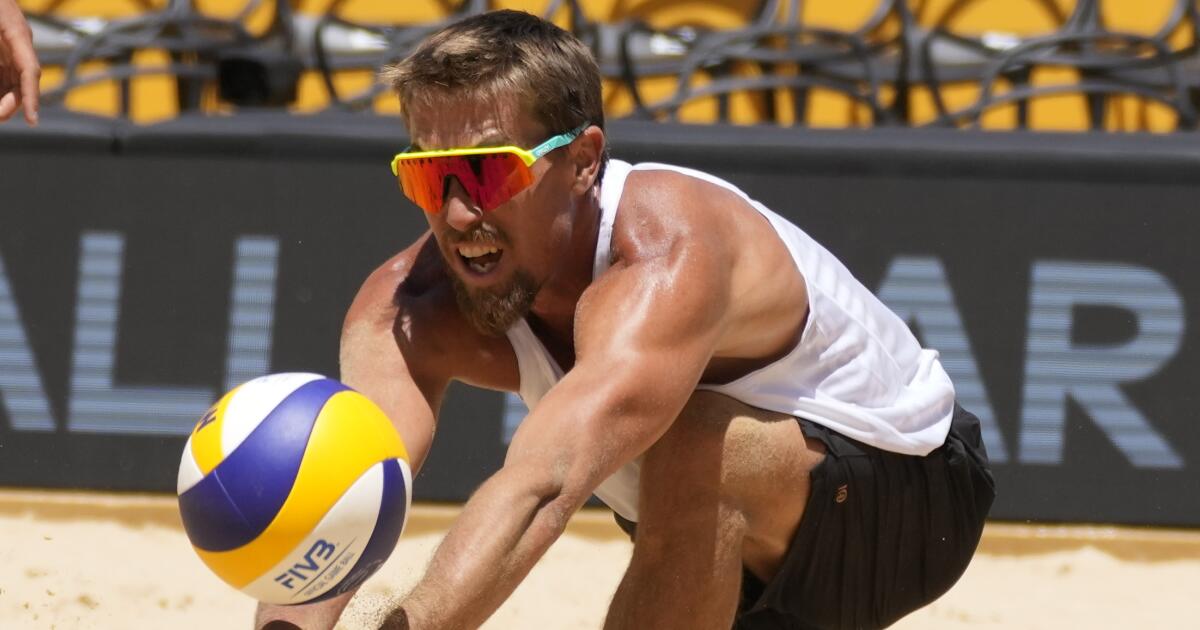
Q&A: Partner, chance to play in Long Beach reignited AVP star Taylor Crabb’s Olympic fire
-

 World22 minutes ago
Moldova president nominates pro-European businessman Tofan for PM
-

 News49 minutes ago
US congressman says he was detained by armed Israeli settlers in occupied West Bank
-

 Los Angeles, Ca2 hours ago
New details emerge in fatal stabbing of boy in El Monte
-

 Detroit, MI3 hours ago
1 dead, 1 injured after two-vehicle crash at Collingwood and Belleterre in Detroit
-

 San Francisco, CA3 hours ago
4 arrested, 3 cited after brawl following Giants vs. Rockies game at Oracle Park
-

 Dallas, TX3 hours ago
Mark Cuban takes legal action against Dallas Mavericks ownership over potential new arena deal

