Miami, FL
Learning From Miami

Last weekend, I went to Miami for a conference, and explored a wide range of neighborhoods, including both suburbs like Sweetwater and North Miami, and urban places such as Wynwood and downtown Miami. One of the most unusual things about Miami is that it combines a high density (over 12,000 people per mile in its small central city) with relatively low transit ridership (about 7 percent in 2022, lower than medium-density cities like Buffalo).* Even some of its suburbs are pretty dense: North Miami Beach (where I stayed over the weekend) has just over 8500 residents per square mile, and Sweetwater (where I stayed Sunday night) is more densely populated than Miami. What is Miami doing wrong?
The first thing I noticed was that except for the quietest residential streets, commercial streets are designed for high-speed traffic — even in parts of a city where walking would normally be common. For example, Brickell Avenue is one of downtown’s more high-end streets, one with a significant amount of housing and public transit. So you might think that Brickell is a comfortable street for pedestrians. But Brickell is six lanes wide, not my idea of a pedestrian-friendly layout. Similarly, you might think that streets near Florida International University (FIU) would be pretty walkable — but FIU is moated off from Sweetwater (a suburb just to its north) by an eight-lane street that resembles a highway with traffic lights more than it resembles a commercial street. To make matters worse, this highway is not even fully connected to the Sweetwater street grid: instead of crossing every block to get to FIU, a walker can only cross the street once every several blocks.
Of course, these are major streets. But Miami also suffers from what traffic engineers call collector streets: streets that lack the commerce and excitement of high-traffic arterials but are nevertheless just wide enough to have dangerously fast car traffic. For example, in North Miami Beach, I mostly walked on N.E. 179th Street and the streets just to its north from Northeast 13th Avenue to Northeast 18th Avenue. 13th and 14th Avenues are quiet, two-lane residential streets that I felt comfortable crossing. By contrast, 15th Avenue has a turning lane and is just wide enough to support faster traffic. As a result, crossing it was a bit adventurous.
On the positive side, most of the city buses I was on were at least half full, and some were standing room only. However, bus rides from city to suburb can be quite long: for example, my ride from downtown Miami to North Miami Beach took almost two hours. By contrast, in Buffalo, most bus routes take only an hour from beginning to end, and even the 20-mile bus ride from Buffalo to Niagara Falls takes about 75 minutes.
This example illustrates a broader problem with city buses in large metro areas: in an area as large as Los Angeles or Miami-Dade County, suburbs can be so far away from a city that bus commutes can take longer than in a smaller but less dense metro. It follows that in a largish metro area, even an otherwise adequate bus network and high central-city density doesn’t protect people from long commutes. And Miami does not have a strong rail system to supplement its buses: Miami’s Metro Rail has only one line, fewer than other Sun Belt metros such as Atlanta (two lines) or Dallas (five). In other words, you can get almost anywhere in Miami Dade County by bus, but it may take a long time to do so.
On the positive side, Miami suburbs are a little more generous with housing than the suburbs of Blue America. On the major Long Island arterials I have seen, housing other than single-family homes is rare. By contrast, the major arterial I saw in North Miami Beach (Northeast 185th Street) did have plenty of apartments, even though the nearby homeowner blocks had none. So at least Miami’s suburbs have done something to alleviate the national housing famine. Sweetwater was even more generous; I saw apartments on side streets as well as on Flagler (the city’s major arterial).
In sum, Miami underperforms when it comes to transit, with a lower transit mode share than some lower-density cities. Although I am not completely sure why this is the case, one possible reason is that streets are designed for speeding cars to an even greater extent than in other American cities. In addition, Miami is just large enough that city-to-suburb bus commutes can be more punishing than in a smaller metro like Buffalo.
*Pre-COVID data is similar: in 2015, 11 percent of Miami commutes were by transit, well below the mode share for medium-density Rust Belt cities like Baltimore, Pittsburgh and Hartford. I note, however, that Miami’s transit ridership was higher than that of Sun Belt cities like Atlanta and Dallas.

Miami, FL
Miami biotech executive was followed into his condo by man who allegedly threw him from 25th floor

A Miami biotech executive was followed into the skyscraper where he lived by the man, accused of pushing him off the building’s 25th floor, newly-released surveillance video shows.
Justin Zelin, 35, was seen walking into Miami Beach’s 47-story Akoya Condominium with a bearded man Corey Hutterli, 37, following behind on Feb. 12 — three days before his death, NBC6 reported.
Zelin, who was wearing a casual outfit, threw away some trash in a garbage can before walking up to the entry door in the high-rise condominium’s parking lot, unaware he would fall to his death.
Hutterli, who was wearing a bucket hat, was following closely behind, carrying bottles of alcohol.
Just three days later, Harvard graduate Zelin called 911 to report a disturbance. During the call, he ordered Hutterli to leave the apartment, WPLG reported.
Zelin, who had worked as a biotechnology equity research analyst at BTIG since January 2021, reportedly shouted, “Get away from me Sasha,” using a nickname Hutterli was known by.
There was a bust-up and cops said, “During said physical altercation defendant Hutterli caused victim Zelin to perish due to blunt force trauma.”
Zelin’s body hit a path on the ground floor, according to surveillance video recorded eight minutes after the 911 call.
Hutterli’s defense team claimed Zelin “went over the balcony” after an alleged mental episode.
They claimed Zelin, who was identified as JZ in court documents, screamed at Hutterli in “what can only be described as a complete break with reality.”
“JZ can be heard ranting, claiming that he was killed by a homeless person, and insisting that he is dead.
“During this mental break, JZ ran in and out of the apartment, and then he went over the balcony of his 25th-floor condo and fell to his death.”
But the state of Hutterli’s body suggested something more sinister had happened. He had scratches on his cheek, and a cut on his thumb.
He was also in what “appears to be an excited state, according to police.
“What’s going on?” a shoeless Hutterli asked one officer.
“Somebody, he freaked out, attacked me.”
The cop asked Hutterli if he was alone, to which he replied, “No I don’t know where he is.
“I kept telling him to relax.”
Hutterli then blurted out, “What is the situation? Did he jump?”
Cops then searched the apartment – which had items strewn inside – and they found Hutterli’s bucket hat.
There were blood spatters on the rails, and clumps of Hutterli’s beard hair were also found.
Blood was also found on Hutterli’s shirt – and they found ketamine in his bag.
Hutterli was arrested on April 8 and faces a second-degree murder charge, which carries a maximum sentence of life imprisonment.
Cops were able to make an arrest after Zelin’s DNA was discovered on Hutterli’s jacket.
He also faces burglary with assault or battery, possession of a controlled substance, and drug paraphernalia charges.
Tributes, meanwhile, were paid to Zelin following his death.
“Justin was one of the best biotech analysts I have ever worked with,” friend Amit Jolly wrote on Linkedin.
“His work was rigorous, thoughtful, and deeply coordinated.
“He had a rare ability to see around corners and articulate complex ideas with clarity and conviction.
“Our field has lost an extraordinary mind, and many of us have lost a trusted voice and friend.”
Miami, FL
Miami-Dade condo owners plead for help after weeks-long elevator outrage impacting residents’ health

Condominium owners near Doral are appealing for help after their buildings have been without elevator service for weeks. They are speaking exclusively with CBS News Miami, sharing stories of hardship amid the area’s suffocating heat. Several owners, who are elderly and have disabilities, say they are struggling to climb the stairs.
This is not the first time the issue has plagued Parkwood Condominiums. Last July, CBS News Miami reported that one building in the complex had been without elevator service for more than a week.
Currently, service has been out at 9240 Fontainebleau Boulevard since May 14. The elevator at 9270 Fontainebleau Boulevard has been out of service since May 15, and the elevator at 9180 Fontainebleau Boulevard is also non-functional, though the duration there is unknown.
Ronald Bedenis, who has lived on the fifth floor of 9240 Fontainebleau Boulevard for 31 years, expressed worry for his wife and others.
“It’s terrible. People are having a really difficult time,” Bedenis said. “My wife cannot go out. I have an 80-year-old woman who cannot go down the stairs. Another neighbor is 104 years old, and she is in a wheelchair. How is she supposed to get down and buy food?”
His neighbor, 68-year-old Sandra Hanson, shared her struggle. “It is horrible. It is very bad because my husband is 80 years old and he cannot walk. He is very sick. He is stressed out,” Hanson said.
At 9270 Fontainebleau Boulevard, 77-year-old heart patient Luis Jorge said the outage is impacting his health.
“They put two catheters in my heart before, and I have another operation coming up,” Jorge said. “To go down is not a problem. But to go up is a problem. We called, and there is no one to talk to. I feel like I am in prison”.
His neighbor, Iris Hernandez, called the situation “frustrating”.
“It’s a big hardship, and I am in disbelief,” Hernandez said. “I feel like I am in a nightmare. I would like to see the elevator fixed”.
CBS News Miami contacted Atlas Property Management Services in Doral and received a statement from Joaquin Alvarez, the property manager.
Alvarez reported some progress at 9270 Fontainebleau Boulevard, where a damaged property edge was repaired, but they are waiting for a control card. At 9240 Fontainebleau Boulevard, Alvarez said the elevator had a damaged valve, and he expected a new one to be installed by the end of the week. He confirmed the Condominium Association had authorized repairs.
For 9180 Fontainebleau Boulevard, Alvarez said the problem involves a defective control board, which the elevator company is working with the manufacturer to resolve. He noted the issue has been ongoing “for a while” but did not provide a repair completion date for that building.

South Florida developers knocked out a combined $115 million in construction loans for Miami condo towers that are nearly sold out, as the demand for hospitality-branded residences heats up in the region.
North Development paid off a $70 million loan to Forman Capital and Core Capital for Domus Brickell Park, while Rosso Development and Midtown Development paid off a $45 million mortgage to Arkansas-based Bank OZK for The Standard Residences, Midtown Miami.
The projects have hit major milestones.
North’s 172-unit Domus Brickell Park recently opened and has posted 120 closings, while Rosso and Midtown’s 228-unit Standard Residences is nearing completion with only five units left to sell.
North Development, a partnership between Ricardo Dunin’s Oak Capital and Juan Carlos Tassara’s Edifica, paid off its loan in April for the building at 1611 Southwest Second Avenue.
The project offers a mix of studios, one-bedroom and two-bedroom units that are short-term rental friendly. Units were marketed from the $600,000s to $1.2 million.
Zyscovich Architects is the architect, and Urban Robot Associates is the interior design firm. Amenities include the Peacock Room, which Dunin previously described as an activated lobby with food and beverage concepts, a market, and co-working spaces for guests and the public that were inspired by the ACE hotel in New York.
The payoff comes as North pushes ahead with Domus Brickell Center, another short-term-rental-friendly condo tower nearby. The developer said that 35-story, 579-unit project at 1034 Southwest Second Avenue is more than 50 percent sold and ahead of schedule. Less than a year ago, the project secured $220 million in financing, consisting of $180 million in C-PACE funding from Coral Gables-based Bayview PACE and a $40 million mortgage from Core Capital.
A few miles north, Rosso Development and Midtown Development paid off a $45 million construction loan for The Standard Residences, Midtown Miami, the first standalone residential project from the lifestyle hospitality brand. Another Standard-branded residential tower is under development in Brickell by Newgard Development Group and Two Roads Development.
Designed by Arquitectonica, the 12-story Midtown project includes 228 residences and more than 34,000 square feet of amenities, featuring a rooftop pool, pickleball court, coworking spaces and several food-and-beverage offerings, including a Juvia Group restaurant on the rooftop.
Units range from 432 square feet to 965 square feet, and include studios to two-bedroom condos. Owners will be able to rent their units out for terms as short as one month. In October 2023, fewer than 35 units remained, priced between $500,000 to $1 million.
A JLL Capital Markets debt advisory team led by Brian Gaswirth and Jimmy Calvo arranged the financing in 2023. According to JLL, the loan was paid off ahead of schedule.
Bank OZK is one of South Florida’s most active condo construction lenders. The bank also provided PMG’s state record-setting $668 million construction loan for Waldorf Astoria Residences Miami, which is expected to become the tallest residential tower south of New York City.
Even as interest rates have gradually come down in recent years, the environment is still relatively high, and construction costs continue to climb.
Read more
Juvia to open rooftop restaurant at Standard Residences in Midtown

Development
South Florida
Standard Residences in Midtown Miami scores $45M construction loan
Residential
South Florida
Ricardo Dunin, Juan Carlos Tassara land $220M financing for Domus Brickell Center
Development
South Florida
Ricardo Dunin, Peruvian partner score $70M loan for Domus Brickell
-

 Technology2 minutes ago
Could your Samsung phone replace your passport?
-
 Business7 minutes ago
Rent-hike ban to protect fire victims ends despite gouging concerns
-
 Entertainment14 minutes ago
Two of music’s most powerful executives maxed out donations to Spencer Pratt
-
 Lifestyle17 minutes ago
Vintage-obsessed millennial parents are driving L.A.’s booming kids’ clothing resale market
-
 Politics22 minutes ago
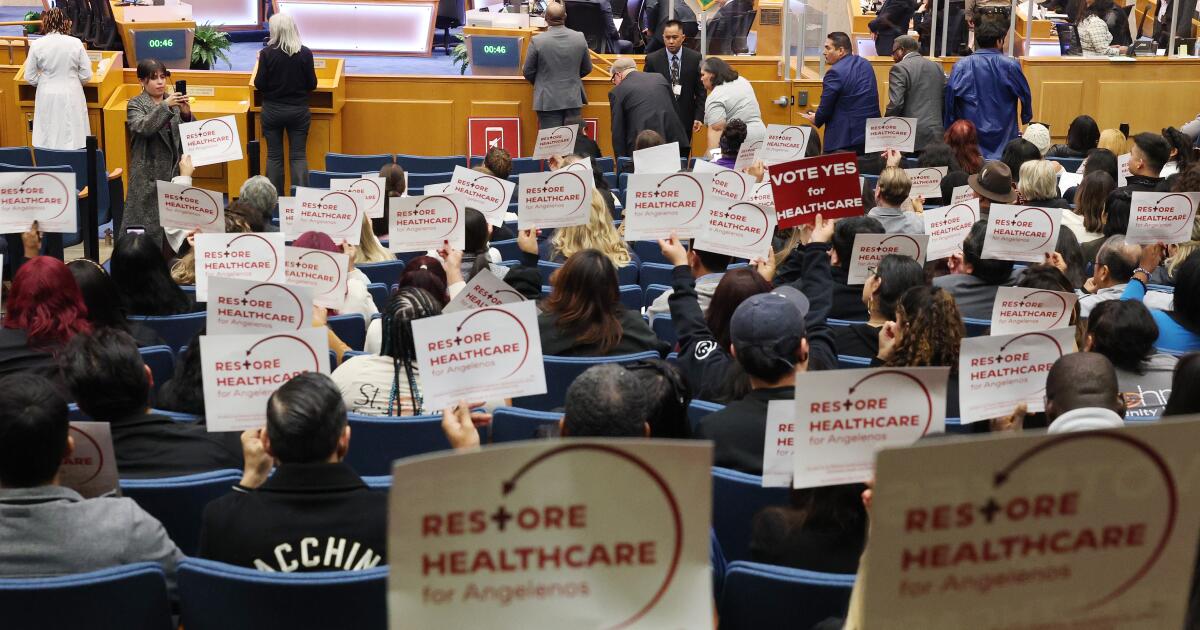
Early returns indicate L.A. County voters have doubts about healthcare sales tax measure
-
 Sports32 minutes ago
Nelly Korda, Michelle Wie West and more: Who to watch at U.S. Women’s Open
-

 World44 minutes ago
EU launches major tech push to break US and China dependence
-
 News1 hour ago
California’s primary for governor is undecided as candidates vie to be in the top two

