Connect with us

Montana

Millions of dollars raised and spent in Montana U.S. Senate race

Published

on

Millions of dollars raised and spent in Montana U.S. Senate race


HELENA — Wednesday was the deadline for federal candidates to submit their year-end fundraising numbers – and, as expected, millions more dollars have poured into the nationally watched race for Montana’s U.S. Senate seat.

The Federal Election Commission’s year-end reports show what campaigns raised and spent in the fourth quarter – October, November and December – giving an updated financial picture coming into 2024.

MTN News

Incumbent Democratic U.S. Sen. Jon Tester’s campaign reported raising just over $5.5 million during that period – the fourth consecutive quarter that they brought in more than $5 million. They spent nearly $7.3 million over those three months, including more than $3.3 million on paid media and another roughly $2 million on digital media. Even so, the campaign still had more than $11.2 million in cash on hand at the start of January.

Advertisement
U.S. Senate Q4 Fundraising

MTN News

Among the Republican candidates challenging Tester, Gallatin County businessman and Navy veteran Tim Sheehy’s campaign brought in almost $2.5 million in the fourth quarter, including $450,000 in personal loans from Sheehy. The campaign spent $2.3 million, including around $1.4 million earmarked for media placement and production, and they had just under $1.3 million in the bank at the start of the year. Sheehy has raised a total of $5.3 million since launching his campaign.

U.S. Senate Q4 Fundraising

MTN News

Former Secretary of State Brad Johnson, who told MTN when he announced his campaign that he expected to be significantly outspent in the GOP primary, brought in just over $22,000 during the quarter, including $15,000 of his own money. He spent more than $20,000 over the period.

U.S. Senate Q4 Fundraising

MTN News

Advertisement

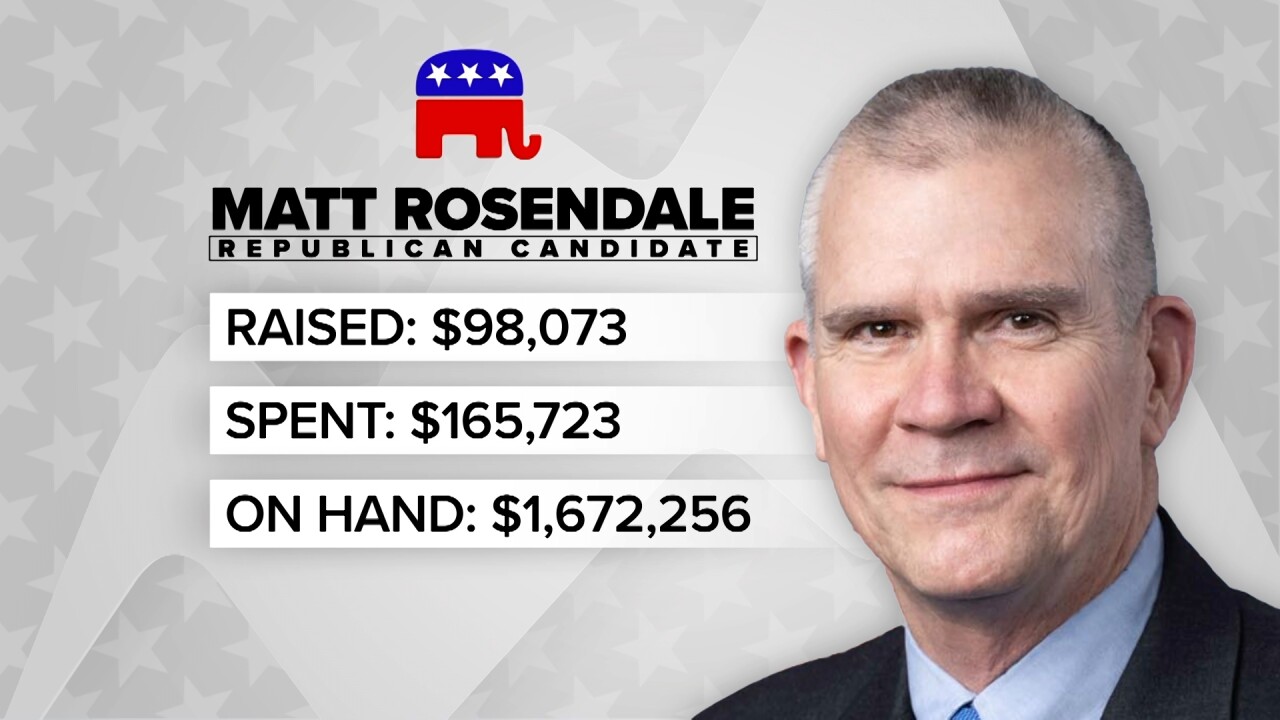
The potential Republican candidate who hasn’t officially announced a run for Senate is U.S. Rep. Matt Rosendale, who has hinted he may jump into the race. Rosendale’s campaign committee raised only about $98,000 during the last quarter, and it spent just under $166,000 – though they had more than $1.6 million in cash on hand at the end of 2023. They brought in a total of just over $1 million throughout the year.

The spending isn’t only coming from the candidates themselves. Millions more in independent expenditures were also reported this quarter in the Senate race – one of the top races nationwide in 2024.

A group called Last Best Place PAC has been consistently running ads attacking Sheehy. According to their FEC report, they brought in and spent just over $2.1 million during the fourth quarter – all of it from Majority Forward, a group linked with Senate Majority PAC, a nationwide super PAC supporting Democratic Senate candidates. In a HuffPost article, Senate Majority PAC confirmed it was behind the ad spending, which the article said has grown to nearly $5.8 million.

Sheehy’s campaign said in a statement that this showed national Democrats were interfering in the GOP primary, and that they were going after Sheehy because he was the strongest candidate to take on Tester.

“The career politicians back in DC are terrified of conservative outsider Tim Sheehy because he’s going to stand shoulder to shoulder with President Trump to drain the swamp, save our country, and put America and Montana First!” a campaign spokesperson said.

Advertisement

Sheehy has also received super PAC support. A group called More Jobs, Less Government has paid for ads backing him, including more than $1 million in the last quarter. Their expenditures included digital ads, radio ads, direct mail and text messaging and emails.

Meanwhile, national media has reported more outside groups are already buying ad time for the general election. Politico reported Senate Majority PAC has made an initial reservation of $27 million in Montana to support Tester, while NBC News says Republican-aligned super PACs Senate Leadership Fund and American Crossroads are spending almost $50 million on fall ad time.

The next federal campaign finance reports will cover the first quarter, from January to March. By that time, we’ll have a full picture of which candidates are in the Senate and congressional races.



Source link

Advertisement

Montana

Montana delegation backs bill to release wilderness study areas

Published

on

Montana delegation backs bill to release wilderness study areas


Laura Lundquist

(Missoula Current) Most of Montana’s Congressional delegation is once again sponsoring a bill to remove three study areas from consideration as designated wilderness.

On Wednesday, Senators Steve Daines and Tim Sheehy and Rep. Troy Downing reintroduced Daines’ “Montana Sportsmen Conservation Act,” which would remove three wilderness study areas from wilderness consideration, releasing them to be managed as regular federal land. Rep. Ryan Zinke was not listed as a sponsor.

Two areas – the 11,580-acre Wales Creek and the 11,380-acre Hoodoo wilderness study areas managed by the U.S. Bureau of Land Management – are 40 to 50 miles east of Missoula in the Garnet Range north of Interstate 90. The third area, the much larger Middle Fork Judith wilderness study area, is around 81,000 acres managed by the U.S. Forest Service in the Little Belt Mountains southeast of Great Falls.

Advertisement

Daines previously introduced the Montana Sportsmen Conservation Act in 2023, but it was never heard in committee. Now, he’s bringing it forward again, and he explained his strangely titled bill in a press release Wednesday.

“As a lifelong sportsman, increasing access to Montana’s great outdoors is one of my top priorities. The ‘Montana Sportsmen Conservation Act’ promotes our outdoor way of life by returning restrictive WSA’s to general public land management, which will improve wildlife habitat restoration, reduce the risk of catastrophic wildfires, and unlock better access to public land,” Daines said in the release.

It should be noted that neither hunting nor fishing are prohibited in wilderness study areas. In the past, sportsmen’s organizations have opposed the wholesale elimination of wilderness study areas. However, some have indicated they are considering the Wales Creek and Hoodoo areas could serve as political sacrifices to save other areas.

The wildfire risk in the Hoodoo area was significantly reduced this summer after the Windy Rock Fire burned a majority of the area.

Daines first proposed a similar bill – the Protect Public Use of Public Lands Act – in 2018 to release five Forest Service wilderness study areas, including the Middle Fork Judith. Former Rep. Greg Gianforte joined him but increased the number of wilderness study areas on the chopping block to 29, including those under BLM management. Both politicians had based their legislation off feedback from a select group of conservative counties and user groups, including the Montana Stockgrowers Association and the Montana Snowmobile Association. Other organizations protested the bills and the lack of transparency during the process.

Advertisement

This most recent bill is supported by the Montana Logging Association, Montana Snowmobiles Association, Montana Outfitters and Guides Association, Montana Farm Bureau Federation, Great Falls Bicycle Club and the Judith Basin and Powell county commissioners.

In 1976, the BLM established 38 wilderness study areas in Montana, including the Wales Creek and Hoodoo areas. In 1977, the Montana Wilderness Study Act set nine Forest Service study areas aside for wilderness consideration, including the Middle Fork Judith. Federal evaluations of the areas conducted during the 1980s concluded some areas, including the three being considered in the bill, weren’t suitable for wilderness designation.

This year’s bill cites the 2020 BLM Missoula Office Resource Management Plan as justification for eliminating the Wales Creek and Hoodoo wilderness study areas. The plan said the two areas were unsuitable for wilderness designation.

However, the plan was not developed during “a 5-year collaborative process,” as the bill claims, but under the direction of the first Trump administration, which ignored a lot of public comments made during scoping. The three resource management plans for Missoula, Lewistown and Miles City were scheduled to be released to the public in late 2018, but they were delayed when the three offices were required to send the drafts to Washington, D.C., for review and revision. When they were returned and published in May 2019, all three draft plans heavily emphasized natural resources extraction.

A Pew Charitable Trust review of six BLM resource management plans drafted in 2019 found all “would fail to conserve lands that the agency’s own research has deemed worthy of protection; cut decades-old safeguards; minimally protect a fraction of 1% of the areas found to contain wilderness characteristics; and open vast swaths of public lands to energy and mineral development.”

Advertisement

Several Montana conservation organizations protested the Montana plans, including Wild Montana and Backcountry Hunters and Anglers. When the draft plans were finalized in early 2020, some changes had been made to cater to sportsmen, but resource extraction still dominated. The Missoula Office’s new objective was to “produce the greatest quantities of forest products from vegetation restoration activities.”

The 2020 plans created a new designation – backcountry conservation area – that allows resource extraction but prioritizes the long-term maintenance of big game populations for hunting. The Missoula plan proposes to manage its three wilderness study areas as wilderness unless Congress releases them. Then, if Daines’ bill passes, portions of the wilderness study areas would become backcountry conservation areas: a 6,100-acre Hoodoos BCA and a 2,365-acre Wales BCA, according to the plan. The remainder of each area is open to any and all uses.

During the 2025 Legislature, the Senate Energy, Technology, and Federal Relations Committee voted 9-4 against a resolution calling on Congress to remove protection from Montana’s wilderness study areas. More than 3,300 Montanans signed a petition opposing the bill and supporting local solutions for study area management.

Some anticipate that more roads will invade wilderness study areas once they’re no longer protected. Zach Angstead, Wild Montana federal policy director, said Daines has countered those claims by saying the areas will still be protected under the Roadless Rule. But now, the Trump administration is on the verge of repealing the Roadless Rule, so that level of protection could disappear. And Daines strongly supports repeal of the Roadless Rule, according to a Dec. 5 email from a Daines spokesperson to the Flathead Beacon.

“Sen. Daines’ push to remove (wilderness study area) protections and roll back the Roadless Rule show that this isn’t about better local management – it’s about opening Montana’s public lands up to large-scale development to benefit corporations, not Montanans,” Angstead said in a statement. “Managing (wilderness study areas) properly requires local collaborative solutions developed by the people who know these places best. The people and the legislature have made it clear that Daines needs to give up this unpopular crusade to undermine and dismantle public lands and start taking his cues from real people who have been working to shape the future of (wilderness study areas).”

Advertisement

Contact reporter Laura Lundquist at lundquist@missoulacurrent.com.


Source link

Continue Reading

Montana

Rare emergency alert issued as destructive windstorm batters Montana

Published

on

Rare emergency alert issued as destructive windstorm batters Montana


The National Weather Service in Great Falls issued a rare civil emergency message on Wednesday, December 17, 2025, as a destructive windstorm pummeled Montana from one end of the state to the other, with some of the strongest gusts recorded in central Montana.

The weather service expected wind gusts greater than 90 mph in Pondera, Teton, and Lewis & Clark counties, prompting the emergency alert that activated the wireless emergency alert system to send warnings directly to cellphones.

Rare emergency alert issued as destructive windstorm batters Montana

Advertisement

“It can be used for weather or non-weather reasons. The primary reason why we deployed it today was to activate the wireless emergency alert system – WEA. That will allow these alerts to go to a person’s cellphone to take immediate action,” said Maura Casey, warning coordination meteorologist with the National Weather Service.

The civil emergency message was the first issued by the weather service since December 2020, during a similar wind and dust storm between Great Falls and Havre. The National Weather Service coordinates with county emergency managers to decide when to issue this rare alert.

What made Wednesday’s event particularly widespread was its prolonged nature and the strength of the accompanying cold front.

“This belt of wind came from the west and with how strong the cold front was accompanying it, it was able to reach down to the surface. What makes this event unique is it’s more of a prolonged wind event. It’s the entire day that we’re experiencing these strong winds,” Casey said.

Advertisement

The windstorm didn’t just hit the plains. Some typically protected mountain valleys experienced destructive wind gusts, with 70 to 80 mph gusts recorded in the Helena and Gallatin valleys.

“The more complex topography make it a little bit difficult south of Great Falls. In this case, because we had that belt of winds that came right over Helena and Bozeman – they essentially had a closer access to that wind,” Casey said.

The powerful winds toppled semi trucks and trees across the region, and knocked out electricity to tens of thousands of people across the state.

Windstorm damage across Montana

Advertisement

The destructive winds stem from an extremely active weather pattern that has been pummeling the Pacific Northwest with flooding rains, heavy mountain snow and high winds.

“We remain in the same very active Pacific weather pattern. While we have high confidence – maybe not as strong as today- but we will get more wind events in the coming weeks,” Casey said.

The weather service recommends staying prepared by keeping up with the latest forecast, especially given the active pattern that doesn’t appear to be going anywhere anytime soon.

This article has been lightly edited with the assistance of AI for clarity, syntax, and grammar.

Advertisement


Source link

Continue Reading

Montana

Real-Time Updates: Severe weather slams Western Montana Wednesday, Dec. 17

Published

on

Real-Time Updates: Severe weather slams Western Montana Wednesday, Dec. 17


(Update 11:00 a.m.)

  • All lanes closed on US-93 near Evaro due to fallen trees.
  • All lanes closed on MT-200 east of Bonner due to fallen trees.

(Update 10:40 a.m.) The Ravalli County Sheriff’s Office has issued an emergency wind and travel warning for the Bitterroot.

The warning states that “due to extreme winds, which are causing trees to fall into roadways and taking down power lines, as well as creating very dangerous driving conditions, the RCSO is advising that people not travel until the wind event decreases.”

High-profile vehicles should not travel in Ravalli County at this time.

Ravalli County 911 is also currently being overwhelmed with calls. Residents are asked to only report immediate emergencies to 911.

Advertisement

The Ravalli County Emergency Operations Center is open. To report non-emergent storm-related events in the Bitterroot, you’re asked to call the EOC at 406-375-6650.

(Update 10:15 a.m.) The reports of damage around Western Montana are rolling in Wednesday morning as thousands remain without power, especially in the northwestern corner.

As trees topple across the area, officials are urging travelers to use caution.

Trees have blocked access to several roads in the region. Here’s the road report as of 10 a.m.:

  • MT-35 is CLOSED from milepost 2.8 to 6
  • Southbound lanes are blocked on US-93 north of Somers due to a semi blow over
  • Tree down and blocking southbound lanes on US-93 near Ronan
  • Tree blocking all lanes on MT-35 east of Polson.
  • Power lines down blocking on lanes on US-2 west of Marion.
  • Severe driving conditions on US-12 from Lolo to Lolo Pass due to downed trees

The Lincoln County Sheriff’s Office issued a notice at 9:40 a.m. that the county is under emergency travel only.

To the south, the Missoula Police Department requested necessary travel only in the city.

Advertisement

The Frenchtown Rural Fire District put out a public service announcement asking people to stay home and off the roads.

Power outages are still impacting several areas of Western Montana too.

NorthWestern Energy’s outage map at 10:10 a.m. showed hundreds of customers were in the dark in Missoula, Mineral, and Sanders counties. Flathead Electric shows thousands of people without power in Flathead and Lincoln counties.

Traffic signals are out in the City of Kalispell. All intersections with dark stoplights must be treated as a 4-way stop.

  • Come to a complete stop
  • Take turns — first to stop goes first
  • Yield to pedestrians
  • Proceed slowly and cautiously

Kalispell’s popular Woodland Park is closed due to heavy winds and hazardous conditions.

The weather has closed the following schools for Wednesday (this list will be updated):

Advertisement
  • Clinton
  • Frenchtown
  • Libby
  • Marion
  • Noxon
  • Pleasant Valley
  • St. Regis
  • Superior
  • Troy
  • West Glacier

High winds tore off the roof of Jefferson School in Missoula. The school is not currently serving students.

Micah Hill / MCPS Superintendent

High winds tear the roof off Missoula’s Jefferson School

This article will be updated throughout the day. Please follow KPAX’s Facebook page for the latest information too.

(Update 9:45 a.m.)

  • MT-35 is CLOSED from milepost 2.8 to 6.
  • Southbound lanes are blocked on US-93 north of Somers due to a semi blow over.

(Update 9:15 a.m.) Montana Department of Transportation reporting several new incidents.

  • Tree down and blocking southbound lanes on US-93 near Ronan
  • Tree blocking all lanes on MT-35 east of Polson.
  • Power lines down blocking on lanes on US-2 west of Marion.
  • Severe driving conditions on US-12 from Lolo to Lolo Pass due to downed trees.

(Update 9:08 a.m.) Hazardous conditions are wreaking havoc across the City of Missoula causing the Missoula Police Department to ask the community to only travel if absolutely necessary.

In a press release at 9:10 a.m., MPD stated that high winds have created dangerous conditions, including reduced vehicle control, blowing debris, and the potential for downed trees and power lines.

If you cannot avoid traveling right now, you’re asked to:

Advertisement
  • Reduce speed
  • Be alert for debris in roadways
  • Watch for downed trees, power lines, and damaged traffic signals
  • Avoid parking near trees or unstable structures

Do not touch anything, including a tree, that may be in contact with power lines. If you see a downed power line, you’re asked to call NorthWestern Energy at 888-467-2669.

For emergencies, call 911. For non-emergency assistance, contact the Missoula Police Department at 406-552-6300.

(Update 9:03 a.m.) A MEANS alert for Missoula County for drivers to be cautious driving due to high winds, several hazards and extreme conditions.

(UPDATE 8:55 a.m.)
Frenchtown School District has cancelled school. Parents should pick up their student from the school to ensure they are supervised and safe as they transition back home. If parents are unable to pick students up, buses will run at 10:00 to return students home. Phones are also out at the South Campus.

(UPDATE: 8:28 a.m.) The storm is hitting Sanders County hard.

Just after 8 a.m., the Community Ambulance Service of W. Sanders Co. posted that power is out in parts of the area and that strong winds are creating extremely dangerous conditions.

Advertisement

Live power lines are across roads, there are reports of falling trees and debris, and some travel routes have become impassable.

Officials are telling people to not travel unless it’s absolutely necessary. School in Noxon has been canceled.

Meanwhile in Mineral County, St. Regis Schools and the Superior School District have also canceled classes.

Due to fallen power lines, Superior Schools will not send the buses back out.

School officials are asking families to pick up their students Wednesday morning. If you’re unable to do so, you’re asked to call Logan Labbe 406-822-2285 to make accommodations.

Advertisement

(1st Report – 8:20 a.m.) The strong Pacific cold front that is moving through Washington has now arrived in Western Montana Wednesday morning.

Power outages have already been reported all across Western Montana including the Interstate 90 corridor from Lookout Pass to Alberton and in Northwest Montana, thousands of residents are without power in the Libby and surrounding areas. For updates on outages check Northwestern Energy Outage map and Flathead Electric Co-Op outage viewers.

NWE Outage Map 12/17

Northwestern Energy

Power outages along Interstate 90 from St. Regis to Alberton, Wednesday 12/17 as of 8:00 a.m.

There is also reports of road hazards. According to the Montana Department of Transportation a powerline is down on Highway 56 near Noxon. Several trees are also down across Highway 56 between Troy and Noxon.

Interstate 90 westbound lanes at mm 15, west of Superior, are blocked due to downed trees.

Advertisement
I90 ROAD CLOSURE

MDT

Click here for live map of road closures.

Stay with KPAX for updates on this storm throughout the day.


Source link

Advertisement
Continue Reading
Advertisement

Trending