Technology
How smuggling gangs use drones to deliver drugs across the border


Drones used to be fancy gadgets for hobbyists or secret weapons for the military. But now they have a new job: delivering drugs. Yes, you heard that right.
While El Pollo Loco is using drones to bring you chicken dinners, some bad guys are using them to smuggle drugs across borders.
Drug lords, cartels and other deviant organizations have been maximizing the benefits of drones to carry out their illegal drug runs.
With many borders of hot zones being heavily watched and reinforced, drones are accomplishing what their human counterparts no longer can. Drones have essentially become the new drug mule.
CLICK TO GET KURT’S FREE CYBERGUY NEWSLETTER WITH SECURITY ALERTS, QUICK VIDEO TIPS, TECH REVIEWS, AND EASY HOW-TO’S TO MAKE YOU SMARTER
Police capture and carry drugs with a drone (BSF Punjab Frontier)
The rise of drug-carrying drones
Drug smuggling is a lucrative and risky business. Smugglers have to evade border patrols, customs agents, police officers, and rival gangs. That’s why some smugglers have turned to drones as a new way of moving drugs.
RUSSIA CHARGES TOP UKRAINIAN MILITARY LEADERS WITH ‘TERRORISM’ OVER DRONE STRIKES
Drones are cheap, easy to acquire, and hard to detect. They can fly over fences, walls, and checkpoints, and drop drugs at precise locations. They can also avoid human contact, reducing the chances of being caught or betrayed.
A drone carrying drugs (BSF Punjab Frontier)
Drones are being used to smuggle drugs in various regions of the world, such as:
North America: Drones sent by Mexican cartels carrying drugs such as cocaine, meth, and heroin regularly cross the U.S. border. The DEA also warned that drones could be used to deliver fentanyl, a synthetic opioid that is 50 times more potent than heroin and can be lethal in small doses.
TRIBAL LEADERS ASK WASHINGTON STATE LAWMAKERS FOR FUNDING TO COMBAT OPIOID CRISIS
South Asia: Recently, border officials in the Punjab region of India revealed they intercepted 107 drug-carrying drones sent by smuggling gangs over the border from Pakistan, the highest number on record. Most were carrying heroin from Pakistan to be dropped and received by collaborators in the Punjab, notorious for having India’s worst levels of opioid addiction.
Middle East: The Jordanian air force shot down a drug-laden drone carrying crystal meth coming from Syria. Drug smugglers from Syria, the world’s largest producer of the black market amphetamine pill, Captagon, often use Jordan as a transit point to the wider Gulf Arab kingdoms and the global market. Syrian smugglers have increased the use of drones to smuggle Captagon and meth due to a security clampdown at the Jordanian border, which has made trafficking by land harder.
Drugs from a drone that was shot down (Jordan Armed Forces)
MORE: COULD THESE CREEPY DEAD STUFFED BIRDS BE USED AS DRONES FOR THE MILITARY?
Why drones are being utilized by the drug trade
There are many reasons why drones are being utilized by drug dealers. Here are the top seven contributors:
- Cheaper
- Easy to acquire
- Dependable — No snitching to authorities by drones if they are intercepted
- Less interference from law enforcement officials than delivering on land or air (as in, by hand or foot)
- Easier than trying to get drugs past borders that are often heavily surveillance
- Great for scoping out enemies or business opportunities
- Lowers risk because drug smugglers do not have to be physically present at the drop-off
Drugs from a drone that was shot down (Jordan Armed Forces)
MORE: 5 DRONES EXPERT REVIEWED
How drones are being used to transport contraband into prisons
Not only are drones being utilized for transporting illegal drugs, but drones are also being used to smuggle contraband items such as cell phones into prisons, too. The number of drone-related illegal activities has skyrocketed. 75% of intercepted illegal goods to prisons in Canada were delivered by drones. In the U.K., the government began to enforce a no-fly zone around all their prisons in October 2023 due to an exponential increase in contrabands by drones.
Drone flying over field (Kurt “CyberGuy” Knutsson)
Law enforcement turns to drones to help stop crime
Globally, local law enforcement officials have begun to employ drones themselves. Officials in the U.K. have used heat-seeking drones to locate cannabis farms. This technology has proven to be effective in detecting illegal activities and reducing crime rates in the country.
Drone in the sky (Kurt “CyberGuy” Knutsson)
Legitimate businesses employ drones to deliver prescriptions
It isn’t just nefarious entities that are innovating with the use of drones. Legitimate businesses such as drugstores and pharmacies are aiming to deliver prescriptions by drone in the U.S. and possibly the U.K. It looks like El Pollo Loco was ahead of the game.
MORE: WHAT’S NEXT FOR TECH IN 2024
Kurt’s key takeaways
As drones become more advanced and widespread, the challenges and opportunities of drone drug smuggling will also evolve and require constant adaptation and innovation from law enforcement. Drug smuggling is now in the air, and we need to tackle it head-on by developing effective counter-drone strategies and technologies.
How do you think governments and law enforcement agencies should respond to the growing threat of drug-carrying drones? Let us know by writing us at Cyberguy.com/Contact.
For more of my tech tips & security alerts, subscribe to my free CyberGuy Report Newsletter by heading to Cyberguy.com/Newsletter.
Ask Kurt a question or let us know what stories you’d like us to cover.
Answers to the most asked CyberGuy questions:
Copyright 2024 CyberGuy.com. All rights reserved.


Philips Hue products don’t often see major discounts, which makes this year’s Prime Day deals especially notable. Prices have dropped significantly across much of the company’s smart lighting lineup, with deals on everything from smart bulb starter kits and sleep lamps to smart buttons. If you’ve been thinking about investing in Philips Hue, now is one of the best opportunities we’ve seen all year to do so for less.
Update, June 26th: Updated prices and availability and added a couple of deals, including a discount for the Philips Hue Bridge.
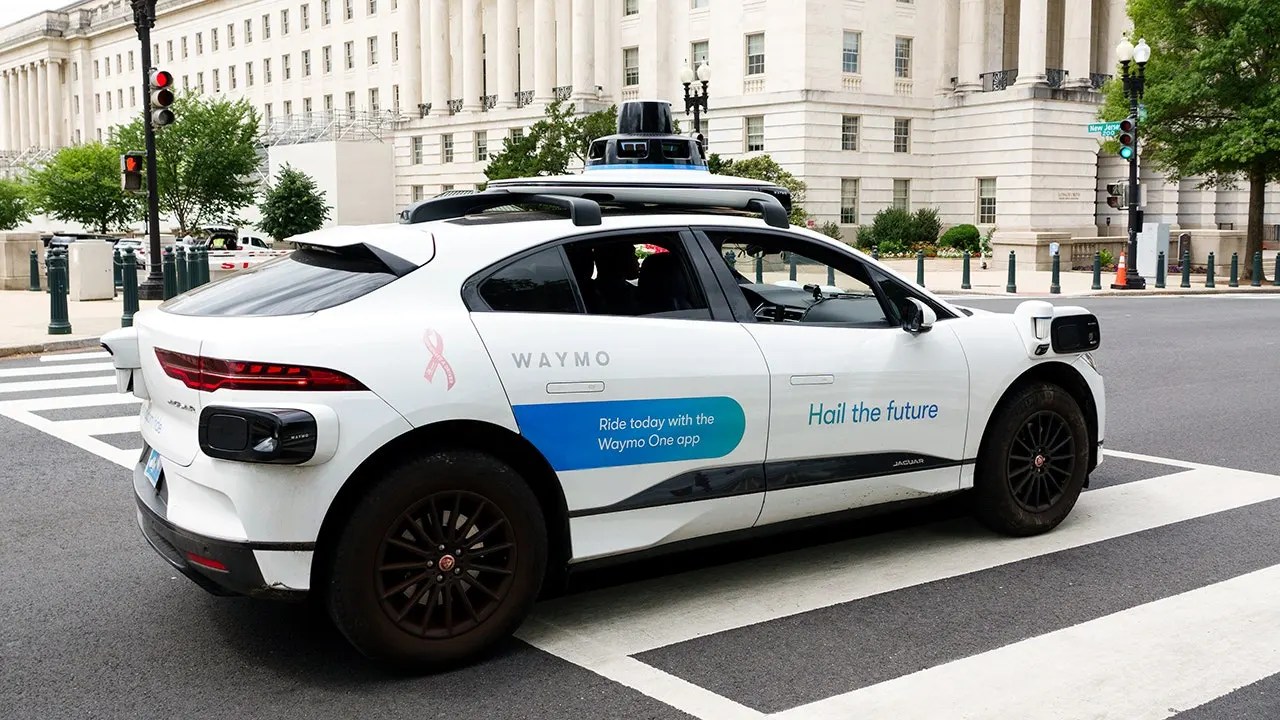
Waymo is recalling 3,871 robotaxis after software issues allowed some vehicles to enter closed freeway construction zones. The company has restricted freeway operations while deploying a fix. (Kevin Carter/Getty Images)
NEWYou can now listen to Fox News articles!
Welcome to Fox News’ Artificial Intelligence newsletter with the latest AI technology advancements.
IN TODAY’S NEWSLETTER:
– Waymo recalls robotaxis over construction-zone risk
– Reporter’s Notebook: Lawmakers wrestle over whether AI can make the grade in America’s classrooms
– OPINION: China is building an AI war machine. Washington must wake up before it’s too late
CONES IGNORED: Waymo has filed a voluntary recall affecting 3,871 vehicles equipped with its 5th Generation Automated Driving System. According to the National Highway Traffic Safety Administration, the software may allow a Waymo vehicle to enter a closed freeway construction zone and continue driving.
OPINION: On June 24, OpenAI unveiled its first custom-built inference chip, developed with Broadcom and known internally as “Jalapeño.” Most Americans will never see it. Yet Beijing certainly noticed. The announcement signals that the contest between America and China has moved beyond software and chatbots into a struggle for control of the infrastructure that will shape economic, military and technological power in the 21st century.
REPORTER’S NOTEBOOK: Reading. Writing. And AI algorithms. The Senate is now wrestling with how students — and teachers — might use artificial intelligence in the classroom. It’s inevitable. “The question is not whether AI is going to impact education. The real question is whether we will shape its use thoughtfully. Responsibly,” said Delaware Secretary of Education Cindy Marten during a recent Senate hearing.
FCC Chairman Brendan Carr announced a review of the agency’s E-Rate program, citing concerns about excessive screen time in schools. (Michael Macor/The San Francisco Chronicle via Getty Images)
SEE THAT?: Meta Wearables VP Alex Himel discusses the newly launched Meta Smart Glasses, highlighting their AI capabilities, accessible price point of $299, and the design collaboration with Kylie Jenner on “The Claman Countdown.”
TECH TITAN: Microsoft CEO Satya Nadella issued a warning that the tech giants competing in the AI race need to ensure they advance the emerging tech in a way that’s palatable to the public.
BOTS MEET BOUNDARIES: NVIDIA, a technology company known for AI computing and robotics systems, has introduced NVIDIA Halos for Robotics. The company calls it the industry’s first full-stack, comprehensive safety system for robotics and physical AI.
NVIDIA introduced Halos for Robotics, a full-stack safety system designed to help robots operate more safely alongside people in industrial workplaces. (Photo by Tomohiro Ohsumi/Getty Images)
Subscribe now to get the Fox News Artificial Intelligence Newsletter in your inbox.
FOLLOW FOX NEWS ON SOCIAL MEDIA
YouTube
X
SIGN UP FOR OUR OTHER NEWSLETTERS
Fox News First
Fox News Opinion
Fox News Lifestyle
Fox News Health
DOWNLOAD OUR APPS
Fox News
FOX Business
Fox Weather
Fox Sports
Tubi
WATCH FOX NEWS ONLINE
Fox News Go
STREAM FOX NATION
Fox Nation
Stay up to date on the latest AI technology advancements and learn about the challenges and opportunities AI presents now and for the future with Fox News here.

Meta is, by and large, a company built on other companies’ ideas. It has almost perfected the strategy: wait for a new platform or social mechanic to take off, then either buy or clone it, put it next to Meta’s unmatched user base and advertising engine, and watch the money pile up. Well, the next big thing appears to be turning everything into gambling. So why wouldn’t Meta make a Polymarket?
On this episode of The Vergecast, David and Nilay discuss the reported prediction market app being built inside Meta, plus the company’s onslaught of other news this week — and its massive, apparently increasing morale problems. Nilay’s at Cannes Lions in France this week, where Meta’s advertising prowess is on full display, and yet it also feels like Meta is in crisis. So which is it? And what is your Facebook feed about to become?
-

 Los Angeles, Ca34 minutes ago
Man found guilty of sex trafficking victim along L.A.’s Figueroa Corridor
-

 Detroit, MI54 minutes ago
No. 23 overall pick in the 2026 NHL draft | Detroit Red Wings
-

 San Francisco, CA1 hour ago
San Francisco Pride kicks off with rainbow lasers, ValQueeries celebrate at Valkyries Pride Night
-

 Dallas, TX1 hour ago
How to buy Egypt vs. Australia World Cup soccer tickets
-

 Miami, FL1 hour ago
Helping Venezuela: Miami search-and-rescue team prepares to deploy
-

 Boston, MA1 hour ago
How to buy Paraguay vs. Germany 2026 World Cup tickets in Boston
-

 Denver, CO1 hour ago
Denver Broncos Roster Breakdown: Center—The Depth Question
-

 Seattle, WA2 hours ago
Iran-Egypt: Seattle World Cup Pride match updates

