Movie Reviews
The Settlers (Los Colonos): Film Review

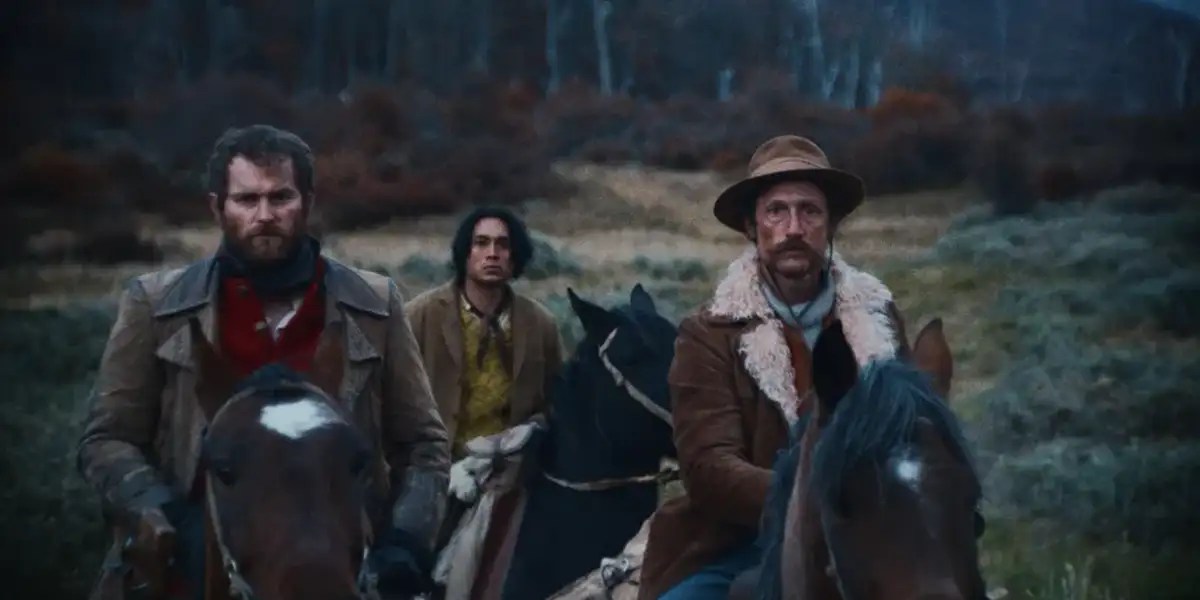
With The Settlers (Los Colonos), Felipe Gálvez offers a piercing and cold look at the brutal actions in La Tierra del Fuego.
The Western genre is undergoing some kind of revision. Filmmakers from across the world – such as Warwick Thornton, Zacharias Kunuk, and even Kelly Reichardt – are looking at it through a new modern lens, one that is centered on untold stories about the darker side of the frontier and dry plains. It is pretty fascinating how these films have been turning out. You can easily see the influence of the auteurs who made the genre so popular and rich, yet with a sensation that feels like a breath of fresh air. The most recent one to join the group is Felipe Gálvez with his feature-length debut, The Settlers (Los Colonos). It starts as a cold look at colonialism and genocide taking place in early 20th-century Chile and ends with a commentary on how crucial cinema is to shine a light on these sidelined harsh truths.
The Settlers begins in 1901, in a particular place in Chile named Tierra del Fuego (the land of fire, in English). The fire in the title of that location doesn’t refer to a literal one, but the desolation one feels when walking through those empty plains: it feels like a descent to hell. There are some occasional scenes with bright blue skies; yet, for the most part, we see ones that feature a darker haze, which covers the film with significant amounts of dread. The story can be described as easily as a group of three men who must transport some goods from point A to point B. However, the circumstances and situations that transpire during their travels are far more complicated and devastating.
We first see a group of overworked men putting up fences in the vast grasslands owned by their boss, José Menéndez (Alfredo Castro), known as “the god of white gold” – a name that Gálvez puts in bold letters across the screen. These types of titles appear in the film on many occasions, when introducing a vital character or starting a new chapter (The King of White Gold; Half-Blood; The Ends of the Earth; The Red Pig) on this journey. Gálvez does this to give his debut another myth-like coating. It helps give more emphasis on the questions the Chilean filmmaker asks us as we watch. Myths are meant to answer timeless questions and be used as guides for each generation. In this case, Gálvez wants to show us that most of what we read about the past is sanitized to a great degree, trying to cover a darker history.
Even with a ninety-seven-minute runtime, The Settlers takes time to stage all these scenarios authentically while still playing with some Western genre conventions introduced by Sergio Leone in the Spaghetti Westerns and Anthony Mann in his classic renditions of the Wild West. The history books say that Menéndez was a businessman and owner of very large companies that stood tall for decades during the time. However, in this film, we are introduced to him differently, one that’s more reflective of his abusive power. Like many of his accomplices or fellow vendors, he wants his business to grow. These were fast-changing times; every decision these magnets made was tied with a movie towards modernization to increase their wealth. But there’s one specific transaction that Menéndez entrusts three men to do so he doesn’t get his hands dirty.

Menéndez hires a Scottish Lieutenant named Alexander MacLennan (Mark Stanley) to clear a path to the Atlantic Ocean and efficiently sell his “white gold”. The “white gold” in question refers to sheep, prize livestock that serves of great importance to the colonialist buyers. That’s why Lieutenant MacLennan has a big task ahead of him. But he isn’t going on this journey alone; MacLennan is joined by Bill (Benjamin Westfall), an American mercenary, and Segundo (Camilo Arancibia), a mestizo who Menéndez demanded to join the team. The three of them aren’t there to bond or connect with one another as happens in other Westerns set during troubling times. In The Settlers, they are only trying to survive at an age where genocide occurs in every corner of these hellscape plains.
MacLennan exudes his dominance over his other two companions, wearing a bright red coat that immediately pops from the screen. It symbolizes his nihilistic behavior – the blood that spills from his past and forthcoming actions. On the other hand, Bill is the archetype of a cowboy, similar to those you see in the films of John Ford and Sam Peckinpah. But what separates this character from the others is his overly barbarous nature. Like MacLennan, he also has a token that symbolizes his persona; in Bill’s case, it is a set of severed human ears stringed one on top of the other. Segundo is the most sympathetic by a mile wide of the three, but he is also involved in some of the crimes, sometimes against his will.
As the three of them traverse through the pastures of La Tierra del Fuego, they find themselves having their fair share of harrowing encounters with other settlers and villagers, all of which end violently. These scenes of conversation and psychological confrontations serve as a way for Gálvez to expand on the film’s themes the most. They reveal how morally indifferent these people who ransack the lands are. It will remind many of Martin Scorsese’s latest joint, Killers of the Flower Moon, another film about the tragedy of colonialism. Both stories are engrossing in their respective rights, using moments of brutality and violence to demonstrate to the audience the level of cruelty that occurred back then. Scorsese and Gálvez sometimes dwell on exploitation due to their raw and cold depictions of actual events. However, much to their favor, those scenes never reach a point where they become provocative, which might have caused the directors to miss the point thematically.
With filmmakers like Manuela Martelli, Sebastian Lelio, Pablo Larraín, and Maite Alberdi, Chile is rapidly on the rise to becoming a country with one of the most fascinating filmographies in recent memory. What separates Chilean cinema from the rest of the other current movements, like the ones in Argentina and Denmark, is that the work is based on the country’s past, no matter the subject matter or genre. And Felipe Gálvez’s debut is one of the best examples from the bunch. It is a history lesson in the most true-to-life way, showcasing the cruelty seeded in the lands thousands of people walk in daily.
The Settlers (Los Colonos) will be released in theaters in NY & LA on January 12, 2024, followed by more cities in the US & Canada, Netherlands, Brazil and Mexico, and in February in Germany. The film is coming soon to the UK, Ireland, Italy, Latin America, India and Turkey.

Movie Reviews
People Shared Their Thoughts About Movies They Watched And These 67 Reviews Are Comedy Gold – AOL

If you love movies, chances are you’ve read a review or two before deciding what to watch. Most people keep things pretty simple—they talk about the acting, the storyline, or whether the film is worth your time. But then there’s Letterboxd, a popular social platform where movie lovers log, rate, and review the films they watch. While plenty of reviews are thoughtful and insightful, others take a… much more chaotic approach.
That’s exactly what the Letterboxd Reviews With Threatening Auras account celebrates. It rounds up the platform’s funniest, most unhinged, and wonderfully cursed reviews—the kind that make you stop mid-scroll and wonder what was going through the reviewer’s mind. These definitely aren’t your standard “Loved it, 4 stars” takes. They radiate such a bizarrely threatening energy that it’s almost impossible not to keep scrolling to see what wild review comes next.
© Photo:
© Photo:

© Photo:
We’ve all been there—sitting through a film, hoping it gets better, only for the credits to roll and leave you wondering what on earth you just watched. But if there’s one silver lining, it’s the internet’s reaction afterward. Sometimes the reviews are so funny, dramatic, or brutally honest that they’re more entertaining than the movie itself.
Whether it’s an accidental masterpiece of comedy or a hilariously savage one-liner, people have a remarkable talent for putting their thoughts into words. The truth is, movie reviews come in all shapes and sizes. They vary depending on who’s writing them, where they’re published, and what they’re hope to achieve. Some are designed to help you decide what to watch on a Friday night, while others dig deep into themes, symbolism, and filmmaking techniques.
© Photo:
© Photo:
© Photo:
One of the most familiar formats is the capsule review. These are the short reviews you’ll often spot in newspapers, magazines, streaming platforms, or entertainment websites. Usually just one or two paragraphs long, they quickly summarize the story, highlight a few strengths and weaknesses, and end with a clear recommendation or star rating. They’re ideal for people who don’t want spoilers or lengthy analysis—they simply want to know whether a movie is worth their time. Writing one isn’t always as easy as it looks, though. Condensing an entire film into just a few sentences while still being informative takes real skill. That’s why some of the best capsule reviews manage to say more in 100 words than others do in 1,000.
© Photo:
© Photo:
© Photo:
Professional critics often take a different approach. Publications such as Variety, The Hollywood Reporter, and major newspapers publish what are commonly known as trade reviews. These aren’t just personal opinions; they also consider a film’s broader impact, commercial appeal, performances, direction, cinematography, and where it fits within the industry. Their reviews are often read by moviegoers, filmmakers, studios, and even award voters. While audiences don’t always agree with the critics, these reviews provide a structured, informed perspective that goes beyond simply saying whether a movie was enjoyable. They aim to explain why a film succeeds—or why it falls flat.
© Photo:
© Photo:
© Photo:
Then there are academic film reviews, which take things to an entirely different level. These aren’t written for casual viewers but for students, researchers, and people who study cinema professionally. Rather than focusing on entertainment value, they examine symbolism, storytelling techniques, historical context, editing, cinematography, and cultural influence. It’s less about asking, “Was this movie good?” and more about exploring what the film is trying to communicate and how it fits into the history of cinema. They can be dense, detailed, and surprisingly fascinating, often revealing layers that the average viewer might never notice. Even a blockbuster superhero movie can become the subject of serious academic discussion.
© Photo:
© Photo:
© Photo:
Of course, not every review is carefully researched. Some of the most popular today are instant reaction reviews—the videos, podcasts, TikToks, or tweets people post immediately after leaving the theater. They’re fast, emotional, and completely unfiltered. You can usually tell within seconds whether someone loved the movie or absolutely hated it. Because there’s no time to overthink anything, these reactions often feel refreshingly genuine. Sure, opinions may change after a second viewing, but that’s part of the fun. They capture that immediate emotional response we all have after watching something memorable, whether it’s excitement, disappointment, confusion, or complete disbelief.
© Photo:
© Photo:
© Photo:
And then there’s arguably the internet’s favorite category: user reviews. Platforms like Letterboxd, IMDb, and Rotten Tomatoes have given everyday movie lovers a place to share whatever is on their minds. Some people write thoughtful essays that rival professional critics, while others somehow manage to steal the spotlight with a single sentence. One review might offer a heartfelt personal story about how a film changed someone’s life, while the next simply says something so absurd that thousands of people can’t stop laughing. Because anyone can contribute, there’s an endless variety of voices, personalities, and senses of humor. That’s exactly what makes scrolling through user reviews so addictive.
© Photo:
© Photo:
© Photo:
© Photo:
In recent years, these reviews have taken on a life of their own. Thanks to social media, the funniest ones are regularly shared far beyond the platforms where they were originally posted. Sometimes the review becomes more famous than the movie itself. A perfectly timed joke, an oddly specific observation, or an outrageously dramatic reaction can spread across the internet within hours. It’s a reminder that people aren’t just reviewing movies anymore—they’re entertaining each other in the process. For many film fans, reading the reviews afterward has become almost as enjoyable as watching the movie itself.
© Photo:
© Photo:
© Photo:
© Photo:
And that’s exactly where today’s collection comes in. Instead of looking at traditional movie criticism, we’re diving into the wonderfully chaotic world of Letterboxd, where movie lovers often express themselves in the most unpredictable ways imaginable. They aren’t polished critiques or carefully balanced opinions; they’re pure internet gold. Keep scrolling, Pandas, and see which review made you laugh the hardest—or left you wondering what on earth the reviewer had just watched.
© Photo:
© Photo:
© Photo:
© Photo:
© Photo:
© Photo:
© Photo:
© Photo:
© Photo:
© Photo:
© Photo:
© Photo:
© Photo:
© Photo:
© Photo:
© Photo:
© Photo:
© Photo:
© Photo:
© Photo:
© Photo:
© Photo:
© Photo:
© Photo:
© Photo:
© Photo:
© Photo:
© Photo:
© Photo:
© Photo:
© Photo:
© Photo:
© Photo:
© Photo:
© Photo:
© Photo:
© Photo:
© Photo:
© Photo:
© Photo:
© Photo:

Welcome to an exciting year-long project here at The Nerdy. 1986 was an exciting year for films giving us a lot of films that would go on to be beloved favorites and cult classics. It was also the start to a major shift in cultural and societal norms, and some of those still reverberate to this day.
We’re going to pick and choose which movies we hit, but right now the list stands at nearly four dozen.
Yes, we’re insane, but 1986 was that great of a year for film.
The articles will come out – in most cases – on the same day the films hit theaters in 1986 so that it is their true 40th anniversary. All films are also watched again for the purposes of these reviews and are not being done from memory. In some cases, it truly will be the first time we’ve seen them.
This time around, it’s July 18, 1986, and we’re off to see Aliens and Vamp.
Aliens
Really, what can you say about a classic?
Set 57 years after the events of Alien, Ellen Ripley (Sigourney Weaver) finds herself heading back to LV-426 when a colony on the planet stops communicating with Earth. Teamed up with Colonial Marines, she is still unprepared for the new horrors she will find at the claws of the xenomorphs.
I’m going to do something I normally don’t do and talk about a deleted scene. Aliens, as it stands is a heck of a follow-up to the original film, but for the life of me I will never figure out why James Cameron cut the scene about Ripley’s daughter dying. For those unfamiliar with it, there is a scene after Ripley returns to Earth where she learns her daughter passed away at the age of 66, two years before Ripley made it home. She cries over the fact she had promised her daughter she would be home in time for eleventh birthday.
This scene does so much to frame some of Ripley’s decisions throughout the rest of the movie. This scene, when included, improves the film far beyond the theatrical cut and adds immense weight to several other scenes.
The theatrical version is great, the extended cut is even better.
Where to watch: Available to stream.

Vamp
The 1980s seem to have already been fed up with vampire films with far more of them tackling the tropes instead of being straight-faced about the bloodsuckers.
Keith (Chris Makepeace) and AJ (Robert Rusler) are rushing a fraternity when when the latter promises the frat a stripper for their party to help their chances of getting in. They head downtown and wander into a strip club that features a dancer named Katrina (Grace Jones) that they are mesmerized by and decide she is the one they need. Little do they know she is actually an ancient vampire.
Considering this wasn’t long after Fright Night, it seems everyone was tired of the same old vampire stories. If they only knew what was coming several years later.
It’s a fine movie, and I mean that in the sense of “it’s fine.” It doesn’t do anything that new per se, but it has some fun visuals and sight gags.
Where to watch: Available to stream.
1986 Movie Reviews will continue on July 25, 2026, with

Christopher Nolan delivers his boldest and most visually stunning film to date.
TOP FIVE OF “THE ODYSSEY”
5. Nolan’s Astounding Script
As a writer-director, Nolan has evolved in substantial ways over the course of his career. He has always been a strong, concept-oriented writer who could sell the ever-living shit out of a great narrative hook, but in recent years, he has reached another level of craftsmanship, especially when it comes to the emotional depth of his work. His take on The Odyssey has the unenviable task of condensing Homer’s sprawling, lyrical epic into a feature-length runtime, yet he manages to turn that challenge into a strength rather than a weakness. From the very first frame, Nolan engages in a fascinating conversation with the original text.
The screenplay merges elements of both Homer’s The Iliad and The Odyssey in articulate and insightful ways that should excite scholars and newcomers alike. Nolan’s film is so efficient that it remains completely accessible to those unfamiliar with the stories, while also serving as a fascinatingly complex and deeply thoughtful adaptation that will keep longtime fans captivated until the very end. Somehow, he accomplishes all of this while crafting one of his most personal works to date. The film is explicitly rooted in many of Nolan’s recurring thematic interests, including time, familial bonds, and the inherent guilt of achievement, while pushing each of those ideas to new depths. This is my favorite Nolan screenplay to date, and an incredible accomplishment.
4. The Insane Ensemble
The cast Nolan assembles for The Odyssey is as sprawling as Homer’s epic itself. The ensemble is a blend of longtime Nolan collaborators and newcomers, all of whom come together to form a richly woven tapestry of fully realized performances. For my money, there isn’t a weak link in the group. If anything, it’s remarkable to see acclaimed actors like Charlize Theron, Lupita Nyong’o, and Zendaya appear for only a few minutes each and still leave a lasting impression.
There are, however, several standout performances, particularly from Matt Damon, Samantha Morton, Robert Pattinson, Anne Hathaway, and Elliot Page. Each actor is utterly magnetic, possessing the screen presence and charisma to command Nolan’s signature IMAX frames in breathtaking fashion. Tom Holland also deserves special recognition, delivering what is arguably the best performance of his career. By the film’s end, it genuinely feels like he’s entering an entirely new chapter as an actor. Altogether, the performances are phenomenal, filled with emotion, pathos, and deeply affecting, soulful work.
3. The Horror Sequences
It’s astonishing how much of Homer’s epic Nolan manages to fit into this film without ever making it feel rushed or condensed. For me, though, the most exhilarating moments come when he fully embraces the story’s fantastical elements through a distinctly unsettling, dread-filled lens. The Cyclops sequence feels like Nolan casually inserted a masterful horror short into the middle of the film’s first act. Even more impressive is the Circe-centered sequence later in the runtime, which pushes the film into even more delirious and mesmerizing territory while employing a similarly immersive approach.
These sequences give Nolan the opportunity to apply many of his signature filmmaking techniques in entirely fresh ways. The craftsmanship on display feels deeply rooted in his established style, incorporating everything from practical on-screen light sources and a thunderous blend of diegetic and non-diegetic sound to his trademark cross-cutting. Yet, when placed within these mythological and fantasy-driven settings, those familiar techniques feel completely revitalized, creating some of the most visually and emotionally striking moments of Nolan’s career.
2. An All-Encompassing Cinematic Experience
Which brings us to the culmination of all this extraordinary craftsmanship: The Odyssey is simply a transportive experience, one that can only be compared to one other Christopher Nolan film, his masterpiece, Dunkirk. From Hoyte van Hoytema’s breathtaking cinematography and Richard King’s immersive sound design to Ludwig Göransson’s soaring score, every element of the film pulls you deeper into its world. Sitting in an IMAX theater, surrounded by this level of cinematic precision and commitment, while witnessing the remarkable performances and Nolan’s grand creative vision, results in something truly monumental.
It was a theatrical experience I won’t soon forget, one that felt epic in every sense of the word.
1. The Obscenely Satisfying Final Act
The final thirty minutes of The Odyssey feel like watching a magic trick unfold before your eyes. As gripping and immersive as the film is from the very beginning, it becomes clear that Nolan has been meticulously setting up layers upon layers of narrative and thematic dominoes, all so he can knock them down in spectacular fashion during the final act. The sheer number of satisfying payoffs that arrive in rapid succession throughout this closing stretch is nothing short of astonishing.
At three hours long, The Odyssey never feels like it’s wasting a single moment. Instead, Nolan creates an experience that makes you feel as though you’ve genuinely embarked on this journey alongside the characters. By the time the film reaches its conclusion and everything comes full circle with such precision and emotional weight, it’s difficult to put into words just how deeply moving it all is. I genuinely sat there with my jaw on the floor. It’s phenomenal filmmaking.
RGM GRADE
(A)
Over the past few decades, Christopher Nolan has established himself as one of the defining filmmakers of his generation. From early works like the critically acclaimed cult classic Memento to blockbuster landmarks like The Dark Knight and Inception, and most recently the Academy Award-winning Oppenheimer, Nolan has remained one of the most influential voices in modern cinema. That made the question of what he would do after winning Best Picture and Best Director for Oppenheimer especially compelling. What kind of film does a director who seemingly can do anything choose to make at the absolute height of his creative powers?
The answer is The Odyssey, an adaptation of Homer’s seminal, genre-defining epic. The choice of source material wasn’t entirely unexpected, given Nolan’s long-documented fascination with the story. He nearly directed Troy back in 2004 before pivoting to Batman Begins, a decision that ultimately launched the extraordinary run of films that followed. What is surprising, however, is the sheer ambition and fearless conviction with which he tackles the material. In a post-Oppenheimer world, Nolan clearly feels emboldened to take even bigger, bolder, and more daring creative swings. The result is a staggering achievement. The Odyssey is unlike anything else in modern blockbuster filmmaking and stands among the finest accomplishments of Nolan’s career.
Ultimately, it’s almost unbelievable that a film like this exists: a massive-budget, three-hour, R-rated epic that finds Christopher Nolan pushing himself further than ever before while embracing his unique storytelling instincts in deeply thoughtful and compelling ways. For a filmmaker whose work has often felt meticulously controlled, The Odyssey crashes over you like a roaring sea, occasionally threatening to overwhelm even its creator, yet becoming all the more exhilarating because of it. It’s a breathtaking, enthralling, and profoundly insightful cinematic achievement. I cannot recommend it highly enough.

Discover more from RGM
Subscribe to get the latest posts sent to your email.
-

 Los Angeles, Ca7 minutes ago
Suspects entered home through upstairs bedroom in Encino burglary: police
-

 Detroit, MI31 minutes ago
Lions training camp preview: Will Blake Miller win the starting RT job?
-

 San Francisco, CA43 minutes ago
SFPD faces fresh round of questions on Pride weekend arrests
-

 Dallas, TX49 minutes ago
Cowboys news: Christian Parker labeled a ‘big question’
-

 Miami, FL55 minutes ago
Billionaires like Ken Griffin are moving to Miami—but middle-class earners can’t copy them and reap the same benefits, real estate experts say | Fortune
-

 Boston, MA1 hour ago
Looking back at the World Cup: Fans drank Boston dry, got permanent tattoos, sold out famous BBQ joints, and drove up small business revenue | Fortune
-

 Denver, CO1 hour ago
How much are Denver Broncos worth after Seahawks’ reported $9.6 billion sale?
-

 Seattle, WA1 hour ago
Seattle Weather: A sunny Sunday, temperatures heating up

