World
The Sticking Points That Kept Russia and Ukraine Apart


Russia and Ukraine failed to agree on a range of critical issues when they held peace talks in the spring of 2022. Documents from those talks obtained by The New York Times shed new light on what those issues were — and what are likely to be the main sticking points in any future negotiations to end Europe’s biggest land war in generations.
President Vladimir V. Putin had referred to the 2022 talks as a foundation for any future deal, but shifted to a harder line on Friday, demanding Ukraine cede territory that is not even under Russian control. Ukrainian and Western officials have long suspected that Russia would not be willing to settle for anything less than the full subjugation of Ukraine.
1. Ukrainian neutrality:
Will it join NATO?
Ukraine’s efforts to join the Western military alliance were at the core of Mr. Putin’s justifications for invading the country in February 2022.
Russia’s Position
Russia demanded that Ukraine never join NATO or other alliances; host foreign military bases or weapons; or conduct military exercises with other countries without its consent. In the 2022 talks, Russia pledged not to stand in the way of Ukraine’s possible membership in the European Union.
Ukraine’s Position
Ukraine offered to become a “permanently neutral state” and to “terminate international treaties and agreements that are incompatible with permanent neutrality.” But in the two years since, Ukraine’s leaders have become more vocal about seeking to join the Western military alliance as Russia’s war has continued.
2. Security guarantees:
What happens if Ukraine is attacked again?
Pledges from other countries to protect Ukraine if Russia mounts another invasion are bound to be at the center of any durable peace, some experts say.
Ukraine’s Position
Ukraine proposed a security mechanism that would be triggered “in the event of an armed attack on Ukraine.” The “guarantor” countries that signed on to the treaty would hold “urgent and immediate consultations” for no more than three days. Then, they would take “individual or joint action as may be necessary” to protect Ukraine, including establishing a no-fly zone, providing weapons and using military force.
Russia’s Position
Russia agreed to much of Ukraine’s security guarantees proposal but with key exceptions. It balked at the idea of other countries establishing a no-fly zone or providing Ukraine with weapons. Most important, Russia sought to insert a clause that would require all guarantor countries — including Russia itself — to agree on military intervention. The idea stands as perhaps the most intractable sticking point in the draft, rendering the security guarantees moot by allowing Russia to veto any international response if it invaded Ukraine again.
There was also a question: What countries would actually be willing to guarantee Ukraine’s security? The United States, the U.K., France, China and Russia itself were all listed in the draft of the treaty as guarantors. Russia also wanted to include Belarus, while Ukraine wanted to add Turkey; it’s unclear whether the countries had given their assent. If Ukraine eventually joins NATO, the Western alliance will have to deal with similarly thorny issues about how to respond if Ukraine is attacked again.
3. Territory:
How much of Ukraine would remain under Russian occupation?
For Ukraine, a peace deal would be likely to come at the expense of accepting Russian control over some part of its territory.
Ukraine’s Position
In the 2022 talks, Ukraine refused to recognize Russian control over any of the country, including Crimea, which Russia illegally annexed in 2014. But Ukraine did offer a deal in which the two countries would agree to “resolve issues related to Crimea” through 10 or 15 years of diplomacy, and would pledge to avoid doing so by “military means.”
Ukraine appeared ready to accept some swath of the country’s east also remaining under Russian occupation, with the precise contours to be hashed out in a meeting between President Volodymyr Zelensky and Mr. Putin that never came.
Mr. Zelensky’s position has since hardened. He says Ukraine is fighting to liberate all internationally recognized territory, including Crimea, under Russian control.
Russia’s Position
Russia’s stance has also fluctuated. At the outset of the 2022 negotiations, Russia demanded that Ukraine give up its entire eastern Donbas region and recognize Russian sovereignty over Crimea. By April, Russia had accepted a model in which Crimea and some other parts of Ukraine would remain under Russian occupation that Ukraine would not recognize as being legal.
Now, however, Russia’s territorial demands appear more extreme. In September 2022, Mr. Putin declared four Ukrainian regions, in addition to Crimea, to be part of Russia, even though Ukraine still controlled much of that territory. On Friday, Mr. Putin went further than in the past, declaring that any ceasefire would be contingent on Ukraine ceding all four regions to Russia, none of which Russia fully controls.
4. How would a cease-fire work?
The logistics of how to put a truce into effect are likely to pose one of the most difficult challenges of any negotiations.
Russia’s Position
An annex to the April 2022 draft added by Russia’s negotiators spelled out how Moscow saw a cease-fire taking hold. They said it would begin when the treaty was “provisionally applied” — defined as the day it was signed by Ukraine and most of the guarantor countries, including Russia. Both sides would not “carry out actions that could lead to the expansion of the territory controlled by them or cause a resumption of hostilities.”
Under Russia’s proposed terms, Moscow’s troops would have more flexibility in withdrawing from the battlefield. While Ukraine would be required to withdraw immediately, Russia’s withdrawal would be the subject of separate “consultations.”
International organizations could also be involved. Russia proposed that the United Nations monitor the cease-fire and that the Red Cross participate in the exchange of prisoners of war, interned civilians and the remains of the dead.
Ukraine’s Position
The April 2022 draft shows that Ukraine rejected Russia’s proposal but does not show a Ukrainian counteroffer. Instead, Ukrainian officials pointed out that Russia could stop fighting at any time. A note inserted by Ukrainian officials into the March 2022 treaty draft says: “The Russian side has ignored Ukraine’s numerous requests for a ceasefire.”
5. Ukrainian national identity
When Mr. Putin announced his invasion on Feb. 24, 2022, he described one of his goals as the “denazification” of Ukraine. The term was widely interpreted as referring to the Kremlin’s goal of toppling Mr. Zelensky’s government and replacing it with a puppet regime.
Russia’s Position
But Russia’s definition of “denazification” shifted quickly after its initial invasion failed. Negotiators for Moscow wanted Russian to be declared an official language and laws promoting Ukrainian language and identity to be repealed. They inserted two annexes into the draft treaty listing the articles of the legal code and Ukrainian Constitution that they wanted repealed, referring to some of them as laws on “nazification and heroization of Nazism.”
Ukraine’s Position
Ukraine balked at including any of Russia’s demands in a deal to end the war, arguing that they were “not related to the subject matter of the treaty.”
6. Limits on Ukraine’s military
Mr. Putin also called for Ukraine’s “demilitarization” when he announced his invasion, like “denazification” an ill-defined term.
Russia’s Position
Russia sought caps on the size of Ukraine’s military, including its total strength (up to 100,000 people), and the quantity of different types of weapons it would have — 147 mortars and 10 combat helicopters, for example. It also wanted the firing range of Ukraine’s missiles to be restricted to just 25 miles.
Ukraine’s Position
In the 2022 talks, Ukraine was willing to accept caps on the size of its military, but much higher ones. It sought an army of up to 250,000 people, 1,080 mortars and 60 combat helicopters. And it offered to restrict the range of its missiles to 174 miles. But that was before Ukraine began to receive significant amounts of arms, equipment and training from the West. Ukrainian officials point out that Ukraine’s military is now one of the most powerful in Europe, and it is unlikely that they would accept limits on the country’s ability to defend itself.
Original documents
To omit identifying markings, these documents have been retyped to resemble the originals. Typographical errors in the original documents have been retained.
March 17, 2022, treaty draft An early draft of a Ukraine-Russia treaty. The document is an English translation that Ukraine provided to Western governments at the time. [English]
March 29, 2022, Istanbul Communiqué The proposed agreement that was discussed at in-person talks in Istanbul, as summarized by Ukrainian negotiators. [English translation] [Russian original]
April 15, 2022, treaty draft A later draft of a Ukraine-Russia treaty. The document’s header shows this was a version that landed on President Vladimir Putin’s desk. The map referred to as Annex 6 is not included. [English translation] [Russian original]


His masterclass started an hour late after Colombia’s FIFA World Cup clash with Switzerland went to penalties, leaving the opening-day crowd at the Bogotá Audiovisual Market (BAM) visibly deflated over its eventual loss. Taking the stage before the subdued audience, Mexico’s Alonso Ruizpalacios acknowledged the collective disappointment by turning to Elizabeth Butcher’s poem One Art.
“I found refuge in it when Mexico lost, too. I’ll read it and see if it speaks to you the way it does to me,” he said, before reciting the poem in full, which begins:
“The art of losing isn’t hard to master; so many things seem filled with the intent to be lost that their loss is no disaster.”
“I’m not much of a soccer fan—I swear, I’m really not—but I’ve had to become one because of my sons’ obsession with the game. And I think one of the most valuable things they’ve learned through it is how to lose. How to lose with grace,” he went on.
“It strikes me as an incredibly important lesson, because losing is far more common than winning,” he said, adding: “I think that’s certainly true in filmmaking as well. For me, one of the greatest lessons has been learning how to lose: accepting that a film won’t always meet your expectations, that you won’t win a grant, that you’ll have to start over and try again. It’s about becoming resilient. I suppose that’s something you gradually acquire over the years.”
Speaking to Variety before his BAM Talk, presented by Mediapro, Ruizpalacios talked about his upcoming adaptation of Carlos Fuentes’ novel Aura for Netflix. “I’m approaching it not as a literal, page-by-page translation of the novel to the screen, but as a reinterpretation of it.”
On his adaptation of another novel, The Transmigration of Bodies by Mexican writer Yuri Herrera, which he deemed “one of the finest novelists writing today,” he said: “It’s set during an epidemic – a fictional one – but it inevitably brings COVID to mind, even though the novel was written before the pandemic, it turned out to be almost prophetic.”
“But it’s an epidemic of sadness—of something that’s never quite defined. Against that backdrop, the story unfolds as a kind of chilango noir—that is, a Mexico City noir. It’s deeply rooted in the atmosphere and character of Mexico City.” Presented at the Berlinale Co-Production Market earlier this year, it already has five co-producing countries attached, he said, naming Spain, France and Chile among them.
Reflecting on his four movies, which BAM was honoring with a retrospective, starting with his career-launching “Güeros,” he mused on what he calls his ‘problem child’, the black & white “The Kitchen,” which was “challenging from start to finish.”
“Raising the financing was especially hard. It took many years. We’d finally get someone on board, and then the deal would fall through. Filming was difficult too, because coordinating actors from different parts of the world and bringing them together in one place was incredibly complicated. We had everyone together for a month before shooting began—we spent an entire month rehearsing. Making that happen was difficult, but it was something I really wanted: for the entire cast to rehearse together before filming.” Finding distribution in the U.S. was even more of a challenge, given its immigration theme, he added.
Speaking about co-production at his BAM Talk, he said: “I think it’s simply the reality of filmmaking today. Every time you watch a film now, the opening credits list co-producers for what feels like 10 minutes. It’s just the way things are – there’s no getting around it.
“There’s something fundamentally right about working that way. We’re no longer living in a time when public funding alone could finance an entire film. Those funds are becoming smaller and smaller, so you have to piece together financing from different sources. There’s also something deeply stimulating about that process. It’s the only way to survive if you’re making non-mainstream, non-hegemonic cinema. If a streaming platform isn’t paying for your film, this is the only viable path.”
“It’s also the only way to stand up to dominant commercial cinema, which, honestly, I think is at one of its lowest points. I genuinely believe Hollywood cinema has reached… a breaking point,” he said, lamenting the abundance of sequels, spin-offs, reboots and the like.
Asked what he thought about the thorny issue of AI and its creeping dominance, he said: “First, I genuinely love what I do. I love writing. That’s why I find this rush toward artificial intelligence unsettling. As a tool, it’s perfectly fine. But this wholesale embrace of it – the almost frenzied enthusiasm – strikes me as dangerous. It feels like we’re shooting ourselves in the foot.”
“What AI doesn’t really account for is that the point isn’t only the result—the point is the process. That’s what the human experience is. The human experience lives in the process. I love sitting down to write. I love searching for exactly the right word, rewriting a sentence, opening a thesaurus, flipping through a dictionary of synonyms, and finally finding the precise word I’m looking for. That process gives me pleasure. So, this obsession with efficiency – with the bottom line – doesn’t interest me at all. I don’t think life is about saving time. Saving time for what? The whole point is to spend it doing what you love.”
He called for more independent cinema as “almost an act of resistance.”
“We can’t simply make films that only cinephiles will watch. I think we have a responsibility to engage audiences – to help re-educate them, in a sense. That’s incredibly important.”
“What we need are Trojan horses,” he pronounced. “I’m a great believer in the Trojan horse. By that I mean what Martin Scorsese has described about Hollywood directors of the 1940s and 1950s. Many of them were European filmmakers who came with genuine artistic training and a real artistic vocation, but they found themselves working within the entertainment industry. So they had to smuggle anti-establishment ideas, political thought and complex artistic content inside the framework of commercial entertainment.”
“I think we need to create more Trojan horses today—works that can exist within streaming platforms, for example. I even fantasize about making a film for TikTok someday: a movie you would watch in 15-second episodes that gradually builds into something larger. I don’t know exactly what that would look like, but I think there’s something worth exploring there, he said, adding: “I no longer think it’s enough to make contemplative films, however beautiful they may be. I love those films – they’re a refuge for me – but I think we also need to find new ways of reaching people where they already are.”
The 17th BAM edition runs over July 6-10.

US envoy: Stop funding UNRWA, back Board of Peace for Gaza
Speaking at the U.N. July 1, Ambassador Jeff Bartos said donors could continue supporting United Nations Relief and Works Agency for Palestine Refugee or choose a framework offering Gazans “peace, prosperity and real durable change.” (Credit: UNTV)
NEWYou can now listen to Fox News articles!
The United Nations defended its appeal for countries to keep funding the United Nations Relief and Works Agency for Palestine Refugees in the Near East (UNRWA) after the United States argued that donors should stop supporting an agency it claims has been infiltrated by Hamas and instead direct its money toward the Security Council-backed Board of Peace.
Speaking at UNRWA’s annual pledging conference in early July, U.S. Ambassador Jeff Bartos accused member states of repeating a failed approach and said the agency had become a “subsidiary of Hamas.”
“Doing the same thing over and over, expecting a different result is the definition of insanity,” Bartos said. “And yet, here we are again, another annual pledging conference for UNRWA. Same speeches … same condemnation of Israel, same failures to condemn Hamas.”
HAMAS SAYS IT WILL DISSOLVE GAZA GOVERNMENT, BUT ISRAEL WARNS GROUP STILL SEEKS HEZBOLLAH-STYLE CONTROL
UNRWA’s headquarters in Gaza City, Gaza, Feb. 21, 2024. (Dawoud Abo Alkas/Anadolu via Getty Images)
Bartos urged governments to stop funding UNRWA schools in Gaza, which he accused of indoctrinating children in hatred of Jews and glorifying terrorism. He also cited allegations that UNRWA employees participated in the Hamas-led Oct. 7, 2023, attack against Israel.
“You can choose to fund incitement, terrorism and stagnation, or you can choose to fund the Board of Peace, giving Gazans a path to peace, prosperity and real, durable change,” Bartos said.
The Board of Peace is a U.S.-led body created under President Donald Trump’s Gaza plan to oversee transitional governance, reconstruction and long-term development alongside a Palestinian technocratic administration. The administration argues it offers a better alternative to UNRWA by shifting aid away from what it says is a Hamas-infiltrated system and toward accountable governance and economic recovery.
Asked by Fox News Digital why U.N. Secretary-General António Guterres was asking countries to put additional money into UNRWA rather than support the Board of Peace, U.N. spokesman Stéphane Dujarric defended the agency’s record and mandate.
ISRAEL SLAMS UN REPORT AS ‘POLITICAL BLOOD LIBEL’ FOR ALLEGING DELIBERATE TARGETING OF PALESTINIAN CHILDREN
A Palestinian woman wears a green Hamas scarf attends a demonstration against a U.N. Relief and Works Agency (UNRWA) funding gap, outside the UNRWA Gaza Headquarters in Gaza City, Aug. 16, 2015. (The Associated Press)
Dujarric said Wednesday that UNRWA officials, including former Commissioner-General Philippe Lazzarini and acting chief Christian Saunders, had taken “strong action” when presented with facts concerning possible infiltration by people aligned with terrorist organizations.
“UNRWA doesn’t operate through a sort of immaculate conception,” Dujarric said in a press briefing. “It is there because there is a mandate given to it by the General Assembly, and we continue to fulfill that mandate. It has a very important role to play on the humanitarian front.”
Dujarric added that the Security Council resolution supporting the Board of Peace also calls on the United Nations to deliver humanitarian assistance and lead humanitarian activities in Gaza.
“UNRWA is part of that system,” he said.
The U.S. position contrasted sharply with those of several European governments.
At the same pledging event, the United Kingdom announced £23 million in support for UNRWA.
British Ambassador James Kariuki called the agency “indispensable” to providing essential services to Palestinian refugees across Gaza, the West Bank, Syria, Lebanon and Jordan.
France also reiterated what its representative described as “full support” for the agency, saying UNRWA continues to provide indispensable assistance despite growing obstacles. France said it had provided €123 million to UNRWA since 2023 and would announce its 2026 contribution soon.
INTERNATIONAL ‘DEEP STATE’ PRIME TARGET OF TRUMP-STYLE CANDIDATE FOR UN CHIEF
A Palestinian man collects food from a humanitarian aid distribution point in Beit Lahia, northern Gaza, July 20, 2025. (Ahmad Salem/Bloomberg via Getty Images)
The French representative said allegations against UNRWA had been taken seriously and argued that the agency was implementing recommendations from the Colonna review intended to strengthen neutrality and transparency. France also supported an eventual, gradual transfer of UNRWA’s responsibilities to reform and strengthen Palestinian institutions as part of a broader political settlement.
The funding dispute comes as UN Watch is demanding that Guterres waive any immunity enjoyed by Lazzarini, whose term has ended, so national authorities can investigate allegations that he ignored repeated warnings about Hamas infiltration.
In a June 30 letter, the Geneva-based watchdog claimed that it had provided Lazzarini and his administration with evidence involving teachers, school principals, union leaders and other employees who allegedly supported or were affiliated with Hamas and other terrorist groups. It argued that the claims create grounds for an independent criminal investigation.
Hillel Neuer, executive director of UN Watch, told Fox News Digital that his organization told Lazzarini “that there are supporters of terrorism — in some cases, actual members of Hamas — working as teachers, working as school principals,” Neuer said, “Not one bad apple, not a few rotten apples, but the problem of support for terrorism … was systematic.”
Neuer said waiving Lazzarini’s immunity would not amount to a finding of guilt but would allow prosecutors to test the evidence.
“The investigation may prove there’s no evidence, and it’s over,” Neuer said. “But at least you should waive immunity to allow an investigation. The U.N. said that if anyone was found involved, ‘we will cooperate.’ Now is the test.”
Asked whether Guterres would consider waiving Lazzarini’s immunity, Dujarric did not answer directly.
CLICK HERE TO DOWNLOAD THE FOX NEWS APP
Philippe Lazzarini, commissioner-general of the United Nations Relief and Works Agency for Palestine Refugees in the Near East (UNRWA), holds a press conference in Jerusalem on October 27, 2023. (Mostafa Alkharouf/Anadolu via Getty Images)
“As far as I know, UN Watch is not a judicial authority,” he said. “We have always, as a matter of principle, cooperated with investigations by national authorities.”
UN Watch’s letter argues that immunity exists to protect the interests of the United Nations rather than provide a personal benefit to an official, and that it should be waived where it would obstruct justice without harming the organization.
Fox News Digital contacted UNRWA for comment but did not receive a response.

Published on
The Spanish government has proposed a new EU common borrowing mechanism worth up to €850 billion per year, according to a document seen by Euronews.
ADVERTISEMENT

ADVERTISEMENT
The pitch will be presented on Thursday in Brussels by Spanish Economy Minister Carlos Cuerpo during a meeting of euro-area finance ministers.
Spain argues that liquidity is central to creating a common safe asset that would serve as a benchmark for European firms, reducing their financing costs. That in turn would have positive implications for the European Union’s competitive goals, such as more integrated capital markets and strengthening the role of the euro as an international currency.
The document also argues that there is a need to reduce fragmentation of debt issuance. Assuming the EU issued debt at German-level borrowing costs, Spain claims, a more centralised issuance mechanism could generate savings of around €5 billion a year, rising beyond €25 billion once issuance reaches €5 trillion.
Opposition to EU common borrowing is well-established in Brussels. Countries led by Germany and the Netherlands are staunchly against any taking on any form of further joint debt. On the other hand, countries such as France and Greece have publicly endorsed new common borrowing.
To chart a path forward, Spain is proposing the creation of a European Sovereign Facility. Participation would be voluntary; the European Commission centralising part of the member states’ funding programs, but participating countries would need to comply with EU fiscal rules.
Annual issuance would reach €850 billion if all 27 member states and the European Stability Mechanism and European Financial Stability Facility take part, allowing the EU to reach a stock of €5 trillion within five years.
If not all EU countries are willing to participate, Spain envisages creating a “coalition of the willing” as an initial stage.
“For the initiative to be meaningful, however, at least the five largest euro area issuers would need to participate, as they alone would enable an annual issuance volume of approximately €540–550 billion,” the document reads.
The guarantees for this mechanism would be twofold: the loan to the participating member states and the EU budget.
The bloc’s 27 members are currently discussing the 2028-2034 long-term budget, set to be agreed by the end of 2026, with intense debate over how the budget will be financed.
-
 Alabama1 minute ago
Mac Jones asked who was his craziest teammate at Alabama
-

 Alaska8 minutes ago
Climate Change Is Helping an Invasive Predator Wreak Havoc on Iconic Alaskan Fish
-

 Arizona11 minutes ago
Arizona man pleads guilty after illegally living in forest for years among ‘1,000lbs of trash’
-

 Arkansas16 minutes ago
Army names intelligence facility for Arkansas Tech graduate
-

 California23 minutes ago
How California Effectively Legalized an Open-Air Sex Market
-

 Colorado26 minutes ago
Julian Lewis Says Deion Sanders’ Colorado ‘Wasn’t Really Looking at Defenses Much’ Last Season
-
 Idaho31 minutes ago
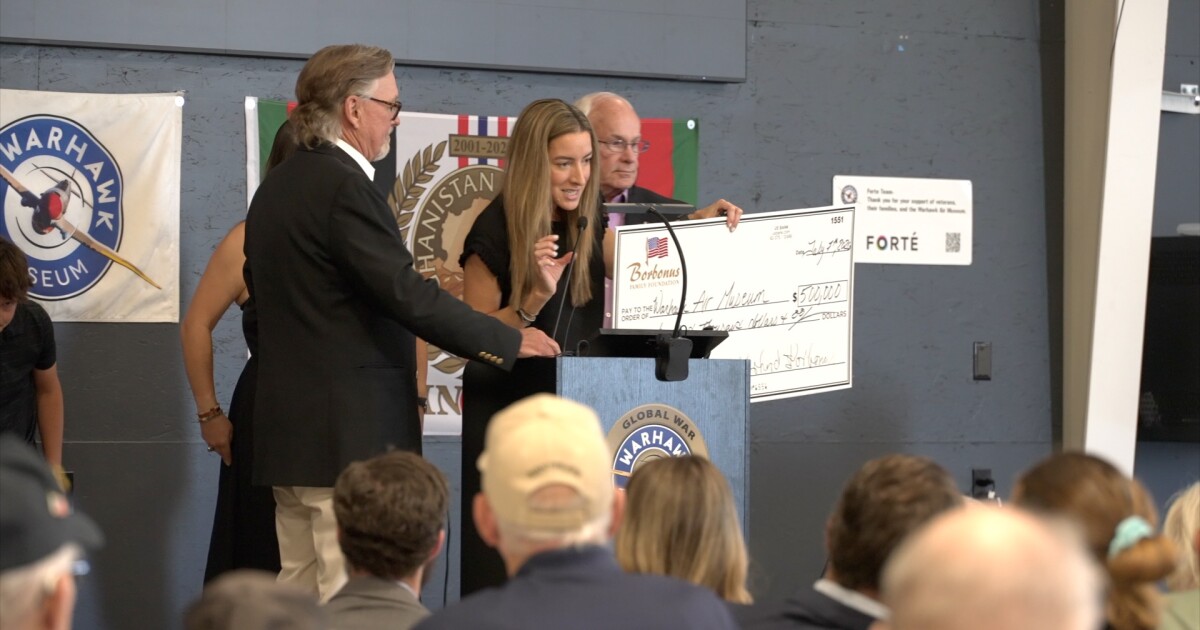
Warhawk Air Museum receives $500K grant honoring fallen Idaho soldier
-

 Connecticut31 minutes ago
Several beaches closed to swimming due to potential bacteria in the water

