World
Stampede that killed 121 in India was caused by severe overcrowding and lack of exits, authorities say


- Severe overcrowding and a lack of exits led to a stampede at a religious festival in northern India on Wednesday, resulting in at least 121 deaths.
- Five people died on Wednesday morning, and 28 people are still hospitalized.
- The event drew around 250,000 people, although it was only permitted to accommodate 80,000.
Severe overcrowding and a lack of exits contributed to a stampede at a religious festival in northern India, authorities said Wednesday, leaving at least 121 people dead as the faithful surged toward the preacher to touch him and chaos ensued.
Five of those died on Wednesday morning, local official Manish Chaudhry said, and 28 people were still being treated in a hospital.
Deadly stampedes are relatively common at Indian religious festivals, where large crowds gather in small areas with shoddy infrastructure and few safety measures.
DEATH TOLL CLIMBS TO 116 IN RELIGIOUS GATHERING STAMPEDE IN INDIA
Some quarter of a million people turned up for the event Tuesday that was permitted to accommodate 80,000. It’s not clear how many made it inside the giant tent set up in a muddy field in a village in Hathras district in Uttar Pradesh state.
Family members of 37-year-old Ruby, victim of a stampede, mourn after receiving her body from a mortuary as they prepare to leave for their hometown, outside Hathras district hospital, Uttar Pradesh, India, on July 3, 2024. Thousands of people at a religious gathering rushed to leave a makeshift tent, setting off a stampede Tuesday that killed more than a hundred people and injured scores. (AP Photo/Rajesh Kumar Singh)
It was also not clear what sparked the panic. But the state’s chief minister, Yogi Adityanath, told reporters that a crowd rushed toward the preacher to touch him as he was descending from the stage, and volunteers struggled to intervene.
An initial report from the police suggested that thousands of people then thronged the exits, and many slipped on the muddy ground, causing them to fall and be crushed in the crowd. Most of the dead were women.
The chaos appeared to continue outside the tent also as followers again ran toward the preacher, a Hindu guru known locally as Bhole Baba, as he left in a vehicle. His security personnel pushed the crowd back, causing more people to fall, according to officials.
AT LEAST 60 DEAD AFTER STAMPEDE AT RELIGIOUS GATHERING IN NORTHERN INDIA
Authorities are investigating and searching for Bhole as well as other organizers, whose whereabouts are not known.
Binod Sokhna, who lost his mother, daughter and wife, wept as he walked out of a morgue on Wednesday.
“My son called me and said, ‘Papa, mother is no more. Come here immediately.’ My wife is no more,” he said, crying.
People injured in a stampede receive treatment at Hathras district hospital, Uttar Pradesh, India, on July 3, 2024. (AP Photo/Rajesh Kumar Singh)
Bhole’s Sri Jagar Guru Baba organization had spent more than two weeks preparing for the event.
Followers of the guru from across the state, which with over 200 million people is India’s most populous, traveled to the village, with rows of parked vehicles stretching nearly 2 miles.
State official Ashish Kumar said there were insufficient exits in the vast tent. It’s not clear how many there were.
Experts said the event violated safety norms. “The function was held in a makeshift tent without ensuring multiple exit routes,” said Sanjay Srivastava, a disaster management expert.
Members of a forensic team investigate the scene a day after a fatal stampede in Fulrai village of Hathras district, Uttar Pradesh, India, on July 3, 2024. (AP Photo/Rajesh Kumar Singh)
On Tuesday, hundreds of relatives had gathered at local hospitals, wailing in distress at the sight of the dead, placed on stretchers and covered in white sheets on the grounds outside. Buses and trucks also carried dozens of victims to morgues.
Sonu Kumar was one of many local residents who helped lift and move dead bodies after the disaster. He criticized the preacher: “He sat in his car and left. And his devotees here fell one upon another.”
“The screams were so heart-wrenching. We have never seen anything like this before in our village,” Kumar added.
In 2013, pilgrims visiting a temple for a popular Hindu festival in central Madhya Pradesh state trampled one another amid fears that a bridge would collapse. At least 115 were crushed to death or died in the river.
In 2011, more than 100 people died in a crush at a religious festival in the southern state of Kerala.

World
FBI snares an American heir indicted for allegedly bankrolling anti-cop, pro-Hamas communist revolution

NEWYou can now listen to Fox News articles!
The Justice Department and FBI have a new communist financier in their crosshairs for alleged financial crimes: James “Fergie” Cox Chambers Jr., the estranged bad-boy heir to the Cox cable empire.
On Friday, Spanish police detained Chambers on the luxury island of Ibiza, in response to an international arrest warrant, according to sources. Chambers is allegedly wanted for money laundering and providing support to Hamas, following years of financing anti-Israel and anti-West organizations and protests. The transnational network he helped fund and support is kicking in to cast him as a victim of the Trump administration’s “fascism,” while critics are cheering the arrest as long overdue.
A spokesman for Spain’s Balearic Islands police branch, which includes Ibiza in its jurisdiction, told Fox News Digital that a U.S. citizen was arrested on charges tied to an international arrest warrant Friday under an international arrest warrant seeking his extradition to the United States. The spokesman did not confirm the identity of the citizen, but sources told Fox News Digital that the individual is Chambers.
Fergie Chambers poses for pictures in Tunis, Tunisia, on Feb. 8, 2024. (Chedly Ben Ibrahim/NurPhoto)
FBI SAYS NEW MISSION CENTER HAS IDENTIFIED ‘NEFARIOUS’ PROTEST FUNDING AND SUBJECTS
The police spokesman added that the individual is being held at the central jail in Ibiza pending a judicial decision that will be conducted by videoconference. Supporters now plan a “Free Fergie Chambers” protest on Tuesday at 7 p.m. outside the prison in Ibiza, demonstrating against “DEL FASCISMO DE TRUMP,” or the “TRUMP’S FASCISM IN PERSECUTING DEFENDERS OF THE PALESTINIAN PEOPLE.”
A spokesperson for the FBI declined to comment. Chambers and his representatives couldn’t be reached for comment.
A convert to Islam, Chambers represents the fusion of socialist and communist activists with Islamist interests that seek the destruction of the West, free enterprise and the state of Israel and the rise of political Islam, communism and a new Palestinian state.
General view of Centro Penitenciario de Ibiza, in Ibiza, Spain, Tuesday, July 14, 2026. (Photo for Fox News Digital)
Chambers’ ideological comrades leaked news of the detention to trusted colleagues on far-left media platforms – some of which Chambers funds – and his communist, socialist and Islamist comrades are flooding social media to frame the narrative around the arrest as the Trump administration unfairly targeting Chambers.
The arrest is a significant move by the Trump administration as it targets far-left financiers allegedly engaged in supporting political violence. In this case, as in other investigations, federal authorities are following the money and investigating potential tax and financial crimes.
FBI Co-Deputy Director Chris Raia recently told Fox News Digital that investigators at the FBI’s Joint Mission Center have identified subjects tied to financing violent protest activity and have been building prosecutable cases.
General view of Centro Penitenciario de Ibiza, in Ibiza, Spain, Tuesday, July 14, 2026. (Photo for Fox News Digital)
Like Neville Roy Singham, the American tech tycoon accused of financing communist and far-left nonprofit organizations from his base in Shanghai, China, Chambers has made a name for himself as a financial backer of anti-Israel and anti-American causes around the world. As reported exclusively at Fox News Digital, the Justice Department has launched a grand jury investigation into Singham for alleged money laundering and other financial improprieties. It is currently prosecuting the Southern Poverty Law Center for alleged money laundering, bank fraud and wire fraud.
DOJ LAUNCHES GRAND JURY PROBE INTO MARXIST MOGUL NEVILLE ROY SINGHAM’S FUNDING OF LEFTIST GROUPS
Fergie Chambers walks near a mosque in Tunis, Tunisia, on Feb. 8, 2024. (Chedly Ben Ibrahim/NurPhoto)
Fergie Chambers walks near a mosque in Tunis, Tunisia, on Feb. 8, 2024. (Chedly Ben Ibrahim/NurPhoto)
Fergie Chambers performs the Muslim prayer in Tunis, Tunisia, on Feb. 8, 2024. (Chedly Ben Ibrahim/NurPhoto)
Fergie Chambers smokes a cigarette while posing for photos in Tunis, Tunisia. (Chedly Ben Ibrahim/NurPhoto)
Chambers was born in 1985 in Brooklyn as James Cox Chambers Jr. to his father, James Cox Chambers, and mother, actress Lauren Hamilton. He is the great-grandson of James M. Cox, a former Ohio governor, 1920 Democratic presidential nominee and founder of the media company that became Cox Enterprises. Forbes estimates the Cox family empire is worth about $27 billion.
Chambers is now the estranged heir of Cox Enterprises, walking away from the family company in 2023 with a payout estimated at about $250 million after a falling out with his family over the company’s support for Atlanta’s controversial public safety training center, known by critics as “Cop City.” In April, a grand jury indicted three alleged Antifa-linked protesters accused of throwing firebombs at the general contractor of the Atlanta police training center.
Protestors rush a police line during a demonstration against the so-called “Cop City” training facility in Atlanta, Monday, Nov. 13, 2023. (Mike Stewart/AP Photo)
Chambers openly redirected his fortune into communist collectives, bail and legal underwriting and groups engaged in hard-edged protest and property disruption.
Raised mostly in Brooklyn after his parents divorced, Chambers attended Saint Ann’s School and later enrolled at Bard College but didn’t graduate. He briefly worked for a Cox Enterprises subsidiary before operating gyms in Georgia and later became increasingly involved in left-wing activism following the anti-police protests in Ferguson, Mo., in 2014 and the demonstrations in Standing Rock, S.D., in 2016 against an oil pipeline.
Around 2019, Chambers established the “Berkshire Communists” collective in Alford, Mass., in a wealthy corner of western Massachusetts, where he built a commune, operated the Berkshire People’s Gym and launched a publication called “Combat Liberalism.”
THREE ALLEGED ANTIFA-LINKED PROTESTERS INDICTED IN ATLANTA POLICE TRAINING CENTER CONTRACTOR FIREBOMBING
Police detain Palestine Action activists at the entrance of APCO Worldwide offices in London, where the building is covered in red paint, on Sept. 3, 2024. (Rasid Necati Aslim/Anadolu)
Following the Oct. 7, 2023, Hamas terrorist attacks, Chambers became one of the most prominent financial backers of “Palestine Action,” later renamed “Unity of Fields,” while also funding legal defense efforts for activists involved in anti-Israel demonstrations and direct-action campaigns in the United Kingdom and the U.S.
He praised the Oct. 7 Hamas attacks as a “moment of hope and inspiration,” told Mother Jones that “the most important thing for the prosperity of humanity is the destruction of the US” and said, “I chant death to America every day.”
Local and national reporting place him behind the “Stop Cop City” opposition, bail after occupations and protests against Elbit Systems, a company that provides services to Israel, in Merrimack, N.H., and the U.K., and ongoing legal support for networks in the U.S. and U.K. led by the controversial “Palestine Action.”
Communist tattoos are visible on Fergie Chambers’ hands and fingers while he sits in a cafe in Tunis, Tunisia, on Feb. 8, 2024. (Chedly Ben Ibrahim/NurPhoto)
After Alford, Mass., shut his Berkshire People’s Gym for zoning violations and law-enforcement scrutiny intensified, Chambers relocated to Tunis, in the North African nation of Tunisia.
In early February 2024, Chambers was photographed in his newly adopted city of Tunis in the North African nation of Tunisia, framing his narrative as a pious Muslim convert, with a red-and-white Palestinian kefiyyeh scarf draped over his shoulders, a black Muslim prayer cap on his head and a small beard on his face, a tradition that follows the sunnah, or practice, of Muhammad, the prophet of Islam.
The photo shoot included images of Chambers in Muslim prayer, at one point with his hands on his chest and at another point in “ruku” position, bent forward with his hands on his knees, staring at a point of concentration in front of him. In other shots, he walked by a local mosque, sat behind the wheel of a car with orange and green Muslim prayer beads, called “tazbi,” hanging on the rearview mirror. A pair of decorative boxing gloves with “RUSSIA” across the wrists, positioned on a red-and-white kefiyyeh spread along the dashboard.
Fergie Chambers walks his dogs in Tunis, Tunisia, on Feb. 8, 2024. (Chedly Ben Ibrahim/NurPhoto)
Unconventional for traditional Muslims, who don’t often have dogs as pets because of a fundamentalist interpretation of Islam that bars dogs as pets in the home, Chambers also was photographed smoking a cigarette and walking on the beach with two small dogs who look like bulldogs. He also wore tattoos, including a sickle-and-barbells on his left hand.
By May 2026, his social media posts placed him in Ireland. This month, the self-declared communist vacationed among the wealthy in Ibiza, is now sitting in prison.
CLICK HERE TO DOWNLOAD THE FOX NEWS APP

Live updatesLive updates,
Iran’s bridges, power plants possible targets, Trump says, adding that strikes on Iran will continue until he says.
Published On 15 Jul 2026
World
Frontières 2026: Lineup and Highlights from a Zombie Wedding to Thai Folk Horror Noir and a Half-Body Filipino Vampire

Thailand’s supernatural folk horror “Cher,” romantic zombie comedy “Cold Feet” and “Third Wheel,” a bridal party-set psychological thriller look like potential wild rides among projects at this year’s Frontières genre pic Co-Production Market, packing one of its highest caliber lineups ever.
They are joined by other potential standouts such as “My Missing Half,” headed by a half-bodied Filipino vampire, and the return of multi-prized Mexican filmmaker Isaac Ezban and Swiss-American doc maker Alexandre O. Philippe.
Many more titles also look enticing. Meanwhile, Frontières submissions have climbed to an all-time record of 136 for the Market and 58 for its Shorts to Features strand. Frontières Platform has run for years at Cannes, selling out in 2026. Among festivals, Berlin, TIFF and Tokyo’s Tiffcom are all adding Frontières project showcases this year.
This strength and strength in depth is a sign of the times, argues Frontières executive director Annick Mahnert.
“It’s a pretty extraordinary year for genre, to be honest,” Mahnert says. “A little film, ‘Obsession,’ suddenly makes millions at the box office, and ‘Undertone” acquired by A24 last year out of Fantasia, became another success story.”
“Studios are starting to realize that a movie doesn’t need to have a studio budget to become a crowd pleaser,” she adds. “I have Searchlight and Focus Features coming to Frontières. I never had these types of studios before. And five genre films won Oscars and the Berlinale and Cannes screened multiple genre films across all sections.”
So Frontières is “going back to basics,” Mahnert says, focusing on “the new generation of filmmakers. We’re looking for these little gems.”
10 of the 20 projects in Fantasia-Frontières’ official selection this year are first features.
However small, titles can still come loaded with stars or prizes. “Cher” packs a powerful Thai star punch of Mim Rattanawadee Wongthong, who broke out in hit horror franchise “Death Whisperer,” plus Pae Arak and Weir Sukollawat, stars of box office smash ““4 Tigers.”
Already a buzz project in the build up to Frontiéres, “My Missing Half” is now a big winner at South Korea’s Bucheon International Fantastic Film Festival (BIFAN), scoring its Asian Discovery Award and the Badclay VFX Innovation Award on July 9.
“My Missing Half” leads an ever stronger Asian presence at Frontières. “As the world is opening up now and opportunities are opening, more and more countries are looking for either investors or co-producers outside of Asia,” says Mahnert.
Also, and suddenly it seems, multiple titles’ creators or producers have already won recognition, often in more traditional spheres. “Echoes” is executive produced by Kath Shelper whose “Samson and Delilah” won Cannes Camera d’Or for best first feature.
“It Takes a Circus,” from Zoe Rameshu, director of “Third Wheel,” was nominated for the 48th Academy Awards. Her “To the Plate” was shortlisted for a student BAFTA.
“My Missing Half” is produced by the Philippines’ This Side Up which scooped a Sundance Special Jury Prize with “Leonor Will Never Die.”
“The Great Canada Day Massacre” marks Elza Klephart’s follow-up to “Slaxx,” which premiered at the Fantasia Film Festival, where it won the Audience Award for Best Canadian Feature and became Shudder’s No. 3 best ranked film of 2021.
Calabrian Rhode, behind “Ring Leader” at Frontières, produced Netflix Original romantic comedy “The Royal Treatment,” which bowed No. 1 worldwide on the streaming service in Jan. 2022.
Horror has even become part of soft power. “True horror reveals the heart of a culture, and as part of the new generation of storytellers in Asia, we are proud to empower Thai filmmakers to bring our local folklore onto the world’s cinematic stages,” says “Cher” producer Hans Audric Estialbo, CEO of Fearfolks, also the film’s sales agent.
A closer look at titles at this year’s Frontières Co-Production Market:
“Any Means Necessary”
Director: George Mihalka
Producer: Cream Productions
The U.S. had Roger Corman, Canada has had, among others, Cinépix. “Any Means Necessary” pays tribute, directed by Mihalka, who helmed its classic My Blood Valentine. Promising interviews with Eli Roth and Slash, the premium doc feature explores how Cinépix launched careers – Cronenberg, Ivan Reitman, battled censorship, sparked boffo box office with its erotica and broadened the boundaries of genre. “‘Any Means Necessary’ is our opportunity to celebrate the films that changed genre cinema and the fearless visionaries who made them possible,” says creator-producer Susan Curran.
“Aurora Comes Home” (Canada)
Director: Gloria Mercer
Producer: Pink Buffalo Films
Produced by Vancouver’s Pink Buffalo and set in rural Northern Canada where a family unravels after the sudden, mysterious disappearance of their daughter. An eerily familiar woman arrives 18 months later. “A tense, intimate take on the alien abduction story” which “marries science fiction spectacle and grounded character drama to tell the story of a woman who faces immeasurable loss and finds the courage to move forward,” Mercer says.
“Birth,” (Estonia)
Director: Oskar Lehemaa
Producer: Stellar Film
The live action feature debut of animation star Oskar Lehemaa, selected for Sundance with “Bad Hair” and a Fantasia winner for “The Old Man Movie.” Edson Jean, behind “Sea Sprits, directed social realist “Ludi,”which world premiered at SXSW.
From Stellar Film, behind Lehemaa’s 2020 Sundance-selected “Bad Hair” and Göteborg 2024 standout “The Missile. Desperate to have a child, a couple travels to a fertility rite deep in the Estonian forest – only to realize they’ve been lured there to be sacrificed. A film that “merges the unsettling power of body horror with the intimacy of a relationship drama,” says producer Evelin Pentillá at Stellar.
“Cher,” (Thailand)
Director: Songsak Mongkolthong
Producer: Benetone Films, Fearfolks
Cop Jade investigates a vine-covered corpse near a remote mining camp encroaching sacred forestland, clashing with estranged brother Joe. As rumours build of a vengeful Thai forest spirit a mysterious young woman appears. One of Frontières’ buzz titles, helmed by Mongkolthong (“School Tales The Series”), from Benetone (“Perfect Girl”) and Fearfolks, distributor in Thailand of A24’s “Backrooms” and Neon’s “Hokum,2 and from a screenplay by Patrick Graham, the writer behind Netflix’s Indian horror series “Ghoul” and “Betaal.”
“Cold Feet,” (Czech Republic, France, Poland, India)
Director: Apoorva Satish
Producer: Off Beat Films (Czech Republic) Telemark (Poland), Ici et Là Productions (France), La Sutra Pictures (India)
At their Czech–Indian wedding, Jacob and Mia’s tradition-hungry guests unexpectedly begin transforming into flesh-eating monsters. To make it out alive, the couple must keep choosing each other, even as everyone tries to tear them apart, literally. “At its heart [“Cold Feet”] is an interracial couple reclaiming their relationship from everyone convinced they know what their love should look like,” Satish tells Variety.

“Delivery” (Mexico)
Director: Isaac Ezban
Producer: Red Elephant Films, Sin Sentido Films
The latest from multi-prized Mexican filmmaker Isaac Ezban (“The Incident,” “The Similars,” “Parvulos”), a time travel sci-fi road movie and “my most personal project yet.”
A lonely trucker meets an abandoned girl in a border town. Fate, or something more sinister, will set them on an unexpected road trip, with devastating consequences. “My most personal project yet. A story about the contrasts of our existence…the borders we create in our relationships…and the one theme that has always that has always defined my work: the passage of time,” Ezban tells Variety.

“Grandmonster” (“Bestemorder,” Norway)
Director: Vegard Dahle
Producer: Syden Pictures
“While trying to save her grandmother from dementia, an American dropout triggers a zombie outbreak at a remote Norwegian nursing home. “The scariest part of ‘Grandmonster’ isn’t the zombies, it’s watching someone you love gradually disappear. We use zombie horror as a metaphor for dementia, and as a vehicle for satire about a healthcare system that treats the elderly as a liability rather than a legacy,” says Dahle.
A Sitges 2025 FanPitch winner.
“The Great Canada Day Massacre,” (Canada)
Director: Elsa Kephart
Producer: GPA Films
“Gory and entertaining” but also “deeply political,” says Kephart. Becca, a fierce climate activist, returns to her hometown, uncovering a secret deal to sell the protected Conservancy Forest and a string of gruesomely patriotic murders targeting those involved. What sets “Massacre” apart? “Hilariously gruesome deaths by iconic Canadian objects! Think about the damage moose antlers or a 20kg curling stone can do!” Klephart argues.
“Gro(ceries)” (U.K.)
Director: Sophie King
Producer: Five by Five Films
Headedand co-writtenby “Sex Education” star Chinenye Ezeudu-Sterling, and billed as a dark horror comedy and a “bold vision that reinvents vampire mythology through a distinctly contemporary lens,” say producers Rosanna Eden-Ellis and Catherine Joy White. Gro, raised by vampires, discovers she’s something far worse: human, since adopted. Her desperate attempt to transform and be like her family unleashes a blood-soaked reckoning over who she really is.
“The Fall,” (U.S., France)
Director: Alexandre O. Philippe
Producer: Medianoche Productions (U.S.),
“In the final seconds of Alfred Hitchcock’s ‘Vertigo’, Judy falls to her death, but Hitchcock never shows us how, keeping his camera locked on a 57-frame close-up of Scottie’s face. “‘The Fall’ is a forensic investigation into cinema’s most elusive image: the missing moment at the heart of Hitchcock’s greatest mystery.” “I’m not trying to solve the riddle at the end of Vertigo, I want to inhabit it, and to follow what happens when some of the greatest filmmakers alive stare into an image that refuses to resolve,” says O’Philippe.
“Humpty: American Dream,” (U.S., Canada)
Director: Carl Fry and Maxwell Nalevansky
Producer: With Pleasure Cinemagroup (U.S.), Ghoul Nexus (Canada)
An off-kilter biopic spoof with eye-catching concept art. To save his kidnapped wizard father, Humpty leaves his enchanted forest for the plague-ridden Kingdom of Orange County, sees a meteoric rise in popularity but internal existential crisis. “Though unlike Bruce Springteen, Mark Kerr and J. Robert Oppenheimer, Humpty is an alcoholic egg with no genitals. It’s like if Tinto Brass directed ‘Shrek,’” its directors say.
“Injured Reserve,” (Canada)
Director: Tyler Mckenzie Evans
Producer: Area V5 Pictures and Still Good Pictures
Teresa is an 18-year-old Black basketball prodigy, raised on the court by Darius, her coach and single father. Basketball is their only language and Teresa’s only identity. Then a mysterious new player and a career-threatening injury sidelines Teresa. “At the heart of ‘Injured Reserve,’ is a universal fear: What happens when the one thing that defines you is suddenly taken away?’ ask its filmmakers Mckenzie Evans, Malachi Ellis and Claire Desmarais.
“The Mire,” (“Suonsilmä, Finland)
Director: Marika Harjusaari
Producer: Silva Mysterium Oy (Finland), Hobab (Sweden), Handmade Films in Norwegian Woods (Norway), Mistrus Media (Latvia)
Written by Ilona Ahti, the scribe on Alli Haapasalo’s 2022 Sundance Audience Award winner “Girl Picture,” and produced by Silva Mysterium Oy, behind Sundance and sales hit “Hatching.” In a remote Finnish 19th century village, milkmaid Iiris leaves unwanted newborns to die in a nearby swamp until, torn between old-world ritual and newfound faith, when a forward-looking pastor arrives, she finally rebels. “I think communities often survive by deciding who will carry what everyone else cannot – the Mire asks what happens when that person can no longer carry it,” says Harjusaari.
“My Missing Half,” (Philippines, Japan)
Director: Rodiell Veloso
Producer: This Side Up
Boldly genre bending Philippine folk horror as a manananggal – a Philippine vampire who can disengage from its lower half – becomes the heroine of a darkly comedic horror movie alongside other misfits. “While embracing outrageous humor and supernatural adventure, the film explores universal themes of identity, body image, shame, self-acceptance, and belonging,” the filmmakers said in a statement.
“Ring Leader,” (U.S., Canada)
Director: Jason Lapeyre
Producer: Calabrian Rhode (U.S:), Osaka Sunset Pictures (Canada)
A codependent and unstable bridesmaid attends her best friend’s remote bachelorette party only to find herself in a claustrophobic social death match where toxic friendship and bridal performance devolve into carnage. “‘Ring Leader’ will be a wildly entertaining horror-comedy that cuts to the heart of the vicious power dynamic between female friends and the cultish roots of wedding rituals. It’s ‘Bridesmaids’ meets ‘Ready or Not’ and we’re out for blood,” promises Lapeyre.

“They,” (U.K.)
Director: Faye Jackson
Producer: True Moon Pictures
After renting a room to a conspiracy theorist, a skeptical gardener begins to fear he might be right as the dead colonize her home, demanding her submission to an ancient cult. “‘They’ sidesteps the politics of conspiracy theories to examine the underlying fear. What if it’s not only true, but worse than you can possibly imagine? They are watching you. They do want to control you. The algorithm is ancient,” says writer-director Jackson of “They.”
“Third Wheel,” (South Africa, the Netherlands)
Director: Zoe Ramushu
Producer: (PRPL, Totem Zea)
At her white adoptive family’s estate, Thina (26), a Black surgeon straddling two worlds, prepares for her wedding with a woke Black fiancé and her white adoptive sister – her best friend. But at a boozy weekend devotion twists into possession. A wedding is “the day you’re supposed to publicly declare who you are and who you belong to… and that can become a nightmare. Literally,” Zamushu tells Variety.
“Violent Delights”
Director: Jack Warren
Producer: Cellar Door Cinema Club
A trans boy and a cannibal girl fall in love, then fight for survival against her homicidal family. From New York, L.A. and Dublin-based Cellar Door, “filled with cannibal kills conceived to impress the most hardened gore fiends, the film forefronts character while telling a terrifying love story about the dangerous thrill of being consumed by desire,” says Warren.
Shorts to Features

“Echoes,” (Australia)
Director: Gemma Lee
Producer: Magic Hour
A neural engineer trapped inside a time loop of his own creation races to save his dying wife before every memory of her is erased forever. “‘Echoes’ asks how far we would go to hold onto the person we love, knowing we must eventually let them go. It explores love not as idealised devotion, but as something raw, imperfect and profoundly human,” Lee tells Variety. Currently financing attached as exec producer with a proof of concept short.
“Eternal Valley,” (U.K.)
Director: Jasmine De Silva
Producer: Runner Up Films
A darkly comedic body horror pic from De Silva, a makeover of proof-of-concept “Beauty Sleep,” described by Rue Morgue as “biting and hilarious.” When the first place beauty queen commits suicide, her best friend, in order to win the pageant, starts to wear the dead friend’s face. “Set in a sugar coated yet sinister and retro-futuristic world, ‘Eternal Valley’ amplifies that there always has been, and always will be, an unattainable beauty standard to chase,” says De Silva.
“Noodles, Our Love Was Instant and Forever,” (Philippines)
Director: Whammy Alczaren
Producer: Daluyong Studios
As climate doom looms and reality becomes nightmare fantasy, a chaotic circle of queer teenage boys plan for a cosmic future laced with aliens, ghosts, and immaculate conceptions. “Internet culture – brainrot, vines, and Tik-tok — will marry traditional techniques such as rear projection, practical effects, and tableau staging,” promises Alczaren. “The film is a cinematic love letter to resilience, queer joy, and the small acts of care that persist amid collapse,” he adds.

“Reset,” (U.S.)
Director: Celine Tien, Jerry Hsu
Producer: SPL Max Productions
From Tien, founder of Flowly, an NIH-backed VR healthtech company, and Hsu, a Yale computer science student. In a near-future where the elderly are physically reset into children to remain economically useful, a young woman becomes the reluctant caretaker of her newly reset mother. “Having built careers across AI, healthcare, and film, we set that story in a near future shaped by automation because we’ve seen these systems from the inside,” say Tien and Hsu.
“Sea Spirits,” (“Lespri Lanmè,” U.S., Jamaica)
Director: Edson Jean
Producer: Bantufy, Full Spectrum
Described as Gothic folk horror, “Sea Sprits” turns on a guilt-ridden mother living amid social and political upheaval, who haunted by her daughter lost at sea refuses to leave the country so as to search for her ghost. “With Sea Spirits, we return the zombie to its Haitian spiritual origins through motherhood, migration, and the horrors history leaves behind,” Jean tells Variety.

‘XX’
“XX,” (Netherlands)
Director: Nina Noël Raaijmakers
Producer: Make Way Film
Up-and-coming scream queen Roxy undergoes an unauthorized uterus transplant after a freak accident on a B-horror film set. But the uterus begins to rot on the misogynistic film set, taking on a life of its own. A visceral body horror with grounded practical effects, which pictures Roxy trapped between “the exploitative film industry and the paternalistic medical system,” From Monique van Kessel’s Dutch genre mainstay Make Way Film, “XX” scored a Sitges WomanInFan Special Mention in 2025.
“You Were Never Here,” (Austria, Canada)
Director: Johannes Grenzfurthner
Producer: Monochrom (Austria), Sunsmasher, Ghoul Nexus (Canada)
At a remote research facility, people from across human history briefly materialize every four minutes and 56 seconds – bamboozling scientists and officials. “The film combines hard science fiction, institutional absurdity and existential dread, but it is ultimately about people trapped inside a system that can measure almost everything except its own meaning,” says Johannes Grenzfurthner.
Genre Film Lab
“Loup-Garou,” (Canada)
Director: Nathalie Therriault
Producer: Latchkey Pictures
From Therriault and her Vancouver-based Latchkey Pictures, a “fresh, deeply personal take on a classic myth, blending historical authenticity with emotional realism,” says Therrialt, talking of the loup-garou, the French version of the werewolf. In this folk horror, set in 1917 rural Québec, during the sacred season of Lent, two farmers’ wives navigate their long-hidden love as the community spirals into hysteria over a loup-garou killing sinful men.

Lauren Marsden
“Severed,” (Canada)
Director: Lauren Marsden
Producer: Ecstatic Time Productions
Visiting her extended family in a Caribbean village, a biracial teenager discovers a severed colonial statue head that curses the community with unrelenting sickness, forcing her to confront the island’s haunted past before it destroys everything she loves.
“The horror unfolds amidst bubbling mud volcanos, chaotic night markets, pulsing island rhythms, and the ever-present hypnotic dread of the sea,” Marsden promises.
“Stacy’s Mom,” (Canada)
Director: Marushka Jessica Almeida
Producer: Cult Following Pictures
Repressed teenager Yoko discovers that the hot MILF who’s just moved in next door is actually a soul-sucking succubus, pushing her to navigate a budding romance with Stacy and save herself and her father’s soul. Selected for the QueerFrames 2025 Screenwriting Lab Presented by Netflix and “angry, erotic and gay AF,” says Almeida.
“To the North,” (Canada)
Director: Jean Parsons
Producer: Ceroma
Francine, an isolated homesteader, lives trapped in a dead marriage. Suddenly her partner goes missing and she finds a strange man unconscious in the woods, who unleashes repressed desires – and a growing fear that her new lover might be her husband’s killer. “Set in the forbidding grandeur of the subarctic Yukon, “To The North” is about sex, nature, the messiness of desire, and how humans often pursue the things they want against all better judgment,” Parsons tells Variety.

“Wifey,” (Canada)
Director: Cassidy Civiero
Producer: True Sweetheart Films
Set up at Montreal’s True Sweetheart, behind fest hit “The Rebrand,” “Wifey” turns on Mara, on the cusp of transitioning female-to-male, who is seduced by a rural f*ckboy, Jack. A seemingly harmless fling turns sinister…. “‘Wifey’ is a manifestation of the surreal shift that can come with transitioning FTM, and is part of the next wave of trans cinema,” Civiero tells Variety.
-
Science16 minutes ago
New Winged Robot Can Fly and Swim Like a Puffin
-
 Lifestyle40 minutes ago
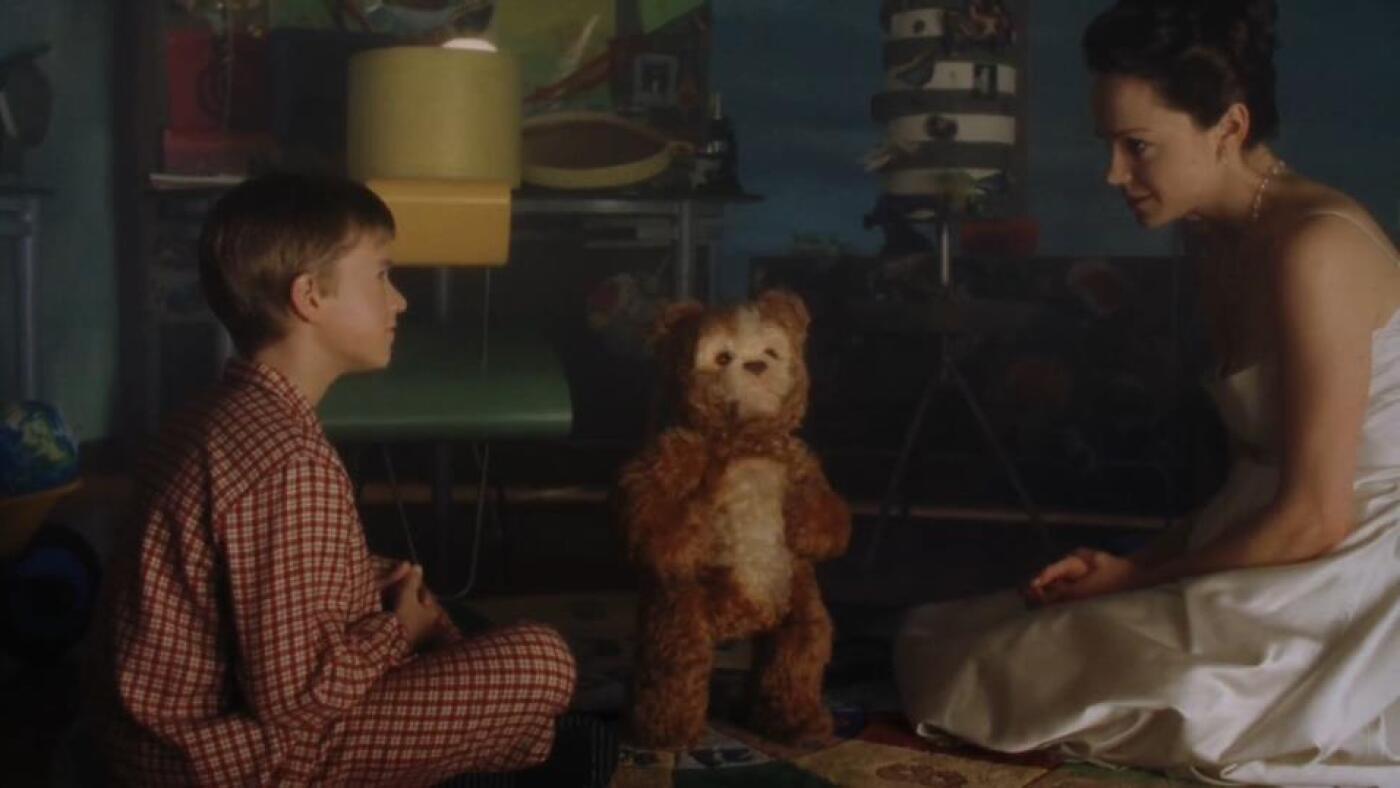
‘The Trojan Teddy Bear’: The promise and peril of childhood in the age of AI
-

 Technology52 minutes ago
Google and Epic give up fighting — third-party Android app stores are coming next week
-

 World58 minutes ago
FBI snares an American heir indicted for allegedly bankrolling anti-cop, pro-Hamas communist revolution
-

 Politics1 hour ago
Biden special counsel’s ‘runaway train’ scooped up sensitive lawmaker info: ‘Abuse of power’
-

 Health1 hour ago
‘Miracle on the Hudson’ hero Captain ‘Sully’ Sullenberger reveals Alzheimer’s diagnosis
-

 Sports1 hour ago
American League stars outshine National League in 96th MLB All-Star game
-

 Technology1 hour ago
Before you connect another smart TV, tablet or phone, lock it down

