World
Socialists elect Nicolas Schmit as lead candidate for EU elections


The Party of European Socialists (PES) has elected Nicolas Schmit as its lead candidate for the EU elections amid worries of a far-right surge.
Schmit, the current European Commissioner for jobs and social rights, received the mandate by acclamation on Saturday afternoon at the end of the party’s congress in Rome. The 70-year-old politician from Luxembourg led the internal race uncontested, as he was the only name put forward.
“We will not allow that Europe will take the path of austerity and social repression as it did during the financial crisis. This is the main argument, this why we want to win these elections, together, in all 27 member states,” Schmit told the audience at La Nuvola, on the outskirts of Rome, as he took the stage surrounded by young activists.
“I want voters to know that social democrats will keep fighting for all citizens and will respect their commitments and promises.”
As a result, Schmit will face off against his boss, Ursula von der Leyen, the lead candidate of the centre-right European People’s Party (EPP).
Both are part of the so-called Spitzenkandidaten system, under which the parties that take part in the elections to the European Parliament are supposed to select a top aspirant to preside the European Commission, the bloc’s most powerful and influential institution. Some groups follow the template, while others choose to ignore it.
The upcoming race, however, will be deeply uneven: Ursula von der Leyen is the indisputable frontrunner thanks to the strong reputation she has built throughout her first mandate at the Commission’s held, from which she spearheaded transformational policies to cope with climate change, the COVID-19 pandemic, Russia’s invasion of Ukraine, the energy crisis and China’s assertive behaviour.
Schmit, for his part, has kept a low profile since his arrival in Brussels in 2019, when von der Leyen assigned him the portfolio of jobs and social rights. Among his most notable projects were the launch of a €100-billion programme for short-time work schemes during the coronavirus lockdowns and a directive to ensure minimum wages are set at “adequate levels.” His proposal to improve the conditions of platform workers, those who service apps like Uber, Deliveroo and Glovo, is currently stuck in negotiations among member states and is close to plunging into limbo.
Schmit’s cabinet is one of the teams overseeing the freezing of EU funds for Hungary over persistent rule-of-law deficiencies. The Commissioner faced the ire of the Parliament after the executive released €10.2 billion in cohesion funds for Budapest, despite the antagonistic attitude of Viktor Orbán, and pleas by civil society. As of today, Hungary is still denied access to roughly €21 billion in cohesion and recovery funds.
Speaking before the PES top ranks, including Germany’s Olaf Scholz, Spain’s Pedro Sánchez, Portugal’s António Costa and Denmark’s Mette Frederiksen, the anointed candidate attempted to build his power base and vowed to defend the party’s core values and priorities: labour rights, gender equality, climate action and social justice.
“We are the movement that fights against precariousness, especially the lives and jobs of young people,” he said. “We will fight for the Green Deal with a red heart.”
Still, Schmit has virtually no chance of taking over the Commission. The Socialists and Democrats (S&D), the group in the European Parliament that encompasses PES members, is projected to finish second at the June elections. The latest estimate by Europe Elects, a poll aggregator, shows a considerable distance between the S&D (from 154 seats in 2019 to 140 in 2024) and the EPP (from 182 to 180).
Asked about the recognisability gap between himself and von der Leyen, Schmit said he had a “lot of esteem” for the president but insisted “we’re both candidates.”
“We will see,” he said. “The campaign will start and then I invite everyone to judge.”
‘The very soul of Europe is at risk’
Even more worrying for socialists, the forecasts also predict a strong rise of hard-right and far-right parties, which would tilt the hemicycle decisively towards conservative ideas and away from the progressive causes that socialists favour.
During von der Leyen’s first mandate, the grand coalition between EPP, S&D and the liberals from Renew Europe proved instrumental to advance far-reaching, ambitious proposals to speed up the transition to climate neutrality, rein in the excesses in the digital world, reform the bloc’s migration and asylum policy, ensure continued financial support for Ukraine, ramp up domestic production of cutting-edge technology, and decrease dependencies on unreliable suppliers, like Russia and China.
But in the past year, the grand coalition began to wobble and shake, as the EPP adopted a more confrontational attitude against the Green Deal, one of von der Leyen’s flagship initiatives, claiming the multiple pieces of legislation approved to slash the bloc’s greenhouse gas emission have created excessive red tape for the private sector, made it harder to invest and risked the loss of competitiveness.
The fierce battle over the Nature Restoration Law, a regulation to gradually rehabilitate the EU’s degraded ecosystems, laid bare the simmering tension between conservatives and socialists, with bitter recriminations and finger-pointing. Although the EPP eventually lost that fight, it enabled the group to re-position itself as a “pro-business” and, particularly, a “pro-farmers party,” a stance that the recent protests have only reinforced.
Von der Leyen’s withdrawal of a contentious law to halve the use of chemical pesticides, an important source of nitrogen emissions, was warmly celebrated by EPP lawmakers last month. The move marked the first major defeat under the Green Deal.
 ADVERTISEMENT
In response to this ideological shift, socialists have ratcheted up their rhetoric, warning the EPP is moving away from the mainstream centre and normalising talking points of the extreme right for purely electoral purposes. The alliances struck between mainstream conservatives and hard-right formations in countries like Italy, Sweden and Finland are evidence of this increasingly blurred line, socialist leaders said at Rome.
In his speech, Schmit made it clear his political family will not cooperate with Identity and Democracy (ID) or the European Conservatives and Reformists (ECR), the two most Eurosceptic groups in the European Parliament. The candidate then asked the EPP and the liberals to “be coherent with yourself” and “stay faithful to your own history, to your European commitment” before striking any new alliances.
“We will fight those propagating hate and division in our societies, those who fuel fears and prepare the return of nationalism,” Schmit said. “The normalisation of the extreme right, as we have seen it in the Netherlands, is dangerous and irresponsible.”
A similar message was echoed by Spanish Prime Minister Pedro Sánchez, who spoke of “ghosts of the past” that are creeping over the European institutions and longing for a time that “never existed.”
“The far right is growing all over Europe, in many places supported by conventional right that is imitating its arguments and populist techniques,” Sánchez told the congress.
ADVERTISEMENT“The very soul of Europe is at risk. And once again, it’s up to us, the social democrats, to defeat that threat and ensure that history continues to advance in the right direction.”
Despite the difficult prospects ahead, socialists joined forces to reclaim their legacy, arguing the main policy responses provided to the most recent crises, including the €750-billion recovery fund and the joint procurement of coronavirus vaccines, had been inspired by social democracy and therefore justified the validity of their ideology.
“These elections are crucial for the future of Europe. It is up to us to provide progressive and fair solutions to the main challenges threatening our societies and our people,” said Danish Prime Minister Mette Frederiksen, referring to migrant smuggling, social dumping, corporate tax evasion and children poverty.
“Our next step is to demonstrate how our social democratic goals of social justice, economic (equality), green ambition and security go hand in hand.”
The elections to the European Parliament will be held between 6 and 9 June. About 350 million eligible voters will be called to cast their ballots across 27 member states.
ADVERTISEMENTIn the immediate aftermath of the elections, EU leaders are expected to gather in a crucial summit to divvy up the bloc’s top jobs: president of the European Commission, president of the European Council and high representative for foreign and security policy.
With the Commission all but guaranteed to land on the EPP’s camp, socialists are aiming to secure the European Council’s presidency, currently occupied by Charles Michel, a liberal politician from Belgium.
This article has been updated with more information about the PES Congress.



NEWYou can now listen to Fox News articles!
Iran’s hardline parliament speaker and key negotiator Mohammad Bagher Ghalibaf warned that Tehran would not honor its commitments under a newly signed memorandum with the U.S. if Washington fails to uphold its side of the deal, according to the media arm of Iran’s Islamic Revolutionary Guard Corps.
“If the United States does not honor its commitments, there is no way Iran will honor its own commitments,” Ghalibaf said.
Ghalibaf’s warning was echoed Thursday by Islamic Revolutionary Guard Corps Quds Force commander Esmail Qaani, who threatened the U.S. in remarks translated by MEMRI TV, saying, “Americans should know their place and avoid confronting the Muslims.”
Qaani added that “Trump is trembling” and warned that the U.S. “should fear not only Hormuz and Bab al-Mandeb, but many other locations as well.”
MEET IRAN’S HARDLINE SPEAKER WHO THREATENED TO BURN US FORCES — REPORTEDLY TEHRAN’S POINT MAN FOR TALKS
The warnings came after President Donald Trump and Iranian President Masoud Pezeshkian Wednesday digitally signed a copy of the memorandum aimed at ending the war and resuming the flow of traffic through the Strait of Hormuz.
Iran’s hardline parliament speaker and key negotiator Mohammad Bagher Ghalibaf warned that Tehran would not honor its commitments under a newly signed memorandum with the U.S. if Washington fails to uphold its side of the deal. (Majid Asgaripour/WANA)
The memorandum gives Iran major economic relief while leaving some of the most difficult nuclear questions for a final agreement to be negotiated throughout the next 60 days. Under the 14-point plan read by a senior U.S. official, Washington agreed to begin lifting its naval blockade, work with regional partners on a $300 billion reconstruction and development plan for Iran and terminate U.S., U.N. and other sanctions on an agreed schedule as part of a final deal.
The memorandum also says all licenses, waivers and permissions needed for related financial transactions would be granted by the United States.
In return, Iran reaffirmed that it “shall not procure or develop nuclear weapons,” and the sides agreed to resolve the fate of Iran’s stockpiled enriched material under a future mechanism, with the minimum method being on-site down-blending under International Atomic Energy Agency supervision.
The agreement defers many of the hardest questions — including how to wind down Iran’s nuclear program — until the 60-day negotiation period for a final deal.
But the Iranian figure at the center of the deal is not a diplomat known for moderation.
Ghalibaf, a former Islamic Revolutionary Guard Corps commander and longtime regime insider, has threatened American forces, vowed Trump would “pay the price” and built his career through loyalty to Iran’s security establishment.
The new warning underscored what experts say is the central risk of the agreement. Washington may be entering a deal with officials who can enforce Iran’s commitments but who have shown little sign of changing the regime’s long-term posture toward the U.S., Israel or the region.
Ghalibaf, 64, is a product of Iran’s security establishment. He rose through the ranks of the Islamic Revolutionary Guard Corps during the Iran-Iraq War, eventually becoming commander of the Islamic Revolutionary Guard Corps air force.
He later served as Iran’s national police chief, overseeing internal security forces responsible for suppressing protests, including the 1999 student uprising, alongside Qassem Soleimani.
After transitioning into politics, Ghalibaf attempted to run for president multiple times but failed. He instead built his career through loyalty to the system, serving as Tehran’s mayor for more than a decade before becoming speaker of parliament in 2020.
FAMILIES OF IRAN’S ELITE LIVE LAVISHLY ABROAD WHILE ORDINARY CITIZENS SUFFER AT HOME
Iranian Parliament Speaker Mohammad Bagher Ghalibaf looks on as parliament members wearing military uniforms chant in support of the IRGC in Tehran, Iran, on Feb. 1, 2026. (Hamed Malekpour/Islamic consultative assembly news agency/WANA/Handout via Reuters)
“Ghalibaf doesn’t have an independent line. His strength is that he is a ‘yes man,’” Beni Sabti, an Iran expert at the Institute for National Security Studies, previously told Fox News Digital. “If he is told to shake hands with special envoy Steve Witkoff, he will do it. If he is told to escalate, he will. It is not about moderation, it is about who gives the orders.”
“His name has also been linked to multiple corruption allegations, including misuse of oil revenues and sanctions evasion networks involving his family. His sons have reportedly been involved and are under sanctions,” Sabti said.
“There have also been public scandals involving family members traveling abroad and making luxury purchases, including widely circulated images of them arriving with numerous high-end Gucci suitcases.”
Behnam Ben Taleblu, a senior fellow at the Foundation for Defense of Democracies, said the image of Ghalibaf at a signing ceremony with a senior U.S. official would be a propaganda victory for the regime.
“There was a time when the Islamic Republic would have been terrified to be seen signing such a thing,” Ben Taleblu told Fox News Digital. “Postwar, this is a sign of the regime’s opportunism, and no one identifies that opportunism better than someone like Ghalibaf, who comes from the IRGC, who is a corrupt politician and is a wheeler and dealer.”
But Taleblu warned that Washington should not confuse Ghalibaf’s opportunism with moderation.
“The mirage is the myth of Iranian military moderation and the myth that, with time, this regime will integrate and put aside all the things that have kept it on the sidelines for so long,” he said. “Transforming Iran via a deal — that is a huge lift.”
Ghalibaf’s wartime statements reflect the hardline posture inside Iran’s leadership. In remarks aired on Iranian television Jan. 12 and translated by MEMRI, he warned that U.S. forces would face catastrophic consequences if they confronted Iran.
“Come, so you can see what catastrophe befalls American bases, ships and forces,” he said, adding that American troops would be “burned by the fire of Iran’s defenders.”
TRUMP ADMINISTRATION UNVEILS SWEEPING TERMS OF PROPOSED IRAN AGREEMENT
A man lights a cigarette with fire from a burning picture of Iranian Parliament Speaker Mohammad Bagher Ghalibaf as Israelis rally in support of nationwide protests in Iran in Holon, Israel, on Jan. 14, 2026. (Ammar Awad/Reuters)
More recently, he warned that “the blood of American soldiers is the personal responsibility of Trump” and vowed Iran would “settle accounts with the Americans and Israelis,” adding that “Trump and Netanyahu crossed our red lines and will pay the price.”
John Hannah, a senior fellow at the Jewish Institute for National Security of America and a former national security advisor to Vice President Dick Cheney, said Ghalibaf’s expected role reflects the reality of who holds power inside Iran.
“If you’re going to sign an agreement with Iran, those are the forces in charge and calling the shots, presumably with the approval of the new supreme leader,” Hannah told Fox News Digital. “If the U.S. harbors hope that Iran will ever implement any of their obligations under the MOU, these are the people — odious as they are — capable of making it happen.”
But Hannah said the central question is whether Iran’s leadership sees compliance as useful or whether the agreement is simply a tactical pause.
“The big question is whether they see it in their interest to do so, or are they only buying time, rebuilding their power and preparing for the next round of conflict,” he said.
Ben Taleblu was even more blunt, warning that even a seemingly favorable agreement would not change the nature of the regime.
“Even if you’ve got the perfect deal, with this kind of regime, with this kind of mentality, they will escalate,” he said. “I thought we would have learned by now what the regime did after the JCPOA. It built a vast missile arsenal. It literally built an empire of terror proxies that took Israel years of blood, effort and money to dismantle, backed by American support.
CLICK HERE TO DOWNLOAD THE FOX NEWS APP
Iranian Parliament Speaker Mohammad Bagher Ghalibaf speaks during a press conference in Tehran, Iran, Nov. 27, 2024. (Majid Asgaripour/WANA via Reuters)
“If we engage in pay-to-play with these guys,” he added, “I’m sorry to sound the alarm bell like this — but something tells me this is bad either way.”
Responding to questions about the threats from Ghalibaf and IRGC Quds Force commander Esmail Qaani, the White House defended Trump’s approach and warned Iran would face consequences if it failed to reach a final deal.
“President Trump has a great track record of good deals for the American people, and the President has been clear about the consequences if Iran fails to make a good, final deal,” White House spokeswoman Olivia Wales told Fox News Digital.
“What the president has achieved on the battlefield and at the negotiating table is nothing short of remarkable and will strengthen American security for many years to come.”

Tehran holds back from talks to cement ceasefire due to ongoing Israeli attacks on southern Lebanon.
Published On 19 Jun 2026
Planned talks in Switzerland between the United States and Iran to discuss the technical terms of their ceasefire deal have been postponed.
The Swiss Foreign Ministry confirmed early on Friday that the talks, which were scheduled to take place in Burgenstock, would now not go ahead.
list of 4 itemsend of listRecommended Stories
Reports suggest that Iran has delayed sending its delegation to discuss the technical issues linked to the ceasefire deal – digitally signed by the two countries on Wednesday – due to Israel’s ongoing military campaign in Lebanon.
Israeli strikes overnight and into Friday have reportedly killed at least 16 people in southern Lebanon, with Iran-linked Hezbollah reporting intense fighting.
Talks postponed
A ceremony followed by talks was expected to be held at the Burgenstock Resort in Stansstad, near Lucerne in central Switzerland.
It is owned by Katara Hospitality, part of Qatar’s sovereign wealth fund, which helped mediate peace in the conflict.
On Friday, in a message to media outlet AFP, the Swiss foreign ministry said: “The planned talks between the US, Iran, Qatar and Pakistan have been postponed”.
“Switzerland remains ready to facilitate these talks. The relevant preparatory work at Burgenstock is continuing,” it added, without providing a new date for the talks.
The announcement followed a report from media outlet Al-Mayadeen that Iran was delaying sending its delegation to Switzerland over Israel’s ongoing military campaign in Lebanon.
Israeli Prime Minister Benjamin Netanyahu said Thursday that Israel’s military will stay in a “security zone” of southern Lebanon as long as “Israel’s security needs require it.”
Israel and Hezbollah are not parties to the agreement, but Iran has insisted Israel must withdraw from the large swath of southern Lebanon it is occupying.
Logistics have never been ‘simple or predictable’
The US push to quickly begin high-stakes talks with Iran hit a snag just two days after the signing of a 14-point memorandum of understanding with the US that sets out a framework for talks during a 60-day negotiation period.
Vice President JD Vance had been prepared to make an overnight flight to meet with his Iranian counterparts at the mountainside resort in the tiny Swiss village of Obburgen.
His staff and a small pack of journalists had even gathered at Joint Base Andrews outside Washington in anticipation of the trip.
Meanwhile, dozens of White House officials, advance staffers and more media gathered in Switzerland to prepare for Vance’s anticipated arrival.
But then, abruptly on Thursday evening, the trip was called off.
The White House issued a statement explaining Vance – who has been tapped by President Donald Trump to lead the negotiations – and his delegation were prepared for talks, but they were unable to finalise plans and the vice president would remain in Washington.
“The logistics of these negotiations have never been simple or predictable,” the statement noted.
Also on Thursday, Pakistan’s Prime Minister Shehbaz Sharif cancelled his trip to Switzerland, his spokesperson told AFP.

new video loaded: A Small Election Could Change British Politics
transcript
transcript
A Small Election Could Change British Politics
Voters in the northern English district of Makerfield cast ballots on Thursday to choose their representative in Parliament, the outcome of which could lead to Prime Minister Keir Starmer’s ouster.
-
Well, I don’t think there should be a leadership election. I think that the last government proved that parties that spend their whole time in leadership elections don’t go on to win the next general election.

By Alisa Shodiyev Kaff
June 18, 2026
-

 Health6 seconds ago
New At-Home DNA Test Reveals if GLP-1 Weight-Loss Drugs Will Work for You
-
 Lifestyle15 minutes ago
What does freedom actually look like? : It’s Been a Minute
-

 Technology25 minutes ago
Barret Zoph is out at OpenAI again after just five months
-

 World30 minutes ago
Iran hardliner behind US deal warns Tehran won’t honor agreement if Trump fails to deliver
-

 Politics37 minutes ago
Top GOP lawmaker rallies around conservative school board member facing calls to resign
-

 Sports45 minutes ago
2026 World Cup Odds: How Far Can Mexico Go After Winning Group A?
-

 Technology52 minutes ago
6 in 10 identity crimes now begin with a new account
-
 Business55 minutes ago
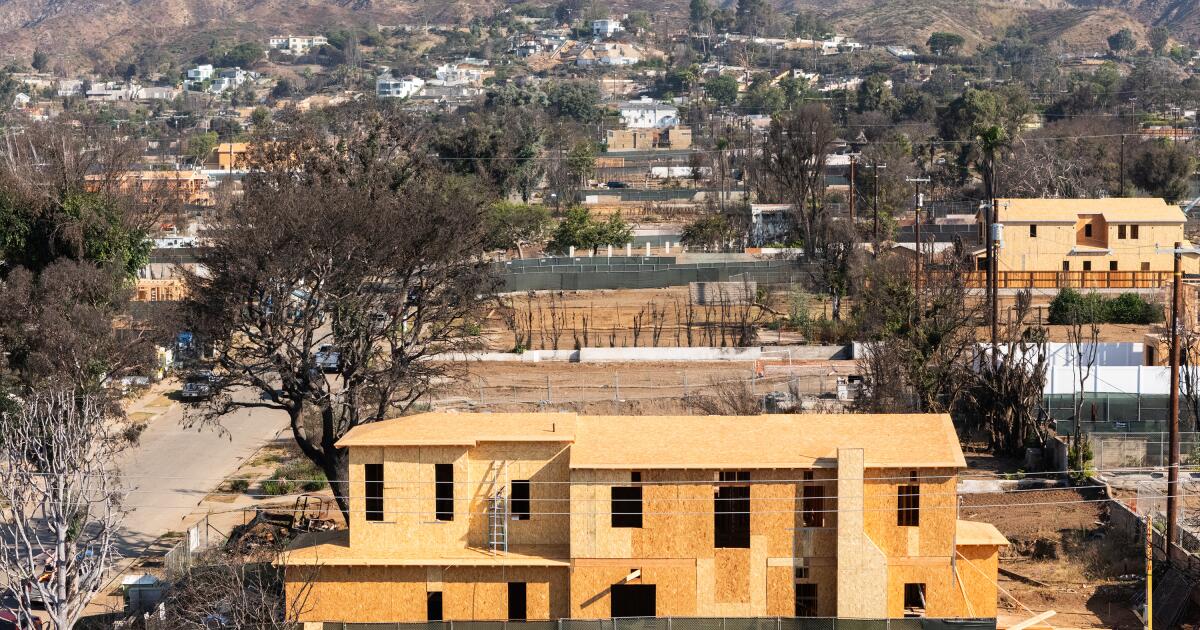
January 2025 wildfire victims seek tougher penalties against State Farm over claims handling

