World
Retraction of US-backed Gaza famine report draws anger, scrutiny


United States President Joe Biden’s administration is facing criticism after a US-backed report on famine in the Gaza Strip was retracted this week, drawing accusations of political interference and pro-Israel bias.
The report by the Famine Early Warning Systems Network (FEWS NET), which provides information about global food insecurity, had warned that a “famine scenario” was unfolding in northern Gaza during Israel’s war on the territory.
A note on the FEWS NET website, viewed by Al Jazeera on Thursday, said the group’s “December 23 Alert is under further review and is expected to be re-released with updated data and analysis in January”.
The Associated Press news agency, quoting unnamed American officials, said the US asked for the report to be retracted. FEWS NET is funded by the US Agency for International Development (USAID).
USAID did not immediately respond to Al Jazeera’s request for comment on Thursday afternoon.
Israel’s war in Gaza has killed more than 45,300 Palestinians since early October 2023 and plunged the coastal enclave into a dire humanitarian crisis as access to food, water, medicine and other supplies is severely curtailed.
An Israeli military offensive in the northern part of the territory has drawn particular concern in recent months with experts warning in November of a “strong likelihood” that famine was imminent in the area.
“Starvation, malnutrition, and excess mortality due to malnutrition and disease, are rapidly increasing” in northern Gaza, the Integrated Food Security Phase Classification said in an alert on November 8.
“Famine thresholds may have already been crossed or else will be in the near future,” it said.
The report
The FEWS NET report dated December 23 noted that Israel has maintained a “near-total blockade of humanitarian and commercial food supplies to besieged areas” of northern Gaza for nearly 80 days.
That includes the Jabalia, Beit Lahiya and Beit Hanoon areas, where rights groups have estimated thousands of Palestinians are trapped.
“Based on the collapse of the food system and worsening access to water, sanitation, and health services in these areas … it is highly likely that the food consumption and acute malnutrition thresholds for Famine (IPC Phase 5) have now been surpassed in North Gaza Governorate,” the FEWS NET report had said.
The network added that without a change to Israeli policy on food supplies entering the area, it expected that two to 15 people would die per day from January to March at least, which would surpass the “famine threshold”.
The report had spurred public criticism from the US ambassador to Israel, Jack Lew, who in a statement on Tuesday said FEWS NET had relied on “outdated and inaccurate” data.
Lew disputed the number of civilians believed to be living in northern Gaza, saying the civilian population was “in the range of 7,000-15,000, not 65,000-75,000 which is the basis of this report”.
“At a time when inaccurate information is causing confusion and accusations, it is irresponsible to issue a report like this,” he said.
— Ambassador Jack Lew (@USAmbIsrael) December 24, 2024
‘Bullying’
But Palestinian rights advocates condemned the ambassador’s remarks. Some accused Lew of appearing to welcome the forced displacement of Palestinians in Gaza.
“To reject a report on starvation in northern Gaza by appearing to boast about the fact that it has been successfully ethnically cleansed of its native population is just the latest example of Biden administration officials supporting, enabling and excusing Israel’s clear and open campaign of genocide in Gaza,” the Council on American-Islamic Relations said in a statement.
The group urged FEWS NET “not to submit to the bullying of genocide supporters”.
Huwaida Arraf, a prominent Palestinian American human rights lawyer, also criticised Lew for “relying on Israeli sources instead of your own experts”.
“Do you work for Israel or the American people, the overwhelming majority of whom disapprove of US support for this genocide?” she wrote on X.
Polls over the past year have shown a high percentage of Americans are opposed to Israel’s offensive in Gaza and want an end to the war.
A March survey by Gallup found that 55 percent of people in the US disapproved of Israel’s actions in Gaza while a more recent poll by the Pew Research Center, released in October, suggested about three in 10 Americans believed Israel’s military offensive is “going too far”.
While the Biden administration has said it is pushing for a ceasefire in Gaza, it has rebuffed calls to condition US assistance to Israel as a way to bring the war to an end.
Washington gives its ally at least $3.8bn in military assistance annually, and researchers at Brown University recently estimated that the Biden administration provided an additional $17.9bn to Israel since the start of the Gaza war.
The US is required under its own laws to suspend military assistance to a country if that country restricts the delivery of American-backed humanitarian aid, but Biden’s administration has so far refused to apply that rule to Israel.
“We, at this time, have not made an assessment that the Israelis are in violation of US law,” Department of State spokesperson Vedant Patel told reporters in November despite the reports of “imminent” famine in northern Gaza.



London, United Kingdom – Hundreds of thousands of people have marched through central London in what organisers are calling the largest ever demonstration against the far right in British history.
The Together Alliance march, backed by about 500 groups including trade unions, antiracism campaigners and Muslim representative bodies, brought together a diverse crowd of all ages from across the country on Saturday, converging on Whitehall near the Houses of Parliament.
list of 3 itemsend of listRecommended Stories
Organisers said that half a million people took part.
Kevin Courtney, chairman of the Together Alliance, told crowds the march “gives us all confidence to carry on.”
London’s Metropolitan Police put the figure considerably lower, at approximately 50,000, though officers acknowledged it was difficult to reach an accurate figure given how spread out the crowds were.
The protest was met with a far smaller group of counterprotesters waving Israeli flags and Iran’s pre-1979 monarchical flag.
Aadam Muuse, a trade union activist, told Al Jazeera that racism and Islamophobia had moved from the fringes into mainstream politics, and was “being pushed by parliamentarians”.
He said the march was “much needed to push back against [Reform leader Nigel] Farage and his ilk,” adding that the populist party “must be defeated at the ballot box”.
Al Jazeera’s Milena Veselinovic, reporting from the march, said demonstrators were pushing back against what they saw as “the politics of hate and division” in the United Kingdom.
One demonstrator, activist and writer Hamja Ahsan, told Al Jazeera he was motivated to attend after a rally organised by the far-right agitator-activist Tommy Robinson that drew 150,000 people and was marred by violence that injured several police officers. Robinson is reportedly planning another rally in May.
“We need to show them that we’re the majority,” Ahsan said. “At a street level, the far right won’t take over our streets.”
He said the atmosphere on Saturday was akin to the Notting Hill Carnival, as the march united people from all backgrounds, “from pensioners to children”.
Museum worker Charlotte Elliston told Al Jazeera that she also feels unsettled by the far right’s creeping rise.
“You think this would never happen here, and then all of a sudden this might happen,” she said. “You see that it is getting scary.”

Several left-wing politicians joined the demonstration.
Independent MP Jeremy Corbyn posted on X that the “problems we face are not caused by migrants or refugees”, arguing they were rooted instead in “an economic system rigged in favour of corporations and billionaires”.
MP Zarah Sultana said on X, “There’s one minority we should be angry at: the billionaires funding division while working class people can’t make ends meet.”
Green Party leader Zack Polanski, Dianne Abbott and Greater Manchester mayor Andy Burnham were also among the crowds.
‘Historic demonstration’
The rights group Amnesty UK hailed the “historic demonstration”, saying marchers were “calling for a different vision of society – one which places dignity, compassion and human rights at its heart”.
A separate march organised by the Palestine Solidarity Campaign, which assembled at Exhibition Road near Hyde Park, converged with the main demonstration during the afternoon.
Eighteen people were arrested outside New Scotland Yard on Saturday after staging a protest in support of Palestine Action, the protest group which remains proscribed under the Terrorism Act despite a High Court ruling in February that the government’s decision to ban it was unlawful.
The march comes amid rising racism as Farage’s Reform party surges in the polls.
Hope Not Hate, an antiracism campaign group, warned earlier in March that the British far right is now “bigger, bolder and more extreme than ever before”.

new video loaded: Humpback Whale Stranded Off German Coast Is Freed by Rescuers

By Axel Boada
March 27, 2026

NEWYou can now listen to Fox News articles!
A Russian man convicted of assaulting a woman in London in an attack witnessed by Barron Trump, President Donald Trump’s youngest son, on a video call was sentenced to four years in prison by a London court on Friday.
Matvei Rumiantsev, 23, an MMA fighter, was convicted by a jury on Jan. 28 of assault with bodily harm but was acquitted of rape and choking charges. He was also convicted of perverting the course of justice stemming from a letter he sent the woman from jail asking her to retract her allegations.
After the assault, Rumiantsev admitted he was jealous of his girlfriend’s friendship with the 19-year-old son of President Donald Trump.
BARRON TRUMP REPORTEDLY SAVED WOMAN’S LIFE AFTER WITNESSING VIOLENT ASSAULT ON FACETIME CALL
Barron Trump attends inauguration ceremonies in the U.S. Capitol Rotunda on Jan. 20, 2025, in Washington, D.C. (Kevin Lamarque/Pool/Getty Images)
“Your lack of insight and empathy was apparent at trial,” Justice Joel Bennathan said. “You continue to try to blame the complainant for everything that has happened.”
Trump told investigators he had placed a late-night FaceTime call to the woman, whom he had met on social media, and had been startled when the call had been briefly answered by a shirtless man on Jan. 18, 2025.
“That view lasted maybe one second and I was racing with adrenaline,” Barron Trump said. “The camera was then flipped to the victim getting hit while crying, stating something in Russian.”
BARRON TRUMP SPOTTED ON NYU CAMPUS FOR FIRST TIME SINCE INAUGURATION
Barron Trump looks on ahead of the Presidential Inauguration of Donald Trump at the Rotunda of the U.S. Capitol in Washington, D.C. on Jan. 20, 2025. (KEVIN LAMARQUE/POOL/AFP via Getty Images)
Barron Trump called the police in London.
“It’s really an emergency … I’m calling from the U.S., uh, I just got a call from a girl, you know, she’s getting beat up,” he told an operator.
Police responded to the address and arrested Rumiantsev, a London-based receptionist.
At his trial at Snaresbrook Crown Court, Rumiantsev was acquitted of rape and choking related to the attack, as well as a separate rape and assault allegation from November 2024.
His attorney, Sasha Wass, said that Trump wasn’t aware the woman had a boyfriend and questioned how much he could have seen in just a few seconds of video.
Barron Trump watches as his father, President Donald Trump attends an indoor Presidential Inauguration parade event at Capital One Arena, in Washington, Jan. 20, 2025. (AP Photo/Evan Vucci, File)
CLICK HERE TO DOWNLOAD THE FOX NEWS APP
Trump never testified in the case. However, the judge praised him for his quick-thinking actions.
“Mr, Trump properly and responsibly, despite being in the United States, made sure the emergency services here were called, and he told them what he had seen,” he said.
The Associated Press contributed to this report.

Baseball is changing forever with robot ump challenges

How the landmark verdict against Meta and YouTube could hit their businesses

Florida manosphere influencer Clavicular arrested on suspicion of battery

Gen Z is the loneliest generation. Here’s what can help
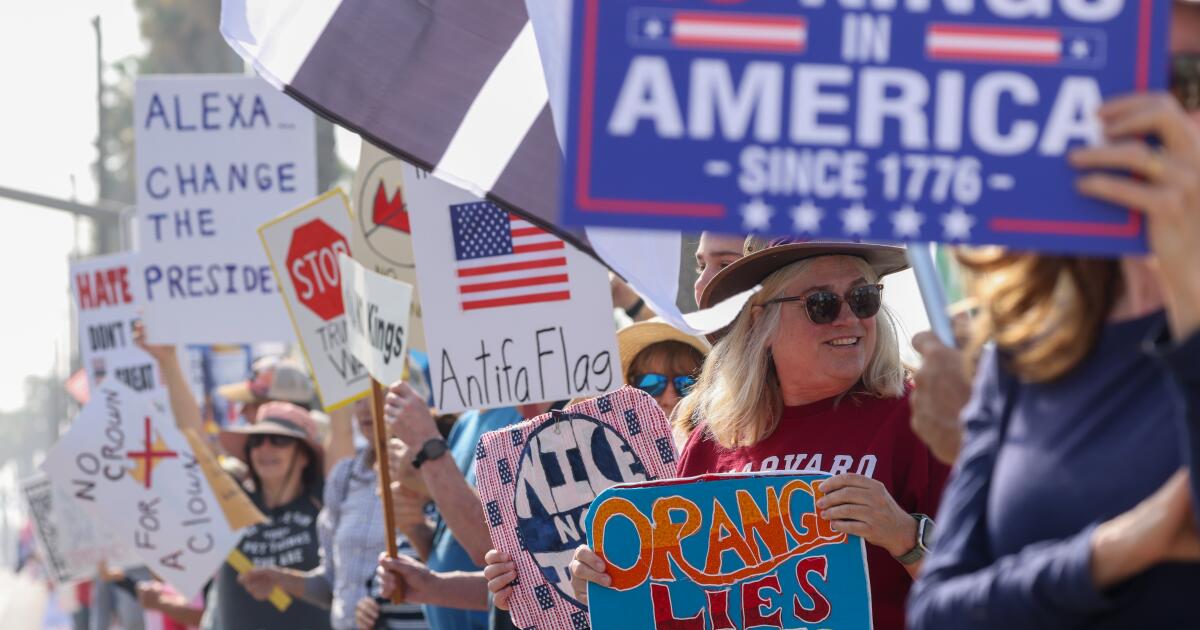
Millions are expected to protest Trump during Saturday’s ‘No Kings’ rallies

Florida High School Football Rankings: Top 25 teams – Oct. 21

How old is Bo Nix? What to know about Oregon quarterback ahead of 2024 NFL Draft

Cleary's 21 help Le Moyne down Central Connecticut State 69-64 in OT

99th annual Pony Swim held in Virginia

Indiana Members Credit Union announced as new anchor tenant at Bottleworks District

Hundreds of thousands march through London in stand against the far right

2 students killed, 7 other people injured in Tennessee bus crash during school field trip

Dem senators dodge crucial question on illegal alien accused of killing Chicago college student

EU Parliament unblocks key political hurdle in digital euro talks

Man arrested in plot to firebomb Palestinian activist’s home after undercover op
-

 Detroit, MI1 week ago
Drummer Brian Pastoria, longtime Detroit music advocate, dies at 68
-

 Movie Reviews1 week ago
‘Youth’ Twitter review: Ken Karunaas impresses audiences; Suraj Venjaramoodu adds charm; music wins praise | – The Times of India
-

 Sports1 week ago
IOC addresses execution of 19-year-old Iranian wrestler Saleh Mohammadi
-

 New Mexico6 days ago
Clovis shooting leaves one dead, four injured
-
 Business1 week ago
Disney’s new CEO says his focus is on storytelling and creativity
-

 Tennessee5 days ago
Tennessee Police Investigating Alleged Assault Involving ‘Reacher’ Star Alan Ritchson
-

 Technology6 days ago
YouTube job scam text: How to spot it fast
-

 Texas1 week ago
How to buy Houston vs. Texas A&M 2026 March Madness tickets