World
Not ‘a litre of oil’ to pass Strait of Hormuz, expect $200 price tag: Iran


Warning comes as 400 million barrels of oil are being released from global reserves during waterway’s closure.
Published On 11 Mar 2026
Iran’s Islamic Revolutionary Guard Corps (IRGC) says it will not allow “a litre of oil” through the Strait of Hormuz as the closure of the key Gulf waterway continues to roil global energy markets during the US-Israeli war on Iran.
A spokesperson for the IRGC’s Khatam al-Anbiya Headquarters said on Wednesday that any vessel linked to the United States and Israel or their allies “will be considered a legitimate target”.
Recommended Stories
list of 3 itemsend of list
“You will not be able to artificially lower the price of oil. Expect oil at $200 per barrel,” the spokesperson said in a statement. “The price of oil depends on regional security, and you are the main source of insecurity in the region.”
Global oil prices have fluctuated wildly this week during continued US-Israeli attacks against Iran, which has retaliated by firing missiles and drones at targets across the wider Middle East.
The closure of the Strait of Hormuz, through which about one-fifth of the world’s oil supplies transit, and production slowdowns in some Gulf countries have raised concerns of further disruptions.
Concerns around the duration of the war, which began on February 28 and has shown no sign of abating, are also adding to uncertainty, sending oil prices soaring.
On Wednesday, three ships were hit by projectiles in the Strait of Hormuz, maritime security and risk firms said, including a Thai-flagged cargo vessel that came under attack about 11 nautical miles (18km) north of Oman.
Release of oil reserves
World leaders, including members of the Group of Seven (G7) and the European Union, have been mulling what action to take in response to the war’s impact on global economies.
Christian Bueger, a professor of international relations at the University of Copenhagen and an expert in maritime security, said Europe will be facing “a major energy supply crisis” if the Strait of Hormuz is not reopened.
“For the shipping industry right now, it’s impossible to go through the Strait of Hormuz,” Bueger told Al Jazeera. “And if there are not stronger signals in the near future that they can at least try to go through the strait, then we are looking at a major shipping crisis, which can last weeks if not months.”
On Wednesday, the International Energy Agency (IEA) announced that its 32 member countries had unanimously agreed to release 400 million barrels of oil from their emergency reserves to try to lower prices.
“This is a major action aiming to alleviate the immediate impacts of the disruption in markets,” IEA Executive Director Fatih Birol said during an address from the agency’s headquarters in Paris.
“But to be clear, the most important thing for a return to stable flows of oil and gas is the resumption of transit through the Strait of Hormuz,” he added.
The reserve supplies will be made available “over a timeframe that is appropriate” for each member state, the IEA said in a statement without providing details.
German Economy and Energy Minister Katherina Reiche said earlier in the day that the country would comply with the release while Austria also said it would make part of its emergency oil reserve available and extend its national strategic gas reserve.
Meanwhile, Japan’s Ministry of Economy, Trade and Industry said it would release about 80 million barrels from its private and national oil reserves.
Japanese Prime Minister Sanae Takaichi said the country, which gets about 70 percent of its oil imports through the Strait of Hormuz, would begin releasing the reserves on Monday.



World
Artemis II astronauts race to set a new distance record from Earth and behold the moon’s far side

HOUSTON (AP) — With the moon looming ever larger, the Artemis II astronauts raced to set a new distance record Monday from Earth on a lunar fly-around promising magnificent views of the far side never seen before by eye.
The six-hour flyby is the highlight of NASA’s first return to the moon since the Apollo era with three Americans and one Canadian — a step toward landing boot prints near the moon’s south pole in just two years.
A prize — and bragging rights — awaits Artemis II.
Less than an hour before kicking off the fly-around and intense lunar observations, the four astronauts were set to become the most distant humans in history, surpassing the distance record of 248,655 miles (400,171 kilometers) set by Apollo 13 in April 1970.
Mission Control expected Artemis II to surpass that record by more than 4,100 miles (6,600 kilometers).
Artemis II is using the same maneuver that Apollo 13 did after its “Houston, we’ve had a problem” oxygen tank explosion wiped out any hope of a moon landing.
Known as a free-return lunar trajectory, this no-stopping-to-land route takes advantage of Earth and the moon’s gravity, reducing the need for fuel. It’s a celestial figure-eight that will put the astronauts on course for home, once they emerge from behind the moon Monday evening.
Commander Reid Wiseman, pilot Victor Glover, Christina Koch and Canada’s Jeremy Hansen were on track to pass as close as 4,070 miles (6,550 kilometers) to the moon, as their Orion capsule whips past it, hangs a U-turn and then heads back toward Earth. It will take them four days to get back, with a splashdown in the Pacific concluding their test flight on Friday.
Wiseman and his crew spent years studying lunar geography to prepare for the big event, adding solar eclipses to their repertoire during the past few weeks. By launching last Wednesday, they ensured themselves of a total solar eclipse from their vantage point behind the moon, courtesy of the cosmos.
Topping their science target list: Orientale Basin, a sprawling impact basin with three concentric rings, the outermost of which stretches nearly 600 miles (950 kilometers) across.
Other sightseeing goals: the Apollo 12 and 14 landing sites from 1969 and 1971, respectively, as well as fringes of the south polar region, the preferred locale for future touchdowns. Farther afield, Mercury, Venus, Mars and Saturn — not to mention Earth — will be visible.
Their moon mentor, NASA geologist Kelsey Young, expects thousands of pictures.
“People all over the world connect with the moon. This is something that every single person on this planet can understand and connect with,” she said on the eve of the flyby, wearing eclipse earrings.
Artemis II is NASA’s first astronaut moonshot since Apollo 17 in 1972. It sets the stage for next year’s Artemis III, which will see another Orion crew practice docking with lunar landers in orbit around Earth. The culminating moon landing by two astronauts near the moon’s south pole will follow on Artemis IV in 2028.
While Artemis II may be taking Apollo 13’s path, it’s most reminiscent of Apollo 8 and humanity’s first lunar visitors who orbited the moon on Christmas Eve 1968 and read from the Book of Genesis.
Glover said flying to the moon during Christianity’s Holy Week brought home for him “the beauty of creation.” Earth is an oasis amid “a whole bunch of nothing, this thing we call the universe” where humanity exists as one, he observed over the weekend.
“This is an opportunity for us to remember where we are, who we are, and that we are the same thing and that we’ve got to get through this together,” Glover said, clasping hands with his crewmates.
___
The Associated Press Health and Science Department receives support from the Howard Hughes Medical Institute’s Department of Science Education and the Robert Wood Johnson Foundation. The AP is solely responsible for all content.

NEWYou can now listen to Fox News articles!
Three people were killed, including a 10-month-old girl, after high winds toppled a tree in Germany during an Easter egg hunt on Sunday morning, according to authorities.
Around 50 people from a nearby residential facility for new mothers, pregnant women and children were attending the egg hunt in a wooded area near the town of Satrupholm at about 11 a.m. when a 100-foot tree fell on top of them, police said in a statement.
Four people became pinned under the tree, police said.
DUCK-HUNTING TRIP IN NEW ORLEANS TURNS DEADLY UNTIL LAST-MINUTE PRAYER BRINGS MIRACLE
A fallen tree lies in a wooded area south-east of Flensburg, Germany, on Sunday, April 5, 2026. (Daniel Reinhardt/picture alliance via Getty Images)
First responders arrived at the scene and first began treating a 21-year-old woman and a 16-year-old girl, but both died at the scene.
The woman’s 10-month-old daughter also later died at the hospital.
An 18-year-old woman sustained serious injuries and was rushed to the hospital in a helicopter.
The residential facility is part of the state-funded child welfare system, supporting pregnant women and new mothers who need help, according to its website.
Police officers stand next to a fallen tree in a wooded area south-east of Flensburg, Germany, on Sunday, April 5, 2026. (Benjamin Nolte/dpa via AP)
Grief counselors were sent to the scene after the fatal incident on Sunday.
Pictures from the scene showed several Easter eggs scattered on the ground as two of the victims were seen covered in white sheets.
The German weather service had put the area under a high winds warning.
ONE DEAD AND DOZENS INJURED DURING PREGAME EVENT AT PERU SOCCER STADIUM
Rescue workers are on the scene after an accident in a wooded area south-east of Flensburg, Germany, on Sunday, April 5, 2026. (Benjamin Nolte/dpa via AP)
CLICK HERE TO DOWNLOAD THE FOX NEWS APP
Officials from the Schleswig-Holstein region, where the facility is located, said they were “deeply shaken” by the Easter tragedy.
“Our thoughts are with the family members of the dead, with the injured, and with everyone who had to experience this terrible occurrence,” regional Governor Daniel Günther, Interior Minister Magdalena Finke, and Youth and Families Minister Aminata Touré said in a joint statement to the dpa news agency.
The Associated Press contributed to this report.
Four northern Italian airports introduce restrictions on jet fuel due to the energy crisis, with priority given to long-haul and medical flights. Meanwhile, Ryanair has warned that if the Iran war continues, summer flights are at risk across Europe.

Vote for Week 1 Delaware High School Team of the Week

Lawsuit claims Florida doctor used ‘mentally ill’ woman as surrogate

Falcons address biggest hole with Georgia prospect in new mock draft

Traditional Treasures: A Brief History of Hawaiian Heirloom Jewelry

From tragedy to reform: Advocates drive passage of three Idaho child protection laws

Florida High School Football Rankings: Top 25 teams – Oct. 21

How old is Bo Nix? What to know about Oregon quarterback ahead of 2024 NFL Draft

Cleary's 21 help Le Moyne down Central Connecticut State 69-64 in OT

99th annual Pony Swim held in Virginia

Indiana Members Credit Union announced as new anchor tenant at Bottleworks District

GOP races to pass ICE, Border Patrol funding bill as priorities pile up, divisions emerge
Jet fuel crisis: Rationing triggered at four airports in Italy
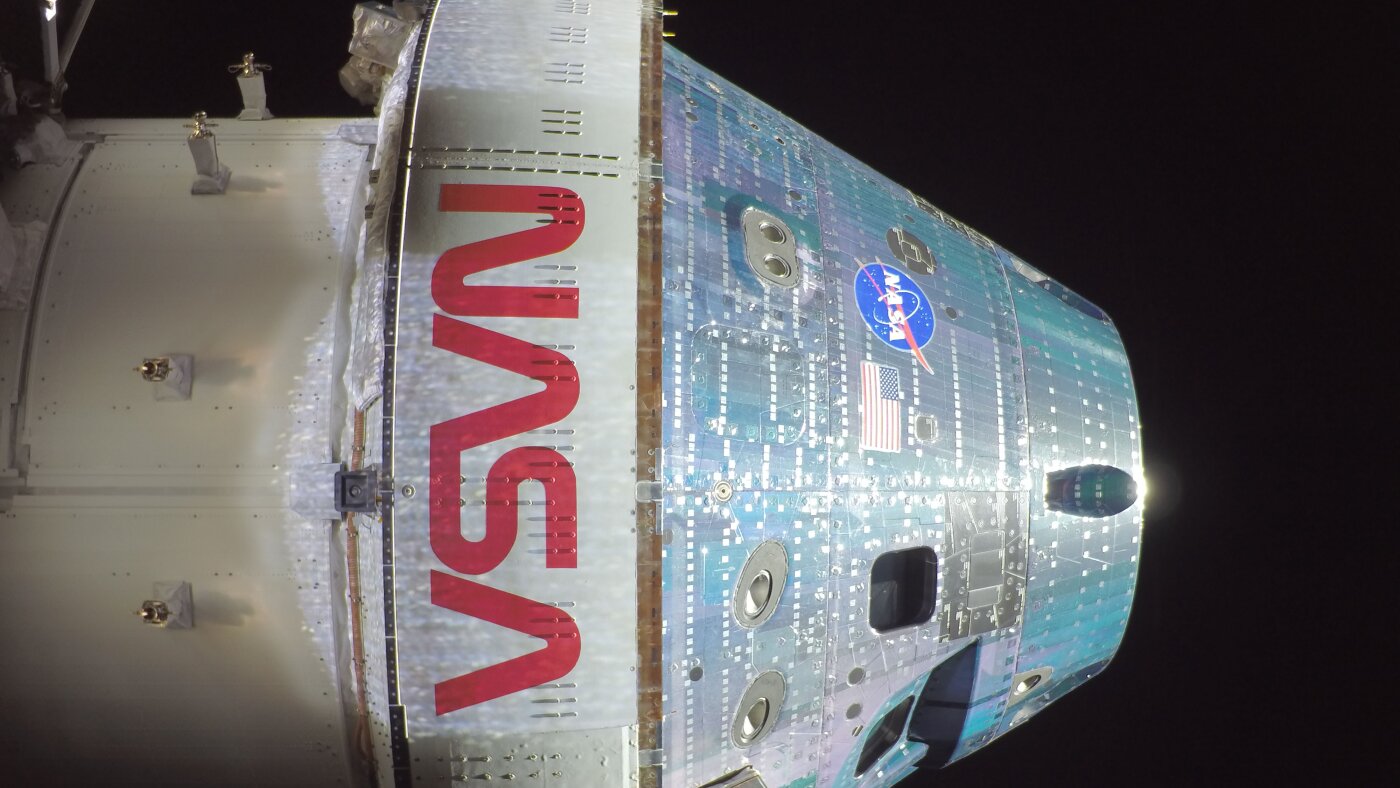
NASA’s Artemis II crew readies for Monday’s lunar flyby. Here’s what you need to know

Tax day is next week: Avoid these 5 common mistakes that can cost you money

Hamas armed wing says disarmament demands not acceptable
-

 South-Carolina1 week ago
South Carolina vs TCU predictions for Elite Eight game in March Madness
-

 Atlanta, GA1 day ago
1 teenage girl killed, another injured in shooting at Piedmont Park, police say
-

 Vermont1 week ago
Skier dies after fall at Sugarbush Resort
-

 Movie Reviews4 days ago
Vaazha 2 first half review: Hashir anchors a lively, chaos-filled teen tale
-

 Politics1 week ago
Trump’s Ballroom Design Has Barely Been Scrutinized
-
 Entertainment4 days ago
Inside Ye’s first comeback show at SoFi Stadium
-

 Atlanta, GA1 week ago
Fetishist ‘No Kings’ protester in mask drags ‘Trump’ and ‘JD Vance’ behind her wheelchair
-

 Politics1 week ago
JD Vance says he was ‘obsessed’ with UFOs, believes aliens are actually ‘demons’