World
Medicine for hostages and Palestinians arrives in Gaza under first Israel-Hamas deal since November


RAFAH, Gaza Strip (AP) — A shipment of medicine for dozens of hostages held by Hamas arrived in Gaza on Wednesday, part of a France- and Qatar- mediated deal that marked the first agreement between Israel and the militant group since a weeklong cease-fire in November.
The deal could bring respite to some of the roughly 100 hostages who remain in captivity, as well as to Palestinians in Gaza in desperate need of additional aid. But fighting still rages in many parts of the beleaguered enclave, and an end to the war — or the release of the hostages — seems nowhere in sight.
WHITE HOUSE URGES ISRAEL TO SCALE BACK GROUND OPERATIONS IN GAZA AS WAR HITS 100 DAYS: ‘IT’S THE RIGHT TIME’
Qatar’s Foreign Ministry spokesman, Majed al-Ansari, announced late Wednesday on X, formerly Twitter, that the shipment had crossed into Gaza, without saying when or how the medicine would be distributed.
“Over the past few hours, medicine & aid entered the Gaza Strip, in implementation of the agreement announced yesterday for the benefit of civilians in the Strip, including hostages,” he wrote.
A senior Hamas official said that for every box provided for the hostages, 1,000 boxes of medicine would be sent in for Palestinians. The deal also includes the delivery of humanitarian aid to residents of the besieged coastal enclave.
France and Qatar have mediated a deal whereby medicine shipments reached Gaza today.
The agreement came 100 days into the conflict and as Palestinian militants are still putting up resistance across Gaza in the face of one of the deadliest military campaigns in recent history. More than 24,000 Palestinians have been killed. Some 85% of the narrow coastal territory’s 2.3 million people have fled their homes, and the United Nations says a quarter of the population is starving.
Israel has vowed to dismantle Hamas to ensure it can never repeat an attack like the one on Oct. 7 that triggered the war. Militants burst through Israel’s border defenses and stormed through several communities that day, killing some 1,200 people, mostly civilians, and capturing around 250.
Israel also has promised to win the return of more than 100 hostages still held inside Gaza.
Hamas has said it will not release any more hostages until there is a permanent cease-fire, something Israel and the United States, its top ally, have ruled out.
AID BOUND FOR HOSTAGES AND PALESTINIAN CIVILIANS
The last deal in late November between Israel and Hamas brought a temporary truce in exchange for the release of more than 100 hostages, mostly women and children, as well as freedom for dozens of Palestinians imprisoned by Israel.
A Qatari official said the medicine would be delivered to the hostages by the Health Ministry in the Hamas-run territory. It was not immediately clear when the drugs would be delivered, or how the handover would be verified. The official spoke on condition of anonymity because he was discussing behind-the-scenes diplomatic efforts.
France said it took months to organize the shipment of the medicines. Qatar, which has long served as a mediator with Hamas, helped broker the deal that will provide three months’ worth of medication for chronic illnesses for 45 of the hostages, as well as other medicine and vitamins. Several older men are among the remaining hostages held in Gaza.
Moussa Abu Marzouk, a senior Hamas official, said in a post on X that the International Committee of the Red Cross will deliver all the medicines, including the ones destined for the hostages, to hospitals serving all parts of Gaza. The ICRC declined to comment.
Senior U.N. officials have warned that Gaza faces widespread famine and disease if more aid is not allowed in.
Israel completely sealed off Gaza after Hamas’ Oct. 7 attack and only relented under U.S. pressure. It says there are now no limits on the entry of humanitarian aid and that U.N. agencies could reduce the delays by providing more workers and trucks.
But U.N. officials say aid delivery is hobbled by the opening of too few border crossings, a slow vetting process and continuing fighting throughout the territory — all of which is largely under Israel’s control.
HEAVY FIGHTING IN GAZA
Israel said at the start of the year that it had largely defeated Hamas in northern Gaza and would scale back operations there, focusing on dense urban areas in the center and south of the territory. Additional Israeli forces withdrew from Gaza on Monday, but there has been little apparent letup in strikes, with scores of Palestinians killed every day.
A strike on a home killed a woman and two children in the southernmost town of Rafah. An Associated Press reporter saw the bodies arrive at a nearby hospital. Tens of thousands of people who heeded Israeli evacuation orders have sought shelter in the town, which is home to the border crossing with Egypt.
Gaza’s Health Ministry said Wednesday that 163 bodies were brought to the territory’s remaining functioning hospitals in the past 24 hours, as well as 350 wounded people. The update brought the war’s overall death toll in Gaza to 24,448, with over 60,000 wounded. The ministry said many other dead and wounded are trapped under rubble or unreachable because of the fighting.
The ministry does not differentiate between civilian and combatant deaths but says around two-thirds of those killed were women and children.
Israel blames the high civilian death toll on Hamas because it fights in dense residential areas. Israel says its forces have killed roughly 9,000 militants, without providing evidence, and that 192 of its own soldiers have been killed since the Gaza ground offensive began.
Militants are still fighting in all parts of the territory, and Israel appears no closer to freeing the remaining hostages. The deaths of two more hostages were confirmed Tuesday after Hamas said they were killed in Israeli airstrikes.
TENSIONS ACROSS THE REGION
Tensions are also soaring in the occupied West Bank, where Israeli forces have conducted near-daily arrest raids that often trigger shootouts with Palestinian militants.
Israeli forces killed at least 10 Palestinians Wednesday in the territory, including five in the urban Balata refugee camp in the north, the military said. Among that group was a senior militant whom the military said was responsible for militant infrastructure and was allegedly involved in recent attacks against Israelis.
Five Palestinians were also killed in an Israeli strike in Tulkarem, the Palestinian Health Ministry said. The military said it targeted a group of militants who had opened fire and were throwing explosives at Israeli soldiers.
Over 360 Palestinians have been killed in the West Bank since Oct. 7.
The Middle East has seen a dizzying array of strikes and counterstrikes in recent days from northern Iraq to the Red Sea and from southern Lebanon to Pakistan.
In the past few days, a U.S.-led coalition has carried out strikes against Iran-backed Houthi rebels in Yemen. Iran has struck what it described as an Israeli spy headquarters in northern Iraq and anti-Iran militants in Pakistan and Syria. Israel and Lebanon’s Hezbollah have escalated the intensity of their fighting across the border, raising fears of another war.



World
Intense Israeli strikes hit Iran and Lebanon as US warns the bombardment will ‘surge dramatically’

DUBAI, United Arab Emirates (AP) — Intense Israeli airstrikes pounded the capitals of Iran and Lebanon early Friday as the U.S. apparently struck an Iranian drone carrier at sea in its unrelenting campaign against the Islamic Republic’s fleet of warships.
Iran launched new retaliatory attacks in the Middle East at the end of a full week of bombardment, which U.S. Defense Secretary Pete Hegseth warned was “about to surge dramatically.”
Israel’s military said Friday morning it had begun “a broad-scale wave of strikes” on Tehran, Iran’s capital. Witnesses described the Israeli airstrikes as particularly intense, shaking homes in the area. Others reported explosions around the Iranian city of Kermanshah in an area that is home to multiple missile bases.
The Israeli military said strikes have already destroyed most of Iran’s air defenses and missile launchers.
The war has escalated to affect countries across the Middle East and beyond. Early Friday, Iran fired missile and drone attacks into Kuwait, Qatar, Saudi Arabia and Bahrain, all countries that host U.S. forces. There were no immediate reports of casualties.
In Lebanon, where the war has rekindled fighting between Israel and Iran-allied Hezbollah militants, Israel launched a series of airstrikes late Thursday into Friday in the southern suburbs of Beirut and other areas. Motorists jammed roads trying to flee or seek shelter.
The U.S. and Israel have battered Iran with nationwide strikes, targeting their military capabilities, leadership and nuclear program.
In addition to Israel, Iran’s attacks have targeted their Arab neighbors, disrupted oil supplies and snarled global air travel. The war has killed at least 1,230 people in Iran, more than 120 in Lebanon and around a dozen in Israel, according to officials in those countries. Six U.S. troops have been killed.
US says it struck an Iranian drone carrier
The U.S. military said early Friday that it struck an Iranian drone carrier, setting it ablaze.
The U.S. military’s Central Command released black-and-white footage of the burning carrier. The Iranian military did not immediately acknowledge the attack.
The drone carrier, the IRIS Shahid Bagheri, is a converted container ship with a 180-meter-long (yard) runway for drones. The vessel can travel up to 22,000 nautical miles without needing to refuel in ports, reports said at the time of its 2025 inauguration.
Adm. Brad Cooper, head of U.S. Central Command, described the carrier as “roughly the size of a World War II aircraft carrier.”
“And as we speak, it’s on fire,” Cooper told reporters.
Earlier in the week, an American submarine sank an Iranian frigate off the coast of Sri Lanka as it was returning from an exercise hosted by the Indian navy that the U.S. also joined. The sinking killed at least 87 sailors.
Under cover of darkness Friday morning, B-2 stealth bombers dropped dozens of 2,000 pound “penetrator” bombs on deeply buried ballistic missile launchers inside Iran, Cooper said.
“We’ve also struck Iran’s equivalent of Space Command, which degrades their ability to threaten Americans,” Cooper said.
Speaking alongside Cooper, Hegseth gave few details when he promised an upcoming surge.
“It’s more fighter squadrons, it’s more capabilities, it’s more defensive capabilities,” Hegseth said. “And it’s more bomber pulses more frequently.”
Iran targets country’s hosting US forces
Qatar’s Defense Ministry reported early Friday it intercepted a drone attack targeting Al Udeid Air Base, which hosts the forward headquarters of the U.S. Central Command.
Saudi Arabia intercepted and destroyed three ballistic missiles fired early Friday toward Prince Sultan Air Base south of Riyadh, which hosts U.S. forces, said a spokesperson for Saudi Arabia’s Ministry of Defense.
Air raid sirens sounded in Bahrain, where the Interior Ministry said Iranian strikes targeted two hotels and a residential building. It said there were no casualties. In Kuwait, where the six U.S. soldiers were killed Sunday, the Kuwaiti army said its air defenses were activated when missile and drone attacks breached Kuwait’s airspace.
Cooper said Iranian attacks had now hit a dozen countries, who would be welcome to play a more active role in the conflict.
“Those 12 countries are none too happy and I look forward to working with all the partners who are willing to join us,” he said.
Trump again urges Iranians to “take back” their country
In brief remarks at the White House, U.S. President Donald Trump again urged the Iranian people to “help take back your country.” This time he promised the U.S. would grant them “immunity” amid the war and ongoing dangers under the current Iranian regime.
“So you’ll be perfectly safe with total immunity,” Trump said, without giving any details about what that meant. “Or you’ll face absolutely guaranteed death.”
Cooper and Hegseth cautioned Iranians not to take to the streets while the conflict is still raging, however.
“It’s common sense, don’t go out and protest while bombs are dropping” Hegseth said.
“The best thing for them to do now is just to lay low,” Cooper added.
In an interview with the news website Axios, Trump said he should be involved in choosing Iran’s new supreme leader to replace Ayatollah Ali Khamenei, who was killed in the opening strikes of the war. Trump spoke dismissively of Khamenei’s son, Mojtaba Khamenei, being a front-runner to replace his father, calling him “a lightweight.”
“We want someone that will bring harmony and peace to Iran,” Trump said.
Iranian officials meet to discuss new leadership
Iranian state television reported Friday that a leadership council had started discussing how to convene the country’s Assembly of Experts, which will select the new supreme leader.
The leadership council includes President Masoud Pezeshkian, judiciary chief Gholam Hossein Mohseni Ejehi and cleric Ayatollah Ali Reza Arafi.
The statement provided no timeline on the selection of the supreme leader, nor information on whether the Assembly of Experts would meet in person or remotely for the vote.
Buildings associated with the Assembly of Experts, a 88-member clerical panel, have been attacked during the Israeli-U.S. airstrike campaign.
Israel hits Lebanon with multiple airstrikes around Beirut
Israel carried out at least 11 airstrikes late Thursday and early Friday, targeting the southern suburbs of Beirut. Fires broke out near a gas station.
The Israeli army issued a warning Thursday evening, urging residents to “save your lives and evacuate your homes immediately.” Two hospitals evacuated patients and staff. No casualties were immediately reported.
The Lebanese health ministry said the death toll has risen to 123 since the resurgence of hostilities between Israel and Hezbollah, which struck Israel in the opening days of the war.
A spokesperson for the U.N. peacekeeping force in southern Lebanon, Tilak Pokharel, said Thursday that peacekeepers had seen and heard clashes, including ground combat, in southern Lebanon as more Israeli forces have moved across the border.
___
Bynum reported from Savannah, Georgia, Rising from Bangkok and Abou AlJoud from Beirut, Lebanon. AP journalists around the world contributed.
___
This version has corrected the date of the ship’s inauguration to 2025, not 2005.
World
Private flights account for 30% of departures from Oman airport as wealthy evacuate Middle East

NEWYou can now listen to Fox News articles!
Long border crossings, SUV convoys and six-figure jet charters have become the new escape route out of the Middle East as Operation Epic Fury intensifies, with private flights now accounting for nearly a third of all departures from Oman’s main airport.
FlightRadar24, a real-time flight tracking platform, reported that while Oman continues to be a “vital” hub for evacuation and repatriation flights, private flights accounted for 31% of operations Wednesday at Muscat International Airport.
As of Thursday afternoon, the platform reported more than 30% of all movements at the airport were private flights.
Semafor reported earlier this week that airports in Oman and Saudi Arabia were drawing ultra-wealthy travelers looking to leave the countries.
Oman continues to be a “vital” hub for evacuation flights at its Muscat International Airport. (Christopher Pike/Bloomberg via Getty Images)
People familiar with the matter told the outlet that private security companies have been booking fleets of SUVs to take people on the 10-hour drive from Dubai to Riyadh, Saudi Arabia, where private flights are available.
The clientele evacuating the region are a mix of senior executives at global finance firms and wealthy travelers in the region for business or vacation, according to Semafor.
LIV golfer Jon Rahm, a two-time major winner, was just one of the wealthy who arranged flights amid the turmoil.
MIDDLE EAST CRUISE NIGHTMARE DEEPENS AS IRAN AIRSTRIKES LEAVE PASSENGERS STRANDED
Rahm arranged a charter flight through his partnership with VistaJet, a private aviation company, to fly the seven stranded LIV golfers and a caddie from Oman to Hong Kong after their flights were canceled.
After a more than four-hour drive to Oman, the crew flew to Hong Kong.
A spokesperson for Air Charter Service, a company that acts as a global broker for private jets and freight transport, told FOX Business the company has arranged more than 10 evacuation flights, with more scheduled, mainly out of Oman with passengers looking to flee Dubai.
AMERICAN STUCK IN MIDDLE EAST ESCAPES IN RACE TO REACH CRITICALLY ILL HUSBAND IN CALIFORNIA
FlightRadar24 shared flights flying in and out of Muscat airport. (@Flightradar24 via X)
“We evacuated some of our own staff who were just visiting the region, and we arranged transport via the Hatta crossing into Oman from the UAE to get them to Muscat from where they flew out of the region,” the spokesperson said. “The border crossing time at Hatta took around 3–4 hours, as of Sunday, but I suspect this has increased now, as more people look at this option.”
Light flight jet trips from Muscat, Oman, to Istanbul, Turkey, are reportedly going for more than $93,000, according to Forbes, which said the price was about double the usual rate.
The outlet added the same route on heavy jets can cost up to $140,000.
AMERICANS IN MORE THAN A DOZEN MIDDLE EAST NATIONS URGED TO FLEE
This map shows the targets of Iran’s retaliatory strikes. (Fox News)
The U.S. and Israel launched attacks on Iran Saturday, triggering retaliatory attacks targeting countries in the region that host U.S. interests.
Mora Namdar, Assistant Secretary of State for Consular Affairs, advised U.S. citizens to leave Bahrain, Egypt, Iran, Iraq, Israel, the West Bank and Gaza, Jordan, Kuwait, Lebanon, Oman, Qatar, Saudi Arabia, Syria, the United Arab Emirates and Yemen.
CLICK HERE TO DOWNLOAD THE FOX NEWS APP
The limited number of available aircraft has pushed up prices, as citizens and travelers attempt to flee.
Fox News Digital’s Ryan Morik and Ashley Carnahan contributed to this report.
Related Article

Social media posts have showed French border guards stationed in airport arrivals with signs that appear to read, “to all the influencers and other people in tax havens such as Dubai, the tax authorities wish you a smooth return to France”. But is this real?
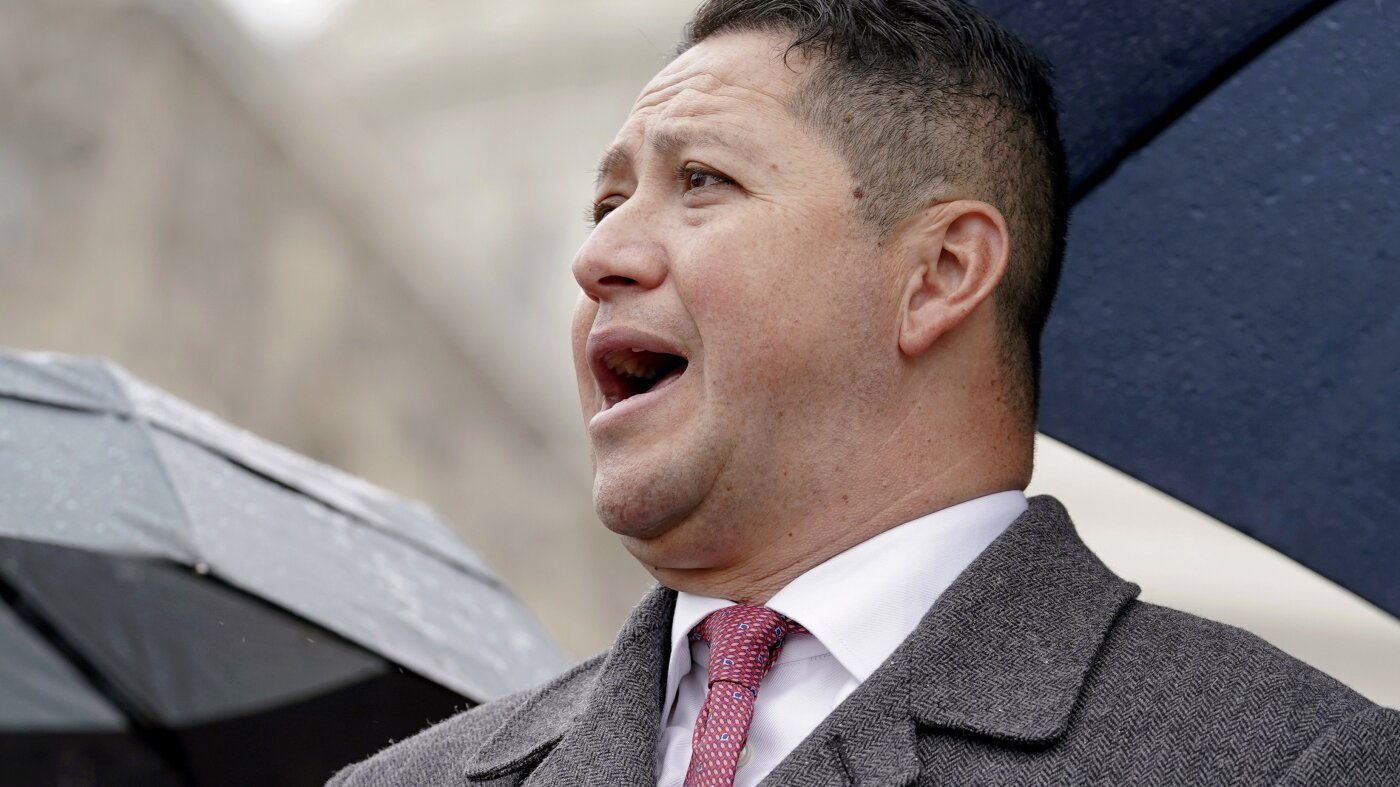
GOP Rep. Tony Gonzales of Texas ends reelection bid after admitting to affair with aide

Utah Blanks Philadelphia, 3-0 | Utah Mammoth

Friends, family rally behind Vermont veteran charged with domestic terrorism

Virginia Tech women overcome slow start to rally past Georgia Tech in ACC Tournament opener

Capitals Acquire a Conditional First-Round Pick in Either 2026 or 2027 and a 2027 Third-Round Pick from Anaheim for John Carlson | Washington Capitals

Florida High School Football Rankings: Top 25 teams – Oct. 21

Cleary's 21 help Le Moyne down Central Connecticut State 69-64 in OT

How old is Bo Nix? What to know about Oregon quarterback ahead of 2024 NFL Draft

99th annual Pony Swim held in Virginia

Indiana Members Credit Union announced as new anchor tenant at Bottleworks District

DOJ continues Biden autopen probe despite former president unlikely to face charges
Fact check: Did French border guards mock influencers returning from Dubai amid Iran war?

Iran’s fight for survival / The widening war / Trump’s nebulous goals : Sources & Methods

Map: 4.9-Magnitude Earthquake Shakes Louisiana

Paxton vows he’s ‘staying in this race’ even if Trump backs Cornyn in Texas GOP clash
-

 World1 week ago
Exclusive: DeepSeek withholds latest AI model from US chipmakers including Nvidia, sources say
-

 Wisconsin4 days ago
Setting sail on iceboats across a frozen lake in Wisconsin
-

 Massachusetts1 week ago
Mother and daughter injured in Taunton house explosion
-

 Maryland5 days ago
AM showers Sunday in Maryland
-

 Massachusetts3 days ago
Massachusetts man awaits word from family in Iran after attacks
-

 Florida5 days ago
Florida man rescued after being stuck in shoulder-deep mud for days
-

 Denver, CO1 week ago
10 acres charred, 5 injured in Thornton grass fire, evacuation orders lifted
-

 Oregon7 days ago
2026 OSAA Oregon Wrestling State Championship Results And Brackets – FloWrestling