World
Judge delays Trump’s sentencing in hush money case until September


Trump became the first former US president convicted of felony charges and was originally set to be sentenced next week.
The judge in Donald Trump’s hush money case has granted a request to delay the former United States president’s sentencing until at least September.
The decision on Tuesday follows a ruling by the US Supreme Court that ordered broad criminal immunity for presidents in their official acts.
Trump’s legal team had cited the top court’s decision in a letter to Judge Juan Merchan requesting the delay in the sentencing, which was originally scheduled on July 11.
The lawyers representing Trump, the presumptive Republican presidential candidate, told Merchan they needed time to build their case that Trump’s conviction on 34 felony charges of falsifying business documents to cover up hush money payments made to an adult actress should be overturned in light of the Supreme Court’s ruling.
Before Merchan’s decision, prosecutors with the Manhattan district attorney’s office said Trump’s argument was “without merit” but agreed to delay the sentencing.
Merchan said the sentencing would be delayed until at least September 18, less than two months before the November 8 elections.
Prosecutors had argued that Trump falsified business records to cover up his former lawyer Michael Cohen’s $130,000 payment to Stormy Daniels in exchange for her silence on an alleged 2006 sexual encounter with Trump.
They directly connected the payments to a wider scheme to influence the 2016 presidential election.
In their letter to Merchan, Trump’s lawyers argued that during the trial, prosecutors had presented evidence involving Trump’s official acts as president, including social media posts he made and conversations he had while in the White House.
That evidence should have been protected under presidential immunity, the lawyers said, per the Supreme Court’s Monday ruling.
The ruling from the majority of six justices on the nine-member bench said presidents have “absolute immunity” from criminal liability for any acts within their “core constitutional powers”. Evidence related to those official acts also may not be presented at a trial, the majority opinion said.
However, the ruling, which was assailed by the court’s three liberal justices, said presidents could still be prosecuted for acts outside those powers. The exact delineations remain unclear.
In her dissent, Justice Sonia Sotomayor warned the decision opened the door to “nightmare scenarios”, including possible immunity for assassinating a political rival.
“In every use of official power, the president is now a king above the law,” she wrote.
Political implications
The Supreme Court ruling bodes well for Trump, who faces three additional criminal trials.
It is expected to be the most bedeviling to the legal argument at the heart of a federal case related to Trump’s efforts to overturn the 2020 presidential election results after his loss to President Joe Biden.
It could also have implications for a state trial in Georgia related to efforts to pressure officials to change the 2020 vote count as well as a second federal trial related to Trump allegedly hiding and hoarding classified White House documents at his Florida estate.
The New York trial, however, was the only trial expected to finish before the election. While the initial guilty verdict did not show a major shift in support for Trump, analysts have argued that a severe sentence could turn off some would-be Trump voters.
Merchan’s decision comes five days after Biden delivered a dismal performance in the first presidential debate against Trump, which has sent the Democrat’s campaign into damage control while bringing concerns over the 81-year-old’s age to the fore.
On Tuesday, a Reuters/Ipsos poll was released showing one in three Democrats think Biden should end his re-election bid after the debate performance. Still, the poll found no prominent elected Democrat would perform any better than Biden in a hypothetical matchup against Trump.
On Wednesday, Biden was reportedly set to meet with Democratic governors in an effort to allay their concerns.
White House spokesperson Karine Jean-Pierre also said Biden would give his first post-debate interview to ABC News on Friday and would hold a news conference during a NATO conference next week.
She reiterated that Biden has no intention of dropping out of the race.



President Trump said Iran had agreed to the “highest level” inspections, hours after an Iranian official said there were “no detailed discussions on the nuclear issue,” as the two sides continued to present different narratives of their latest talks.
World
Turkey detains over 200 suspects, including alleged ISIS militants, in sweeping raid ahead of NATO summit
NEWYou can now listen to Fox News articles!
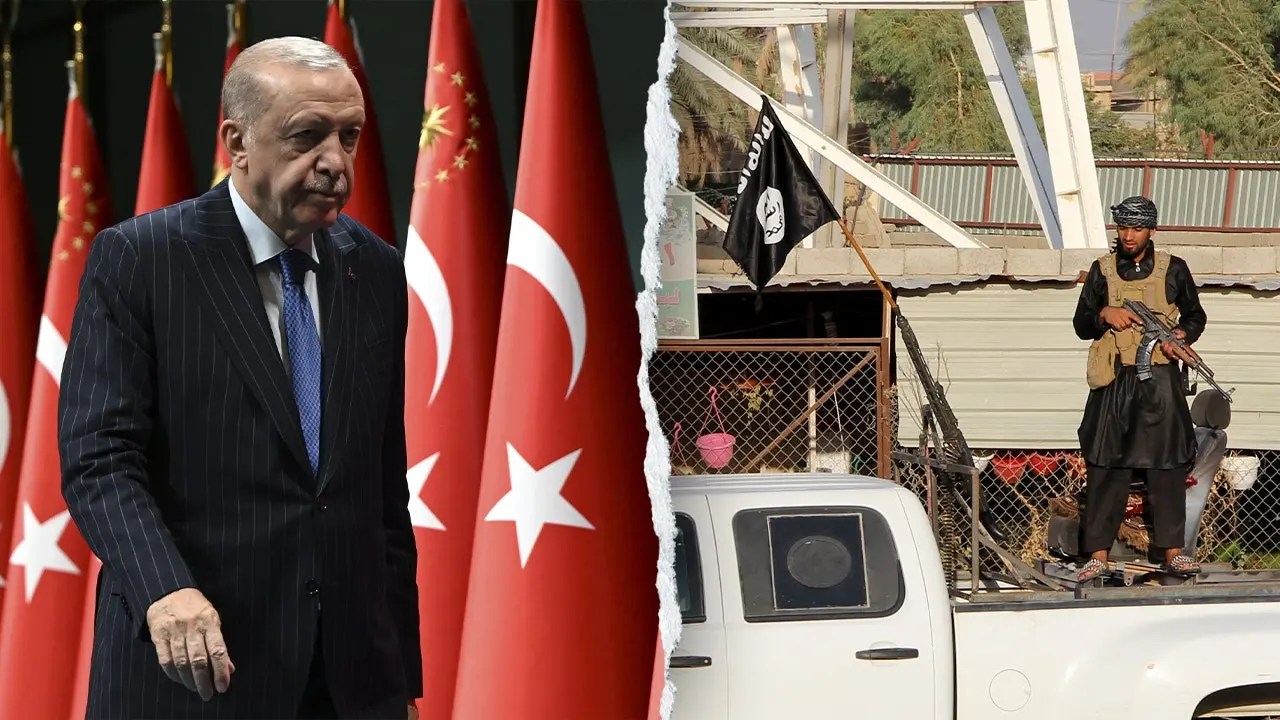
Turkish authorities reportedly detained more than 200 people, including suspected ISIS-linked militants, in a sweeping Tuesday raid in capital Ankara ahead of a July 7-8 NATO summit.
The raid came after Turkish authorities issued detention orders for 241 suspects, 209 of whom were taken into custody, The Associated Press reported, citing a statement from the office of Turkey’s chief prosecutor.
Among the 209 detained, 56 were allegedly ISIS militants, according to the AP. This comes after Turkish authorities said they detained 125 ISIS members in December.
The detention operations occurred just two weeks before a planned NATO summit in Ankara on July 7 that President Donald Trump is expected to attend.
TURKEY’S NATO ROLE UNDER SCRUTINY AMID NEW REPORT ON HAMAS, MUSLIM BROTHERHOOD TIES
President Donald Trump greets Turkey’s President Recep Tayyip Erdogan during a summit in Sharm El Sheikh, Egypt, on Oct. 13, 2025, to support ending the Israel-Hamas war in Gaza after a breakthrough ceasefire deal. (Evan Vucci/AP Photo/Pool)
Other militants scooped up were 35 alleged members of the Revolutionary People’s Liberation Party/Front, which a Turkish statement described as “a far‑left group known for armed attacks and assassinations in Turkey,” according to the AP.
The ISIS-combating operations demonstrate the terrorist group’s ongoing activity in the region, showing the group is still functioning despite the U.S. campaign during Trump’s first term to eliminate the group’s caliphate and its control of large swaths of territory in the Middle East.
Iraqi government forces celebrate while holding an Islamis Sate (IS) group flag after they claimed they have gained complete control of the Diyala province, northeast of Baghdad, on January 26, 2015 near the town of Muqdadiyah. (YOUNIS AL-BAYATI/AFP via Getty Images)
In recent years, ISIS has spread into the African continent, prompting a strong response from the U.S. In May, Trump authorized a series of strikes in Nigeria to combat the group.
PENTAGON SLASHES NATO COMBAT COMMITMENTS AS TRUMP PUSHES EUROPE TO DEFEND ITSELF
A May 16 strike killed ISIS leader Abu-Bilal al-Minuki, who was the group’s second-in-command globally.
U.S. and Nigerian forces conducted kinetic strikes against ISIS fighters in northeastern Nigeria on May 17, 2026, AFRICOM said. (X/U.S. Africa Command)
CLICK HERE TO DOWNLOAD THE FOX NEWS APP
“Abu-Bilal al-Minuki, second in command of ISIS globally, thought he could hide in Africa, but little did he know we had sources who kept us informed on what he was doing,” Trump wrote in a post on Truth Social after the strike. “He will no longer terrorize the people of Africa, or help plan operations to target Americans.”
The group’s renewed activity also includes a call to supporters to make attacks on U.S. soil during the World Cup.
The Associated Press contributed to this report.

By Euronews with AFP
Published on
Two whales were killed off the coast of Iceland overnight Sunday, two days after commercial hunting resumed, local media and animal rights activists reported Monday.
ADVERTISEMENT

ADVERTISEMENT
The kill ends a two-year pause and marks the first catches since 2023.
Icelandic public broadcaster RUV reported that two fin whales were killed. The fin whale is the second largest animal on Earth after the blue whale.
Before the vessels set off on Friday, a protester had attached himself to one of the masts in the port of Reykjavik, but climbed down and was escorted away by police.
Iceland, Norway and Japan are the only three countries that still openly permit whaling, despite international condemnation from the public and animal welfare organisations.
Iceland cancelled its whale hunt over the past two years, partly because economic problems had cut demand and the industry was not deemed profitable enough.
“The first fin whale deaths in Iceland’s hunt this year are devastating,” said Joanna Swabe, European senior public affairs director for animal rights group Humane World for Animals.
“Iceland has killed more than 1,000 fin whales in the past two decades — not only the second largest animal on the planet but also a species classified as globally vulnerable to extinction,” Swabe said in a statement.
Iceland’s government has said it is planning to introduce a bill aimed at banning whaling this autumn.
The International Whaling Commission banned the commercial killing of whales in 1986 amid alarm at the declining stock of the marine mammals.
Iceland’s Marine and Freshwater Research Institute has recommended that no more than 150 fin whales are caught in the 2026 season.
That represents a 28-percent drop on the annual quota it recommended for the period 2018–2025, it said.
The institute has set an annual catch of 168 animals for the minke whale hunt this year, a 23-percent drop on 2018-2025.
-
Arkansas1 second ago
Razorbacks’ Guard Darius Acuff Selected No. Overall in 2026 NBA Draft
-

 California3 minutes ago
DOJ charges 10 Southern California defendants in largest federal healthcare fraud crackdown in US history
-

 Colorado8 minutes ago
Erie Town Council approves sale of Colorado mineral rights for major oil and gas development
-

 Connecticut15 minutes ago
Man charged with murder in death of Duxbury, Massachusetts woman in Connecticut home
-

 Delaware18 minutes ago
Vigil held for 2 teens killed in hit-and-run in New Castle County; driver in custody
-

 Florida23 minutes ago
Meet the Florida Democrats running for governor against David Jolly
-
Georgia30 minutes ago
Georgia Lottery Mega Millions, Cash 3 results for June 23, 2026
-

 Hawaii33 minutes ago
Logan Kalawaia to perform in next Hawaiian Music Series, June 25 | Maui Now

