World
FACT FOCUS: False claims Trump made as he addressed the nation about Iran


WASHINGTON (AP) — President Donald Trump mischaracterized core elements of the U.S. economy and stretched the facts in claiming to have toppled Iran’s government as he addressed the nation Wednesday night in a time of soaring gas prices and persistent inflation.
Here’s a look at some of his statements:
‘No inflation’
CLAIM: “We were a dead and crippled country after the last administration and made it the hottest country anywhere in the world by far, with no inflation.’’
THE FACTS: This is a standard Trump claim. But the economy he inherited was far from weak. In 2024, the last year of Joe Biden’s presidency, American gross domestic product grew 2.8%, adjusted for inflation, faster than any wealthy country in the world except Spain. It also expanded at a healthy rate from 2021 through 2023. Last year, in fact, U.S. economic growth decelerated under Trump to a still-respectable 2.1%, partly because the 43-day federal government shutdown slashed growth from October through December.
Nor has inflation vanished. The Labor Department’s consumer price index was up 2.4% in February compared with a year earlier. It’s still above the Federal Reserve’s 2% target.
‘Regime change’
CLAIM: “Regime change was not our goal. We never said regime change, but regime change has occurred because of all of their original leaders’ death. They’re all dead. The new group is less radical and much more reasonable.”
THE FACTS: Trump’s depiction of the people now in charge in Iran, after scores of senior leaders were killed in the war, stretches credulity.
Israel’s airstrike at the start of the war Feb. 28 killed Supreme Leader Ayatollah Ali Khamenei. Iran then installed his son, Mojtaba, who is viewed as even more hard-line, as supreme leader. The monthlong war has seen Iran’s paramilitary Revolutionary Guard grow even more ascendant. Iran’s civilian leadership — broadly untouched by the war — acknowledges it has little command and control over the Guard’s actions.
Both Trump and Israel have signaled they would tell the Iranian people to rise up at a point in the war to take back their government. That hasn’t happened.
Protester deaths
CLAIM: “This murderous regime also recently killed 45,000 of their own people who were protesting in Iran.”
THE FACTS: A death toll that high has not been verified.
The U.S.-based group Human Rights Activists News Agency, which has been accurate in multiple rounds of demonstrations in Iran, said it confirmed the deaths of just over 7,000 people in the nationwide protests that reached their apex in January. However, it said thousands more may have been killed, though internet and communication restrictions in Iran since have made verifying the reports incredibly difficult. It put total arrests at more than 53,000.
Iran’s government, which long has played down death tolls in other unrest, offered its only toll on Jan. 21, saying 3,117 people were killed.
Trump previously said that at least 32,000 people were killed in January protests, which is at the far end of estimates offered by activists for the death toll. He offered no evidence to support those figures.
This is how the AP reports on the death toll from Iran’s protests.
Middle East oil
CLAIM: “We’re now totally independent of the Middle East, and yet we are there to help. We don’t have to be there. We don’t need their oil.’’
THE FACTS: It’s true that the United States is by far the world’s leading producer of oil and relies on the Persian Gulf for a fraction (8.5% in 2025) of the oil it imports. But, as is obvious at U.S. gas pumps, that doesn’t mean it is unaffected by the turmoil in the Middle East.
Oil is a commodity, “the price of which is set in a global market,’’ University of Chicago energy analyst Sam Ori said before Trump’s speech, “and a disruption anywhere affects the price everywhere.’’ Which is why the price of benchmark U.S. crude oil is up more than 50% since the Iran war began, and the average price of U.S. gallon of gasoline cracked $4 a gallon this week.
Inflated investments
CLAIM: Trump cited “record-setting setting investments coming into the United States, over $18 trillion.”
THE FACTS: Trump has presented no evidence that he’s secured this much domestic or foreign investment in the U.S. Based on statements from various companies, foreign countries and the White House’s own website, that figure appears to be exaggerated, highly speculative and far higher than the actual sum. The White House website offers a far lower number, $10.5 trillion, and that figure appears to include some investment commitments made during the Biden administration.
A study published in January raised doubts about whether more than $5 trillion in investment commitments made last year by many of America’s biggest trading partners will actually materialize and questions how it would be spent if it did.
Cash to Iran
CLAIM: “Obama gave them $1.7 billion in cash.”
THE FACTS: This misleading claim that President Barack Obama handed over cash to the Iranians dates back to Trump’s first term and persists in his second.
The U.S. treasury did pay Iran roughly that amount under Obama. But it was not a gift. Rather, it was money owed to the Iranians since the 1970s, when they paid the U.S. $400 million for military equipment that was never delivered because the government was overthrown and diplomatic relations ruptured.
After the 2015 deal to restrain Iran’s nuclear development, the U.S. and Iran announced they had settled the matter, with the U.S. agreeing to pay the $400 million principal in cash, along with about $1.3 billion in interest. Trump later took the U.S. out of the deal.
__
Gambrell reported from Dubai, United Arab Emirates.
___
Find AP Fact Checks here: https://apnews.com/APFactCheck.



Mark Dubowitz says Trump holds ‘maximum leverage’ over Iran as ceasefire begins
Mark Dubowitz, CEO of the Foundation for Defense of Democracies, analyzes President Trump’s firm Iran policy following a two-week ceasefire agreement. He highlights the regime’s weakened state after 15 months of Trump’s administration, making Iran’s 10-point peace plan with “ridiculous demands” unlikely to be accepted. Dubowitz discusses the choice facing Iran’s new regime.
NEWYou can now listen to Fox News articles!
The lack of a two-week pause in the fighting between Israel and Hezbollah appears to be a dealbreaker for Iran’s regime as the ceasefire takes effect.
While the Trump administration maintains the deal does not include the Tehran-backed terrorist movement Hezbollah, Iran is threatening to use that exclusion as a pressure point against the U.S., potentially collapsing the entire ceasefire.
On Wednesday, Iran’s Foreign Minister Seyed Abbas Araghchi wrote on X that “The Iran–U.S. Ceasefire terms are clear and explicit: the U.S. must choose—ceasefire or continued war via Israel. It cannot have both. The world sees the massacres in Lebanon. The ball is in the U.S. court, and the world is watching whether it will act on its commitments.”
IRAN REVEALS 10-POINT PLAN FOR PEACE WITH THE US – HERE’S WHAT’S IN IT
Rescue workers search for victims at the site of an Israeli airstrike that hit a crowded neighborhood south of Beirut, Lebanon, Sunday, April 5, 2026. (Hussein Malla/AP)
His comments were later echoed by Iran’s parliamentary speaker Mohammad Bagher Ghalibaf, citing Israeli attacks in Lebanon. Earlier in the day, Pakistan’s Prime Minister Shehbaz Sharif, a key intermediary in ceasefire talks between the U.S. and Iran over Operation Epic Fury, said the two-week ceasefire would include Lebanon.
Hezbollah reneged on a U.S. negotiated November 2024 ceasefire by entering the war against Israel on March 2025 to aid Iran. Many experts say long-term regional security depends on Lebanon’s government and army disarming the terror group.
Hezbollah al-Mahdi scouts parade with big portraits of Iran’s late leader Ayatollah Khomeini, foreground, and Iran’s supreme leader Ayatollah Ali Khamenei, background, during an event for Jerusalem day or Al-Quds day, in the southern town of Nabatiyeh, Lebanon, Thursday, Aug. 1, 2013. The last Friday of the Islamic holy month of Ramadan is observed in many Muslim countries as Al-Quds day, as a way of expressing support to the Palestinians and emphasizing the importance of Jerusalem to Muslims. (Hussein Malla/AP)
Edy Cohen, an Israeli security expert on Hezbollah, who was born in Lebanon, told Fox News Digital that “Hezbollah will never disarm itself. From its perspective, it protects two million Shiites. The only way to defeat Hezbollah is to first define it as a terrorist organization. Not to allow its political wing to exist and also to order the Lebanese army to gather in the areas under its control area by area.”
He added that “Dismantling Hezbollah must be carried out in stages. The Lebanese government must first take possession of the heavy weapons. Not to allow it to concentrate except in Dahiya [a Beirut suburb that is a Hezbollah and Shiite stronghold]. Leave it in one place and control all the roads leading to it. Little by little, it can be dismantled. Israel cannot and should not disarm Hezbollah. It can only assist with bombing from above.”
TRUMP’S IRAN CEASEFIRE ROCKED WITHIN HOURS AMID REPORTED MISSILE, DRONE ATTACKS
U.S. President Donald Trump welcomes Israeli Prime Minister Benjamin Netanyahu to his Mar-a-Lago club on December 29, 2025, in Palm Beach, Florida. (Joe Raedle/Getty Images)
On Wednesday, the IDF said it hit over 100 targets in 10 minutes, including, “Hezbollah headquarters, military arrays, and command-and-control centers: Intelligence command centers and central headquarters used by Hezbollah terrorists for directing and planning terror attacks against IDF soldiers and Israeli civilians.” Reuters, quoting the country’s health ministry, said some 91 people were killed in Beirut, with a total of at least 182 killed nationwide on Wednesday.
The IDF added, “The large-scale strike was based on precise IDF intelligence and was planned meticulously over weeks. Most of the infrastructure that was struck was located within the heart of the civilian population, as part of Hezbollah’s cynical exploitation of Lebanese civilians as human shields in order to safeguard its operations. Prior to the strikes, steps were taken to mitigate harm to uninvolved individuals as much as possible.”
Since the war started and before Wednesday’s attacks, Israeli airstrikes have killed more than 1,530 people in Lebanon, according to the Associated Press. The Long War Journal notes “that neither the Lebanese Health Ministry nor Hezbollah has provided an official count of the group’s fallen fighters.”
Hezbollah terrorists are shown in this image. A “terrorist network” funded and operated by Hezbollah and Iran has been foiled in the United Arab Emirates, according to a report. (Fadel Itani/NurPhoto)
Guila Fakhoury, whose father, Amer, was kidnapped by Hezbollah in 2019, told Fox News Digital that “Iran and the IRGC are occupying Lebanon through their proxy Hezbollah.”
Fakhoury, who was born in Lebanon, said, “The majority of Lebanese people believe the actions of Hezbollah caused Israel to occupy southern Lebanon and don’t want Iran and Hezbollah. Hezbollah is threatening the entire government.”
VANCE WARNS IRAN WILL ‘FIND OUT’ TRUMP IS ‘NOT ONE TO MESS AROUND’ IF CEASEFIRE DEAL FALLS APART
A mourner holds a poster depicting Ayatollah Mojtaba Khamenei, right, the successor to his late father Ayatollah Ali Khamenei, left, as supreme leader, during the funeral procession for senior Iranian military officials and civilians killed during the U.S.-Israel campaign in Tehran, Iran, Wednesday, March 11, 2026. (Vahid Salemi/AP)
As the president and co-founder of the Amer Foundation, an organization dedicated to help families of illegal detainees and educate on Middle East policy and geopolitics, she said is seeing some positive steps being taken including Lebanese President Joseph Aoun calling for negotiations with Israel.
She said the “only solution is to have peace with Israel. I think there a lot of Shiites who are against Hezbollah… The majority of the Lebanese people just want peace. We hope the Trump administration will push the Lebanese government and Israel’s government to start peace talks.”
Last week, Iran’s regime defied Lebanon’s expulsion order for its ambassador by saying he would stay, further increasing tensions in a country in the crosshairs of the latest fighting between the Iranian-backed Hezbollah and Israel.
Lebanon had declared Ambassador Mohammad Reza Shibani “persona non grata” to weaken Iran’s diplomatic presence and have a chargé d’affaires at its embassy instead. But the deadline to leave the country was Sunday and an Iranian spokesperson said the ambassador’s mission in Beirut continues.
CLICK HERE TO DOWNLOAD THE FOX NEWS APP
Fox News Digital reached out to Lebanon’s government and the Embassy in Washington D.C. for a comment.
The Associated Press and Reuters contributed to this report.

Good morning from Brussels.
ADVERTISEMENT

ADVERTISEMENT
The two-week truce agreed by Washington and Tehran on Tuesday evening has left the world on edge.
A meeting between NATO Secretary-General Mark Rutte and US President Donald Trump in Washington overnight failed to ease pressure on the transatlantic alliance, after several NATO countries resisted Trump’s calls to help reopen the Strait of Hormuz over the last weeks.
After more than two hours at the White House, Rutte told CNN that Trump was “clearly” disappointed with many NATO allies, adding: “I can see his point.” The NATO chief said, however, that even if “some” allies had failed to meet their commitments in the Iran operation, “the large majority of Europeans” had been helpful.
In recent weeks, Trump has threatened to withdraw from the 32-member alliance.
“NATO WASN’T THERE WHEN WE NEEDED THEM, AND THEY WON’T BE THERE IF WE NEED THEM AGAIN,” Trump posted on Truth Social overnight after meeting Rutte.
Speaking to Europe Today, former US ambassador to NATO Ivo Daalder said threats by Trump to pull out of NATO, alongside disputes with European allies over their reluctance to participate in the Iran war, have triggered the “worst crisis” the alliance has ever experienced.
“The last six weeks have been extraordinarily damaging to NATO,” he said, adding: “We see a divided NATO, which has been the goal of first the Soviet Union and then Russia for the better part of 80 years.” Watch.
Meanwhile, the terms of the agreement between the US and Iran remain contested by both sides, with Lebanon’s fate still unclear after Israel carried out a new wave of heavy strikes in the country of the cedars, killing 182 and injuring 890, according to the Lebanese health ministry.
In a call on Wednesday evening with French President Emmanuel Macron, Iranian President Massoud Pezeshkian stressed the need for a ceasefire in Lebanon, calling it a key condition of Iran’s ten-point plan.
But US Vice President J.D. Vance earlier denied Lebanon was included in the deal, saying the US position focused on Iran and its allies, including Israel and the Gulf Arab states. Macron, who also spoke with Trump, expressed hope Lebanon would be part of the agreement.
Vance will lead a US delegation to Pakistan for talks with Iran starting Saturday.
Israeli bombings in Lebanon amid the regional ceasefire sparked sharp international reactions. UN High Commissioner for Human Rights Volker Türk said the scale of the killing and destruction was “nothing short of horrific,” adding that “such carnage, within hours of agreeing to a ceasefire with Iran, defies belief.”
European leaders also reacted. Belgian Foreign Minister Maxime Prévot was at the Belgian embassy in Beirut a few hundred meters from where missiles struck.”This must stop,” he wrote on X saying the ceasefire must include Lebanon.
Spanish Prime Minister Pedro Sánchez, a staunch opponent of the war in Iran, also said on X that Israeli Prime Minister Benjamin Netanyahu’s “contempt for life and international law is intolerable,” calling for the EU to suspend its Association Agreement with Israel.
Italian Foreign Minister Antonio Tajani, who spoke with Lebanese President Joseph Aoun, warned that Italy does not want “a second Gaza.” Tajani also summoned the Israeli ambassador to the Farnesina.
After US-Iran ceasefire deal, Europe faces tough questions
European leaders were quick to hail the ceasefire agreement between the United States and Iran as a “much-needed de-escalation”, as Ursula von der Leyen put it.
The breakthrough, however, leaves several major questions unanswered for Europeans, who have been largely sidelined from the diplomatic process, Jorge Liboreiro writes.
Chief among them is the Strait of Hormuz, which used to carry a fifth of the world’s oil and gas supplies before the war erupted. Europeans have repeatedly voiced their readiness to help secure the waterway, but only after the hot phase of the conflict is over. Now, with the ceasefire deal on the table, they will be asked to make good on their promise. According to French President Emmanuel Macron, a group of about 15 countries is preparing to deploy a “strictly defensive mission” to the strait.
Tehran, however, has indicated it wants to retain tight control of Hormuz, and Donald Trump has floated a “joint venture” to charge vessels for transit, which Brussels considers unlawful.
Besides freedom of navigation, Europeans face the prospect of granting sanctions relief to Iran, which could be hard to stomach given Tehran’s support for Russia’s war on Ukraine. And there are serious concerns about Lebanon’s exclusion from the ceasefire deal.
Read Jorge’s full analysis.
Leaked audio reveals Szijjártó calling Lavrov ahead of crucial EU summit
Several Hungarian investigative news outlets revealed that Hungary’s Foreign Minister Péter Szijjártó called his Russian counterpart, Sergey Lavrov, in 2023 to brief him on a debate among EU leaders over whether to open accession talks with Ukraine at a key summit in Brussels.
“Sometimes good-willed direct blackmailing is the best option,” Lavrov said as Szijjártó stepped out of the meeting to call him, according to transcripts of the audio recording, which was leaked days before Hungary’s pivotal general election on Sunday.
The call took place before Orbán lifted his veto and stepped out of the leaders’ meeting for a coffee break, enabling the other 26 EU leaders to approve the start of Ukraine’s membership talks. Szijjártó remained in the room, continuing to observe the negotiations after Orbán left.
Sandor Zsiros has more.
If you have any questions about the Hungarian elections, drop them below this post on our social media. Sándor will reply with another video on Friday.
More from our newsrooms
Two French nationals return to France after four years in Iranian prisons. President Emmanuel Macron welcomed Cécile Kohler and Jacques Paris, two French citizens who arrived back in the French capital on Wednesday after nearly four years in detention in Iran on espionage charges.
Investigation reveals major global router breach by Russian GRU. After a major investigation in collaboration with international partners, the FBI has uncovered a large-scale operation by Russian hackers targeting data from governments, armed forces, and critical infrastructure.
We’re also keeping an eye on
– Valdis Dombrovskis, European Commissioner for the Economy, holds an exchange of views with MEPs from the European Parliament’s Committee on Economic and Monetary Affairs.
– Italy’s Prime Minister Giorgia Meloni addresses the Italian parliament.
That’s it for today. Remember to sign up to receive Europe Today in your inbox every weekday morning at 08.30.
World
‘The Pitt’ Actor Patrick Ball Cries While Revealing Show Got Him Out of $80,000 Worth of Debt: ‘I Thought I Was Gonna Die With It’

“The Pitt” actor Patrick Ball broke down in tears while speaking to Cultured magazine and revealed how the Emmy-winning HBO Max medical series helped him get out $80,000 worth of student loan debt. Ball stars on the show as Dr. Frank Langdon. “The Pitt” is currently airing its second season on the streamer.
“I paid off my student loans like three months into ‘The Pitt,’ and that was a really profound moment because I thought I was gonna die with it,” Ball said through tears. “It’s a huge burden to carry, and a lot of people carry it. I was $80,000 in debt and I had been through a series of failed relationships where my financial insecurity was a real problem. I had just thought that was going to be my life forever, and that is a really heavy thing to live with.”
Ball added, “Paying off those student loans and getting back to zero, I remember being like, ‘Man, if this show works, great. If it doesn’t work, they can’t take that away from me. I am out of debt.’ No take-backsies on that.”
Ball earned a Critics’ Choice Television Award nomination for best supporting actor in a drama series thanks to his performance on “The Pitt.” He won a SAG Award as part of the show’s ensemble cast, which is headlined by Emmy winner Noah Wyle. Prior to being cast in “The Pitt,” Ball was leaning towards a life outside of Hollywood all together.
“The financial outlook can be bleak. I was looking for an off-ramp,” Ball told the publication, noting his then-girlfriend’s dad was trying to convince him to join the FBI. He was later working four jobs when he moved to New York City.
“I was working at a coffee shop, I was working at a restaurant, I was working as a wardrobe assistant for ‘And Just Like That,’ I was doing these corporate coaching seminars,” he continued. “I don’t think I’ve told anybody this story, but I was doing these seminars where they’d bring me into Blackrock and Blackstone and Goldman Sachs, and they would want to teach these young administrators how to have difficult conversations, à la how to fire somebody. They would bring me in as an actor so that these administrators could get practice firing someone. So I have been fired more than anyone you’ve ever met, I promise you. I’ve been fired thousands of times. And then the call for ‘The Pitt’ came in and everything was different.”
Head over to Cultured’s website to read Ball’s profile in its entirety.

Inside a One-Man Workshop for Ultrapotent Drugs

Hilariously caustic ‘Big Mistakes’ drags Dan Levy into organized crime

Google makes it easy to deepfake yourself

Iran threatens to end ceasefire over Hezbollah’s exclusion from truce deal

Spanberger ripped after taking credit for billions in investments secured under GOP predecessor: ‘Pathetic’

Florida High School Football Rankings: Top 25 teams – Oct. 21

How old is Bo Nix? What to know about Oregon quarterback ahead of 2024 NFL Draft

Cleary's 21 help Le Moyne down Central Connecticut State 69-64 in OT

99th annual Pony Swim held in Virginia

Indiana Members Credit Union announced as new anchor tenant at Bottleworks District
Spanberger ripped after taking credit for billions in investments secured under GOP predecessor: ‘Pathetic’

Newsletter: NATO holds amid fragile Iran ceasefire
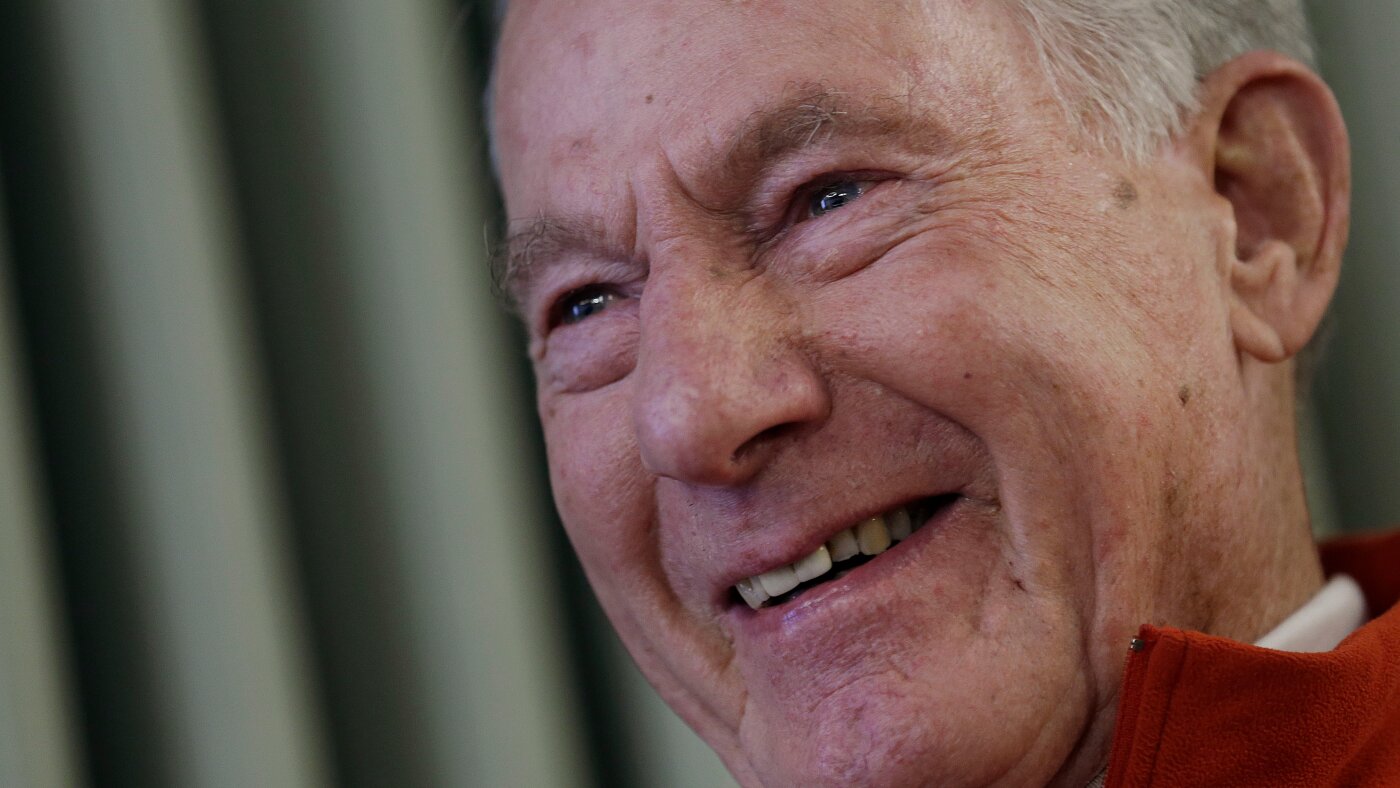
Jim Whittaker, the first American to summit Mount Everest, dies at 97

Video: Military Families Bear the Burden of War, Again

Fox News Poll: Record number say taxes are too high; government spending seen as wasteful
-

 Atlanta, GA4 days ago
1 teenage girl killed, another injured in shooting at Piedmont Park, police say
-

 Culture1 week ago
Do You Know Where These Famous Authors Are Buried?
-

 Movie Reviews1 week ago
Vaazha 2 first half review: Hashir anchors a lively, chaos-filled teen tale
-

 Georgia2 days ago
Georgia House Special Runoff Election 2026 Live Results
-

 Education1 week ago
Video: We Put Dyson’s $600 Vacuum to the Test
-

 Pennsylvania2 days ago
Parents charged after toddler injured by wolf at Pennsylvania zoo
-
 Milwaukee, WI3 days ago
Potawatomi Casino Hotel evacuated after fire breaks out in rooftop HVAC system
-
 Entertainment1 week ago
Inside Ye’s first comeback show at SoFi Stadium