Milwaukee, WI
Milwaukee leaders take action to address food desert crisis on city’s north side


A Milwaukee Common Council committee, this week, supported legislative action aimed at addressing the city’s food desert crisis on the city’s north side.At the April 8 Steering and Rules Committee meeting, leaders discussed at length the growing frustration with sudden closures of grocery stores and the minimal notice they said residents received before the businesses shut down.District 1 Alderwoman Andrea Pratt referenced the sudden January closure by owners of the Aldi near North Sherman Boulevard and West Custer Avenue.”They left me a voicemail on January 9 to tell me they were closing on January 11, which means that all those people in that neighborhood were left without a grocery store in two days. They found out on the news,” she said.The committee approved adopting a city ordinance to require licensed food establishments to provide the city written notice of their intent to close a business at least 60 days before the planned closure.The measure will go up for a vote by the full council.”They are there, not only to conduct business, but are very much a part of our neighborhoods and very much a part of our community; they have a responsibility, and they have to be accountable,” Pratt said of food businesses.The planned opening of a grocery store to replace the now-departed Sentry Foods at 64th and Silver Spring Drive in Ald. Mark Chambers Jr.’s district hit a snag.”The Sentry is going to be re-imaged and repurposed into a grocery called One City Supermarket that will be opening up soon, this month,” he said, “There are still some kinks that are coming out as far as accepting SNAP and things for the federal government, so that’s what’s holding up the grand opening on that one.A sign posted on the door said the grand opening was scheduled for April 26. It is unclear if the issue Chambers revealed would push the date.Chambers supported the 60-day notice ordinance along with the resolution to declare food apartheid a public health emergency in the city. A 2023 article published by Jo Walker for the University of Michigan School for Environment and Sustainability cited Karen Washington, a food justice advocate, for coining the term as drawing attention. Karen Washington, food justice advocate, organizer, and author, first coined the term food apartheid to draw attention to the “root causes of inequity in our food system based on race, class, and geography.” The article went on to say Washington emphasized “healthy, fresh food is accessible in wealthy neighborhoods while unhealthy food abounds in poor neighborhoods.””This is necessary because we, as alders on the Northside are severely impacted compared to our counterparts on the south side,” Chambers, who represents District 1 said.”You shouldn’t wake up in a food desert,” Ald. Pratt added.
A Milwaukee Common Council committee, this week, supported legislative action aimed at addressing the city’s food desert crisis on the city’s north side.
At the April 8 Steering and Rules Committee meeting, leaders discussed at length the growing frustration with sudden closures of grocery stores and the minimal notice they said residents received before the businesses shut down.
District 1 Alderwoman Andrea Pratt referenced the sudden January closure by owners of the Aldi near North Sherman Boulevard and West Custer Avenue.
“They left me a voicemail on January 9 to tell me they were closing on January 11, which means that all those people in that neighborhood were left without a grocery store in two days. They found out on the news,” she said.
The committee approved adopting a city ordinance to require licensed food establishments to provide the city written notice of their intent to close a business at least 60 days before the planned closure.
The measure will go up for a vote by the full council.
“They are there, not only to conduct business, but are very much a part of our neighborhoods and very much a part of our community; they have a responsibility, and they have to be accountable,” Pratt said of food businesses.
The planned opening of a grocery store to replace the now-departed Sentry Foods at 64th and Silver Spring Drive in Ald. Mark Chambers Jr.’s district hit a snag.
“The Sentry is going to be re-imaged and repurposed into a grocery called One City Supermarket that will be opening up soon, this month,” he said, “There are still some kinks that are coming out as far as accepting SNAP and things for the federal government, so that’s what’s holding up the grand opening on that one.
A sign posted on the door said the grand opening was scheduled for April 26. It is unclear if the issue Chambers revealed would push the date.
Chambers supported the 60-day notice ordinance along with the resolution to declare food apartheid a public health emergency in the city.
A 2023 article published by Jo Walker for the University of Michigan School for Environment and Sustainability cited Karen Washington, a food justice advocate, for coining the term as drawing attention.
Karen Washington, food justice advocate, organizer, and author, first coined the term food apartheid to draw attention to the “root causes of inequity in our food system based on race, class, and geography.” The article went on to say Washington emphasized “healthy, fresh food is accessible in wealthy neighborhoods while unhealthy food abounds in poor neighborhoods.”
“This [resolution] is necessary because we, as alders on the Northside [of Milwaukee] are severely impacted compared to our counterparts on the south side,” Chambers, who represents District 1 said.
“You shouldn’t wake up in a food desert,” Ald. Pratt added.



MILWAUKEE, Wis. – Several Milwaukee leaders are condemning recent Immigrations and Customs Enforcement activity in the city, though questions remain whether actions meant to limit the agency within city limits can be enforced.
The group led by U.S. Congresswoman Gwen Moore expressed anger at the nature of the at least 57 confirmed arrests made by ICE agents across Wisconsin during “targeted operations” that began in late June.
“They’re being kidnapped. They’re being disappeared. They’re being rushed through a judicial process without due process because they don’t have any money. And we’re here to decry that,” said Moore during a press conference July 9.
Back in April, Milwaukee Common Council members unanimously passed one of the key pieces of their “ICE Out MKE” package: an ordinance that prohibited ICE agents from wearing masks while working in the city. But the Department of Homeland Security has indicated they will not adhere to the ordinance, with representatives asserting the US Constitution’s Supremacy Clause allows for federal laws to supersede any local ordinance.
“State and local sanctuary politicians attempting to ban our federal law enforcement from wearing masks is despicable and a flagrant attempt to endanger our officers,” said an ICE spokesperson in a statement to WTMJ. “To be crystal clear: we will not abide by unconstitutional bans. The Supremacy Clause makes it clear that state and local sanctuary politicians do not control federal law enforcement.”
During the recent arrests, ICE agents were spotted by groups like Voces de la Frontera wearing masks despite the ordinance. Agents also used the Milwaukee Police Department District 2 parking lot for staging purposes, which is against another “ICE Out” city ordinance. A statement from MPD said they were not told in advance that ICE intended to use the parking lot, and then asked them to leave.
No citations have been written by Milwaukee Police against any agents who have violated the mask ban, with the department citing the need for legal clarity from City Attorney Evan Goyke.
“We’re waiting to see what the city attorney’s advice will be on that,” said Milwaukee Mayor Cavalier Johnson July 9 when asked by WTMJ if any of the “ICE Out” package is enforceable.
ICE says those arrested will remain in custody pending removal proceedings.
TOP STORIES FROM THE WTMJ NEWSROOM:

Milwaukee Police Department (MPD)
MILWAUKEE – A shooting in Milwaukee on Wednesday, July 8 left one person wounded.
11th and Locust
What we know:
According to the Milwaukee Police Department, a 23-year-old was shot around 6:30 p.m. near 11th and Locust.
The victim arrived at the hospital for treatment.
The circumstances leading up to the shooting are under investigation.
FREE DOWNLOAD: Get breaking news alerts in the FOX LOCAL Mobile app for iOS or Android
MPD tips
What you can do:
Milwaukee police are seeking information to identify a suspect in connection with this incident.
Anyone with information is asked to contact Milwaukee police at 414-935-7360 or to remain anonymous, contact Crime Stoppers at 414-224-TIPS or P3 Tips.
The Source: The information in this post was provided by the Milwaukee Police Department.

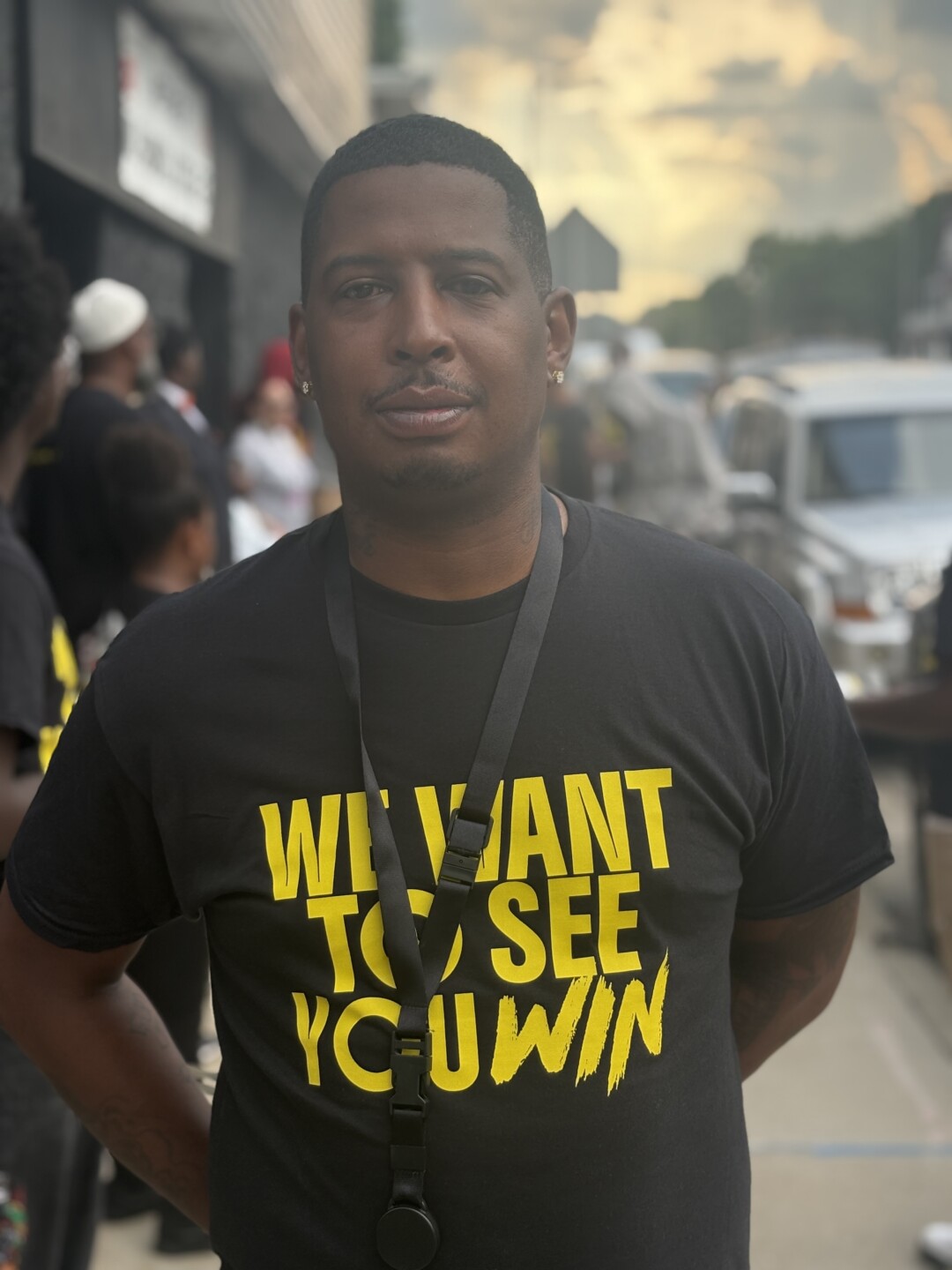
Milwaukee community members gathered at pop-up events across the northwest side Wednesday as part of “Peace on Every Block,” a week of activities aimed at building community, mentorship and sharing resources for violence prevention.
The week is organized by Advance Peace Milwaukee, Milwaukee Community Cross Roads and Milwaukee County Department of Health and Human Services.
“We want to see everybody win, and that’s the whole theme about it, about healing, coming together, stopping the violence,” Desilynn Smith of Uniting Garden Homes said.
Lorenzo Davis of Advance Peace said the northwest side was a deliberate focus for the effort.
“Because this is where the gun violence is happening, and we’re trying to end the gun violence in the city of Milwaukee. We really want to do what’s best for Milwaukee,” Davis said.
The Milwaukee Police Department reported a 30 percent drop in homicides during the first half of 2026 compared to the same period last year. But community members say that progress doesn’t always reflect what people are experiencing on the ground.
Watch: ‘Peace on Every Block’ brings Milwaukee community together to fight gun violence
‘Peace on Every Block’ brings Milwaukee community together to fight gun violence
“The data doesn’t lie, that’s true, but when it’s like every day we’re hearing about a shooting, or we’re so connected to it, and so many people connected to it, it just doesn’t appear that way,” Smith said.
The events come as Milwaukee has seen several violent deaths in recent days. 42-year-old Kristy Syed was found shot to death on Milwaukee’s south side.
The Medical Examiner’s Office also identified 19-year-old Savannah Lynn, who was killed after gunfire broke out following a fight on the Fourth of July.
Nine-year-old Jade Riser died after a shooting that happened near East Burleigh Street last Thursday.
Smith said healing is central to any lasting change.
“If we don’t heal, we can’t stop anything, because violence is actually the secondary emotion that is really driven off a lot of pain,” Smith said.
Davis said the young people in these neighborhoods are ready for something better.
“They want to see a better inside Milwaukee. They want to see a better chance for Milwaukee, and they want to do something better for themselves. So, these kids out here, we promote peace with them, and we’re going to back them, and we want to see them win,” Davis said.
Let’s talk:
Hey there! At TMJ4 News, we’re all about listening to our audience and tackling the stuff that really matters to you. Got a story idea, tip, or just want to chat about this piece? Hit us up using the form below. For more ways to get in touch, head over to tmj4.com/tips.
It’s about time to watch on your time. Stream local news and weather 24/7 by searching for “TMJ4” on your device.
Available for download on Roku, Apple TV, Amazon Fire TV, and more.
Report a typo or error // Submit a news tip
-

 Health10 seconds ago
Parasitic infection causing ‘explosive’ stomach illness exceeds 1,000 cases in northern state
-

 Sports3 minutes ago
London descends into disorder as Morocco fans flood streets after World Cup elimination by France
-

 Technology8 minutes ago
Google turns old phones into cloud servers
-
 Business15 minutes ago
Waymo is starting robotaxi service in San Diego
-
 Entertainment18 minutes ago
‘Children of Blood and Bone’ author won’t see film after feud with star Amandla Stenberg
-
 Lifestyle23 minutes ago
After her son’s death, she found a new purpose. ‘He’s whispering: Mom, this is your path’
-
 Politics30 minutes ago
Iran ceasefire is ‘over,’ Trump says, and orders additional strikes
-
 Science33 minutes ago
Diarrhea-causing cyclosporiasis exceeds 1,000 cases in U.S. What Californians should know

