World
El Salvador's Bukele, an anti-gang hardliner, takes reelection bid abroad


- Right-wing President Nayib Bukele of El Salvador, currently on leave from office, has taken his controversial re-election campaign beyond Salvadoran borders in a bid to shore up global support.
- Bukele took to X, formerly Twitter, to tout recent discussions with other insurgent, ideologically-aligned global counterparts, including libertarian, anti-establishment Argentine President Javier Milei.
- Bukele’s decision to seek reelection raises serious constitutional concerns, as El Salvador generally only allows presidents to serve one term.
El Salvador’s Nayib Bukele took his presidential reelection campaign beyond his tiny country’s borders this week to capitalize on his rising profile across Latin America, and he affirmed that he doesn’t aspire to indefinite reelection.
During a two-hour forum late Wednesday on the platform X, Bukele accused foreign critics of his controversial policies — including the Inter-American Commission on Human Rights and international institutions like it — of trying to keep El Salvador and other developing nations down.
Bukele was granted a six-month leave from the presidency starting in December to run for reelection — despite a constitutional ban on reelection. Congress approved the president’s selection of his private secretary to be the country’s interim leader.
SALVADORAN PRESIDENT BUKELE FILES FOR RE-ELECTION, RAISING CONSTITUTIONAL CONCERNS
The Supreme Court, stacked with justices selected by Bukele’s allies in Congress, ruled in 2021 that Bukele could seek a second five-year term in the Feb. 4 election.
Asked Wednesday if he would seek to change the constitution to allow his indefinite reelection, Bukele said he would not.
In April 2023, the commission called on El Salvador to lift the state of emergency instituted in March 2022 that allowed Bukele’s administration to step up its fight against the country’s powerful gangs. The state of emergency suspends some fundamental rights like police having to inform people of the reason for their arrest or give them access to an attorney.
Some 74,000 people have been arrested under Bukele’s war on gangs. Judges later freed more than 7,000 of them.
Salvadoran President Nayib Bukele greets supporters in San Salvador, El Salvador, Friday, Oct. 27, 2023. (AP Photo/Salvador Melendez, File)
Human rights groups in El Salvador and abroad have criticized Bukele for the lack of due process and other abuses. But the resulting drop in homicides has cemented support for Bukele among a majority of Salvadorans.
Bukele has declared El Salvador the safest country in Latin America, just a few years after it was listed as one of the world’s deadliest. Many people have expressed a willingness to overlook the erosion of checks and balances in exchange for safe neighborhoods.
His exchanges with people from a host of Latin American countries reflected how his success has resonated beyond El Salvador’s borders, even in the face of sometimes withering criticism from the United States and Europe.
His pushback against critics Wednesday echoed his 2023 speech before the United Nations General Assembly, in which he said that if El Salvador had listened to his critics it would return to being the world’s murder capital.
“Today, I come to tell you that that debate is over,” Bukele said at the U.N. “The decisions we took were correct. We are no longer the world death capital and we achieved it in record time. Today we are a model of security and no one can doubt it. There are the results. They are irrefutable.”
Bukele enjoys sky-high rates of approval in El Salvador.
He boosted his country’s international image hosting events like the Central American and Caribbean Games in July and the Miss Universe competition in November.
He has responded brashly to his critics, accusing them of defending gangsters. His success has spurred a host of political aspirants in other Latin American countries from Argentina to Guatemala who promise to emulate his heavy-handed tactics.
On Wednesday, Bukele said that he had spoken with one such foreign politician in a country where the people were fed up with the traditional political parties: Argentina’s newly elected Javier Milei, the self-declared “anarcho-capitalist” who raced to victory campaigning against what he called Argentina’s political caste.
In a two-hour conversation, Bukele said, he told Milei that he would have to confront a system that did not agree with him.
“I told him that I wished him luck, we wish him the best and hope that he can overcome those obstacles, the obstacle of the reality, as well as the obstacle of the system that is going to try to block him and that isn’t going to let him make the changes that he wants to make,” Bukele said.



World
Jonathan Majors Fell Through a Window on Daily Wire Action Movie Set; Producers Downplay the Accident Amid Crew Strike

Jonathan Majors‘ new action movie, backed by Ben Shapiro’s The Daily Wire and Dallas Sonnier‘s Bonfire Legend, is facing scrutiny following an on-set accident and a crew strike.
On Friday, Deadline obtained footage of Majors and his co-star, JC Kilcoyne, accidentally falling through a window while filming a scene. In the clip, the two actors stumble backwards into the glass before falling through and out of the frame. As crew members rush in to check whether they’re okay, two voices can be heard affirming that they’re “good.” A voice that appears to be Majors asks if the production was rolling on the action. “Did we shoot it?” the man asks. “Use it.”
Sources told Deadline that the accident occurred “after the window was replaced with an unsecured sheet of tempered glass to be purposefully shattered in a later stunt that did not involve any actors,” and that the actors, and the pane of glass, fell about six feet to the ground. The same sources revealed that Kilcoyne required stitches in his hands.
Kilcoyne’s reps tell Variety that the actor is “doing well and was taken care of immediately by production.” Kilcoyne is wrapped filming on the movie, but his team notes that he “did not feel unsafe on set and continued to have a positive experience working on the project.”
Representatives for Majors have not returned requests for comment. In addition to starring in the film, Majors is an executive producer on the movie under his Tall Street Productions banner.
“The actors’ fall was shorter than the failed movie careers of the now-union reps,” Sonnier told Variety, responding to a request for comment about the accident, as well as the production’s negotiations with the crew who’ve walked off the South Carolina set.
On March 26, IATSE called a strike against the production after crew members walked off the job, which is shooting under the working title “Knuckle,” over a series of labor concerns. Deadline’s reporting indicates that the on-set accident was many crew members’ final straw with the indie production.
“The producers are actively looking for replacement crew,” IATSE shared in a social media post. “All IATSE members are advised not to cross the picket line.”
Despite the walkout, filming is said to continue in some capacity. Variety has reached out to the union for additional comment on the strike’s status.
The film is written and directed by Kyle Rankin, who reunites with the Daily Wire and Bonfire Legend after the 2020 actioner “Run Hide Fight.” The film, which starred Isabel May and Thomas Jane, premiered at the Venice Film Festival. Details about the untitled action movie are largely being kept under wraps, but an early logline hinted toward the plot: “When threats strike the heart of the homeland, American warriors rise with unbreakable grit and unrelenting firepower to defend what makes this country worth fighting for.”
Majors stars in the project after his skyrocketing career — with standout roles in “Creed III,” “Lovecraft Country,” Marvel’s “Ant-Man and the Wasp: Quantumania” and the “Loki” series — stalled following a 2023 domestic assault conviction. In the wake of the controversy, the actor was fired from the Marvel Cinematic Universe and lost major parts in movies like a pseudo-biopic in which he’d portray basketball legend Dennis Rodman.
In recent months, Majors has staged his comeback, returning to theaters with the tense bodybuilding drama “Magazine Dreams,” which had received rave reviews in its Sundance debut. He is also set to appear in Martin Villeneuve’s thriller “Merciless.”
World
UK prosecutors charge 3, including dual Pakistani citizen, in arson attack on Jewish ambulances in London

NEWYou can now listen to Fox News articles!
British prosecutors charged three suspects — ages 17, 19 and 20 — in an alleged arson attack targeting Jewish community ambulances in north London.
The March 23 incident unfolded at around 1:45 a.m. in the Golders Green neighborhood, where four ambulances operated by a volunteer emergency service serving the Jewish community were deliberately set ablaze in a synagogue parking lot.
Hamza Iqbal, 20, Rehan Khan, 19, and a 17-year-old boy are accused of arson with intent to damage property while recklessly endangering life, according to the Metropolitan Police.
Officials said two of the suspects are British citizens, while one holds dual British and Pakistani citizenship.
GUILTY VERDICTS IN ISIS PLOT POLICE SAY COULD HAVE BEEN ‘THE DEADLIEST TERRORIST ATTACK IN UK HISTORY’
Members of the Jewish community view an alleged antisemitic arson attack in the Golders Green neighborhood of north London March 24, 2026. (Henry Nicholls/AFP)
All three were arrested Wednesday at separate locations across London.
They did not enter pleas and remained in custody after a roughly 45-minute hearing Saturday afternoon at Westminster Magistrates’ Court, according to The Standard.
Prosecutors said a fourth suspect was also arrested and taken into custody at the courthouse where the three charged men were appearing, according to Reuters.
UK COUNTERTERRORISM POLICE PROBE ANTISEMITIC ARSON ATTACK AS IRAN-LINKED GROUP CLAIMS RESPONSIBILITY
Firefighters tackle a blaze at Highfield Road in the Golders Green neighborhood of London after an apparent arson attack on four ambulances belonging to the Jewish Community Ambulance Service. (PA/PA Images via Getty Images)
U.K. Prime Minister Keir Starmer previously condemned the attack as a “horrifying” antisemitic act.
“An attack on our Jewish community is an attack on us all. We will fight the poison that is antisemitism,” Starmer wrote on X March 23.
A report from the SITE Intelligence Group says an Iran-backed network calling itself the Islamic Movement of the People of the Right Hand has claimed responsibility, according to Reuters.
UK ARRESTS 2 OVER ‘ANTISEMITIC ARSON ATTACK’ AS POLICE INVESTIGATE POSSIBLE IRAN LINK
Shadow Foreign Secretary Priti Patel visits the site after four ambulances belonging to Hatzola, a Jewish community organization, were set on fire in northwest London March 23, 2026. (Isabel Infantes/Reuters)
Despite the claim, officials have not formally classified the case as terrorism. However, counterterrorism police are leading the investigation, Metropolitan Police said.
CLICK HERE TO DOWNLOAD THE FOX NEWS APP
Police in the United Kingdom previously arrested two other men, ages 45 and 47, in the days after the attack. They were later released on bail, according to the Metropolitan Police.
“I want to reiterate that the support we had from the local community since this attack took place has been incredible, and we will continue to work closely with local policing colleagues to do everything we can to keep the public safe,” Commander Helen Flanagan, head of Counter Terrorism Policing London, said in a statement.
The Metropolitan Police did not immediately respond to Fox News Digital’s request for comment.
Fox News Digital’s Efrat Lachter and Greg Norman and Reuters contributed to this report.

Foreign Minister Sugiono told reporters that Indonesia wants a thorough UN investigation into the deaths of the peacekeepers.
Published On 4 Apr 2026
Indonesia has received the bodies of three United Nations peacekeepers who were killed in southern Lebanon during Israel’s invasion of the country, amid the ongoing United States-Israel war on Iran.
The coffins of the killed soldiers arrived in Indonesia on Saturday. They were carried on the shoulders of uniformed officers for a ceremony attended by President Prabowo Subianto.
list of 3 itemsend of listRecommended Stories
After the ceremony, Foreign Minister Sugiono told reporters that Indonesia wants a thorough UN investigation into the deaths of the peacekeepers who were part of the United Nations Interim Force in Lebanon (UNIFIL).
“This is a peacekeeping mission. Incidents such as this should not happen,” the minister told reporters at the airport.
“There must be a security guarantee for peacekeeping soldiers,” he added.
Last week, peacekeeper Farizal Rhomadhon, 28, was killed after a projectile exploded. A UN security source told the AFP news agency anonymously on Tuesday that fire from an Israeli tank was responsible for the attack.
A day later, two more Indonesian peacekeepers, Zulmi Aditya Iskandar, 33, and Muhammad Nur Ichwan, 26, were killed after an explosion struck a UNIFIL logistics convoy in southern Lebanon.
Iskandar’s father said he was shocked that peacekeepers were losing their lives in the conflict.
“We were really sad and regretful, because this is a UN troop, a peacekeeping troop, not deployed for war,” Iskandarudin, 60, told reporters at his house in West Java province.
The three men are expected to be laid to rest on Sunday, and the government has promised financial support for the families.
On Friday, UNIFIL announced that three peacekeepers were wounded after a blast at a UN facility near Adeisse and were taken to hospital.
The UN information centre in Jakarta said the “origin of the explosion” was unknown, but identified the injured soldiers as Indonesian.
“Repeated attacks or incidents of this kind are unacceptable,” the Indonesian foreign ministry said in a statement.
The government urged the UN Security Council “to immediately convene a meeting of troop-contributing countries to UNIFIL to conduct a review and take measures to enhance the protection of personnel serving with UNIFIL”.
The US-Israel war on Iran spread to Lebanon after Iran-aligned Hezbollah fired rockets at Israel, following the assassination of Iran’s Supreme Leader Ayatollah Ali Khamenei on the first day of the war on February 28.
Israel has bombarded the country for weeks and launched an invasion, with Israeli officials saying the mission intends to set up a security zone extending 30km (18.6 miles) from the Israeli border.

After the Minnesota surge, ICE is moving to a quieter enforcement approach

Mitch Albom: Detroit Opening Day tradition embraces the local perfectly

San Francisco man missing from Seaside motel under suspicious circumstances

Logan Farrington, Petar Musa stay hot in leading Dallas to 4-0 victory over D.C. United – WTOP News

Nu Stadium party! Inter Miami host epic home opener | MLSSoccer.com

Florida High School Football Rankings: Top 25 teams – Oct. 21

How old is Bo Nix? What to know about Oregon quarterback ahead of 2024 NFL Draft

Cleary's 21 help Le Moyne down Central Connecticut State 69-64 in OT

99th annual Pony Swim held in Virginia

Indiana Members Credit Union announced as new anchor tenant at Bottleworks District
After the Minnesota surge, ICE is moving to a quieter enforcement approach

FBI’s Patel delivers blunt warning to law enforcement attackers: ‘We’re going to put you down’

Indonesia receives bodies of peacekeepers killed in southern Lebanon
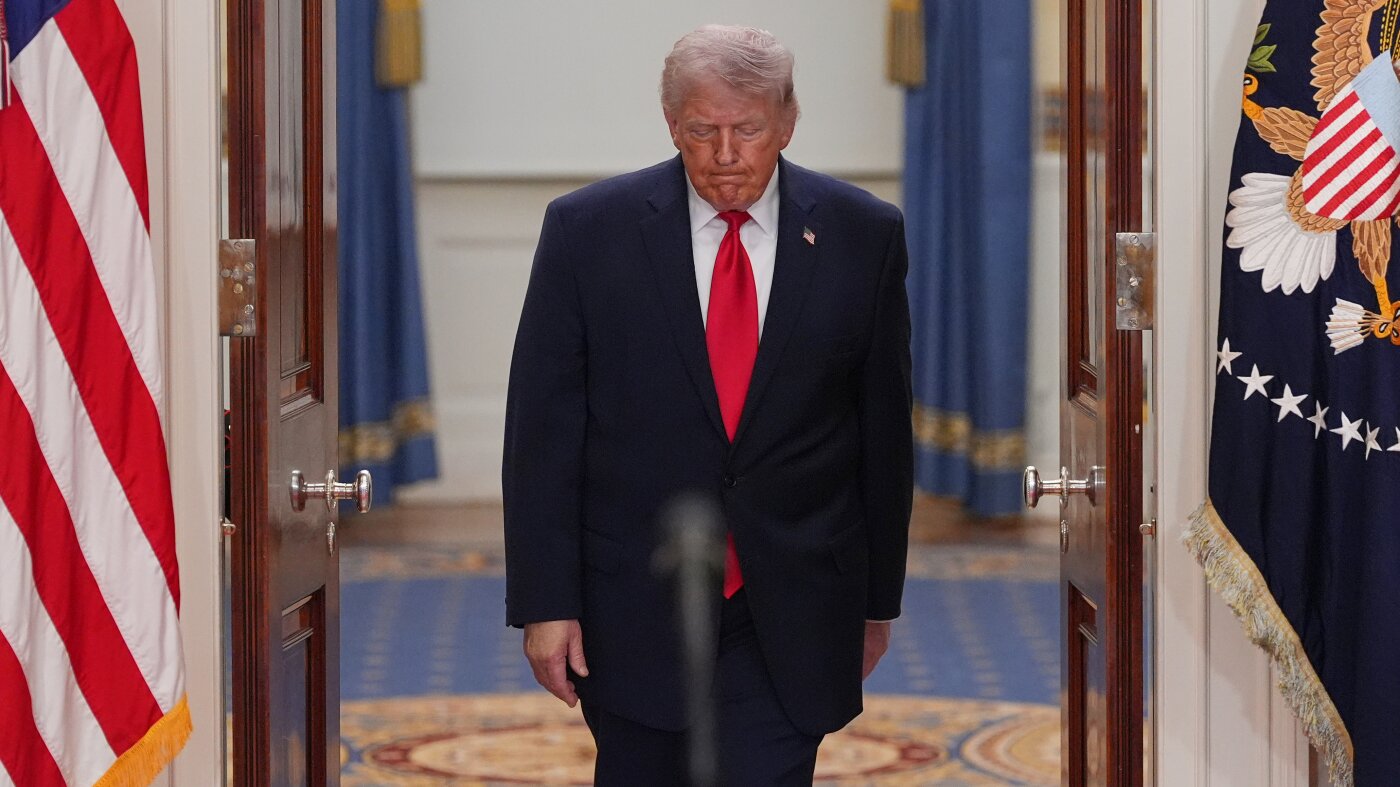
Judge halts Trump effort requiring colleges to show they don’t consider race in admissions

Trump says ‘America needs God’ in Good Friday message touting ‘resurgence of religion’
-

 South-Carolina7 days ago
South Carolina vs TCU predictions for Elite Eight game in March Madness
-

 Education1 week ago
Video: Transgender Athletes Barred From Women’s Olympic Events
-

 Miami, FL1 week ago
Jannik Sinner’s Girlfriend Laila Hasanovic Stuns in Ab-Revealing Post Amid Miami Open
-

 Minneapolis, MN1 week ago
Boy who shielded classmate during school shooting receives Medal of Honor
-

 Vermont7 days ago
Skier dies after fall at Sugarbush Resort
-

 Politics7 days ago
Trump’s Ballroom Design Has Barely Been Scrutinized
-

 Atlanta, GA7 days ago
Fetishist ‘No Kings’ protester in mask drags ‘Trump’ and ‘JD Vance’ behind her wheelchair
-
 Entertainment3 days ago
Inside Ye’s first comeback show at SoFi Stadium