World
Biden urged to outlaw antisemitic Palestinian ‘terrorist’ group banned in Germany, Israel


JERUSALEM – The Biden administration is facing new calls to sanction Samidoun: Palestinian Prisoner Solidarity Network, which has links to Iran’s regime and the U.S.-designated terrorist movement Hamas.
Germany outlawed Samidoun in November and Israel classified the Palestinian organization as a terrorist entity in 2021.
“If the U.S. is going to get serious about the pro-Hamas mobs who’ve wreaked havoc on U.S. campuses, they will have to take action to ban Samidoun and investigate their allies and supporters,” Rabbi Abraham Cooper, the associate dean of the LA-based Simon Wiesenthal Center, told Fox News Digital.
Samidoun has chapters in Albuquerque, New Mexico, and Iran, as well as in numerous European states: Sweden, France and Spain.
Nancy Faeser, German federal minister of the interior, said in a November statement, “Today, I banned all activity in Germany by Hamas, a terrorist organization whose aim is to destroy the State of Israel. Samidoun is an international network which disseminates anti-Israel and anti-Jewish propaganda while claiming to promote solidarity with prisoners in different countries. Samidoun also supported and glorified various foreign terrorist organizations, including Hamas… Banning the activity of Hamas and Samidoun, and dissolving Samidoun Deutschland, will put a stop to such demonstrations of hate in Germany.”
NEW BATCH OF ‘MORALLY BANKRUPT’ COLLEGE ADMINISTRATORS TO BE GRILLED OVER CAMPUS ANTISEMITISM BY HOUSE
Samidoun protesters gather in Cologne, Germany. (Ying Tang/NurPhoto via Getty Images)
She added, “With its spontaneous ‘celebrations’ here in Germany following the horrific terrorist attacks by Hamas in Israel, Samidoun revealed its antisemitism and absolute lack of regard for human life in an especially abhorrent way.”
When approached about the German and Israeli bans of Samidoun, a U.S. State Department spokesperson told Fox News Digital, “We are aware that Germany banned Samidoun: Palestinian Prisoner Solidarity Network. We do not comment on deliberations, or potential deliberations, related to the U.S. terrorist designation process.”
The State Department spokesman added, “Unlike many of our foreign partners, the United States, under the First Amendment, cannot designate organizations based solely on hateful speech. As a matter of law, in order to designate any group as a Foreign Terrorist Organization the Secretary of State must determine that it is a foreign organization that engages in terrorist activity that threatens the security of United States nationals or our national security.”
Terrorism experts have, however, noted that Samidoun’s links to U.S.-designated terrorist organizations such as Hamas and the Popular Front for the Liberation of Palestine (PFLP) meet the criteria for a ban.
‘AN ACTUAL REVOLUTION’: COMMUNIST PARTY ORGANIZER REVEALS TRUE MISSION AT UCLA ANTI-ISRAEL RALLY
German Minister of the Interior Nancy Faeser gives a talk after a federal cabinet meeting. (Sebastian Gollnow/picture alliance via Getty Images)
The role of Samidoun during the pro-Hamas campus protests has drawn greater scrutiny from experts.
On May 16, Steven Stalinsky, the counterterrorism expert and executive director of the Middle East Media Research Institute (MEMRI), wrote on the Fox News op-ed page, “Also lending its support to U.S. students was a coalition of jihadi Gaza student organizations representing Hamas, Palestinian Islamic Jihad, PFLP, and others. Its statement of ‘solidarity’ with the ‘Student Intifada in the United States,’ translated into English and published by the PFLP affiliate Samidoun on April 25, saluted the American students who are ‘rising up to put an end to the Zionist-U.S. genocide’ and lauded their ‘work to transform their universities into ‘Popular Universities for Gaza.’”
MEMRI also posted a video of a speech by the Canadian-based Charlotte Kates, the international coordinator of Samidoun, who glorified Hamas’ mass murder of roughly 1,200 people on October in southern Israel. Hamas murdered over 30 Americans on Oct. 7 and kidnapped more than 250 people.
ELITE UNIVERSITY JOURNALISM PROFESSOR EXPOSED FOR MONTHSLONG CAMPAIGN JUSTIFYING HAMAS
Anti-Israel agitators protest at the University of Toronto in Ontario, Canada. (Mert Alper Dervis/Anadolu via Getty Images)
Kates said on April 26 in Vancouver, British Columbia: “We demand a free Palestine from the River to the Sea. And we stand with the Palestinian resistance and their heroic and brave actions on October 7. As they said, long live October 7th! And we say today: long live October 7th!”
The Canadian authorities arrested Kates for her pro-Hamas terrorism speech. On the other side of the Atlantic, Herbert Reul, the interior minister of the German state of North Rhine-Westphalia, dismantled and outlawed on May 16 the NGO Palestine Solidarity Duisburg because it provides support to Hamas and Samidoun.
Reul said, “This ban comes at the right time and sends the right signal. In many cases, solidarity with Palestine hides nothing other than hatred of Jews – as is the case with the organization that was banned today. We will use all legal options to combat antisemitism and ideological support for terrorism. Today, the state has shown a clear stance against extremism.”
Yet, the ban of Samidoun and its activities in Germany has not been a complete success. Dr. Rafael Korenzecher, the publisher of the German-Jewish newspaper Jewish Review (Jüdische Rundschau in German), told Fox News Digital, “The half-hearted bans on Samidoun and Hamas, which still leave too much leeway for anti-Jewish activities, come far too late and are purely alibi actions by the responsible political actors to divert attention from the fundamental.”
According to the recently released domestic intelligence report from North Rhine-Westphalia, the number of Hamas operatives rose from 150 in 2022 to 175 in 2023. In 2003, Germany along with the EU, formally sanctioned Hamas as a terrorist entity. Germany, however, did not strictly enforce the ban and it became a hotbed of Hamas membership, recruitment and fundraising.
CAMPUS ‘OCCUPATION GUIDE’ TAPS INTO AGITATORS’ ‘RAGE,’ INSTRUCTS HOW TO ‘ESCALATE’ CHAOS
German police confront anti-Israel protesters in front of Humboldt University in Berlin. (Michele Tantussi/Getty Images)
The German state of Baden-Württemberg has taken a lax approach to Hamas. The state’s Green Party governor, Winfried Kretschmann, has refused to ban Palestine Committee Stuttgart – an NGO that has raised funds for Samidoun. The capital city of Baden-Württemberg, Stuttgart, allows the contact information of the Palestine Committee Stuttgart to appear on the municipal webpage.
Professor Michael Wolffsohn, a prominent German-Jewish historian and commentator on modern antisemitism and Islamism, told Fox News Digital that the “structural problem” in Germany can be grounded in former German Chancellor “Angela Merkel’s migration policy. Not just in the years 2015-16. Hundreds of thousands of times, Islamic antisemites were allowed into the country unchecked. Only attention was paid to right-wing extremism, which was also certainly dangerous, and left-wing extremism was downplayed as partners of the Islamists.”
Wolffsohn warned, “It’s not just about this or that federal government. You also have to look at the state governments and municipalities,” while noting that also includes the “the police and judicial authorities.”
The future for Jews in Germany appears bleak based on the massive outbreaks of Jew-hatred since Oct. 7. Just last week, nearly 4,000 German Muslims, leftists and ordinary Germans protested against Israel in front of the main synagogue in Munich, Bavaria.
“Jewish life in Germany is becoming increasingly impossible,” Korenzecher said. “Illegal migration from predominantly Islamic countries, where hatred of Jews and Israel is partly propagated by the state and is virtually part of the raison d’être there, is an existential threat to Jewish life.”
Fox News Digital approached Samidoun for a comment.


Tehran holds back from talks to cement ceasefire due to ongoing Israeli attacks on southern Lebanon.
Published On 19 Jun 2026
Planned talks in Switzerland between the United States and Iran to discuss the technical terms of their ceasefire deal have been postponed.
The Swiss Foreign Ministry confirmed early on Friday that the talks, which were scheduled to take place in Burgenstock, would now not go ahead.
list of 4 itemsend of listRecommended Stories
Reports suggest that Iran has delayed sending its delegation to discuss the technical issues linked to the ceasefire deal – digitally signed by the two countries on Wednesday – due to Israel’s ongoing military campaign in Lebanon.
Israeli strikes overnight and into Friday have reportedly killed at least 16 people in southern Lebanon, with Iran-linked Hezbollah reporting intense fighting.
Talks postponed
A ceremony followed by talks was expected to be held at the Burgenstock Resort in Stansstad, near Lucerne in central Switzerland.
It is owned by Katara Hospitality, part of Qatar’s sovereign wealth fund, which helped mediate peace in the conflict.
On Friday, in a message to media outlet AFP, the Swiss foreign ministry said: “The planned talks between the US, Iran, Qatar and Pakistan have been postponed”.
“Switzerland remains ready to facilitate these talks. The relevant preparatory work at Burgenstock is continuing,” it added, without providing a new date for the talks.
The announcement followed a report from media outlet Al-Mayadeen that Iran was delaying sending its delegation to Switzerland over Israel’s ongoing military campaign in Lebanon.
Israeli Prime Minister Benjamin Netanyahu said Thursday that Israel’s military will stay in a “security zone” of southern Lebanon as long as “Israel’s security needs require it.”
Israel and Hezbollah are not parties to the agreement, but Iran has insisted Israel must withdraw from the large swath of southern Lebanon it is occupying.
Logistics have never been ‘simple or predictable’
The US push to quickly begin high-stakes talks with Iran hit a snag just two days after the signing of a 14-point memorandum of understanding with the US that sets out a framework for talks during a 60-day negotiation period.
Vice President JD Vance had been prepared to make an overnight flight to meet with his Iranian counterparts at the mountainside resort in the tiny Swiss village of Obburgen.
His staff and a small pack of journalists had even gathered at Joint Base Andrews outside Washington in anticipation of the trip.
Meanwhile, dozens of White House officials, advance staffers and more media gathered in Switzerland to prepare for Vance’s anticipated arrival.
But then, abruptly on Thursday evening, the trip was called off.
The White House issued a statement explaining Vance – who has been tapped by President Donald Trump to lead the negotiations – and his delegation were prepared for talks, but they were unable to finalise plans and the vice president would remain in Washington.
“The logistics of these negotiations have never been simple or predictable,” the statement noted.
Also on Thursday, Pakistan’s Prime Minister Shehbaz Sharif cancelled his trip to Switzerland, his spokesperson told AFP.

new video loaded: A Small Election Could Change British Politics
transcript
transcript
A Small Election Could Change British Politics
Voters in the northern English district of Makerfield cast ballots on Thursday to choose their representative in Parliament, the outcome of which could lead to Prime Minister Keir Starmer’s ouster.
-
Well, I don’t think there should be a leadership election. I think that the last government proved that parties that spend their whole time in leadership elections don’t go on to win the next general election.

By Alisa Shodiyev Kaff
June 18, 2026
World
From bear hugs to handshakes: How India lost its edge with Trump while Pakistan quietly gained ground

NEWYou can now listen to Fox News articles!
This week, President Donald Trump and Indian Prime Minister Narendra Modi came face-to-face at the G7 summit in France, their first such encounter since February 2025. Rather than his trademark bear hug, Modi greeted Trump with a smile and handshake.
Then on Wednesday, the two held a bilateral meeting. It was a friendly chat, but one that came against a backdrop of compounding tensions.
As India works at restoring its relationship with Washington, its arch-foe Pakistan has expanded its own diplomatic profile, complicating India’s campaign against its nuclear-armed rival.
COMMERCE SECRETARY HOWARD LUTNICK MAKES QUIET TRIP TO INDIA DAYS AFTER TARIFF SETBACK
President Donald Trump looks at Pakistan’s Prime Minister Shehbaz Sharif speaking following the official signing of the first phase of the Gaza ceasefire agreement between Israel and Hamas. Shariff announced his intention to nominate Trump for the Noble Peace Prize for a second time. (Evelyn Hockstein / Reuters)
For years, India built an international case against Pakistan, projecting it as an isolated or destabilizing state. This hardline stance appeared to be working, with Modi declaring to Pakistan, “India has been successful in isolating you, and we will intensify those efforts.”
But a decade later, Pakistan is rapidly emerging as a key global player in the region and beyond.
While Modi initially tried to engage Pakistan, his government’s approach eventually hardened around the mantra that “terror and talks cannot coexist.”
In Washington, India has typically been favored, with Presidents Trump, Biden, Obama and George W. Bush all making visits during their time in office.
President Donald Trump (R) shakes hands with Indian Prime Minister Narendra Modi during a bilateral meeting at the G7 Summit on June 17, 2026 in Evian-les-Bains, France. (Anna Moneymaker/Getty Images)
Modi built a rapport with Trump during his first term in office and was one of the first world leaders invited to the White House after Trump’s inauguration. But over the past year, that relationship has come under strain as Islamabad quietly clawed its way back to credibility.
“India misjudged Trump in term two, banking on once friendly relations,” Sid Dubey, a visiting professor at Bennett University in India, told Fox News Digital. “They have yet to start recovering from that.”
PRESIDENT TRUMP, INDIA’S MODI TO TACKLE TRADE, TARIFF TENSIONS AT HIGH-STAKES MEETING
U.S. President Donald Trump and Indian Prime Minister Narendra Modi wave to the crowd at Sardar Patel Stadium in Ahmedabad, India, Monday, Feb. 24, 2020. India poured on the pageantry with a joyful, colorful welcome for President Donald Trump on Monday that kicked off a whirlwind 36-hour visit meant to reaffirm U.S.-India ties while providing enviable overseas imagery for a president in a re-election year. (AP Photo/Aijaz Rahi)
The shift first became apparent in May 2025, when President Trump announced he had secured a ceasefire between nuclear-armed India and Pakistan. The fighting had come over India-administered Kashmir and was the worst in decades.
Islamabad promptly praised Trump for ending the deadly dispute and even nominated him for a Nobel Peace Prize. New Delhi, however, rejected the claim, insisting the ceasefire was the result of direct bilateral talks with Pakistan.
The response reflected India’s long-standing sensitivity to third-party involvement in what it fiercely maintains is a bilateral dispute.
In the months that followed, frictions only deepened.
FILE — In this Jan. 11, 2013 file photo, a Pakistani Ranger in black uniform and his Indian counterpart march during a flag-off ceremony, at the joint Pakistan-India border check post of Wagah near Lahore, Pakistan. (AP Photo/K.M. Chaudary, File)
President Trump hit India with some of the steepest tariffs imposed on any major economy. Meanwhile, U.S. sanctions pressure on Russian oil rattled energy import-dependent India, while disputes over H-1B visas added further strain. Analysts say Trump’s America First agenda increasingly overshadowed the friendship Modi had cultivated during Trump’s first term.
“When Trump unfortunately said the May 2025 clash ended because of him personally, that upset India a lot, and they made that known,” Dubey said. “Then the tariffs were another slap in India’s face. Meanwhile, Pakistan took advantage, leaving India at a bit of a loss. From there, relations fell further with the Iran conflict.”
India is among the countries most indirectly affected by the strategic fallout from the Iran war, facing economic pressure and mounting energy concerns.
IRAN WAR FUELS ASIA ENERGY CRUNCH AS INDIA, JAPAN, OTHERS FEEL STRAIN
Iranian Parliament Speaker Mohammad Bagher Ghalibaf meets with chief of Defence Forces of Pakistan, Field Marshal Asim Munir, in Tehran, Iran, May 23, 2026. (Iranian Parliament Speaker Office/WANA (West Asia News Agency)/Handout via Reuters)
Last week, a U.S. strike further exacerbated tensions after three Indian seafarers became collateral damage in the conflict. They were the first and only seafarers confirmed killed as part of the U.S. blockade, sparking outrage across India.
New Delhi instantly summoned Washington’s Chargé d’Affaires Jason Meeks, expressing deep concern over the renewed attacks and arguing that its nationals were becoming casualties in a war not their own.
India also warned of the broader humanitarian, economic, and energy consequences of the conflict, which are expected to linger even as an agreement has now been reached.
U.S. Vice President JD Vance, center, walks with Pakistan’s Chief of Defence Forces and Chief of Army Staff Field Marshall Asim Munir, left, and Pakistani Deputy Prime Minister and Foreign Minister Mohammad Ishaq Dar after arriving for talks with Iranian officials in Islamabad, Pakistan, Saturday, April 11, 2026. (Jacquelyn Martin/Pool via AP Photo)
All the while, Pakistan was gaining diplomatic visibility, finding itself in the unusual position of currying favor in Washington while maintaining deep ties with China, Iran and the Gulf states.
Pakistan’s prominent role in recent months highlighted how Islamabad has been more nimble in its diplomacy than India,” Council on Foreign Relations Senior Fellow Sadanand Dhume told Fox News Digital. “Additionally, Pakistan decisively outmaneuvered India’s quixotic bid to isolate Pakistan on the world stage.”
Regional dynamics have also been reshaped by the two rivals’ competing strategies. India has deepened its strategic partnership with the U.S. through alliances such as the Quad partnership with the U.S., Australia, and Japan and has expanded cooperation across South Asian states, including a burgeoning relationship with Afghanistan. Meanwhile, Pakistan’s growing regional relevance has been reflected in its strengthened ties with China, improved relations with regional partners like Bangladesh and expanded security cooperation with Gulf states.
RUBIO VISIT TO INDIA PUSHES DEEPER ENERGY TIES AS IRAN CONFLICT RATTLES GLOBAL OIL MARKETS
Additionally, Trump, who accused Pakistan of “deceit and lies” during his first term, has since repeatedly praised its leadership. In June 2025, the president invited Pakistan’s army chief Asim Munir to the White House for a high-profile lunch meeting.
Munir was the first Pakistani military chief who was not also president to be hosted by a U.S. president. He also led the war effort against India earlier that year.
In this photo released by the Inter Services Public Relations, Pakistan’s Chief of Defense Forces and Army Chief Gen. Asim Munir, center, Pakistan Naval Chief Admiral Naveed Ashraf, left, and Pakistan Air Force Chief Air Chief Marshal Zaheer Ahmed Babar attend a guard of honor ceremony at the joint military command headquarters in Rawalpindi, Pakistan, Monday, Dec. 8, 2025. (Inter Services Public Relations via AP)
Trump described Munir as his “favorite Field Marshal” and an “exceptional human being.”
Their relationship has been further reflected in trade deals and, most recently, Pakistan’s role as a principal mediator in restoring diplomacy between the U.S. and Iran.
“India tried to make Pakistan an international pariah. Instead, Pakistan has wormed its way into Trump’s good books through a combination of concrete co-operation with the U.S. and outrageous flattery of the president, leading to Trump elevating Field Marshal Asim Munir and Prime Minister Shehbaz Sharif as heroes,” Dhume said.
India, meanwhile, has maintained close ties with Israel while generally sticking to more measured messaging.
TRUMP’S FAVORITE FIELD MARSHAL: WHO IS PAKISTAN’S POWERFUL ARMY CHIEF ASIM MUNIR WITH DEEP INTEL TIES
On June 15, upon the agreement of a deal with Iran, Modi released a statement, saying, “India hopes that the implementation of this understanding will help restore peace and stability in the region and ensure the freedom of navigation and commerce.”
“Hats off to Pakistan. They worked really hard to bring this awfully disruptive war with Iran to an end,” Dubey told Fox. “India unfortunately lost out by not seeking to be a problem solver like Pakistan. It could have played its cards better as a peacemaker, given its traditionally strong relations with Tehran.”
Still, analysts caution these are rapidly evolving dynamics. There is no guarantee that Pakistan’s current moment will last, and the tide for India could still turn.
“Pakistan’s mediation role has allowed it to substantially reset its international image. It has positioned itself as a responsible international actor rather than a rogue state responsible for both nuclear proliferation and exporting Islamic terrorism. How long this lasts depends in large measure on two things: will Pakistan find a way to remain in Trump’s good books, and will it be able to change its behavior sufficiently to convince the world that it has indeed turned over a new leaf,” Dhume told Fox News Digital.
Meanwhile, India is working to regain its position and show the U.S. it is still a reliable partner.
Marco Rubio visited India last month, his first since becoming Trump’s top diplomat last year, which was widely seen as an attempt to reset ties.
Secretary of State Marco Rubio speaks as President Donald Trump looks on during a cabinet meeting in the Cabinet Room of the White House in Washington, DC, on April 30, 2025. (JIM WATSON/AFP via Getty Images)
Trump and Modi’s G7 meeting marked another significant step.
Trump praised Modi as “calm, cool and totally killer” and said he would be traveling to India “sometime in the future.” India has been pressing Trump for a visit, potentially as part of a broader meeting involving Japan and Australia.
Trump also said the United States would defend India.
CLICK HERE TO DOWNLOAD THE FOX NEWS APP
“If anybody attacks that man, we’re going to be there,” Trump said, referring to Modi. “Now, if there’s a new leader, I’m not sure about it.”
The Pakistani and Indian governments did not respond to Fox News Digital requests for comment.
-

 Sports7 minutes ago
2026 World Cup Odds: How Far Can Mexico Go After Winning Group A?
-

 Technology14 minutes ago
6 in 10 identity crimes now begin with a new account
-
 Business17 minutes ago
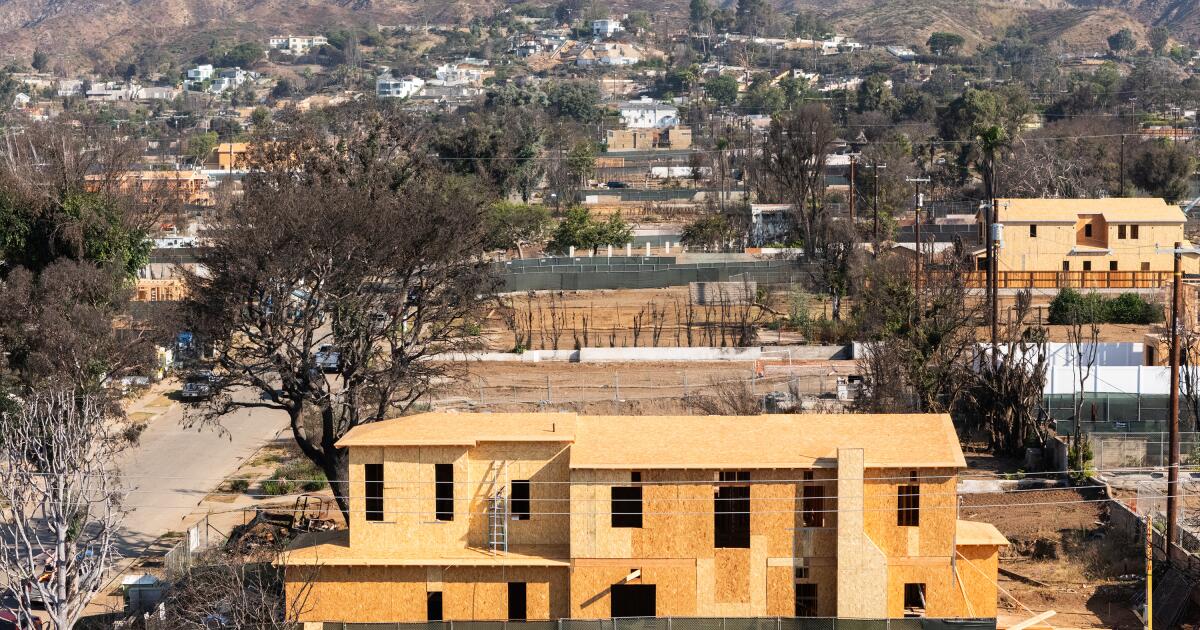
January 2025 wildfire victims seek tougher penalties against State Farm over claims handling
-
 Entertainment22 minutes ago
Review: ‘Sugar,’ with Colin Farrell as an alien private eye, gets a new and improved second season
-
 Politics32 minutes ago
Political watchdog fines Newsom for failing to report $5.5M in solicited donations on time
-
 Sports44 minutes ago
Goalkeeper Raúl Rangel’s elite play and South Korea’s mistake help Mexico advance
-

 World52 minutes ago
US-Iran talks postponed as Israel attacks Lebanon
-
 News1 hour ago
Luigi Mangione’s lawyers withdraw plans for psychiatric defense

