Wyoming
Wyoming Bear Lodge Resort reopens doors in hopes of rebuilding business


SHERIDAN COUNTY, Wyo. — In the snowy mountains of Sheridan County, Wyoming, it can be hard to believe a resort is open in the midst of the Elk Fire. However, the Bear Lodge Resort has decided to reopen their doors, in hopes of making up some of their lost business.
According to a press release by Lisa Eichhorn, the Public Information Officer for Sheridan, Burgess Junction, where Bear Lodge Resort resides, is not in the danger zone.
Mack Carmack, MTN News
Mid-October usually means one thing for many in the region.
“So, October is hunting season. So, that can be pretty busy. Unfortunately, the fire kind of coincided with the bulk of that business,” said Ian Lindsey, the manager of the Bear Lodge Resort.
Mack Carmack, MTN News

At the Bear Lodge Resort, one of their busiest times of year is early October. However, the now almost three-week Elk Fire has caused the resort to lose a huge chunk of their business.
“There’s been a little bit of activity going on, nothing like it would normally be, but enough that we want people to know if there’s a need, somebody’s here to help,” said Scott Jorgensen, one of the owners of the lodge.
Mack Carmack, MTN News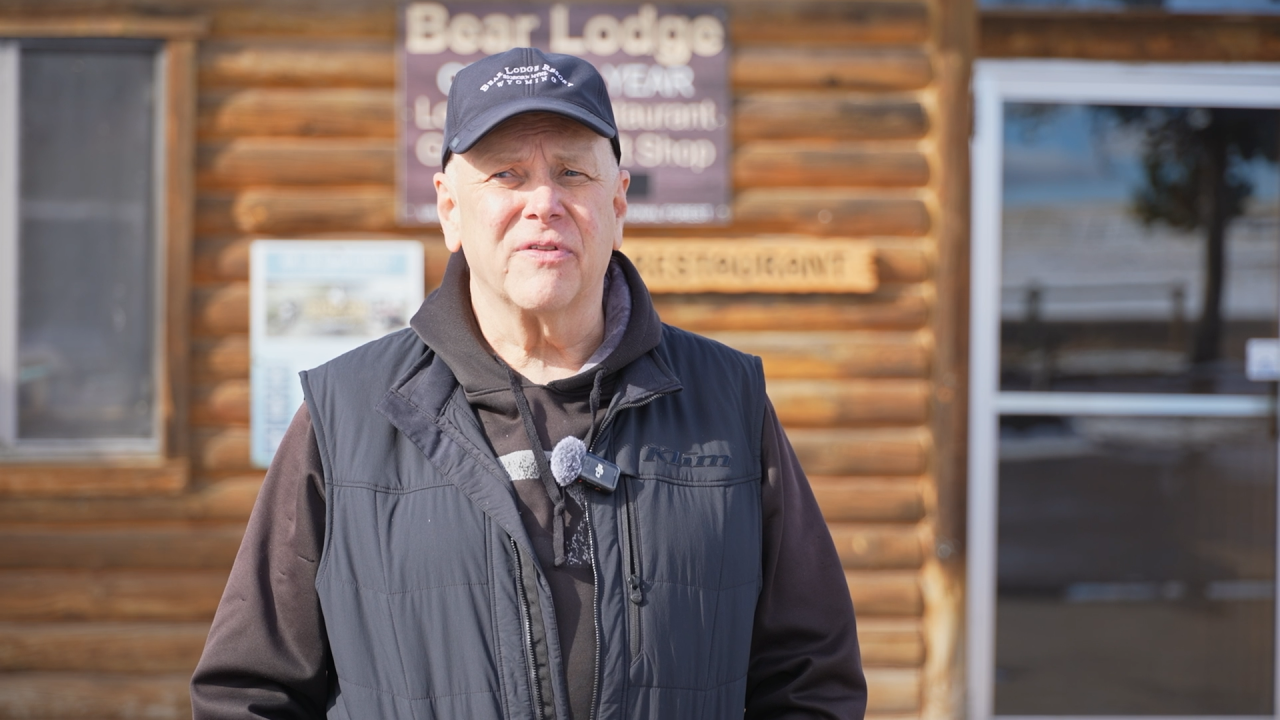
Now that the first snow of the season has fallen, the Bear Lodge Resort is able to reopen their doors in hopes of rebuilding some of their hunting business.
“Seeing nobody up here is weird,” said Brady Tracy, a hunter and nearby resident.
His brother told, Jeff, MTN, “It’s pretty sad, this parking lot should be full.”
Mack Carmack, MTN News
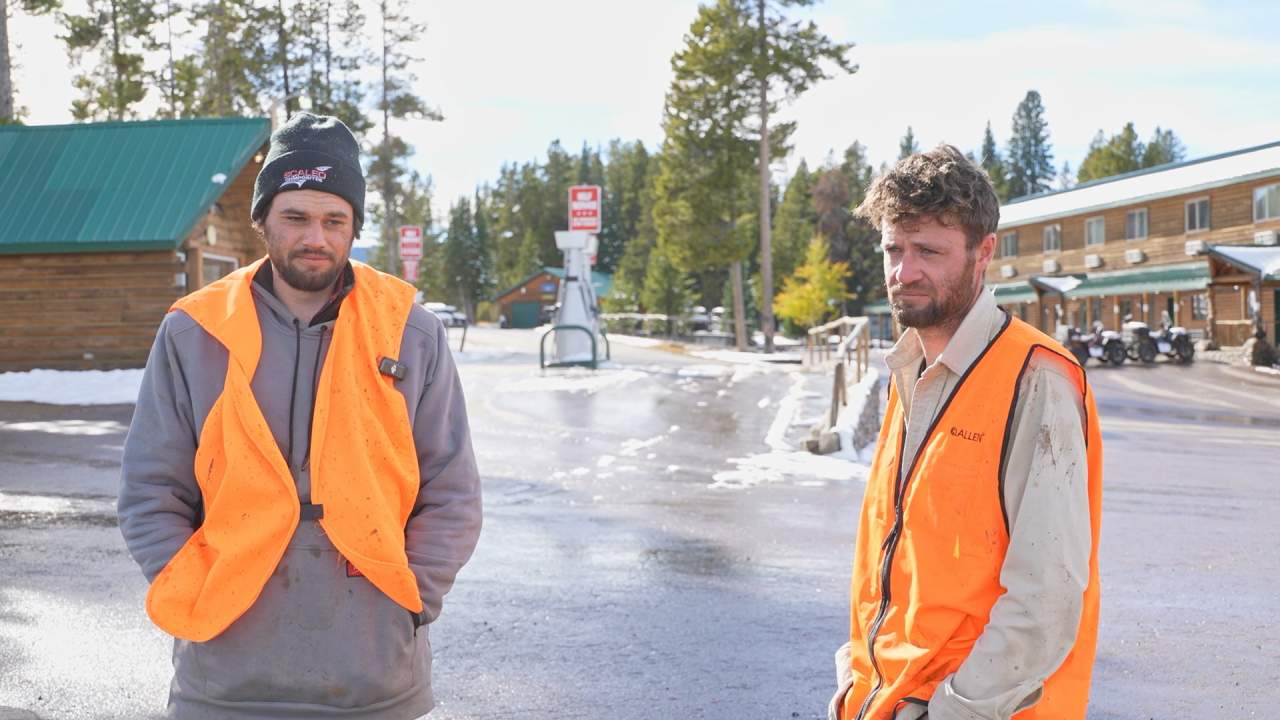
Jeff and Brady Tracy say every week during hunting season they visit the area, and were sad to see it closed most of the month.
“I feed my family by wildlife,” Jeff said.
“A lot of people don’t realize hunting is not just a sport. You’re actually bring food home,” Brady said.
Mack Carmack, MTN News
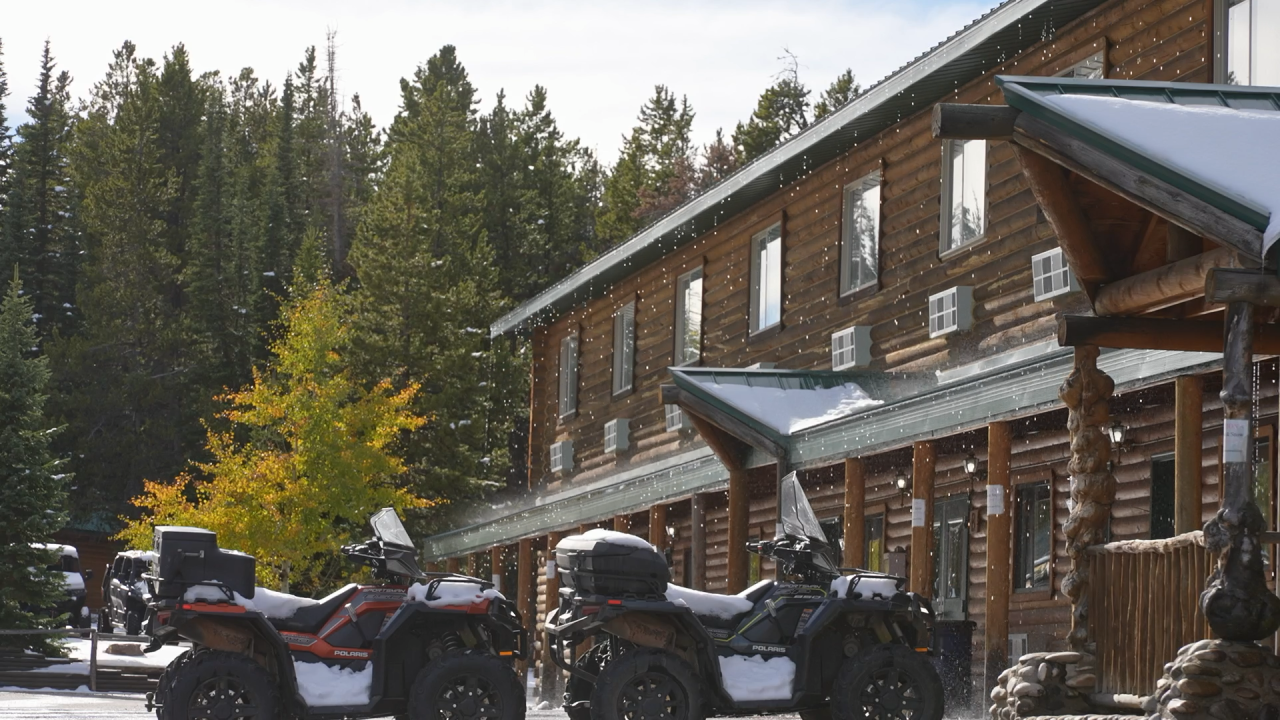
The fire hasn’t only impacted the hunters, but the employees of the resort as well.
“We actually all live here at the lodge. So that’s why the fire was particularly difficult for us, because some of our employees, their homes are actually out of state,” said Lindsey.
Saturday officially marked the soft reopening of the resort.
Jorgensen says it can be hard to predict their current business, especially since the hunting season is almost over.
“We’ve kind of done a very limited crew, soft opening, so that we could service anyone who was going to come up and check things out,” he said.
Mack Carmack, MTN News
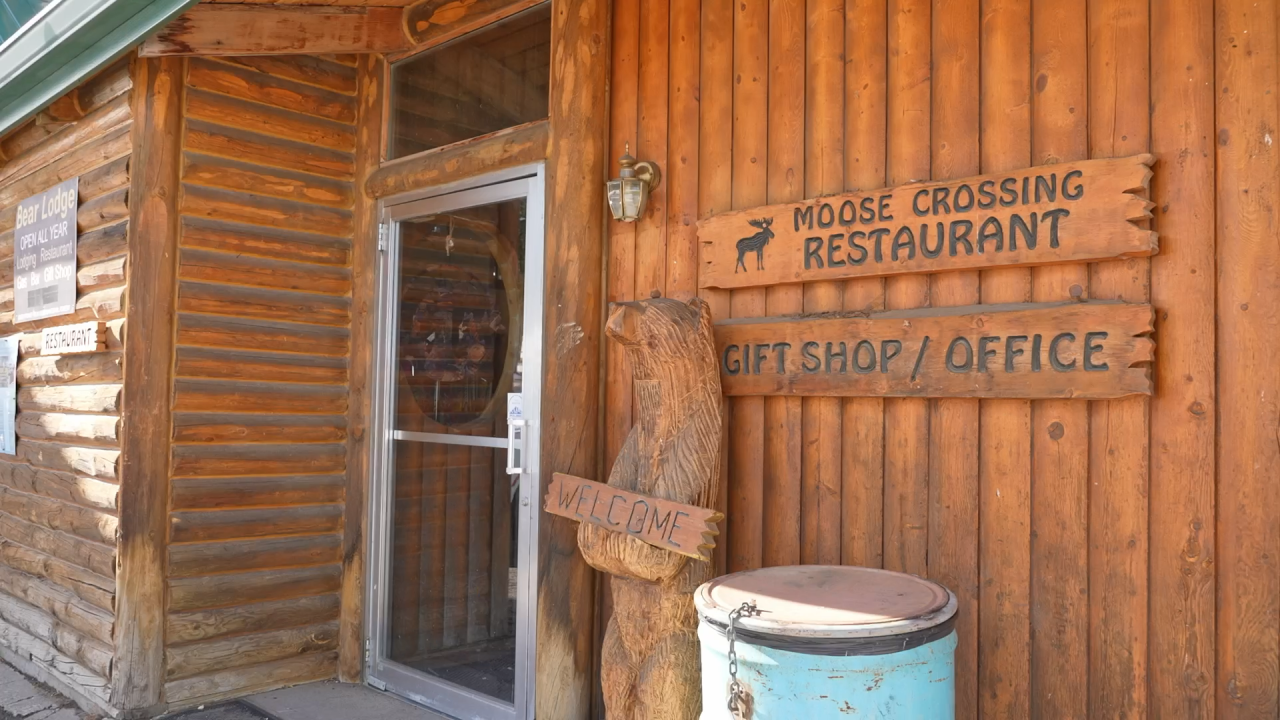
Now, the crew is trying to stay positive, hoping more snow comes soon, for another booming season.
“We had a pretty good lunch, and I don’t know. We’ll see where it goes,” Lindsey said.



Monique Merrill
(CN) — A federal judge in Montana must determine whether or not to split up two cases challenging the Bureau of Land Management’s reduction of protections to the greater sage grouse across millions of acres in the West and transfer the claims to Wyoming.
Seven conservation groups — the Center for Biological Diversity, Gallatin Wildlife Association, Great Old Broads for Wilderness, Rocky Mountain Wild, the Sierra Club, the Western Watersheds Project and WildEarth Guardians — sued the agency in March, challenging its approval of resource management plan amendments for greater sage grouse across nine Western states spanning from California to North Dakota.
Later that month, another three conservation groups — The Montana Wildlife Federation, the Wilderness Society and Defenders of Wildlife — also sued the agency, challenging specifically the Wyoming and Montana plan amendments.
In both cases, the plaintiffs accuse the Bureau of Land Management of weakening prior protections for sage grouse habitat by removing key restrictions and expanding oil and gas leasing. The bird is considered threatened, with populations in sharp decline due primarily to habitat loss.
Both cases were filed in Montana federal court and have not been consolidated, and on Monday, the state of Wyoming argued they should be dismissed or at least severed and have the case transferred to Wyoming.
“Wyoming is a sage grouse stronghold,” Ethan Paddison of the Wyoming Attorney General’s Office argued. “The group’s challenge to the 2025 Wyoming [Resource Management Plan Amendment] strikes at the heart of this longstanding cooperative conservation framework between the state of Wyoming and the federal government.”
According to Wyoming, its resource management plan is different than the other states because it took account of different underlying facts and local plans in its development.
But U.S. District Judge Brian Morris, a Barack Obama appointee, noted his concern at severing the cases in the event that the courts return conflicting decisions. Wyoming appeals go to the Tenth Circuit and Montana appeals go to the Ninth Circuit.
Wyoming argued there was more tying the cases to Wyoming than any other venue.
“The state has spent close to three decades and upwards of $100 million developing and implementing the sage grouse core area strategy,” Paddison said.
The federal government agreed and asked the court to move all claims raised by the seven conservation group plaintiffs to the District of Wyoming.
“What we’re asking here is to do something different, to keep the case together, but to put it in a place, at least one of these places, where there’s a higher concentration of sage grouse habitat,” Justice Department attorney Luther Hajek said.
Wyoming has 24% of Bureau of Land Management-managed surface lands designated as sage grouse habitats, roughly 17 million acres.
Michael Freeman, Earthjustice attorney representing the trio of conservation groups, implored the court to consider the case as a continuation of a recently decided sage grouse case in which Morris tossed oil leases on sage grouse habitat.
“Rather than conserving sage grouse by complying with prioritization, BLM has responded to this court’s decisions by attempting to just eliminate prioritization from its plans altogether,” Freeman said. “And just as this court found in the leasing litigation that national decisions need to be properly adjudicated together in a single court, and this court represents a proper venue for doing so.”
Transferring the case to Wyoming would reward a “rush to courthouse,” Freeman argued. Plus, it would be inefficient to have two courts deciding the same issues based on essentially the same administrative record, he said.
Morris questioned why there were even two lawsuits to begin with.
Freeman clarified that the trio of conservation groups are focused specifically on oil and gas prioritization issues, though admitted there were overlapping issues.
Andrew Missel, attorney with Advocates For The West representing the larger coalition of conservation groups, agreed with Freeman.
“I think transferring part or all of this case to Wyoming would not be in the interest of justice because it would effectively reward what I think is a pretty naked display of gamesmanship,” Missel said.
Morris again questioned why both sets of conservation groups filed separate suits.
“And you just happened to file both in the District of Montana,” Morris said.
Wyoming and the Western Energy Alliance filed suit against the Department of Interior in the District of Wyoming, seeking a declaration from the court that the state’s amended plan complies with the law. Missel characterized the suit as a sham.
Wyoming argued the lawsuit is further reason why Morris should move the claims to Wyoming, so the Montana court doesn’t run the risk of issuing a conflicting judgment with the Wyoming court.
Morris said he would return an order in the next couple of weeks.

GILLETTE, Wyo. — As the Aug. 18 primary election approaches, County 17 is introducing candidate questionnaires to help voters make informed decisions at the ballot box.
Every candidate in the primary field was sent the same three questions and given a limit of 500 words, which could be distributed among their answers as they saw fit. To ensure a fair and direct line to the community, all responses are published exactly as submitted, without edits or alterations.
Candidates were asked:
- What are the most crucial challenges your constituents are facing?
- If elected, how will you address these challenges?
- What qualities or qualifications do you possess that have prepared you to meet these challenges?
Questionnaires are being published on a rolling basis online through Aug. 11. They will be accessible via the County 17 Election Tracker.
Qwenton Eagle Oviatt (R), Wyoming secretary of state
What are the most crucial challenges your constituents are facing?
The most crucial challenges my constituents are facing are low voter turnout, outdated election processes that make voting harder than necessary, a business registration system being exploited by scammers, and a wide fracture within the Wyoming Republican Party.
If elected, how will you address these challenges?
If elected, I will address these directly. I will push for a long overdue election cleanup bill to make voting easier while ensuring strong security. I will implement top tier screening software and a small enforcement team to stop fraud using commercial registered agents. I will also work closely with county clerks to give them the training and uniformity they’ve requested. On party division, I will focus on repairing our Republican Party by practicing Alan Simpson’s collaboration and Mike Enzi’s 80/20 rule, bringing people together instead of tearing them apart.
What qualities/qualifications do you possess that have prepared you to meet these challenges?
What prepares me for these challenges is my diverse real world experience. I have worked in Wyoming’s oil fields, supported National Science Foundation research in Antarctica, built small businesses, and currently serve as an academic advisor at Central Wyoming College. As a certified mediator, I’ve learned how to bring people together to solve problems. This practical background gives me the judgement and skills needed to deliver real results for Wyoming.
Related
-

 Los Angeles, Ca11 minutes ago
Bicyclist killed by hit-and-run driver in Long Beach
-

 Detroit, MI29 minutes ago
Child shot while riding bike outside home on Detroit’s west side, police say
-

 San Francisco, CA41 minutes ago
Bay Area restaurant has strict policy on acceptable children behavior
-

 Dallas, TX44 minutes ago
Detroit Pistons trade Marcus Sasser to Dusty May’s Dallas Mavericks
-

 Miami, FL49 minutes ago
The offseason has been a massive success for the Miami Heat
-

 Boston, MA56 minutes ago
Can’t afford Boston’s priciest restaurants? Try these instead. – The Boston Globe
-

 Denver, CO59 minutes ago
City of Denver says images of piling waste a case of illegal dumping
-

 Seattle, WA1 hour ago
14-year-old dies in electric motorcycle crash at Seattle bike park

