Wyoming
Plug Pulled on Project Bison CO2 Sequestration Project – SweetwaterNOW


ROCK SPRINGS – What would have been a revolutionary carbon capture project in Sweetwater County is now dead as the company behind it has opted to focus its attention to other projects.
CarbonCapture Inc. announced recently that its Project Bison would be suspended due to competition for renewable energy, leading the company to focus on other carbon capture projects. Company references to Project Bison have been removed from CarbonCapture’s website, though links to news articles referencing Wyoming remain. A new project, Project Sonora, is listed on the company’s main page, with a short note advising that details about the project are forthcoming.
Project Bison was one of many industrial projects slated for southwestern Wyoming. Other industrial projects taking place include new trona mines in Sweetwater county and the joint venture between TerraPower and Rocky Mountain Power to build a nuclear reactor in Kemmerer. Kayla McDonald, the economic development specialist for the Sweetwater Economic Development Coalition, says the development is disappointing, but SEDC remains ready to assist if the company returns with new projects for the area.
Advertisement – Story continues below…
“It’s unfortunate for Sweetwater County and the State of Wyoming, but we wish the Project Bison team the best,” she said. “SEDC stands ready to support them should they consider future projects in Sweetwater County. In the meantime, the southwest side of the state has a lot of growth on the horizon and SEDC is doing its part in helping the projects that have been announced with initiative to help their projects be successful. We are excited for the future growth that awaits in Sweetwater County.”
The project termination comes months after CarbonCapture showed its Leo Series of commercial carbon capture units at an event in June. Ron Wild, regional business manager for Rocky Mountain Power, attended the event and said the company didn’t mention the possibility of suspending Project Bison at that time. The company listed Rep. J.T. Larson, R-Rock Springs, as one of the speakers at the event.
Despite progress being made on the project before its termination, there were concerns about how it would be powered. According to Politico, Department of Energy documents released through a Freedom of Information Act request outlined the company’s interest in small nuclear reactors as part of the initial concept for the Wyoming Regional Direct Air Capture Hub.
“It adds complication upon complication,” Wil Burns, the co-director of American University’s Institute for Carbon Removal Law and Policy told Politico in January. “You’re starting off with a complex new technology, and now you’re trying to wed another complex technology, including one that’s in transition.”
Prior to pulling the plug on Project Bison, CarbonCapture was active in the area. The company hired a Sweetwater County-based community relations manager and had representation on Western Wyoming Community College’s presidential search committee. The company also hosted local town hall meetings about the project.



Wyoming
PIAA TRACK AND FIELD: Wyoming Valley West, Valley View athletes shine in Unified championships

SHIPPENSBURG — Athletes from Wyoming Valley West and Valley View competing in the Unified Champion Schools track and field championships had rewarding performances at Shippensburg University’s Seth Grove Stadium.
Wyoming Valley West finished third in the team competition with 48 points, and Valley View had 40 points to finish sixth among the nine teams at the event. East Stroudsburg North won the team title with 63 points; Spring Grove was second with 55.
Unified track and field teams are made up of a proportional number of students with and without intellectual and developmental disabilities who practice and compete together as equal peers.
Athletes in the UCS program compete in divisions based on similar abilities to earn team points toward the team championship.
Valley View’s Jeffrey Wasilchak finished first overall in the Mixed Unified 400-meter run in 57.53 seconds and was second in the Mixed Unified shot put with a distance of 13.82 meters, which was more than 45 feet. He also competed with Eli Szydlowski, James Terrance and John Mulkerin, who had a time of 1:02.66 and finished seventh overall.
Wyoming Valley West’s Raheem Blanton finished first in the Mixed Unified 100-meter dash in 12.21 seconds, and was part of the Mixed Unified 400 relay team that included Dierra Wade, Chelsea Hummel and Kaylah Sewell and finished in 1:00.66, and in fifth place.
Valley View’s Tyson Sisen had two second-place finishes. He was second in the Mixed Unified 800 in 2:31.57 and second in the Mixed Unified Mini Javelin with a mark of 90-3.
Other Valley View finishes overall included Jack Loftus (100, seventh, 13.70); Aubree Black (100, 16.30, 25th, Shot, 5.72 meters, 22nd); Ava Kielar (100, 22.35, 46th); Miranda Troue (100, 22.48, 47th, Shot, 3.54 meters, 28th); Sophia Davies (100, 24.95, 48th, Shot, 4.27 meters, 25th); John Mulkerin (400, 1:23.48, 19th, Shot, 8.13 meters, 11th); Gregory Davis (400, 1:31.45, 27th, Mini Javelin, 45-0, 19th); and James Terrance (800, 3:19.61, 15th).
Wyoming Valley West finishers overall included, Hummel (100, 14.54, 12th, Mini Javelin, 66-10, sixth); Sewell (100, 16.30, 24th); Wade (100, 16.74, 29th, Mini Javelin, 31-3, 32nd); Billy Bell (400, 1:03.95, fourth, Mini Javelin, 46-3, 17th); Gavin Burridge (400, 1:18.66, 15th, Mini Javelin, 39-10, 26th); Lilly Eckstein (800, 2:59.69, 11th, Mini Javelin, 53-9, 12th); Meghan Singer (800, 3:04.31, 12th); Javian Fernandez (Shot, 7.27 meters, 15th); Angel George Umoh (Shot, 5.21, 24th); Savannah Mayewski (Shot, 3.70, 27th); and Jamie Evans (Shot, 1.85, 32nd).
Record breakers
Mid Valley freshman Olivia Thomas capped her medal-collecting first weekend at the PIAA Track and Field Championships with a gold medal in the Class 2A triple jump with a leap of 39-11.5 in far-from-ideal weather conditions Saturday.
In addition, she won silver medals in the long jump and the 100 hurdles in 14.32 seconds. That time broke her Mid Valley school record of 14.44 set this season. It is also the second-fastest school record in Lackawanna Track Conference history. Lakeland’s Cassidy Jenkins has the best time of 14.28, which she ran in winning a PIAA Class 2A silver medal in 2015.
Mid Valley finished with 26 team points — all scored by Thomas — and in seventh place in the Class 2A standings. Shenango won the team championship with 40 points.
In addition to his three medals won in the Class 2A boys meet, Elk Lake’s Kendel Jones set a school record in the 3,200 in 9:17.54 to earn a silver medal. He beat his previous best time of 9:18.72 set in 2024.
Wallenpaupack’s Aiden Janowicz won a silver medal in the Class 3A 800 in 1:51.52. That beat his LTC-best time of 1:53.14 he set during the regular season.
Scranton senior Anijha Turner broke her school record with her 10th-place finish in the Class 3A 400 in 57.26 seconds. That is the fifth-fastest school record in LTC history. Taliyah Booker of Delaware Valley owns the fastest time for the event at 55.86 in 2021.
Lakeland sophomore Bria Hill broke her school record in the 400. Her time of 57.65 qualified her for the Class 2A final, where she won an eighth-place medal on Saturday. Her time is the ninth-best school record in the LTC.
Montrose junior Sadie Jones beat her school record in the javelin with a mark of 126-0. That earned a bronze medal in Class 2A.
Elite athlete
When Thomas won her state championship in the Class 2A triple jump, she became the first to claim a gold medal in track and field at Mid Valley.
Mid Valley’s programs join a list of 18 programs from the LTC that have had an athlete win a state gold medal in track and field.
Susquehanna athletes have won nine PIAA gold medals and a team championship since 1989, which is the most of any LTC program.
Teresa Covert won three straight gold medals in the Class 2A 100 hurdles from 1996 to 1998 and added the 300 hurdles title in 1998. Tatum Norris won gold medals in the Class 2A 100 and 200 in 2022 when she led the team to a championship by herself. Norris also won the 100 in 2023. Jim Corse won the Class 2A pole vault in 1989, and Amber Gaffey won a gold in Class 2A pole vault in 2005.

UPDATE: According to the Consumers Energy outage map, all power was restored around 5 p.m.
WYOMING, Mich. (WOOD) — Thousands of people in southwestern Kent County lost power Monday morning.
The Consumers Energy interactive power map showed a cluster of outages in the area, all of which were first reported around 10:55 a.m. The outages were located in the Grandville, Wyoming and Byron Township areas. In total, around 10,000 customers were without power as of 11:20 a.m., according to the map.
The outage was initially thought to be caused by a transmission line from ITC Michigan, but crews were able to determine the outage was the result of a tap failure that connects the ITC line to Consumers Energy substations.
Three substations were impacted by the outage. As of 2:30 p.m., crews had restored two of the substations and continue their work to get everyone back online. Approximately 5,600 customers remained without power as of 3:30 p.m.

Katie Chandler, who works as a bartender at Kate’s Bar in Evanston, can spot Utah residents right away. They’re the adults looking self-consciouslyover their shoulders before ordering a beer and a shot, like middle schoolers breaking the rules.
Chandler gives them a sweet smile when she serves them their drinks, along with a piece of friendly, free advice.
“I always warn the people from Utah to be careful,” she told Cowboy State Daily. “Because we are at a much higher elevation, and you do get drunker quicker.”
Chandler, an Idaho transplant who has lived in Evanston for five years, experienced this while barhopping the first time in Evanston. She was drinking about one 5% seltzer an hour, which normally wouldn’t be a problem for her.
But after the second one in as many hours, it felt as if she’d downed twice as many drinks in half as much time.
“I was like, ‘Babe, we gotta walk home,’” she said. “So, I always warn people now: drink some water and stay hydrated.”
Just across the state line, Evanston is the first place people from Utah hit when leaving their state to dabble in vice. That state’s stiff liquor laws push some to make a run for the border to get stronger drinks and buy booze, along with placing bets and buying fireworks.
A new Utah law that went into effect Jan. 1 bans people convicted of DUIs with blood alcohol content measurements of 0.160% or greater from buying booze. That makes Evanston’s bars and liquor stores enticing for those who can’t buy alcohol close to home.
This One Time A Utahn Walked Into An Evanston Bar …
Kate’s Bar isn’t the only place in Evanston where the bartenders have stories about Utahns and their liquor.
They’ve become the punchline in many off-hand jokes, and people love to tell their own “this one time, a Utahn walked into a bar in Evanston” jokes to whoever will listen.
Rhonda Berlener, the general manager at Suds Bros. Brewery in downtown Evanston, has dozens of them.
She, too, can spot the Utah “newbies” as soon as they sit down.
They’ll order a beer, finish it, then carefully ask if they can have a shot now. It’s like they’re waiting for someone to swoop in and tell them it’s against the rules.
“‘OK, so we’ll take a beer, and then as soon as we’re done, we’ll take a shot,’” she recalled one Utah couple saying. “And we’re like, ‘Well, we can just bring you that shot.’ And they’re like, ‘What?’ And we’re like, ‘You’re not in Utah anymore. We can line them up. How many do you want?’”
Some get so tickled at the idea they can have more than one drink in front of them at once that they go a little overboard, ordering a whole line of shots across the bar, just because they can.
The situation has led to signs at some establishments poking fun at Evanston’s Utah neighbors — like the tavern which posted a sign making it crystal clear that the place really is a bar, just in case anyone from Utah was feeling the least bit confused.

The Joke Goes Both Ways
The funny stories run both ways, entertainer A.J. Lamb told Cowboy State Daily.
He still laughs about the time he and a buddy discovered Utah’s famously weak beer at a party fresh out of college. At that time, Utah beer had a legal maximum of 3.2% alcohol content by volume. It was like drinking water to Lamb and his friend.
It soon dawned on them that no one at the party was keeping up with them. They made a game of that, challenging anyone to outrank them. They still barely felt a buzz, even after guzzling a heroic amount of beer.
A couple of weeks later, some of the Utahns from the party called Lamb up and said they were coming to Evanston for a rematch. They were “trained up and ready,” Lamb recalled with a chuckle.
What they didn’t count on was full-strength Wyoming beer at elevation.
After just a handful of beers over a couple of hours, the Utah drinkers were wrecked.
One managed to make it to his hotel room, though perhaps not the bed. The other fell asleep somewhere outside the hotel. The third landed in the Uinta County jail.
The takeaway line, which Lamb still uses when he’s talking to Utah friends, is “don’t drink with people from Wyoming.”
Here’s a funny, forgotten fact about that 3.2% beer, which was still in use up until 2019. When the law finally died, Budweiser brought its Clydesdales to Salt Lake City for a little parade — actually a funeral procession.
Pallbearers carried a coffin that said “RIP 3.2% Beer.” Others held up signs that read, “Bud Heavy is coming Nov. 1!”
If Utah residents are the punchline in Evanston drinking jokes, it’s usually a gentle kind of ribbing, Lamb said, the kind where people don’t feel bad about laughing at themselves with you.
t’s all in good fun, and usually includes a dose of empathy for folks who live in a state where ordering a nightcap has become a bit like taking the Uniform Bar Exam.
“People from Utah, they come up here and they’re just blown away,” Lamb said. “It’s like they’re on another planet when they see how we do things.”

No Sin City
With a population around 12,000, Evanston isn’t really a Sin City. You won’t see flashy signs and supermega hotels.
It’s a friendly small town with tree-lined streets draped in charm and history.
There’s an operating drug store with old-fashioned soda shop seats. Some of the restored buildings date back to the 1880s and house art galleries, restaurants and breweries, bakeries and coffeeshops, as well as the historic Strand Theater.
Despite the “Leave it to Beaver” vibe, Evanston has long had a Sin City relationship withUtah residents. It’s where they have been coming for decades to buy things their faithful neighbors might frown upon — a taboo trifecta of booze, fireworks, and lottery tickets.
These days, Utahns can also add off-track horse betting and full-strength vapes to that shopping list.
People still remember when the Utah Highway Patrol would set up in Evanston parking lots, watching their residents carting home illegal liquor from Wyoming, then confiscating it the minute those motorists crossed the state line.
Today, the law prohibiting out-of-state liquor from crossing the Utah state line has gone away.
People may still feel like it’s hanging over them, but Utah residents legally buy up to 9 liters of liquor for personal consumption and haul it home.

A Tourism Tangent
But there are still a whole host of finicky liquor laws that rankle enough to keep Utahns driving to Evanston for the foreseeable future.
Restaurants in Utah can serve drinks, but only when they’re tied to food. A plate of fries, then, even if you’re not hungry, is required.
Bars and taverns can pour without food, but they’re tightly age-restricted and carefully licensed. That means families with children younger than 21 aren’t allowed.
Restaurant or bar, only one drink at a time is allowed per person at any given table. Double shots in a cocktail aren’t allowed, nor shots to chase your beer.
By contrast, Evanston’s border town offers Utahns a much simpler proposition. Walk in, grab a bar stool and order a drink. No need for a flowchart of what’s on your plate or in your glass.
The relationship between Utah’s strict liquor laws and Evanston’s more relaxed bar scene isn’t just a cultural curiosity anymore. The dynamic has become part of the town’s tourism strategy.
Business owners along Main Street talk about the importance of keeping things open for business on the weekends and maintaining a friendly, welcoming, no-fuss atmosphere.
“Those out-of-state visitors are a huge piece of keeping downtown alive,” Berlener said. “If they feel comfortable here — if they can find a place to eat, have a drink, walk around — they’ll keep coming back.”
And Evanstonians will keep telling those funny drinking Wyoming from Utah stories.
Renée Jean can be reached at renee@cowboystatedaily.com.
-
 Lifestyle2 minutes ago
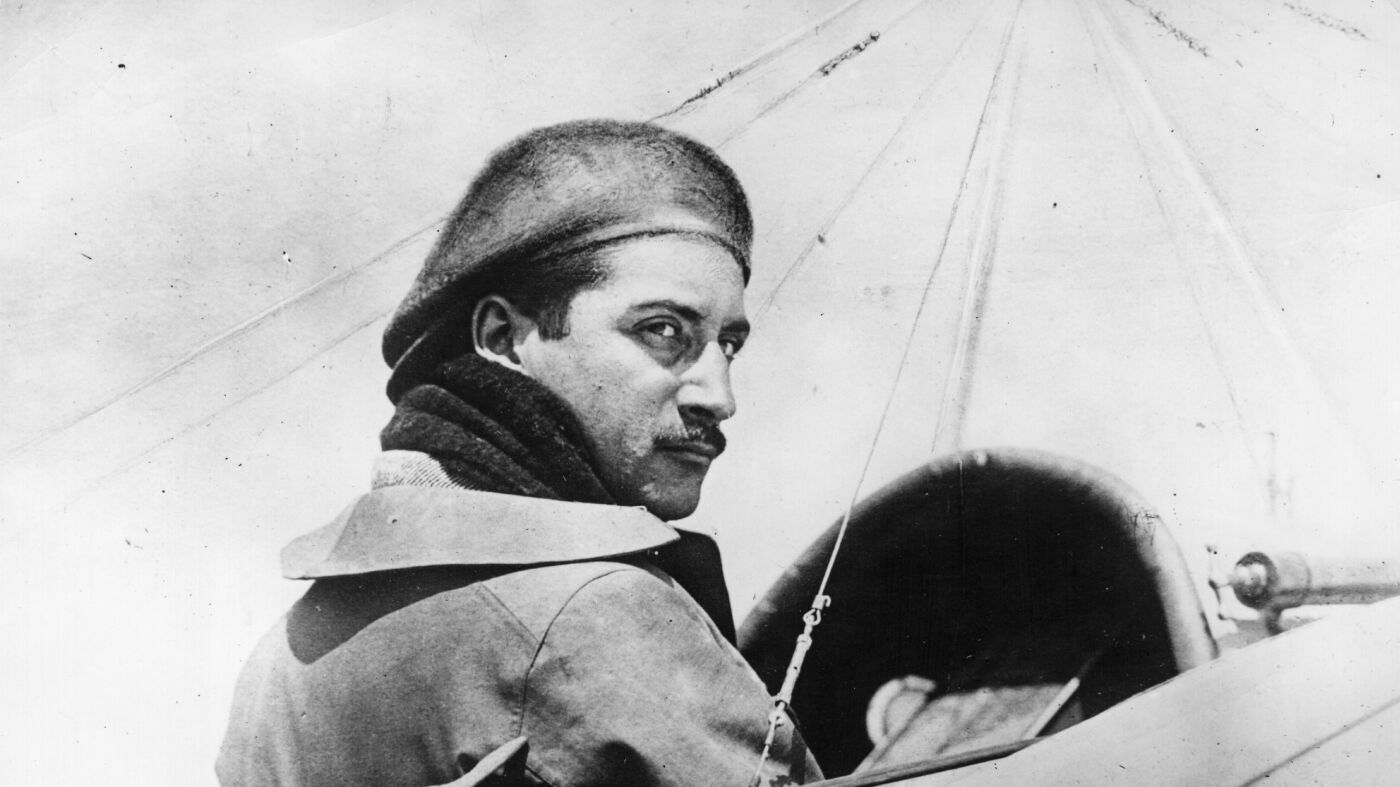
Why the French Open is named after Roland Garros, who didn’t play tennis
-

 Education8 minutes ago
Video: The Very Best Veggie Burgers
-

 Technology14 minutes ago
Google Health is here, but a lot of people want their Fitbit app back instead
-

 World20 minutes ago
‘Designated target’ Mojtaba Khamenei to sign Trump deal in ‘unprecedented’ courier setup
-

 Politics26 minutes ago
Thomas blasts SCOTUS for decision on Florida lawsuit over illegal immigrant truckers with blue-state licenses
-

 Health32 minutes ago
Popular fruit may help protect your skin from the sun, new study suggests
-

 Sports38 minutes ago
2026 World Series Odds: Dodgers Favored; Rays Continue to Rise
-

 Technology44 minutes ago
Are Apple devices spying? What your iPhone tracks

