Wyoming
Hiker mauled by grizzly in Grand Teton National Park played dead, officials say; bear won’t be pursued


A grizzly that accidentally inflicted itself with a burst of pepper spray while attacking a hiker in Wyoming’s Grand Teton National Park won’t be captured or killed because it may have been trying to protect a cub, park officials said in a statement.
While mauling a hiker on Signal Mountain, the grizzly bit into the man’s can of bear repellent and was hit with a burst of it, causing the animal to flee. The 35-year-old Massachusetts man, who’d pretended to be dead while he was being bitten, made it to safety and spent Sunday night in the hospital.
There was no word when Signal Mountain or a road and trail to its 7,700-foot (2,300-meter) summit would reopen after being closed because of the attack. Such closures are typical after the handful of grizzly attacks on public land in the Yellowstone region every year.
The decision not to pursue the bears, which officials determined behaved naturally after being surprised, also was consistent with attacks that don’t involve campsite raids, eating food left out by people, or similar behaviors that make bears more dangerous.
Rangers track and study many of the Yellowstone region’s 1,000 or so bears but weren’t familiar with the ones responsible for the attack Sunday afternoon, according to the statement.
The attack happened even though the victim was carrying bear-repellant spray and made noise to alert bears in the forest, the statement said.
Speaking to rangers afterward, the man said he came across a small bear that ran away from him. As he reached for his bear repellant, he saw a larger bear charging at him in his periphery vision.
He had no time to use his bear spray before falling to the ground with fingers laced behind his neck and one finger holding the spray canister.
The bear bit him several times before biting into the can of pepper spray, which burst and drove the bears away.
The man got to an area with cell phone coverage and called for help. A helicopter, then an ambulance evacuated him to a nearby hospital.

Investigators suspect from the man’s description that the smaller bear he saw was an older cub belonging to the female grizzly that attacked. Mother bears aggressively defend their offspring and remain with them for two to three years after birth.
Park officials didn’t release the victim’s name. He was expected to make a full recovery.
Recent grizzly attacks
The attack in Grand Teton National Park came just days after a man in Canada suffered “significant injuries” after being attacked by a grizzly bear while hunting with his father.
Last fall, a Canadian couple and their dog were killed by a grizzly bear while backpacking in Banff National Park. Just weeks before that, a hunter in Montana was severely mauled by a grizzly bear.
Last July, a grizzly bear fatally mauled a woman on a forest trail west of Yellowstone National Park. The bear was later euthanized after breaking into a house near West Yellowstone in August.
Also that month, a 21-year-old woman who was planting trees was seriously injured by a bear in British Columbia. Canadian officials could not locate the animal but believe it was a grizzly bear that attacked the woman.
Grizzly bears in the 48 contiguous states are protected as a threatened species, according to the U.S. Fish and Wildlife Service.
Last month, the U.S. National Park Service announced it was launching a campaign to capture grizzly bears in Yellowstone Park for research purposes. The agency urged the public to steer clear of areas with traps, which would be clearly marked



BILLINGS — Two Wyoming women escaped unharmed after a black bear attacked their tents in the Big Horn Mountains while they were still inside.
Friends Maggie Bassett and Shonna Dehl were on a camping trip when the bear began tearing into their tents while they were asleep on Sunday night.
Click here to hear the story:
Wyoming women escape black bear attack on their tents in the Big Horn Mountains
“It was so scary,” Bassett said.
Basset said it jolted them and their four dogs awake and that both women were shocked at the bear’s behavior.
“It wanted in the tents,” Dehl said. “That’s all it wanted. It didn’t matter what we did.”
Dehl and Bassett proceeded to yell and scream at the bear, even firing gunshots in its direction in an effort to scare it away. None of those efforts worked.
“It was not scared at all,” Bassett said Wednesday afternoon in an online web call. “It didn’t even blink. It just kind of circled around and came back at me from a different angle.”
“It was circling us,” Dehl said. “It felt like it was circling our campground.”
Eventually, the bear scattered away after more gunshots were fired. Then, the two women fled to their vehicle, hiding out for a couple of hours and honking their horn to keep the bear away.
“We were in there for at least an hour,” Dehl said. “Just scared and shaking.”
Eventually, the two drove away unharmed and made their way to Dehl’s family cabin a few hours away.
When they returned the next day, they found their tents collapsed and torn to shreds. Wyoming Game and Fish responded and told the two women they plan to trap the bear and relocate it.
Both Bassett and Dehl said it was a frightening ordeal, especially because they followed all bear-aware protocol, including using bear containers.
“I will never forget that sound of my tent being ripped open,” Bassett said.
Chrissy Webb with Montana Fish, Wildlife and Parks has not been involved in the investigation but said a bear’s memory can bring it back to places where it has encountered unnatural foods before.
“You know it’s not unreasonable for a bear to return to a site where they’ve gotten food in the past,” Webb said. “When bears start accessing those unnatural human-based food is when we start to see bears that can be potentially dangerous because, you know, they’ve got conditioned by this food.”
Webb said there is no way to know if that is what happened in this case, but staying bear aware is crucial for both campers and the animals.
“It’s safer for you to store things properly, and it’s better for the bear’s sake if they’re not able to access those human foods,” Webb said.
For Bassett and Dehl, it’s an experience that has changed the way the two plan to go camping in the future.
“I don’t see myself sleeping in a tent anytime soon, maybe never,” Bassett said.
“Yeah, we’re going to need four walls,” Dehl said.

CASPER, Wyo. — The Boys & Girls Clubs of Central Wyoming recently announced that Cathy Holman, founder of the Prairie Wife brand, has been selected as the 2026 Mick & Susie McMurry Cowboy Code Try Award recipient.
A release from the Boys and Girls Clubs says that Holman will be recognized during the 28th Annual Awards & Recognition Breakfast, happening on Wednesday, September 16 at the Ford Wyoming Center.
“The Mick & Susie McMurry Cowboy Code Try Award recognizes individuals who exemplify the values of the Cowboy Code through integrity, perseverance, service, and leadership,” the release states. “Holman embodies those qualities through her entrepreneurial spirit, commitment to strengthening Wyoming communities, and willingness to use her voice to help others.”
Known as the Prairie Wife, Holman launched PrairieWifeInHeels.com in 2013 to share stories about her life, her family, and the Wyoming way of living.
“What began as a personal blog has grown into one of Wyoming’s most recognizable digital brands, reaching more than 65,000 followers across social media,” the release states. “Through honest storytelling, humor, and authenticity, she has built a community centered on grit, grace, faith, and finding purpose through life’s challenges.”
Throughout the years, Holman has become a much sought-after speaker, emcee, auctioneer and media personality, and she uses her platform to encourage others while championing causes that strengthen families and communities, all across Wyoming.
Due to her own family’s experiences, Holman became a leading advocate for stronger protections for children.
“Working alongside fellow advocates, legislators, and law enforcement, she helped raise awareness that contributed to the passage of House Bill 8, strengthening Wyoming’s stalking laws to better protect minors,” the release continues. “She continues to educate parents, schools, and organizations about online safety, digital responsibility, and protecting children in today’s technology-driven world.”
Holman said that the Cowboy Try represents choosing courage when life is difficult and using adversity to help others.
“The Cowboy Try is what we admire in everybody,” Holman said. “You’re knocked down and you get up again. And if you’re willing to share about getting knocked down, you’re going to help a lot of other people get up again too.”
Holman said that the mission of Boys & Girls Clubs of Central Wyoming reflects her own belief that investing in young people strengthens the future of every community.
“Our children are our future. We are only as strong as they are,” she said. “The Boys & Girls Club is creating a strong future for our communities. From providing a safe place for kids to mentoring, career education, and giving parents peace of mind, the Club is a beacon of hope.”
Holman encouraged young people to move forward with courage.
“Don’t let fear decide your future,” she said. “If you feel there’s something you’re supposed to do, charge forward. Ask for help when you need it, learn from those who have gone before you, and don’t be afraid to try.”
In addition to Holman, the 28th Annual Awards & Recognition Breakfast will honor Bob and Celia Kirkwood for their generosity and lasting impact on the Boys & Girls Clubs of Central Wyoming, as well as the community itself. It will feature nationally recognized speaker, Coach Ken Carter.
The event is open to the public and there is no cost to attend. Guests will have the opportunity to support the Boys & Girls Clubs of Central Wyoming and its mission of inspiring and enabling all young people to reach their full potential.
For tickets or table sponsorships, contact the Boys & Girls Clubs of Central Wyoming at https://bgccw.org/our-events/, email Vanessa at vwarner@bgccw.org, or call (307)235-4079.
Related
Wyoming
Wyoming coal company wins federal money to extract critical minerals from Powder River Basin – WyoFile

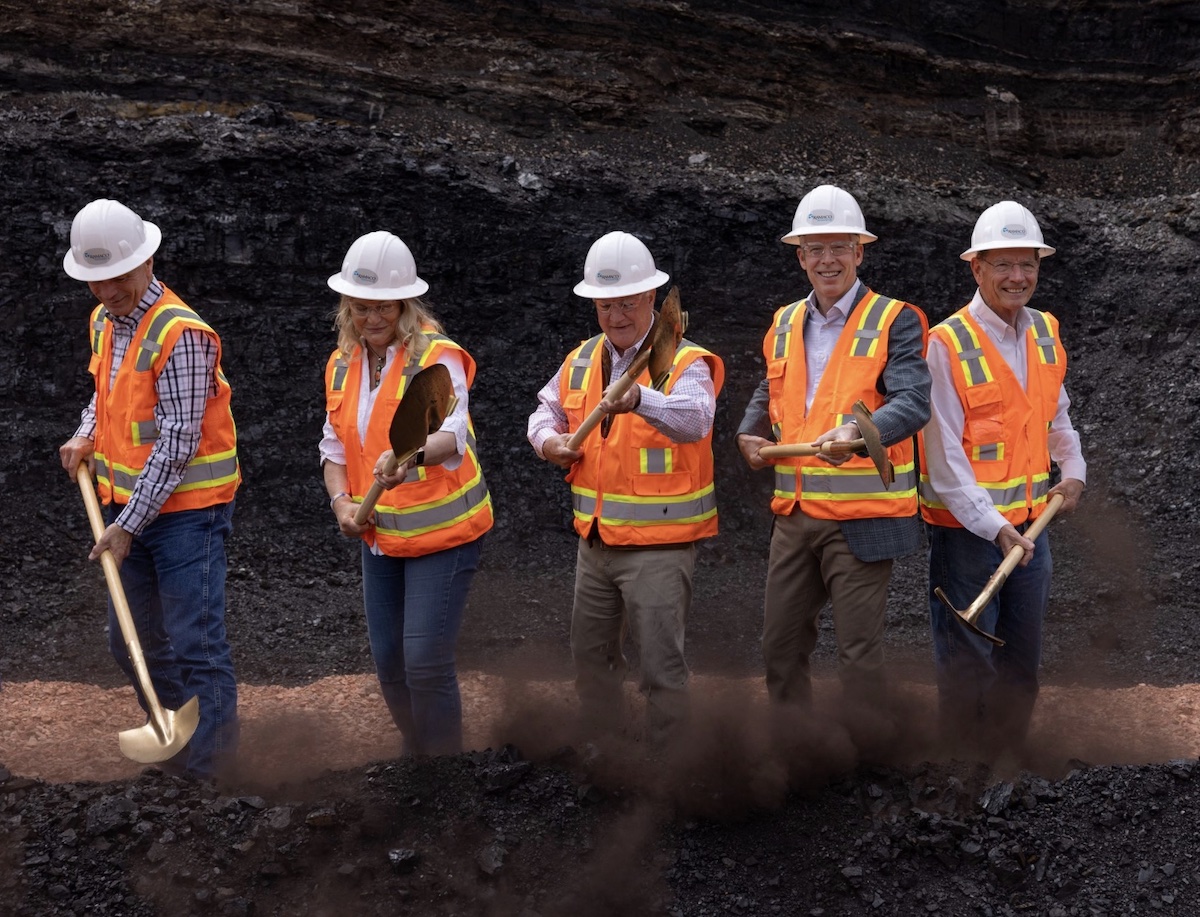
Coal mining giant Peabody Energy, with massive operations in Wyoming’s Powder River Basin, is among five entities that will share a total of $75 million from the U.S. Department of Energy to advance production of rare-earth elements and critical minerals.
As of press time, it wasn’t clear exactly how much Peabody might receive from the department’s Office of Critical Minerals and Energy Innovation, but it will be added to the $6.25 million in taxpayer money granted to the company earlier this year via Wyoming’s Energy Matching Funds program for the same project.
Peabody plans to build a pilot processing facility at its Rawhide mine just north of Gillette to extract rare earth and critical minerals from coal, according to a Peabody document submitted to the state. It would produce “market-ready mixed rare-earth concentrate,” which can be further refined to produce oxides and metals used in modern technology. Once complete, the facility would support 55 new jobs, Peabody says.
“Coupled with the Wyoming Energy Authority grant awarded earlier this year, this [DOE grant] selection reflects the meaningful progress Peabody has made in advancing promising unconventional rare earth and critical mineral opportunities,” Peabody President and Chief Executive Officer Jim Grech said in a prepared statement this week.
The DOE’s support of Peabody’s effort in Wyoming demonstrates the value of Wyoming coal beyond burning it to generate electricity, Wyoming Mining Association Executive Director Travis Deti said.
“Whether it be energy or the domestic supply chain for needed critical minerals and rare earths, Wyoming coal will be needed for the foreseeable future,” Deti told WyoFile. “Of course this all translates into jobs and revenue.”
St. Louis-based Peabody Energy, with a market value of $2.8 billion, is the largest coal producer in Wyoming and the nation. It owns and operates the Rawhide, North Antelope Rochelle and Caballo coal mines in northeastern Wyoming. Rawhide shipped 7.8 million tons of coal in 2025, according to federal data, while Caballo produced nearly 11.7 million tons and North Antelope scooped nearly 65 million tons.
Peabody reorganized after filing for bankruptcy and laying off 235 Wyoming miners in 2016. Today, the company employs about 1,480 coal miners in Wyoming.
Push for rare earth, critical minerals
Rare-earth elements and critical minerals occur all over the world, typically in minute quantities. The metals are increasingly in demand as building blocks for everything from magnets to batteries in devices like cell phones and MRI machines. They’re also frequently used in military equipment.
The U.S. has lagged behind China in producing and refining the metals, giving China an economic advantage in the rocky relationship between the two nations. The U.S., and the Trump administration in particular, has pushed a rare-earth and critical minerals supply chain buildout toward the top of its mining and manufacturing priorities.
Last year, President Donald Trump issued the Immediate Measures to Increase American Mineral Production executive order while invoking the Defense Production Act to fast-track permitting and help finance mining and processing efforts.
With increasing government and private-sector interest, Rare Element Resources recently built a rare-earth demonstration processing plant near Upton. Others are pursuing new mining operations in the Laramie Range and southern Bighorn Mountains. Those are all traditional, hardrock resources. As for Wyoming coal, researchers have known for years that it contains rare-earth and critical minerals, but it’s only a relatively new focus.
Although Ramaco Resources, for years, has said it is reactivating its Brook coal mine near Sheridan to extract critical minerals, Peabody Energy’s entrance into the market brings another level of corporate prowess to the prospect of putting Wyoming on the world map. And the Trump administration’s focus on coal for the metals dovetails with other priorities.
“Today’s announcement advances the Trump administration’s efforts to strengthen the U.S. coal sector,” the Department of Energy said. It “reflects a broader commitment to unlock the value of coal and coal-based feedstocks as domestic sources of critical minerals and materials.”
Gov. Mark Gordon agrees.

“I was happy to support a $6.25 million grant from the Wyoming Energy Authority’s Energy Matching Fund earlier this year to build a pilot processing facility at the Rawhide mine near Gillette,” he told WyoFile this week. “If we are going to get back in the game of supplying our nation’s need for rare-earth elements and critical minerals, we need to look at all sources, including those in and around coal seams. The federal contribution is a great addition to this effort.”
Meantime, Wyoming is investing significant taxpayer money beyond the $6.25 million already granted to Peabody.
Visionary Metals Corp recently received a $250,000 Energy Matching Funds grant for a nickel-and-copper project in the Granite Mountains. Also this year, the Legislature created the Wyoming Rare Earths Fund with $16 million “for commercial deployment projects focused on the processing and separation of rare-earth resources located in Wyoming.”
-

 Hawaii3 minutes ago
Three West Hawaii sex offenders arrested – West Hawaii Today
-

 Idaho6 minutes ago
Idaho Power crews respond to outage affecting 2,163 customers in Canyon County
-
 Illinois18 minutes ago
As Illinois enters 10th year under Evidence-Based Funding model, equity remains an elusive goal
-

 Indiana21 minutes ago
FAIRFIELD NATIVE AND HIS WIFE FOUND DEAD IN THEIR NEWBURGH, INDIANA HOME
-

 Iowa26 minutes ago
From caviar nuggets to bison, 10 new Iowa State Fair food trends
-

 Kentucky36 minutes ago
Kentucky lawmakers hold town hall on AI data centers in Louisville
-

 Louisiana41 minutes ago
Norman C. Francis library naming honors Lafayette education legacy
-

 Maine48 minutes ago
Live updates: U.S. and Iran escalate attacks; jockeying starts in Maine after Graham Platner drops Senate bid

