Wyoming
Former Wyoming Man Is Hero Beekeeper From Dodgers Game


The MVP of Tuesday night’s Major League Baseball game between the Arizona Diamondbacks and Los Angeles Dodgers was Matt Hilton. But don’t bother looking for the 37-year-old right-hander on either team’s roster.
While the former Wyomingite did help his hometown Arizona D-backs to a 4-3 win, Hilton’s ESPN highlight reel was compiled before the first pitch was ever thrown. The pest control expert was called on to handle a colony of bees that held up the start of the game for almost two hours.
Media outlets across the country had fun with the puns — “Chase Field was buzzing last night” — but the truth of the matter is the situation could have turned serious in a heartbeat. Even before Hilton arrived he had a pretty good idea he would be dealing with a highly antagonistic crossbred species known colloquially as “killer bees.”
“We live in a state where Africanized honey bees are super common here,” Hilton told Cowboy State Daily. “Compared to a normal strain of honeybees, most people can’t tell the difference. Except these have a tendency to be extremely aggressive — 10-20 times more aggressive than the average honeybee.”
Red Carpet Treatment
Hilton informed stadium staff to move people in the closest box seats to at least 50 to 75 feet away. He was on his way.
“I explained these bees very much raised the risk level quite a bit. I kind of walked them through it, but it was not their first rodeo,” Hilton said.
In fact, stadium personnel rolled out the red carpet for Hilton and had everything waiting for the bee whisperer when he arrived.
“I was able to drive right up to the big bay doors and throw my gear on,” he said. “They had the scissor lift right there ready to go. It was in everyone’s interest to get this game underway as safely and quickly as possible.”
Bonnie Tyler’s “I Need a Hero” blared from loudspeakers as Hilton’s play-in song, just like he was the team’s closer coming in from the bullpen.
By the way, a shout out to another winning team — Blue Sky Pest Control of Phoenix. Chase Field actually contracts with the local company for regular service keeping the food concessionaire areas pest- and rodent-free.
Blue Sky Pest Control is also on-call 24/7 for just the type of crazy emergency that came up Tuesday.
“I was at my 6-year-old son’s T-ball game when the head guy at Chase called me and said he had a swarm of bees holding the game up,” Hilton said. “In my line of work, especially with a high-profile account like this, we have to drop everything and take care of the problem.”
10,000 To 20,000 Bees
When Hilton arrived to the field, he quickly anesthetized the popup colony with a non-pesticidal solution. That was done to lock the bees in place.
“They interlock their legs together when they are in a colony like this. The last thing you want to do is start poking at them and have them fly off individually looking for someone to be mad at,” Hilton said.
The pest control tech estimates between 10,000 and 20,000 bees made up this particular swarm. If agitated, D-backs fans could be in a lot more pain than anything the Dodgers could dish out.
“The risk comes in if that swarm gets disturbed. If they start stinging people, when they do it releases a pheromone in the stinger that signals: ‘Hey, get this guy,’” Hilton said.
Deaths have been reported in Arizona, Utah and Texas, where a victim was stung repeatedly by Africanized bees.
Donned in a beekeeper’s protective suit, Hilton was able to vacuum up all the bees as the crowd around him chanted, “You can do it!”
King For A Night
Once the job was done, Hilton gave the fans a fist pump and was immediately invited to toss out the ceremonial first pitch.
Just another day at the office, Hilton said. Except for the paid attendance.
“I’ve done hundreds of these types of calls. This was the first in front of 30,000 people,” Hilton said. “I’ll maybe be in a parking lot and a handful of people will be looking on from their office windows. This one was a little more high-pressure with a game hanging in the balance. It was pretty electric, pretty awesome.”
Blue Sky offers a relocation service for bee swarms it collects but the market for Africanized bees is slim.
“Beekeepers don’t want Africanized honey bees. You see pictures of video of beekeepers tending their hives without a suit on. That’s where it gets dicey. If they did that with these bees they would be in a world of hurt,” Hilton assured.
Wyoming To The Rescue
Topps, the baseball card manufacturer, is already working on a special one-off card for the bee specialist who saved the game. It will be a keepsake for the Arizona man with Wyoming roots.
Hilton lived in Buffalo, Wyoming, from ages 11 through 18 before he attended college Arizona State University. He met an Arizona girl, Morgan, and the two were married in 2010. They have four kids.
“I moved away from Buffalo because of the cold. I got married to the love of my life and found a career and a company that really suits me,” Hilton said. “Buffalo is a super cool little town and I take a lot of pride having grown up there. I miss hunting and fishing in the Big Horn Mountains.”
Contact Jake Nichols at jake@cowboystatedaily.com
-

Beekeeper Matt Hilton, left, arrives to Chase Field to remove a colony of bees that formed on the net behind home plate during a delay to the MLB game between the Los Angeles Dodgers and the Arizona Diamondbacks on April 30, 2024, in Phoenix, Arizona. (Christian Petersen, Getty Images) -


Jake Nichols can be reached at jake@cowboystatedaily.com.



Wyoming State Historic Sites Superintendent Sharie Mooney Shada made an appearance on Sheridan Media’s Public Pulse to speak on the upcoming Immersion in Crow Culture program at Fort Phil Kearny on July 16.
The event begins at 6 p.m. Thursday, July 16 at the Fort Phil Kearny Interpretive Center.
S. Mooney Shada
The rangers host free, family-friendly evening talks and presentations throughout the summer. Shada said the Native American Student Interpretive Ranger Program has enriched the visitor experience at Fort Phil Kearny. In its fourth year at the fort, the program allows a perspective from the indigenous side of history.
Keep up with events at Fort Phil Kearny by clicking here.
Wyoming
‘Not just coloring tipis,’ experts debate quality of Indian education in Wyoming schools – WyoFile

RIVERTON—Nine years after the Wyoming Legislature passed the Indian Education for All Act, education experts say there is still more work to be done.
“I think it is a key priority across the state. Having grown up in Wyoming as a Native student in an off-reservation school, there was never a priority about learning about either tribe; and I still see that today,” Fremont County School District 21 Superintendent Deb Smith told the Wyoming Legislature’s Select Committee on Tribal Relations. “And I’m well into my 50s. So I think we need to push more.”
When the Legislature passed the Indian Education for All Act in 2017, lawmakers did not create an office of Indian education similar to the ones already in place in states such as Montana. Now, some experts and tribal members say they hope Wyoming will move in that direction in the future. But regardless of the particulars of future steps, reservation school leaders told lawmakers that the Indian Education for All Act needs more support and better integration into Wyoming schools.
“As a Native person, we shouldn’t always have to be the one advocating on behalf of our tribes,” Smith said. “People that are Wyomingites should know. They should be sharing that great history.”
Fremont County School District 14 Superintendent Blakke Bertram agreed.
“When there are questions on our state assessment that are geared towards Indian Ed. for All, then I’ll know that we’ve taken it serious,” Bertram told the tribal relations committee during its June meeting in Riverton. “I feel like I have yet to see that.”
The Legislature, he pointed out, recently passed new requirements for literacy education — and backed it up with grant funds and rulemaking. “So when we say something’s important, when we put support and money behind it, we’re saying it’s important. Have we really done that for Indian Ed. for All?”
Revisions underway
When she takes Lander fourth graders on their annual tour of the Wind River Reservation, Fremont County School District Native American Liaison Lisa McCart said one of the highlights is often the visit to Sacajawea’s grave. Having read “Naya Nuki,” the kids usually know who Sacajawea is — but seeing her grave, and hearing Fort Washakie Schools Librarian Robin Levin explain the history of disputes over her burial place, is special.
Fremont County School District 1 is not among the schools regularly invited to testify at tribal relations meetings. However, district representatives sat down with the Lander Journal in the days following the meeting.
As the Lander schools’ Native American liaison, McCart explained, her job involves keeping track of all of the district’s Native students and working with the district’s curriculum coordinator to coordinate learning and cultural experiences. McCart invites in tribal experts, organizes field trips, and works with extracurricular clubs in addition to helping Native students get to, stay in and feel supported at school.
Not every Wyoming school district has a significant population of Native American students, or a Native American liaison. Schools like those in Lander, which are close to the Wind River Reservation, have a bit of an advantage when it comes to integrating Indian education into their classrooms, the Lander district’s Curriculum Coordinator Deidre Meyer explained.

Scotty Ratliff, a member of the Wyoming Department of Education’s relatively new Native American Education Cabinet and a former legislator, said the Wyoming Department of Education could do more to provide districts with resources, teaching materials and curriculum to support the implementation of Indian Education for All statewide. Not every school in Wyoming, he pointed out, is close enough to the Wind River Reservation to have easy access to tribal experts.
The Indian Education for All Act requires that the state take another look at its social studies standards related to the act every nine years. Last updated in 2018, the state is currently in the process of putting together those new standards, the department’s Native American Liaison Rob Black told legislators.
Meyer worked in the Montana Office of Indian Education for years before moving to Lander and was at one point the principal of Fort Washakie Elementary School. She is among several Fremont County educators represented on the committee revising those standards.
Beyond her role as her district’s Native American liaison, McCart is also a member of the Wyoming Department of Education’s Native American Cabinet. In particular, she’s involved in an Essential Understandings subgroup that will be reviewing the updates to social studies standards currently underway to ensure they adequately incorporate tribal perspectives and Native American culture and history.
Learning language
Accessing Shoshone and Arapaho language classes also can be difficult for students, especially for those seeking successive years of Shoshone or Arapaho to qualify for the highest tier of Wyoming’s Hathaway Scholarship, Native American Education Director Roy Brown said. Brown works for Fremont County School District 25, which oversees Riverton schools. Part of the problem is a lack of qualified teachers, Brown and Fremont County School District 38 Superintendent David Holbert noted. Riverton has only ever offered one year of Arapaho language, Brown explained, which means that the district’s students wanting to take Arapaho can’t meet the high-tier Hathaway requirement of two successive years of a foreign language unless they actually take three years of foreign languages.
There are very few available and certified teachers of the Arapaho language, the group of superintendents explained — and even fewer for Shoshone.

McCart recalled that several years ago, Lander pursued its own attempts to bring Northern Arapaho and Shoshone language classes into the district. But, she said, her district found that there are very few people with the appropriate certifications to teach either language as part of a public school class. One of the ideas that she and Meyer have discussed is bringing in tribal elders or others who are fluent in Arapaho and Shoshone outside of a formal class setting, where they might not need to meet the same certification requirements as a teacher but can still help interested students start to learn.
‘[Not just] coloring tipis’
Bertram also challenged the implementation of the current standards for Indian Education for All, even in schools close to the reservation.
“My kids, they go to a neighboring school district, an off-reservation school district. I’ve seen the work that’s going toward Indian Ed. for All in that school district,” Bertram said. “It is not teaching my daughter, my son, about what Indian Ed. for All stands for and what it means to be a Northern Arapaho or Eastern Shoshone tribal member on our reservation.”
He continued: “We’re talking coloring tipis. That’s the kind of stuff we’re seeing on our off-reservation schools when it comes to Indian Ed. for All. And that’s a border school.”
If the district in question had called, Bertram’s district would likely be willing to work with them to share resources, he said.
“I appreciate his passion,” Lisa McCart said of Bertram’s remarks. However, she added, the superintendents at Fremont County school districts meet monthly, and she isn’t aware of any concerns along those lines having been raised at any of those meetings.
McCart and Meyer explained some of the ways Lander schools work to incorporate Indian Education for All into Lander’s curriculum, including reservation tours, cultural events, and the incorporation of Native American literature, history, and legal texts into classes from kindergarten through 12th grade.
For example, a few years ago McCart worked to bring musician and artist Gabriel Ayala, a member of the Yaqui tribe of Arizona, to Lander schools. Ayala worked with a variety of grade levels, McCart said, including teaching kids at Gannett Peak Elementary about the meanings of different symbols in Yaqui culture through an activity that involved the elementary students selecting symbols that would be meaningful to their family and drawing them on a tipi.
“If we weren’t confident in what we’re doing and trying to do in this district, we wouldn’t be vocal at the state level,” Meyer pointed out. “It’s not just coloring tipis.”
To characterize the district’s approach as such, McCart added, “is disrespectful for the [Native] families that choose to be in this district.”
McCart and Meyer noted that communication is key, and they hope Fremont County and Wyoming school districts can work together to ensure all Wyoming students receive an adequate education concerning tribal peoples and issues. If someone has concerns, they said, they both hope they will bring them to them directly so Lander can work to address those concerns.
-
 Florida14 seconds ago
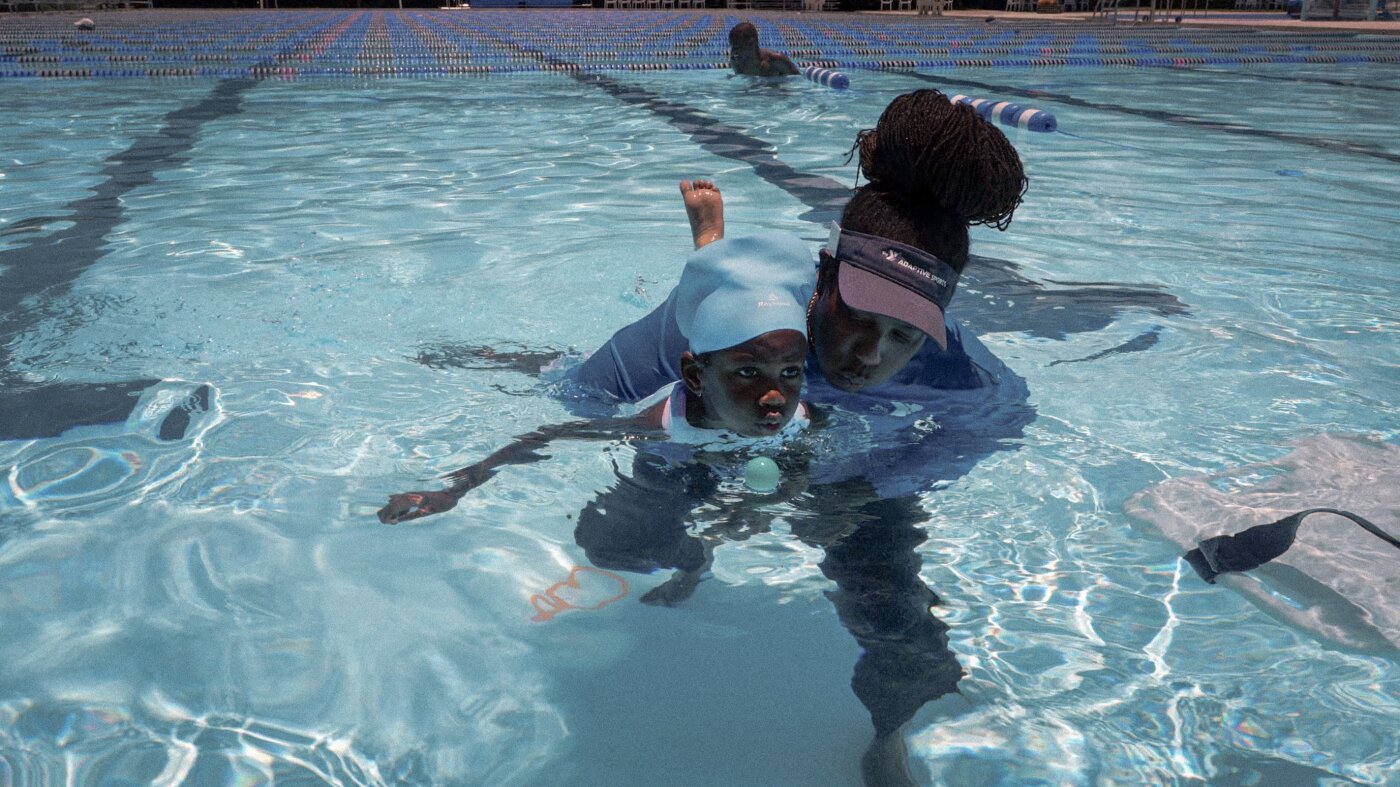
Kids with autism are prone to drowning. Florida is trying to prevent that
-

 Georgia3 minutes ago
Bradenton man wanted for murder is found hiding in Georgia
-

 Hawaii8 minutes ago
Few state bills this year face potential veto – West Hawaii Today
-

 Illinois18 minutes ago
West Suburban hospital sends permanent layoff notices to about 500 furloughed employees
-

 Indiana23 minutes ago
Extreme heat peaks before holiday weekend storms | July 1, 2026
-

 Iowa30 minutes ago
New York Times/Siena Polls in Alaska, Iowa, North Carolina, and Ohio – Siena Research Institute
-

 Kansas33 minutes ago
Kansas State Fair announces Rock Fest with three-band lineup
-

 Kentucky33 minutes ago
Looking for the best hot dog in Louisville? Try these 15 spots

