NFL Free Agency opens up on Wednesday, with the legal tampering period beginning on Monday. The top free agents usually all commit to a team during that period, so be ready to rock and roll to start next week.
West
Washington Senate approves $8M to combat addiction among Native Americans, but some say it is not enough

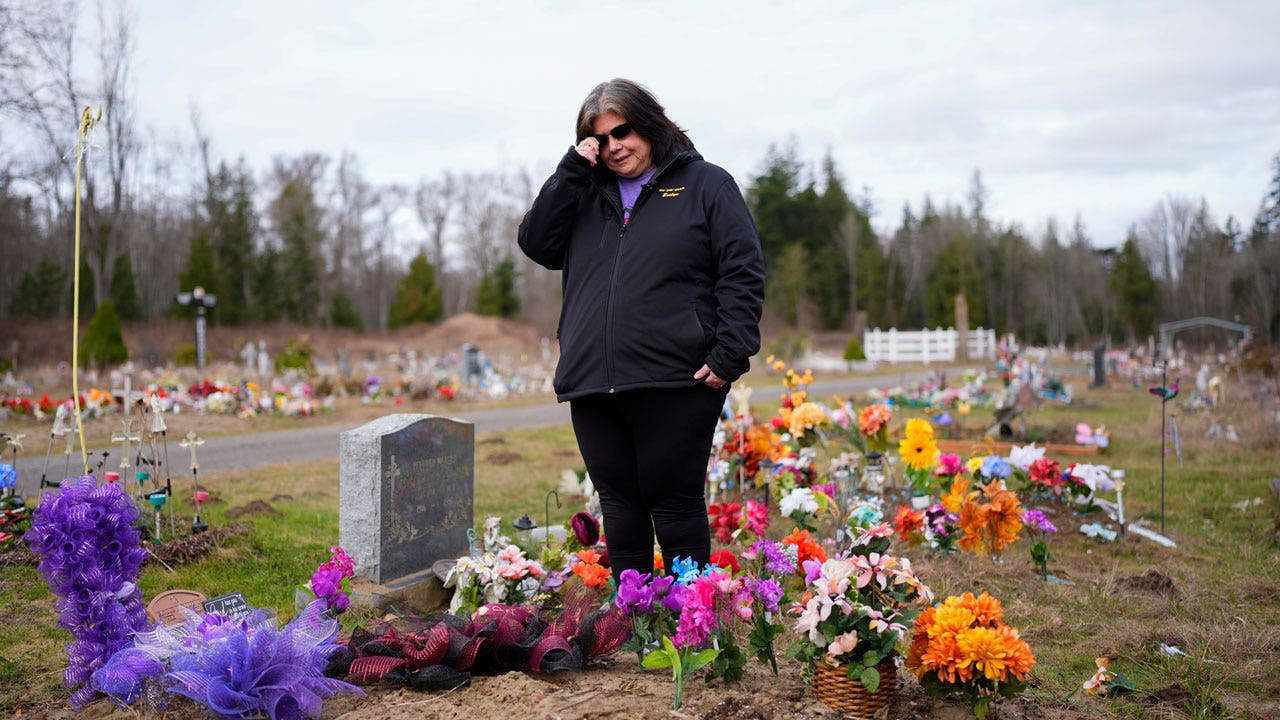
Evelyn Jefferson walks deep into a forest dotted with the tents of unhoused Lummi Nation tribal members and calls out names. When someone appears, she and a nurse hand out the opioid overdose reversal medication Naloxone.
Jefferson, a tribal member herself, knows how critical these kits are: Just five months ago, her own son died of an overdose from a synthetic opioid that’s about 100 times more potent than fentanyl. The 37-year-old’s death was the fourth related to opioids in four days on the reservation.
“It took us eight days to bury him because we had to wait in line, because there were so many funerals in front of his,” said Jefferson, crisis outreach supervisor for Lummi Nation. “Fentanyl has really taken a generation from this tribe.”
CRISIS IN THE NORTHWEST: POLICE STRUGGLE AS FENTANYL’S GRIP IN RURAL OREGON BECOMES ‘NEXUS’ OF DAILY RESPONSES
A bill before the Washington Legislature would bring more state funding to tribes like Lummi that are trying to keep opioids from taking the next generation too. The state Senate unanimously approved a bill this week that is expected to provide nearly $8 million total each year for the 29 federally recognized tribes in Washington, funds drawn in part from a roughly half-billion-dollar settlement between the state and major opioid distributors.
The approach comes as Native Americans and Alaska Natives in Washington die of opioid overdoses at five times the state average, according to 2021-2022 Centers for Disease Control and Prevention data that includes provisional numbers. The rate in Washington is one of the highest in the U.S. and more than three times the rate nationwide — but many of the state’s Indigenous nations lack the funding or medical resources to fully address it.
Lummi Nation, like many tribes, faces an additional challenge when it comes to keeping outside drug dealers off their land: A complicated jurisdictional maze means tribal police often can’t arrest non-tribal members on the reservation.
Evelyn Jefferson, a crisis outreach supervisor for Lummi Nation, stands at her son’s grave at the Lummi Nation cemetery on tribal reservation lands, Thursday, Feb. 8, 2024, near Bellingham, Wash. (AP Photo/Lindsey Wasson)
“What do we do when we have a non-Lummi, predatory drug dealer on our reservation with fentanyl, driving around or on their property and are selling drugs?” said Anthony Hillaire, tribal chairman.
Against the backdrop, tribes such as the Lummi Nation, about 100 miles (161 kilometers) north of Seattle, say the proposed funding — while appreciated — would barely scratch the surface. The tribe of about 5,300 people on the shores of the Salish Sea has already suffered nearly one overdose death a week this year.
Lummi Nation needs $12 million to fully finance a 16-bed, secure medical detox facility that incorporates the tribe’s culture, Hillaire said, and money to construct a new counseling center after damage from flooding. Those costs alone far exceed the annual total that would be designated for tribes under the legislation. The Senate has proposed allotting $12 million in its capital budget to the facility.
“We’re a sovereign nation. We’re a self-governed tribe. We want to take care of ourselves because we know how to take care of ourselves,” he said. “And so we usually just need funding and law changes — good policies.”
The proposed measure would earmark funds deposited into an opioid settlement account, which includes money from the state’s $518 million settlement in 2022 with the nation’s three largest opioid distributors, for tribes battling addiction. Tribes are expected to receive $7.75 million or 20% of the funds deposited into the account the previous fiscal year — whichever is greater — annually.
Republican state Sen. John Braun, one of the bill’s sponsors, has said he envisions the funds being distributed through a grant program.
“If this ends up being the wrong amount of money or we’re distributing it inequitably, I’m happy to deal with this,” he said. “This is just going to get us started, and make sure we’re not sitting on our hands, waiting for the problem to solve itself.”
Opioid overdose deaths for Native Americans and Alaska Natives have increased dramatically in the past few years in Washington, with at least 100 in 2022 — 75 more than in 2019, according to the most recent numbers available from the Washington State Department of Health.
In September, Lummi Nation declared a state of emergency over fentanyl, adding drug-sniffing dogs and checkpoints, while revoking bail for drug-related charges.
The tribe has also opened a seven-bed facility to help members with withdrawal and get them on medication for opioid use disorder, while providing access to a neighboring cultural room where they work with cedar and sage. In its first five months, the facility treated 63 people, the majority of whom are still on the medication regimen today, said Dr. Jesse Davis, medical director of the Lummi Healing Spirit Opioid Treatment program.
But truly thwarting this crisis must go beyond just Lummi Nation working on its own, said Nickolaus Lewis, Lummi councilmember.
“We can do everything in our power to protect our people. But if they go out into Bellingham, they go out anywhere off the reservation, what good is it going to do if they have different laws and different policies, different barriers?” he said.
The tribe has urged Washington Gov. Jay Inslee and President Joe Biden to declare states of emergency in response to the opioid crisis to create a bigger safety net and drive additional vital resources to the problem.
In the encampment in Bellingham, Jefferson estimates there are more than 60 tribal members, some she recognizes as her son’s friends, while others are Lummi elders. She suspects many of them left the reservation to avoid the tribe’s crackdown on opioids.
When she visits them, her van filled with food, hand warmers and clothing to hand out, she wears the shirt her niece gave her the day after her son died. It reads, “fight fentanyl like a mother.”
“It’s a losing battle but, you know, somebody’s got to be there to let them know — those addicts — that somebody cares,” Jefferson said. “Maybe that one person will come to treatment because you’re there to care.”
Read the full article from Here

Continue Reading

Three adults and five juveniles were arrested after two people were stabbed on Wednesday at San Francisco’s Dolores Park, police said.
The San Francisco Police Department said officers responded at about 4:50 p.m. to a report of a group of people fighting at the park. On the way there, the officers were notified that there was a possible stabbing, police said.
When officers arrived, they found two men with stab wounds, and the officers began first aid before medics arrived. Both men were taken to the hospital, one with life-threatening injuries, police said.
Officers searched the area around the park and detained eight people; they were all arrested after investigators developed probable cause, police said. The adults were identified as 18-year-old Fernando Moreno Hernandez, 18-year-old David Paz, and 19-year-old Yeferson Mondragon-Ortiz. Each was booked into the San Francisco County Jail.
The five teenagers were taken and booked into the city’s Juvenile Justice Center.
All suspects were charged with attempted murder, conspiracy, assault likely to produce great bodily injury, and assault with a deadly weapon.
Police said the case was still under active investigation, and anyone with information was asked to contact the department at 415-575-4444, or send a text to TIP411 and begin the message with SFPD.

I figured now would be a good time to do a little discussion around the Denver Broncos and where we think their top priorities should be on offense when free agency kicks off.
Broncos top FA needs on offense
Tim Lynch: For free agency, I’d say running back and tight end are the highest on my wish list.
I’d say pay big for a top free agent running back and ensure you have a monster two-headed backfield next season. They need a superior run-blocking tight end and, if they move on from Evan Engram, a pass-catcher too.
Christopher Hart: I agree with Tim. Those are the biggest needs for the offense. Getting a top-notch running back and a tight end capable of playing inline to replace Adam Trautman is a must. The two players I advocated a few weeks ago were running back Travis Etienne and tight end Cade Otton. Both would be fantastic additions and help take Denver’s offense to the next level in 2026.
Scotty Payne: Playmaker is the top and biggest need. That includes a RB, TE, and/or WR in that order.
Need to improve the run game regardless, need some sort of production out of the TEs as well as improved blocking, and if they can get a true WR1, that would be great too.
Ross Allen: I think we’re all in agreement.
Getting someone who can be the dominant running back and have RJ Harvey serve that glamorous “joker” role would be huge for this offense. And given that they also don’t have a legitimate playmaker at the receiving position hurts them. A TE or WR can fill that role.
Sadaraine: The #1 need for the Broncos on offense is a top-notch running back. I will be blown away if the Broncos don’t sign a top-tier free agent running back to upgrade the offense (and no, J.K. Dobbins wouldn’t be that guy…not with his injury history).
There’s a significant gap in need after that until we start talking about tight ends and receivers. I think we’re more likely to see more money spent on a tight end than a receiver, but this offense could use both to be sure.
Ian St. Clair: Not to beat a dead horse, but running back is the biggest need and priority for this team when free agency starts. Having a consistent and effective running game will make Nix and the offense exponentially better. It will make the team better. After running back, the Broncos need to figure out their tight end.
Adam Malnati: Give Bo a weapon. I don’t care which position. Yes, RB is a need. Yes, TE is a need (thanks a lot Evan Engram). Still, a weapon would be nice.
Predictably, we’re all heavily keyed in on running back and tight end. That was a big part of our free agent profile coverage too and for good reason. There have been many rumors around Denver looking to target both positions next week and where there is smoke there is usually fire.
The question really becomes: go big or go affordable? With the championship window open, I’m leaning go big on premium play-maker positions this offseason.
Where do you stand on this discussion? Give us your top free agent needs on offense and how you hope the Broncos address them next week.

SEATTLE — Seattle is one of the only host cities for the FIFA World Cup 2026 with a stadium in the heart of downtown. While that gives soccer fans a wide range of options to get to a match or join a celebration, it also requires intensive planning to meet the varying transportation needs.
Sound Transit, King County Metro, the Washington State Department of Transportation (WSDOT), and the Seattle Department of Transportation (SDOT) laid out how each of their agencies is preparing for the upcoming competition during presentations on Thursday before the Seattle City Council’s Transportation, Waterfront, and Seattle Center Committee.
RELATED | Seattle leaders mark 100 days until FIFA World Cup with artwork, security plans
The overarching goal is to create a safe, inclusive, and welcoming atmosphere for visitors while limiting traffic impacts to the shortest time period possible for those not participating in the FIFA events. Adding to the challenge is that the international match-ups are scheduled to take place on weekdays while people are trying to get to their jobs.
Extensive street closures will be in effect around the Stadium District on game days, beginning four hours before kick-off and extending two to three hours post-game. That will help accommodate the intense pedestrian traffic that is anticipated, as many as 750,000 visitors try to navigate downtown on foot.
King County Metro plans to add more service during the four weeks of the World Cup. On match days, an additional 60 buses will be in operation, scaling back to an extra 30 buses on non-match days. There will also be a Waterfront service available.
Sound Transit will add more trains and expects to transport up to 2,800 riders per hour. The added capacity will extend from three hours before a match begins and continue until three hours after the match. Service from the eastside will also be available when the Crosslake Connection opens on March 28th.
SEE ALSO | Iran’s participation in Seattle World Cup match up in the air following US strikes
Both systems will now allow payment to be made by tapping a debit or credit card, in addition to the standard ORCA cards that have been used to cover fares. Sound Transit will also introduce a three-day visitor pass available through an ORCA card.
WSDOT will tear down its Revive I-5 construction zone on the Ship Canal Bridge and alternate the express lanes between north- and southbound directions depending on the time of day.
To help in these transit efforts, just this week Congress allocated money $8.4 million for transit service, which is on top of $9 million already promised last year by the state.

Detroit, MI48 minutes ago
Rapper Tee Grizzley plans mixed-use apartment project in Brush Park

San Francisco, CA1 hour ago
5 teens, 3 adults arrested in San Francisco double stabbing at Dolores Park

Dallas, TX1 hour ago
Dallas City Council approves resolution to explore leaving Dallas City Hall

Miami, FL1 hour ago
Miami Gardens mother gets probation after her 2-year-old shot himself

Boston, MA1 hour ago
Boston honors first casualty of American Revolution – The Boston Globe

Florida1 year ago
Florida High School Football Rankings: Top 25 teams – Oct. 21

Connecticut2 years ago
Cleary's 21 help Le Moyne down Central Connecticut State 69-64 in OT

Oregon2 years ago
How old is Bo Nix? What to know about Oregon quarterback ahead of 2024 NFL Draft

Virginia2 years ago
99th annual Pony Swim held in Virginia

Indiana1 year ago
Indiana Members Credit Union announced as new anchor tenant at Bottleworks District

News8 hours ago
Map: 4.9-Magnitude Earthquake Shakes Louisiana

Politics9 hours ago
Paxton vows he’s ‘staying in this race’ even if Trump backs Cornyn in Texas GOP clash

World10 hours ago
Which Kurdish groups is the US rallying to fight Iran?

News11 hours ago
Man accused of plot to assassinate Trump testifies Iran pressured him, says Biden and Haley were other possible targets

Politics21 hours ago
DHS defends McLaughlin against allegations husband’s company profited millions from ad contracts: ‘Baseless’
-

 World1 week ago
Exclusive: DeepSeek withholds latest AI model from US chipmakers including Nvidia, sources say
-

 Wisconsin4 days ago
Setting sail on iceboats across a frozen lake in Wisconsin
-

 Massachusetts1 week ago
Mother and daughter injured in Taunton house explosion
-

 Maryland5 days ago
AM showers Sunday in Maryland
-

 Massachusetts3 days ago
Massachusetts man awaits word from family in Iran after attacks
-

 Florida5 days ago
Florida man rescued after being stuck in shoulder-deep mud for days
-

 Denver, CO1 week ago
10 acres charred, 5 injured in Thornton grass fire, evacuation orders lifted
-

 Oregon6 days ago
2026 OSAA Oregon Wrestling State Championship Results And Brackets – FloWrestling