- Sen. Mike Lee said Utah bill that requires proof of citizenship to vote is an example of the state leading the way.
- A review by the Utah Lieutenant Governor’s Office has so far found one confirmed noncitizen on Utah voter rolls.
- Lt. Gov. Deidre Henderson said these efforts must be careful not to accidentally kick citizens off of the voter rolls.
Utah
Utah leading nation to prevent noncitizens from voting, Sen. Lee says


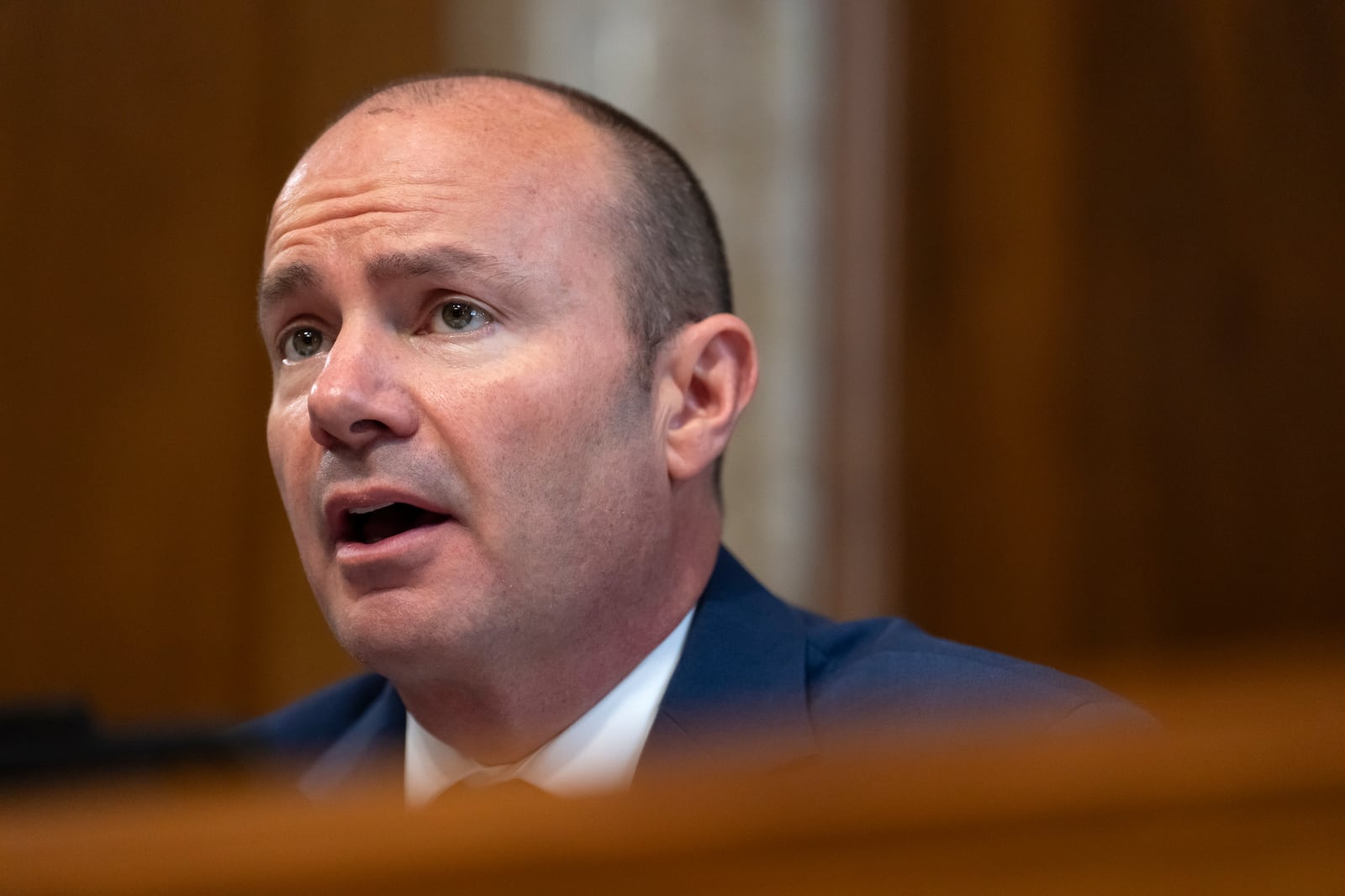
U.S. Sen. Mike Lee said Utah is an example to follow for its efforts to verify voter citizenship as the senator comes closer to passing his voter ID law in Congress.
More than a year after it was first introduced, Lee’s Safeguard American Voter Eligibility Act appears to be gaining traction as Republicans seek to make good on President Donald Trump’s campaign promises.
Meanwhile, Utah GOP legislators are backing a bill, HB209, that would create a process for county clerks to verify documentary proof of U.S. citizenship during voter registration, in line with the Utah Constitution.
“While we fight to pass the SAVE Act in the Senate, state-level citizenship requirements for voting and registration will be a vital tool to secure American elections and ensure citizen-only voting,” Lee said. “As ever, Utah leads the way.”
The Utah legislation would mirror that in a handful of Republican-leaning states that empower clerks to independently determine whether a registered voter is not a citizen and to bar participation in state elections.
As Lee, in Washington, D.C., and lawmakers in Utah clamp down on loopholes that may allow for noncitizens to vote, Utah’s chief election officer is also concluding an unprecedented citizenship review of Utah’s voter rolls.
What has the citizenship review found?
On Friday, the Utah Lieutenant Governor’s Office, which oversees elections in the state, provided an update on its review of noncitizens who are registered to vote.
After analyzing over 2 million records, election officials have so far identified just one noncitizen who was actively registered on voter rolls, but who never voted.
The individual checked the “noncitizen” box on the voter registration form but was still registered by the county clerk in a “clerical error” likely committed out of “some sort of confusion,” Lt. Gov. Deidre Henderson said.
Before the review began in April, the office identified four noncitizens who registered online to vote. The four were removed from voter rolls and are under investigation. It is unclear whether they voted, according to Henderson.
After confirming the citizenship of more than 99.9% of Utah voters, Henderson’s team is still working through roughly 7,000 records that could not be verified by using state drivers license information or federal databases.
Meanwhile, the office has updated the online voter registration process to prevent noncitizens from completing an application and Henderson is collaborating on HB209 to clarify when clerks can request proof of citizenship.
A problem of federal data?
One of Henderson’s takeaways from the comprehensive citizenship review, which she believes is the first in Utah history, is that federal databases are not a foolproof way to identify noncitizens on voter rolls, she said.
“There is no centralized federal database with a list of U.S. citizens,” Henderson told the Deseret News. “The states need to do further checks to find out. The federal government does not have good data.”
More than 95% of the 2,069,640 voters registered in August could be immediately confirmed as citizens by the Lieutenant Governor’s Office when comparing the state’s voter database with Driver License Division records.
The office then entered a memorandum of understanding with the Department of Homeland Security to use its SAVE program — which compiles Social Security, change of address and death records to determine welfare eligibility.
The program confirmed the citizenship of all but 8,836 of the remaining registered voters. But the database cannot “confirm noncitizenship,” Henderson said. So the Lieutenant Governor’s Office has begun manually inspecting each of the records.
The office found that 77% of the 2,119 active voters born outside the U.S. were citizens. On Jan. 13, the office asked the final 486 actively registered voters who could not be confirmed as citizens to complete a new registration form before Feb. 1.
The office will also inspect the roughly 6,700 records of inactive voters and those with incomplete information who said they were born within the U.S. The review will be published “as soon as we can track down as many of these voters as possible,” Henderson said.
Utah brings Sen. Lee’s SAVE Act to the state level
HB209 outlines what steps clerks can take if they cannot confirm citizenship, according to Henderson, who pointed out that, due to an election law passed last year, all Utah voters will soon be required to have state ID.

HB209, which is sponsored by Rep. Cory Maloy, R-Lehi, sailed through its first committee hearing on Wednesday with the blessing of House Speaker Mike Schultz, and the endorsement of the state’s top election administrators.
The bill would create a “bifurcated ballot system,” similar to that used for military service members in the state, that would provide voters a federal-only ballot if they refuse to provide documentary proof of U.S. citizenship.
If a registered voter has not provided proof of citizenship — with a drivers license, birth certificate, passport, tribal card or naturalization document — then clerks are instructed to notify the individual they cannot vote in state elections.
Schultz, R-Hooper, and Senate President Stuart Adams, R-Layton, both called the bill “common sense” this week, with Adams predicting on Friday that the desire to prevent noncitizens from voting is “probably unanimous up here.”
Over in the U.S. House, GOP leaders have signaled that Lee’s SAVE Act is a priority. The bill would amend the National Voter Registration Act to allow states to require REAL ID identification in order to vote in federal elections.
In addition to adding penalties for knowingly registering a noncitizen, the bill would provide alternate ways of proving citizenship to ensure citizens aren’t prevented from voting if they do not have certain forms of identification.
Any federal reform must actually accomplish “the intended goal,” Henderson said. In 2022, she was removed from voter rolls when her county clerk interpreted her birth on a foreign military base to mean she was not a U.S. citizen.
“We have worked in our state to balance accessibility and security,” Henderson said. “We want to make sure that only eligible voters are registered. We also want to make sure that we don’t erroneously kick off the voter rolls any eligible voters.”



SANDY — Vibes were as high as the temperature in some cases as thousands gathered at Real Salt Lake’s home stadium to cheer on the United States’ 2-0 win over Australia in the second match of the 2026 FIFA World Cup.
Fernando Sanchez took it all in, between belts of his drum standing in front of more than 4,000 people at the Sandy stadium.
“I was born and raised in Mexico City,” said Sanchez, who hosts a podcast called the “Fercho Show” from his current home in Utah. “But I’m from the U.S. now.”
Four years after scoring just two goals in three group games before a 3-1 exit to the Netherlands in the Round of 16, the United States is flying under Mauricio Pochettino, exciting fans across the country — from the sellout crowd at 69,000-seat Lumen Field in Seattle to watch parties around the world, including Friday in Sandy.
“The vibe is amazing,” Sanchez told KSL.com. “You can see all of the people who came out, everybody is happy because this World Cup means so much for Utah, for everybody. It’s the best of the best from each country fighting on the field. That’s what it feels like, and it’s so good to be part of this game.”
Less than 24 hours after some 9,200 fans showed up at America First Field for Mexico’s 1-0 win over South Korea, Real Salt Lake employees braced to host as many as 6,000 American fans who submitted an RSVP to spend a portion of the Juneteenth holiday in 94-degree weather.
In-game hydration breaks became as much of a necessity for fans as the players in Seattle, with hundreds flooding the open hydration stations, concessions area, and a few food trucks at each “quarter break” installed by FIFA for the first time at a men’s World Cup.
While final attendance dropped to around 4,500 fans in Sandy, the spirits remained high as Folarin Balogun, who scored two goals in a 4-1 win over Paraguay in the World Cup opener, forced the opening goal off Australia’s Cameron Burgess.
Alex Freeman, the son of former Super Bowl champion Antonio Freeman who at 21 is the youngest player on the roster, doubled the advantage in the 43rd minute off a set piece that was initially ruled offside.
But after a lengthy video review where fans refused to sit down, pandemonium ensued as the U.S. fans in Sandy recognized their national team was moments away from clinching passage out of the group in the first men’s World Cup on home soil since 1994.
It’s the first time the United States men’s national team has won consecutive games at a World Cup tournament since 1930.
Yet it’s not just the wins, but how the Yanks are winning that has Americans excited about a sport that has made significant strides domestically in three decades since the founding of Major League Soccer.
The U.S. is winning with an exciting brand of attacking soccer led by Balogun, who grew up in England but chose to represent the country of his birth over his parents’ native Nigeria in 2023, and Christian Pulisic, the AC Milan winger with 33 goals in 87 international appearances from Pennsylvania who did not play Friday due to a calf injury.
“There’s a lot of American pride,” said St. George youth soccer player Tate Hurst, who showed up to the watch party with a half-dozen club teammates at Fire SC during Western Presidents Cup regional this weekend. “The American dream.”
Sunburn, heat and hydration aside, the moment created a memory for thousands of soccer fans and casuals alike. That included RSL season ticket holders, waiting until the end of the month-long international break for the club’s MLS season to resume in July.
But for one afternoon — and perhaps another, as the club plans to host a similar watch party next Thursday when the United States hosts Türkiye in Los Angeles (8 p.m. MT, FS1) — each soccer fan was pulling for the same team.
Except, perhaps, for the dozen or so Australia fans in the corner of the east lawn who represented their own Socceroos for the entire 90 minutes.
“Soccer brings everybody together,” one RSL staff member said over the public-address system as fans headed for the parking lot while James Brown’s “Living in America” blasted over the sound system after the full-time whistle. “That’s what today was all about.”

SALT LAKE CITY — Utah athletics is making a notable change to the Huntsman Center gameday setup, but the move is about more than where the team sits.
The Runnin’ Utes are moving the team bench from the east side of the Jon M. Huntsman Center to the west side, returning the bench to the side it occupied during the Rick Majerus era. The change will also move the MUSS and band from the west side to the east side.
The shift is part of a larger effort by Utah Athletics to improve the student-section experience, create a more consistent setup inside the Huntsman Center and better connect the arena to the university’s growing College Town Magic initiative.
Enhancing The MUSS And Fan Experience
Nowlin said the primary motivation behind the change is improving the MUSS and the overall fan experience.
“The reason we’re doing this is we want to enhance the MUSS,” Utah’s Deputy Athletics Director & Chief Revenue Officer, Patrick Nowlin said. “As an ongoing effort, we’ve been working on for the past two years, how do we enhance the fan experience?”
One issue Utah identified was that the MUSS had been located in different areas for different events. Moving the student section and band to the east side gives the department a more consistent location to build around.
“We wanted to create a better fan experience,” Nowlin said. “We wanted to be able to have one spot that we can build on, which means we can brand. We can enhance everything about it.”
The move also ties directly into College Town Magic. Nowlin said the area around the Huntsman Center will include more than 2,900 total beds, including more than 1,400 new beds, giving students a direct path from nearby housing to the student-section entrance.
“There’s over 2,900 new beds that are right there, which will be right at the branded entrance, right where the student section is,” Nowlin said. “They don’t have to go far at all. So it’s just a walk straight down from the dorm, right in the door.”
And according to Utah’s Patrick Nowlin, the move is not limited to men’s basketball.
“It’s not just men’s basketball. It’s all Huntsman Center events,” Nowlin said.
A Nod To Utah Basketball History
While the move is primarily about fan experience, there is also a clear basketball-history component.
The west-side bench location is where Utah sat during the Majerus era, when the Runnin’ Utes were one of the top programs in the country and the Huntsman Center had a different level of edge. Alex Jensen was part of that era as a player, and now, as Utah’s head coach, the move reconnects the current program with one of its most successful periods.
Nowlin said the historical connection was part of the conversation, even if it was not solely Jensen’s decision.
“Yeah, it’s a nod to history,” Nowlin said. “I think Alex, him being here, he’s a steward of the program. There’s a lot of history to having it on that side.”
Still, Nowlin made clear the change was not simply pushed through by Jensen.
“It wasn’t a push from him,” Nowlin said. “It was a concerted effort from everybody to where, how do we create an area that the MUSS can have, but also how do we lean into our history, but still move forward in a way that we can honor that, but create an unbelievable environment.”
That is the heart of the move. Utah is trying to bring back a piece of its basketball identity while also reworking the building for the future.
How Fans Will Be Impacted
The change will affect some season-ticket holders, donors and fans seated near the current bench, MUSS and band areas, but Utah tried to limit the disruption.
Nowlin said the department spent months working through the seating impact and expects fewer than 200 accounts to be directly affected. Those accounts are in sections T, U and V.
“This wasn’t something that just came about,” Nowlin said. “We’ve been working on this for a few months now, and we wanted to find a way that we could minimize the accounts that were directly impacted, but still create the fan experience change we were after.”
Utah’s plan is to work individually with affected fans and mirror their seat location as closely as possible on the other end of the court.
“If you’re on one end and now you’re going on the other end, we will work with you to get you in the seat that is similar to where you were and allow you to have the same experience you’ve had, just on the other end of the court,” Nowlin said.
Utah will also hold a virtual seat-selection process from July 7-17, allowing fans who want to move to choose from available options.
“We’re going to take care of everybody, but we’re also going to allow people the choice and the freedom to be able to make the changes they want to make,” Nowlin said. “We want to create every opportunity we can to give our fans opportunities to choose their own experience.”
Not Part Of The Huntsman Renovation
The bench and MUSS move is not directly tied to the larger Huntsman Center renovation discussions. Nowlin said the change is instead connected to College Town Magic and Utah’s effort to improve the student and fan experience inside the building.
“It does not have to do with the renovation, but it does have to do with College Town Magic,” Nowlin said.
The move could create some new seating and premium opportunities, particularly around courtside and floor seating. Nowlin said Utah is still evaluating those possibilities.
“By doing this, this will create additional opportunities for us on courtside and floor,” Nowlin said. “We’re also looking to how do we enhance our premium experience across the board. So this is a step in a process that will continue.”
The Bottom Line
Utah’s bench move is not just a nostalgic callback to the Rick Majerus era, and it is not just a seating chart adjustment. It is part of a broader effort to reshape the Huntsman Center experience.
The team bench is moving back to the west side, where Utah sat during some of the program’s most successful years. The MUSS and band are moving to the east side, where Utah believes it can build a stronger, more consistent student-section identity tied to College Town Magic.
For Utah Athletics, it is another step toward rethinking how the Huntsman Center looks, sounds and feels on game day. For Jensen, the move reconnects the program to its winning past.
The symbolism will matter to longtime Utah basketball fans. The logistics will matter to students, band members and season-ticket holders. But the larger goal is simple: make the building feel more intentional, more connected and more like home again.
Steve Bartle is the Utah insider for KSL Sports. He hosts The Utah Blockcast (SUBSCRIBE) and appears on KSL Sports Zone to break down the Utes. You can follow him on X for the latest Utah updates and game analysis.
Take us with you, wherever you go. Download the new & improved KSL Sports app from Utah’s sports leader. You can stream live radio, video and stay up to date on all of your favorite teams.

SALT LAKE CITY – The San Juan County assessor has resigned partway through his second term, following a recommendation that he be removed from office.
Rick Meyer’s resignation became effective on Monday, according to San Juan County Commissioner Lori Maughan. A copy of Meyer’s resignation letter was not immediately available.
This comes after the Utah State Tax Commission determined that Meyer had failed to follow the law and was “unfit to perform his duties.” In a letter last week to San Juan County commissioners, the tax commission recommended “the immediate removal of the San Juan County assessor from office to protect the public interest and restore the integrity of the property tax system in San Juan County.”
Among other things, Meyer was accused of failing to tax agricultural buildings, misclassifying property, and giving property tax exemptions to certain parcels, including vacant land, when he shouldn’t have.
The recommendation to remove Meyer from office was the first under a recent state law giving the Utah State Tax Commission more power to take corrective action against county assessors who aren’t doing their jobs properly. Assessors play a major role in the property tax process by determining the value of property throughout their counties.
Yet, it was unclear whether the San Juan County Commission could have actually removed Meyer from office had he not stepped down.
With Meyer’s resignation, the San Juan County Assessor’s Office has just one employee left. Deputy assessor Nathan Pitts will run the office until the San Juan County Republican Party recommends a replacement and the County Commission appoints one.
“It’s me holding down the fort here,” Pitts told KSL on Thursday, noting that he has spoken with the Utah Association of Counties and the state tax commission about plans for this interim period. “Everybody’s on board to assist and try to make it the best as we can, (but) I’ve definitely got my work cut out for me.”
Pitts said he does not plan to run for county assessor to replace his old boss.
“That is not my intention at all,” he said. “I’m quite content as a deputy assessor.”
Meyer was first elected as San Juan County assessor in 2020 and won reelection in 2024. His current term was set to conclude in 2029.
The Key Takeaways for this article were generated with the assistance of large language models and reviewed by our editorial team. The article, itself, is solely human-written.
-

 Detroit, MI2 minutes ago
Today in History: June 20, race-related rioting erupts in Detroit
-

 San Francisco, CA12 minutes ago
San Francisco hotels see steady World Cup business, but fall short of Super Bowl surge
-

 Dallas, TX17 minutes ago
Dallas International Piano Competition brings finalists June 23
-

 Miami, FL24 minutes ago
Where to watch San Francisco Giants vs Miami Marlins: TV channel, start time, streaming for June 20
-

 Boston, MA27 minutes ago
Duck parades, outdoor drinking, and Gronk in a kilt. Here’s how Friday’s World Cup festivities unfolded. – The Boston Globe
-

 Denver, CO32 minutes ago
Rockies ride Kyle Freeland’s gem, Braxton Fulford’s double to 4-3 win over Pirates
-

 Seattle, WA39 minutes ago
Suarez’s no-hit try ends on Naylor double in seventh, but Boston still tops Seattle
-

 San Diego, CA42 minutes ago
Neymar expected to return from right calf injury and play for Brazil in World Cup against Scotland

