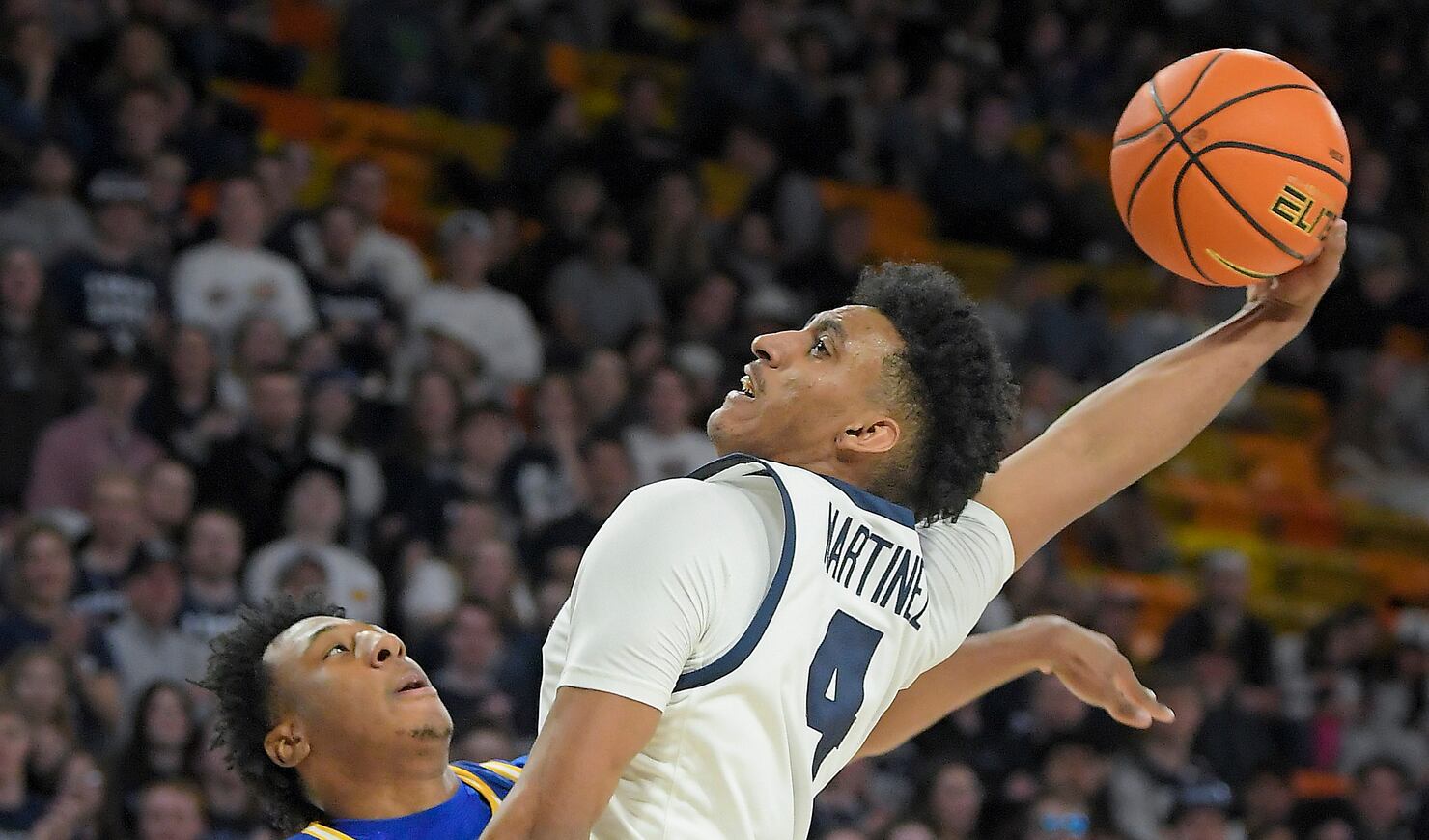


Shortly after the San Jose State basketball team arrived in Cache Valley in preparation for Wednesday night’s game at Utah State, the student-led group of Aggie spirited athletic fans known as The HURD attempted to make amends for a previously unfulfilled promise made to Spartans’ head coach Tim Miles.
Now in his fourth season at SJSU, Miles was gifted a half gallon of chocolate Aggie Ice Cream when he arrived at his hotel on Tuesday, and he took the time to thank The HURD and post a photo of himself on social media enjoying some of the frozen treat.
But by halftime of Wednesday’s game against the Aggies, the veteran coach was suffering from something far more painful than an ice-cream headache.
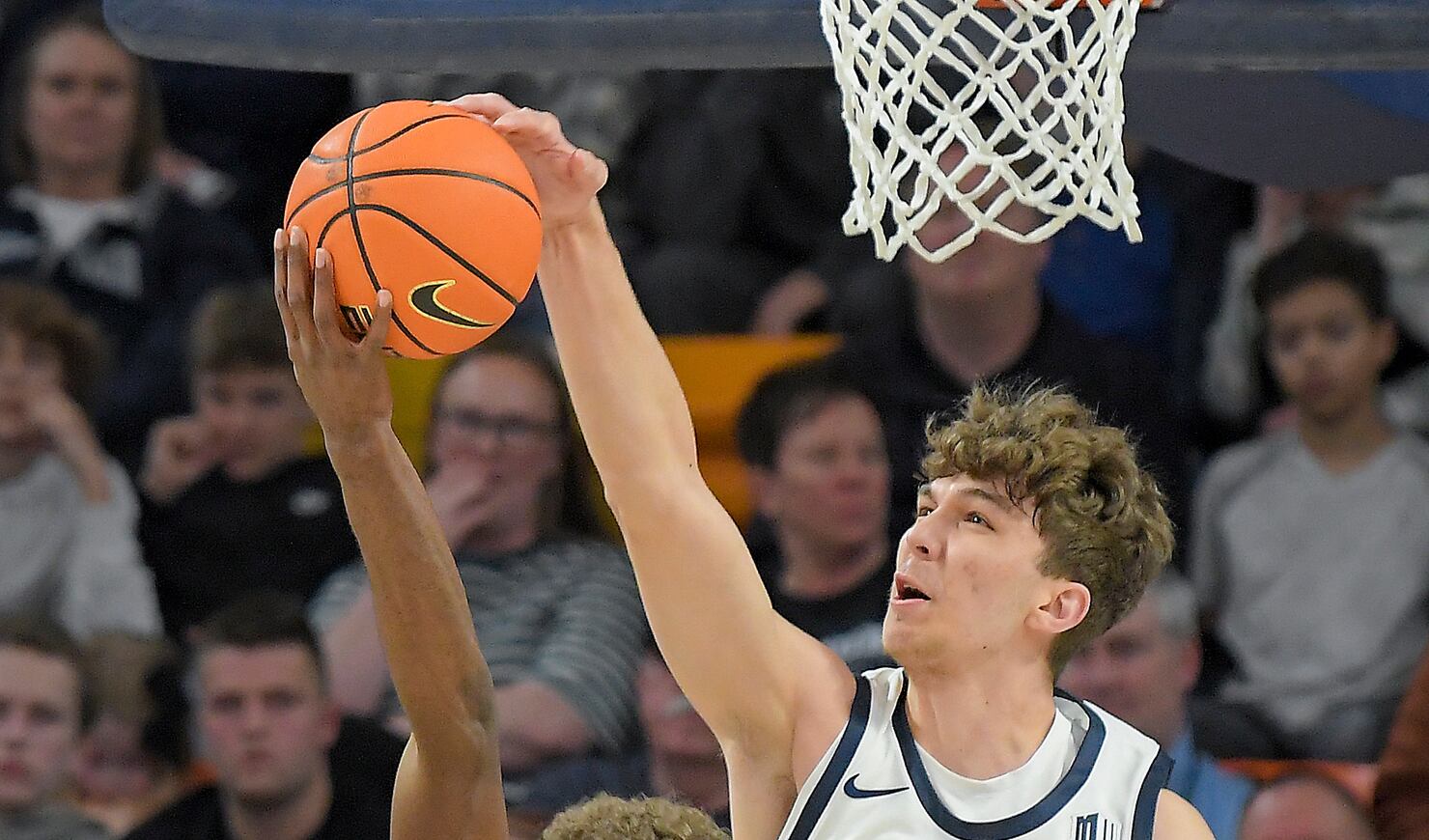
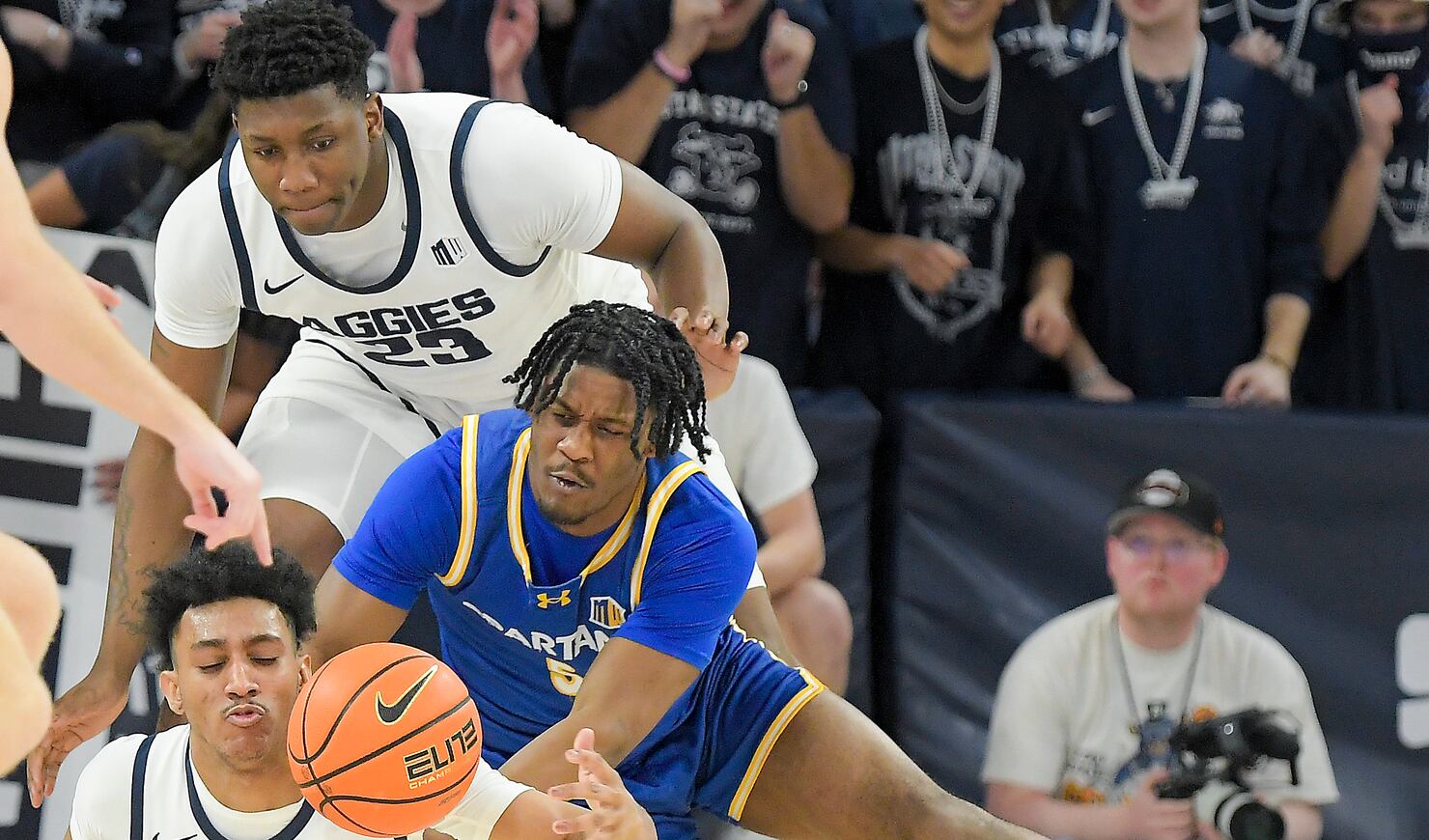
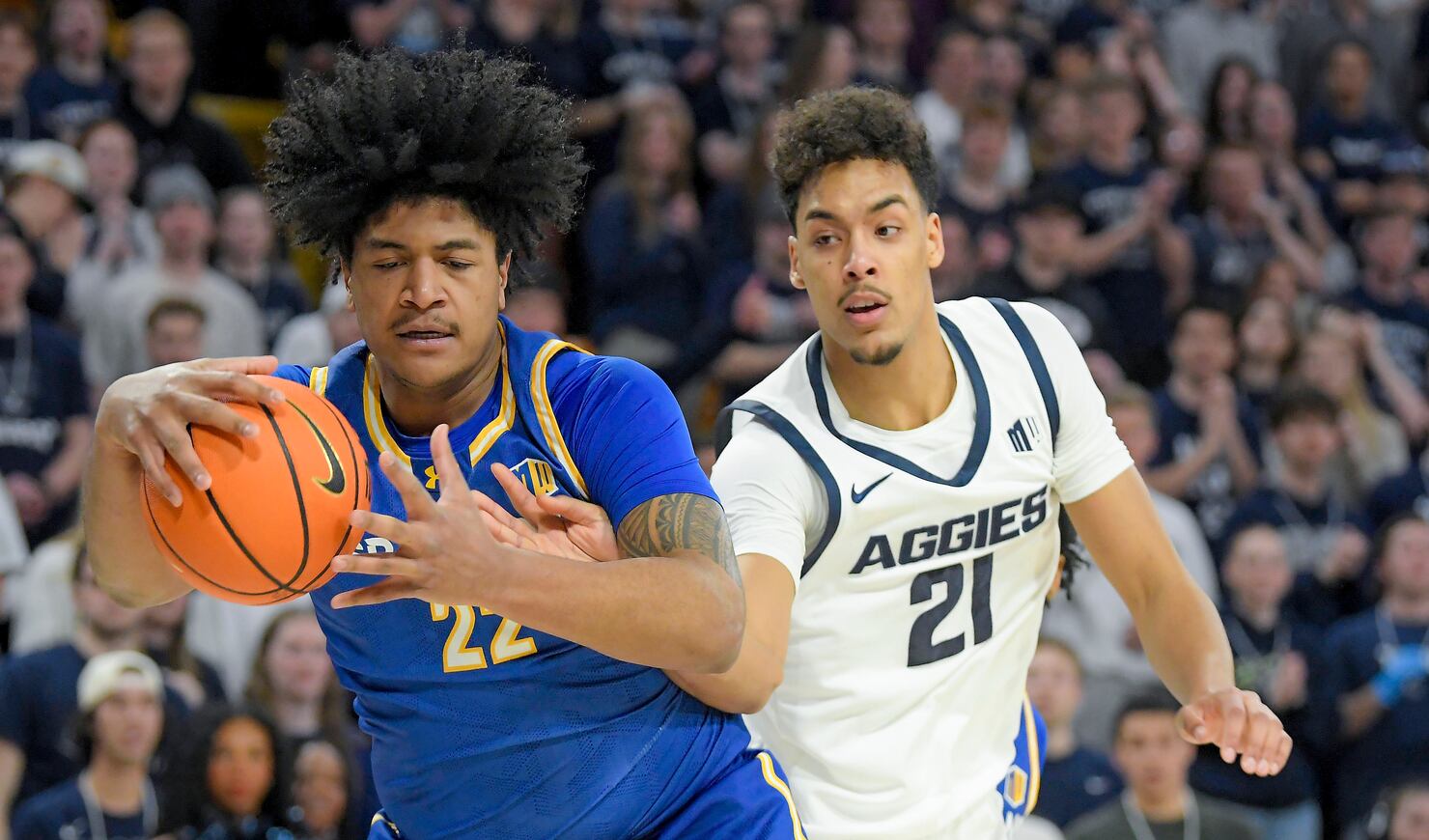
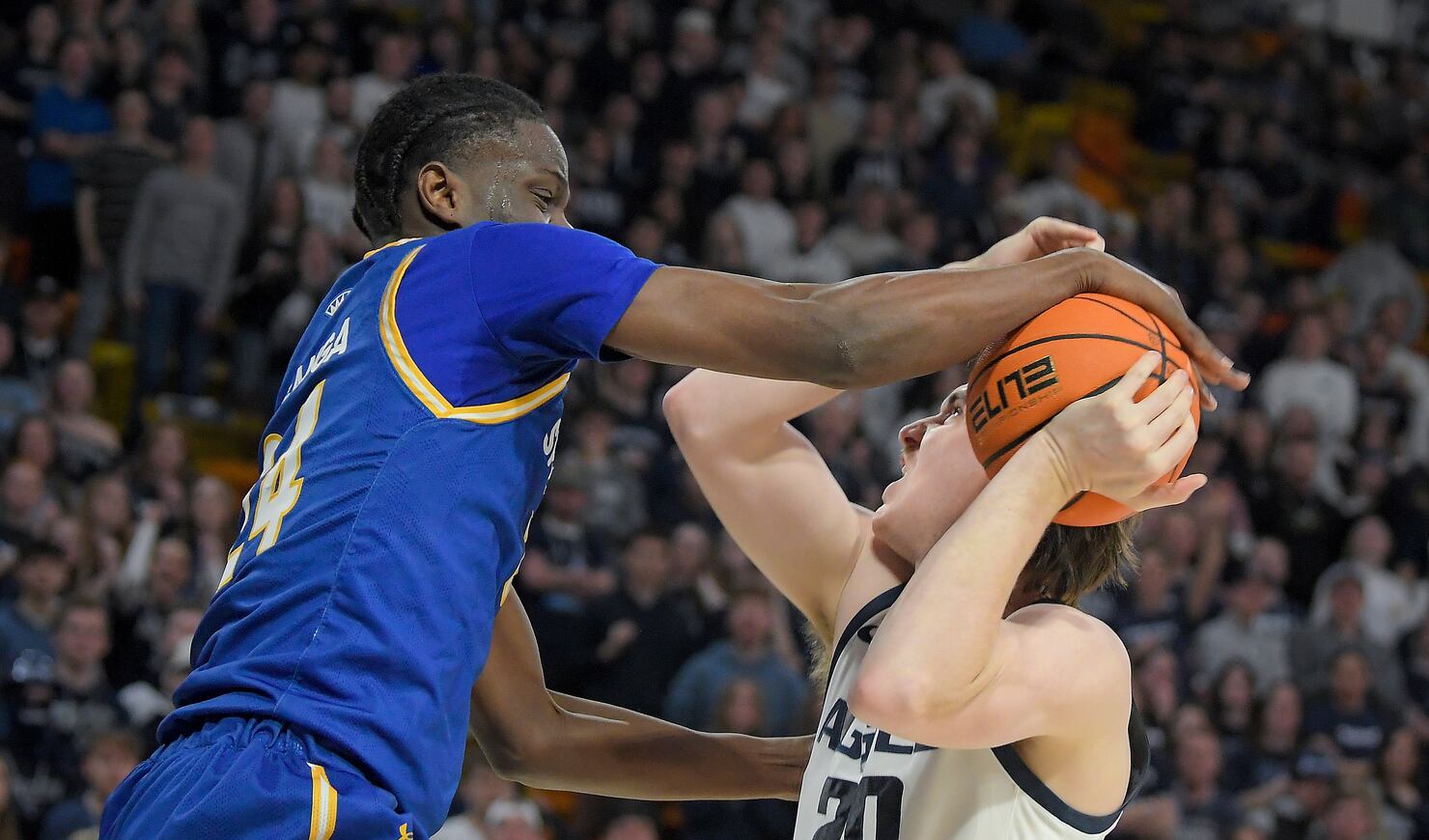
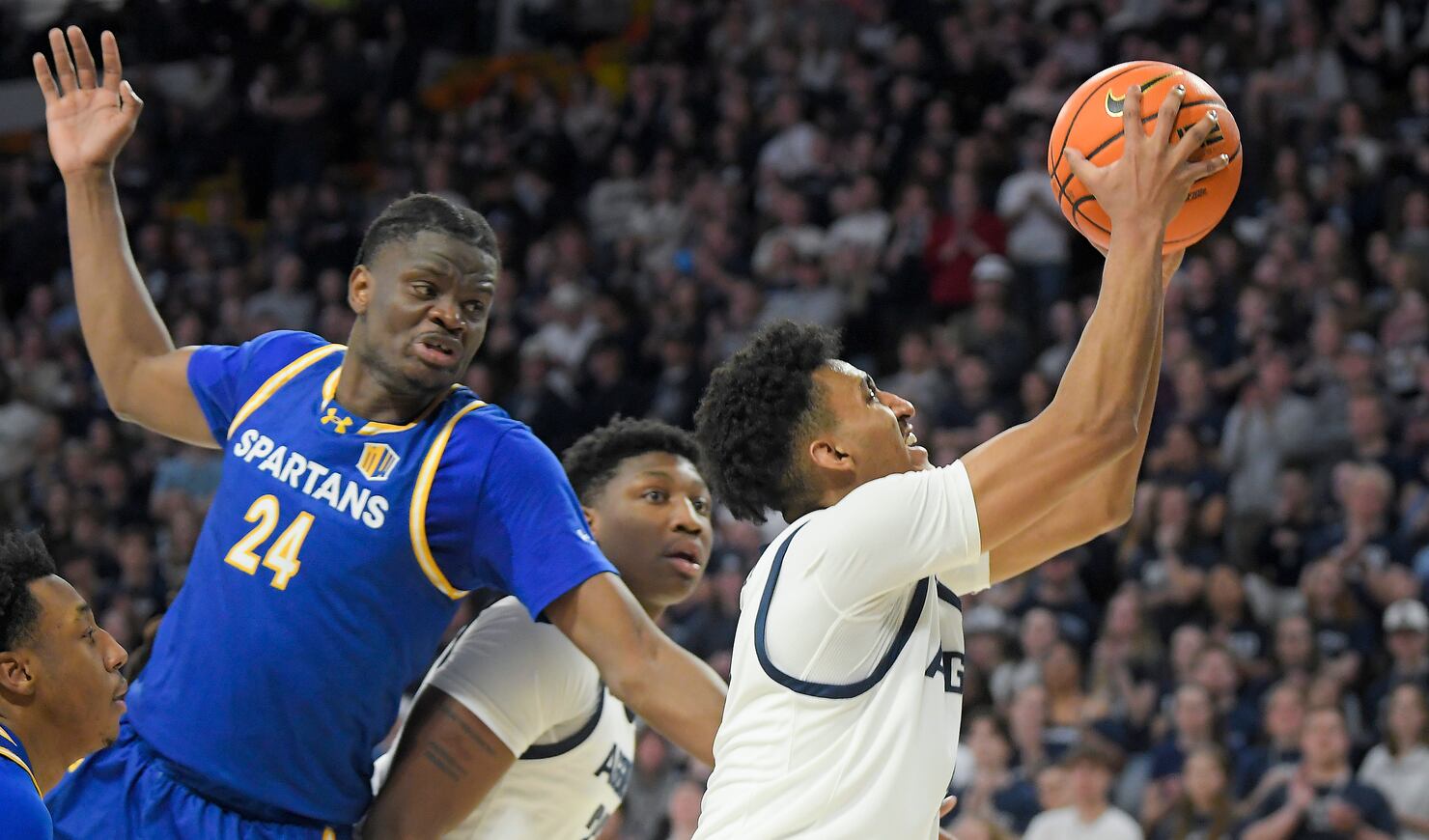
Utah State absolutely dominated San Jose State, 105-57, at the Spectrum to record the largest margin of victory in a conference win in school history, bettering a 45-point win against the Spartans on Dec. 21, 2020.
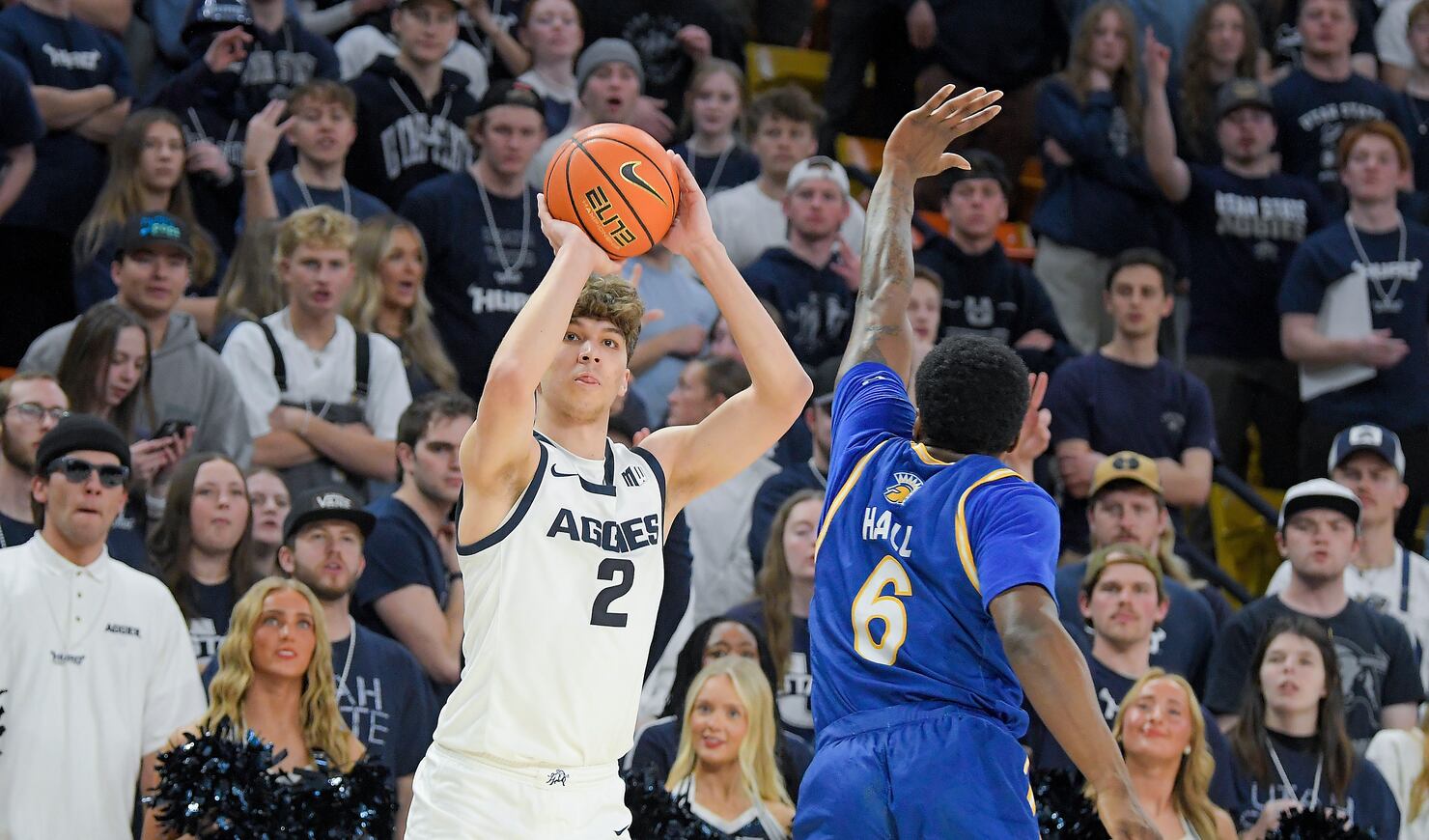
“It was just a disappointing night for San Jose State,” Miles declared. “I thought that Utah State was clicking on all cylinders. They were great the way they shot the three. I think six different guys hit threes in the first half, and that really set the tone for the whole game.”
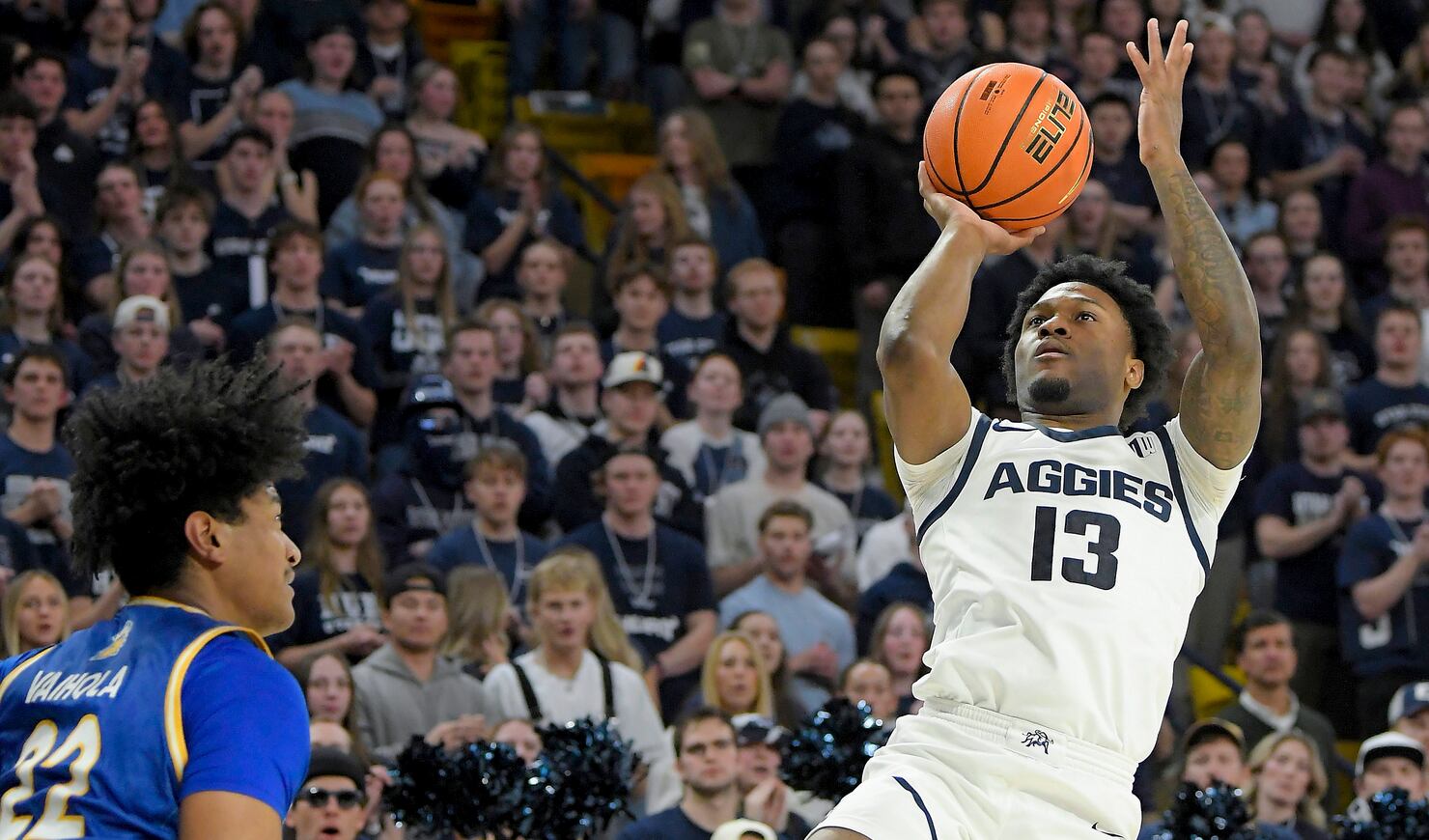
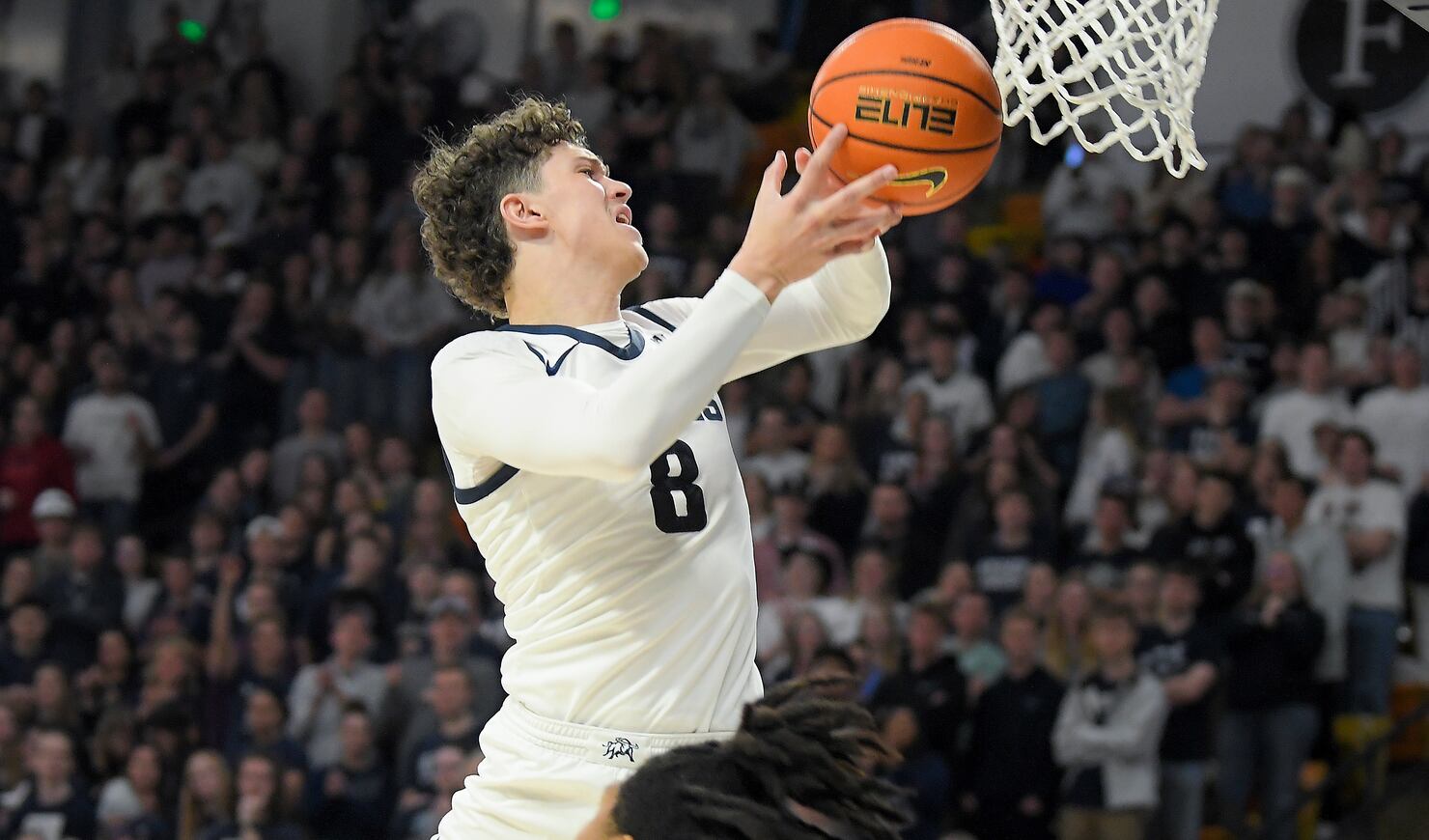
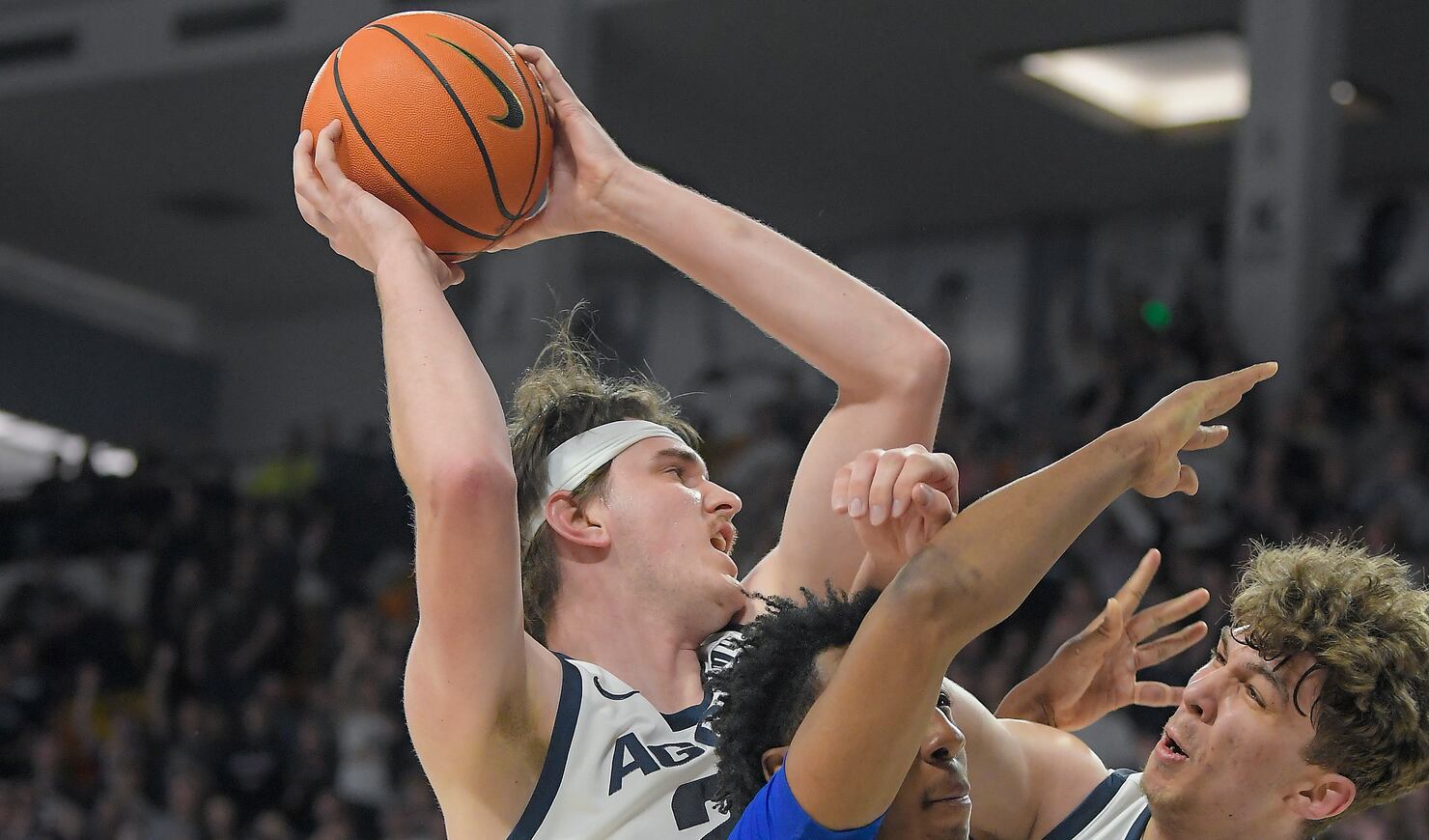
Led by graduate guard Ian Martinez’s game-high 22 points, the Aggies held a 47-24 advantage at halftime and led by as many as 51 points in the second half. All 12 USU players to see action scored at least two points, with guard Mason Falslev (13 points), guard Dexter Akanno (13 points), wing Tucker Anderson (11 points) and guard Deyton Albury (10 points) all scoring in double figures.
Utah State, which was coming off a tough, three-point loss at New Mexico on Sunday, shot 63.6% from the field in the second half, 51.5% for the game and knocked down 13-of-25 (52%) 3-point attempts.
“I thought our guys didn’t let one loss correlate to another,” USU head coach Jerrod Calhoun said. “We’ve talked about mindset for the last 48 hours. Credit to the leaders of our team, Ian and Mason and Drake (Allen), some of those guys that have been around college basketball. They understand the highest of highs and the lowest of lows.
“They had the attention to detail, the defense, the physicality, the rebounding in this game. I’m really proud of our guys.”
The lopsided victory helped the Utah State (23-4 overall, 13-3 in the Mountain West) hold onto second place in the conference standings. But the Aggies did pull within a game of first-place New Mexico (22-5, 14-2) thanks to the Lobos’ 86-78 loss at Boise State Wednesday night.
Utah State has four regular-season games left, starting with Saturday’s home game against San Diego State. The Aztecs (18-6, 11-4) are currently tied for third place with Colorado State (17-9, 11-4).
San Jose State (12-16, 5-11), which hasn’t won in the Spectrum since 1982 and is 4-42 all-time in Logan, gave the Aggies a little scare in the first game of the season in San Jose before losing 85-78 on Jan. 7. But after taking a 4-2 at the start of the rematch, not much went right for Miles’ club as USU scored 10 of the game’s next 12 points.
Former Aggie Josh Uduje, who notched those first two field goals for the Spartans, missed his next 12 shots of the game and San Jose State’s leading scorer at 16.4 points per game ended up scoring just four points in 31 minutes. It was a disappointing return to the Spectrum for Uduje, who was named the co-Sixth Man of the Year last season in the Mountain West after playing a key role for the Aggies in their conference championship run under former head coach Danny Sprinkle.
Uduje initially announced he was staying at USU for another year after Calhoun was hired last April, but then he switched his commitment in May and ended up signing on with the Spartans. Uduje, who was still greeted warmly by the Spectrum crowd of 8,921 on Wednesday, played against the Aggies despite missing the SJSU’s two previous games with elbow and back injuries.
“I thought the crowd really treated Josh with the respect that he deserves; that team last year was pretty special,” Calhoun said. “… As long as I’m the coach at Utah State, which is hopefully a long time, he’s always welcome here. He’s a class act kid.
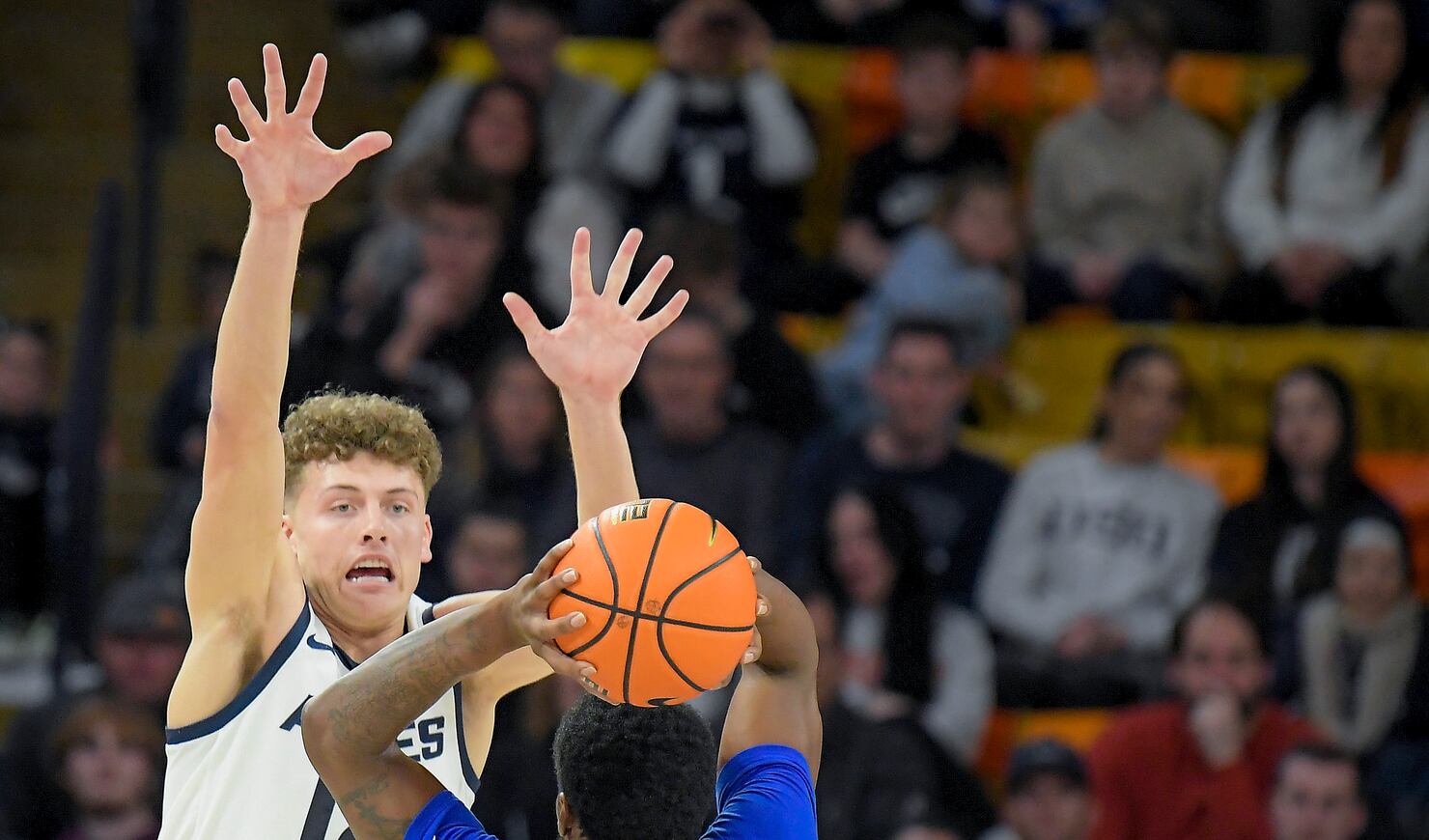
“… But he’s been having some back issues and hasn’t played in a couple of weeks, but we knew he’d play in this game,” Calhoun added. “Josh is a big focal point of their team, and he gets 16 points a night. So, we wanted to crowd him and make life hard for him. And yeah, he struggled. Just 2 for 14. But credit our guys and our defense.”
Overall, San Jose State shot just 36.8% from the field, were 9 for 32 (28.1%) from 3-point range and committed 13 turnovers to just six for the Aggies.
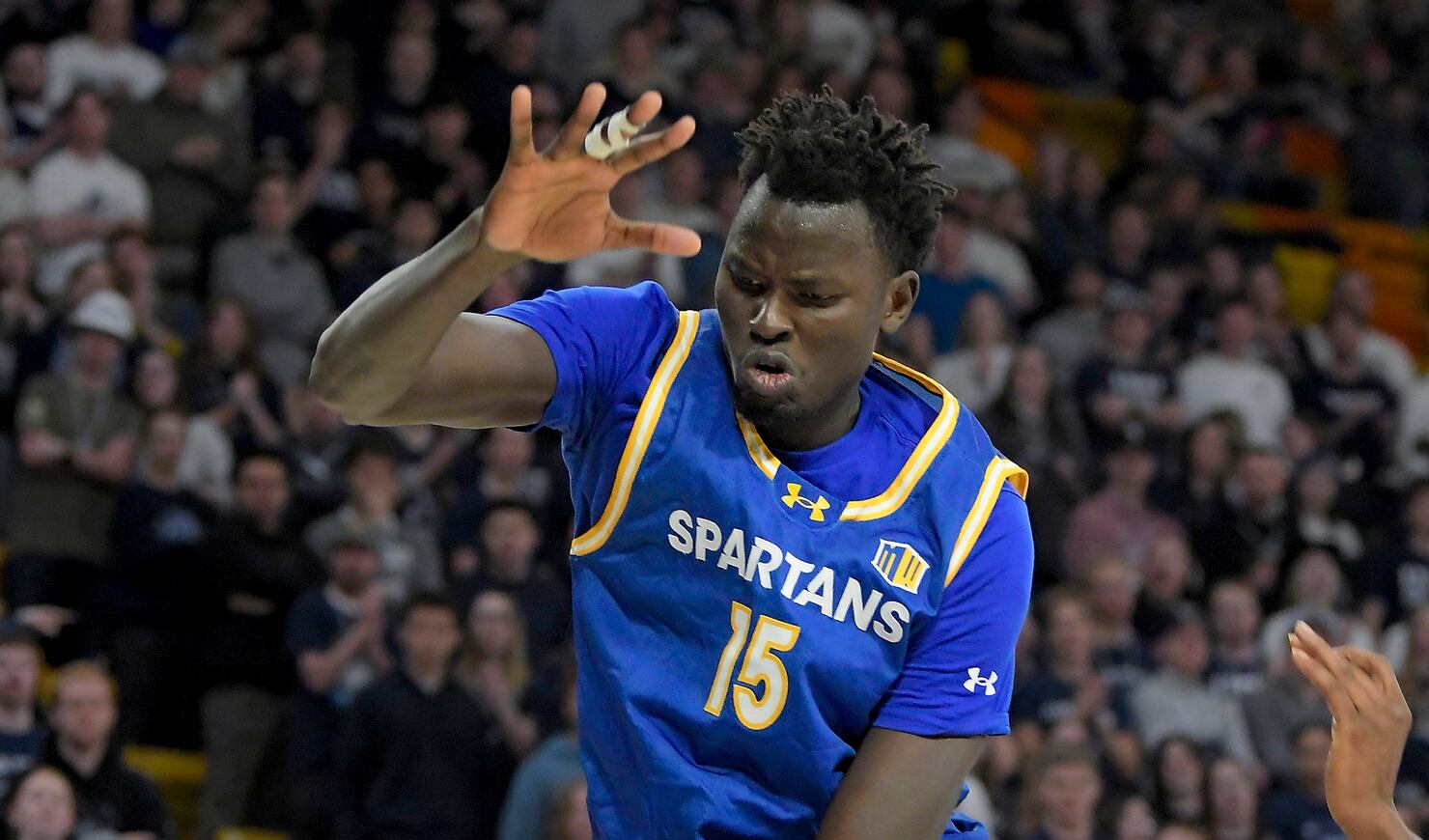
The Spartans, whose second-leading scorer Will McClendon missed Wednesday’s game with a knee injury, got 15 points each from graduate guard Donovan Yap and junior forward Sadraque Nganga.
“One thing we’ve really talked about lately is defensive stamina, and there were times in the second half we gave up some easy points,” Anderson said. “But we know what we’re capable of, and we’re trying to focus on our strengths and coming out in the second half, not looking at the score and just playing as hard as we can for 20 minutes in the second half.
“We seem to have some really good first halves, but second half defense is where we’ve struggled sometimes. So, we’ve got to keep getting better at that.”
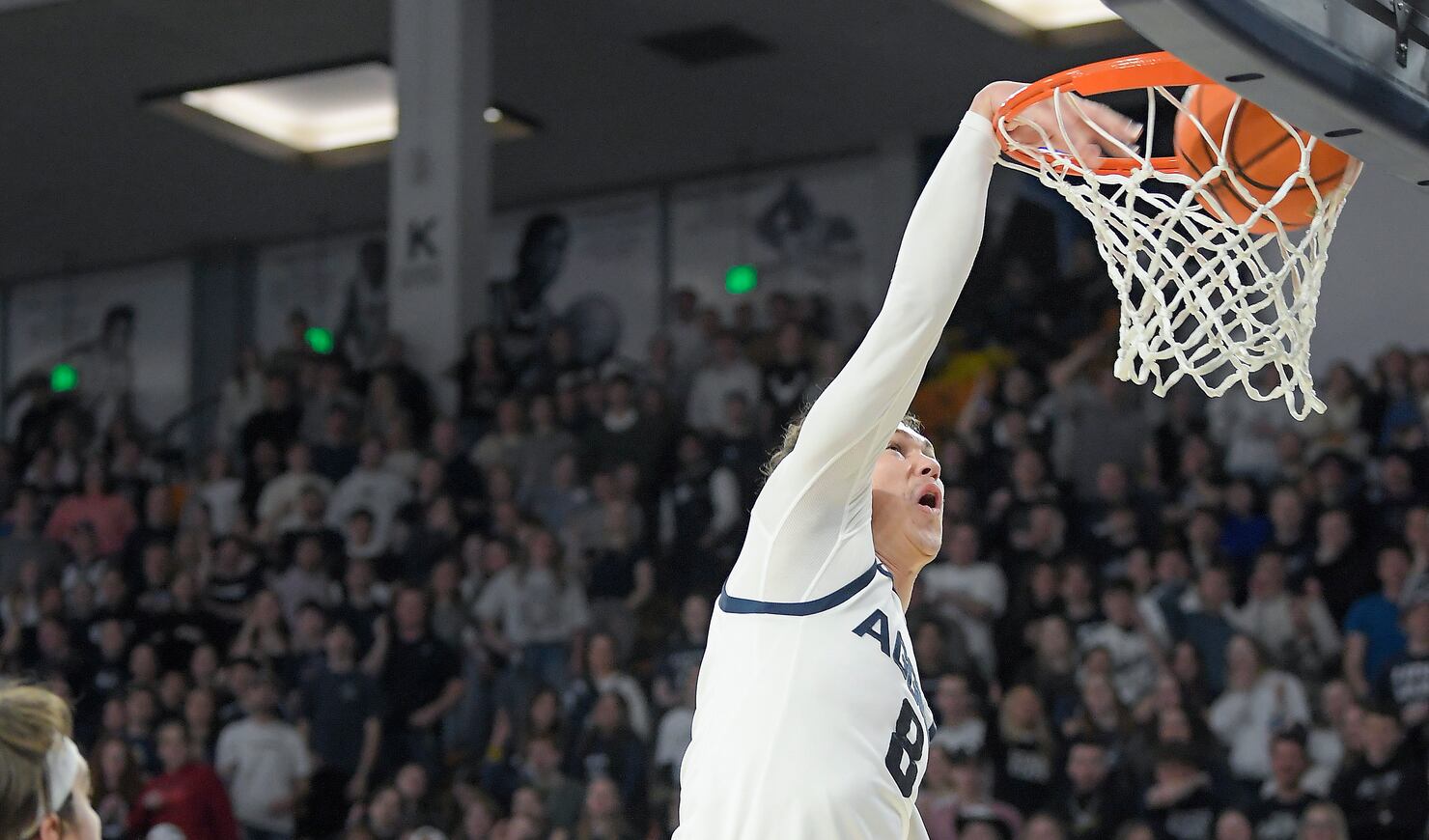
Anderson, who went 3-for-6 from 3-point range against the Spartans, credited Allen for setting him up for an easy dunk in transition in the second half, as well as for a behind-the-back pass from the top of the key that Anderson turned into a 3-pointer on the following possession.
“I think Drake’s been almost like a big brother to me,” Anderson said of Allen, who also flew down the lane in the second half for the most spectacular dunk of the night. “He’s the guy that’s always talking to me and always tells me to keep shooting, and he gave me some good passes tonight.”


SALT LAKE CITY, UT (Good Things Utah) – A Park City charitable foundation is challenging outdoor athletes to turn their miles into meals for hungry kids. Terrence Moorehead is the co-founder of the non-profit RipLine Foundation. He says the RipLine Foundation seeks to channel the energy of Utah’s outdoor athletes, adventurers, and enthusiasts into the fight against childhood hunger. RipLine’s mission: Fight Hunger Feed the Future. It’s delivered through three peer‑to‑peer leader challenges across the year that turn movement into meals for children in need. 100% of funds raised go directly to vetted giving partners, including No Kid Hungry, Feeding America, Feed the Children, and Vitamin Angels.
The challenge is to turn every mile walked, run, biked, or hiked, and every hole of golf played into meals for kids facing food insecurity. Terrence says ‘Outdoor athletes are the most generous, motivated, and passionate community in the state and we’re done pretending we can’t do something to help our kids. Every mile is a meal. Every climb is a meal. Every round of golf is a meal. If you’re already moving, you’re already qualified.’
He says this summer they have Miles in the Wild™ – walking, running, biking, and hiking – which currently runs through September, and Balls Out™ which is our summer golf challenge. They are encouraging athletes in their preferred sport to rally networks of family, friends, coworkers, and crews to sponsor their effort.
Terrence says ‘Childhood hunger is unacceptable in a country this abundant — and it’s an area where we can have a real and meaningful impact. What’s been missing is a model that scales — that turns individual effort into measurable, repeatable impact. RipLine is built to do exactly that. Every Leader brings a network. Every dollar reaches a child. The math works. The Foundation has committed to providing one million meals in 2026 alone — its first year of fundraising — with a 2030 target of four million meals and one million children nourished.’
To sign up go to riplinefoundation.org

SALT LAKE CITY — Rep. Mike Kennedy, R-Utah, views liberty as a driving force in American history, which is why he’s thrilled about a 60-foot-long and 36-foot-tall arch planned for a space near the Utah Capitol.
The Grand Liberty Arch, designed by renowned artist Sabin Howard, is expected to become one of the largest bronze sculptures in the West by the time it’s completed over the next seven years. Kennedy believes it will highlight the effort to gain liberty over the past 250 years.
“For two and a half centuries, liberty has been an active ingredient in the background of American history, and the driving engine of our national progress,” he said on Monday, as a 6-foot model of Howard’s piece rotated within the Utah Capitol rotunda next to him. “It is the vital spark that transformed a collection of colonies into a beacon of global innovation and human potential.”
However, those who live near its planned location are less excited by the state’s plan, not by the sculpture as much as the spot the state has in mind and the process by which it was selected. They believe it will drastically alter a longstanding open space, and question why the project was voted on quickly without much public feedback.
The Capitol Preservation Board signed off on the project in May, with the expectation that the estimated $55 million cost will be raised privately. Former Zions Bank CEO Scott Anderson was working with JLL Salt Lake City Real Estate to raise the funds, meeting with family foundations and large corporations, officials said during the meeting.
Utah Gov. Spencer Cox penned a letter in support of the project in February, saying that he believes in the “significance of this legacy piece.” Howard, who recently completed a World War I memorial in Washington, D.C., had his latest vision on display at the Utah Capitol over Fourth of July weekend, so people could better view his vision.
The sculpture depicts many elements of the past 250 years in the U.S., from the Revolutionary War and the signing of the Declaration of Independence to the building of the country and its westward expansion. An unveiling ceremony was held Monday, where Howard and others were able to describe it and its importance for now and the next 250 years.
“America is dynamic. … Americans do not stand still,” he said. “The Grand Liberty Arch is a celebration of liberty that has transformed our nation.”
It’s expected to be built in phases over the next seven years, completed in time for the 2034 Winter Olympics and Paralympics. Over 100 people showed up for the ceremony, making sure to snag a photo of the model by the end of it.
The sculpture is to be located at 17 W. 500 North, on a parcel across the street from the Utah Capitol, informally known by some as the Capitol triangle. Utah owns the land, but it’s also not considered part of the primary Capitol Complex, meaning it’s not subject to some of the same Capitol grounds rules, Cox said.
Utah House Speaker Mike Schultz, R-Hooper, called it the “perfect location” during the board’s May meeting. Renderings show a plan to remove some of the park’s longstanding trees, replacing them with cherry trees around the arch that essentially adds to the Capitol’s walkway.
The location has also created a stir within its neighborhood. The Capitol Hill Neighborhood Council ended a June 17 meeting by debating several options to respond to the state’s decision.
There were some concerns raised about some of the depictions, but most are concerned about potential impacts to the current open space, which is used for an annual gathering, but also smaller park space since it’s located right next to homes, said Jonathan Bruns, chairman of the Capitol Hill Neighborhood Council.
“It’s off the main (path), so it’s a little … removed from the main grounds. It’s usually a quieter spot,” he explained.
With thousands of people projected to cross the street to view the piece, they said it could snarl traffic along Capitol and Columbus streets. Others were concerned by the size and scale of the project and the quick process to select a design, which appeared to include little to no public feedback.
Salt Lake City Councilman Chris Wharton, whose district includes the area, pointed out that the state is exempt from local processes, meaning there’s nothing the city or county could do to intervene. As a resident and lawyer, he suggested a formal complaint to the Capitol Preservation Board over the monument process around the Capitol complex, which the neighborhood council plans to do.
The council agreed to submit a formal complaint to the board and Utah Attorney General’s Office to make sure that the board followed Utah’s Open and Public Meetings Act and normal processes for a monument. It also agreed to submit a public records request on the project for a “comprehensive report of community feedback.”
Part of the complaint centers around a discussion of a 100-year monument project for which there were two options discussed in May, separate from the arch. One celebrated the golden spike, while the other highlighted women’s suffrage in Utah, but the project was placed on hold over logistics.
Board members didn’t abandon the project, but said the arch could ultimately serve as the selection. That made the neighborhood question if it followed the correct process for monuments, Bruns explained.
“It kind of seems like this went around the rules in an odd way. … We are obviously doing work to make sure it was done by the right processes,” he said.
The attorney general’s complaint has since been filed, while the rest are in the works, he told KSL. He’s unsure if the council would file a lawsuit over the time and money that would strain a volunteer group of residents.
Bruns credited Howard for being responsive, adding that he’s hopeful the state can also be understanding of the neighborhood’s concerns, whether that’s project adjustments or a new location.
The Key Takeaways for this article were generated with the assistance of large language models and reviewed by our editorial team. The article, itself, is solely human-written.

ST. GEORGE, Utah (KUTV) — A jury returned a guilty verdict against a Chicago man accused of trafficking 25 pounds of cocaine through Utah with a firearm and cash.
Marcus Kentral Brown, 41, of Chicago, was found guilty on Tuesday of possessing 500 grams or more of cocaine with the intent to distribute and carrying a firearm in relation to a drug trafficking crime.
A Utah Highway Patrol trooper pulled Brown over in his Jeep Grand Cherokee on July 13, 2021. Brown reportedly said that he was traveling back to Chicago from California.
The U.S. Attorney’s Office District of Utah said that, according to evidence presented at trial, the trooper conducted a consensual search of the vehicle and found 10 packages of cocaine (25 pounds worth) and a loaded Glock pistol in a hidden compartment in the rear cargo area. The trooper also found air fresheners and about $14,000 in cash.
Brown is scheduled to be sentenced on Oct. 28 in St. George.
JOIN THE CONVERSATION (1)
_____

Justin Baldoni and wife break silence after ‘It Ends With Us’ legal battle with Blake Lively
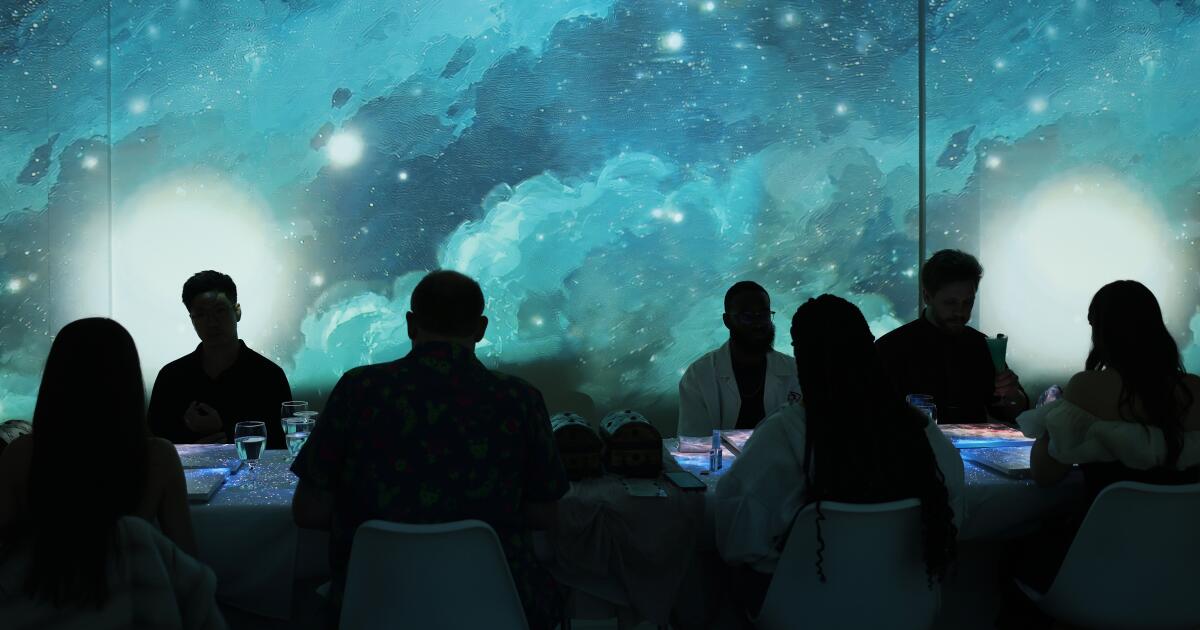
A meal with an animated Mona Lisa? Immersive dining goes high tech — but will L.A. eat it up?

Nexstar launches its first digital subscription service with The Hill Insider, aimed at political junkies

Not everyone is leaving California. A new commercial battery maker just landed in Sacramento
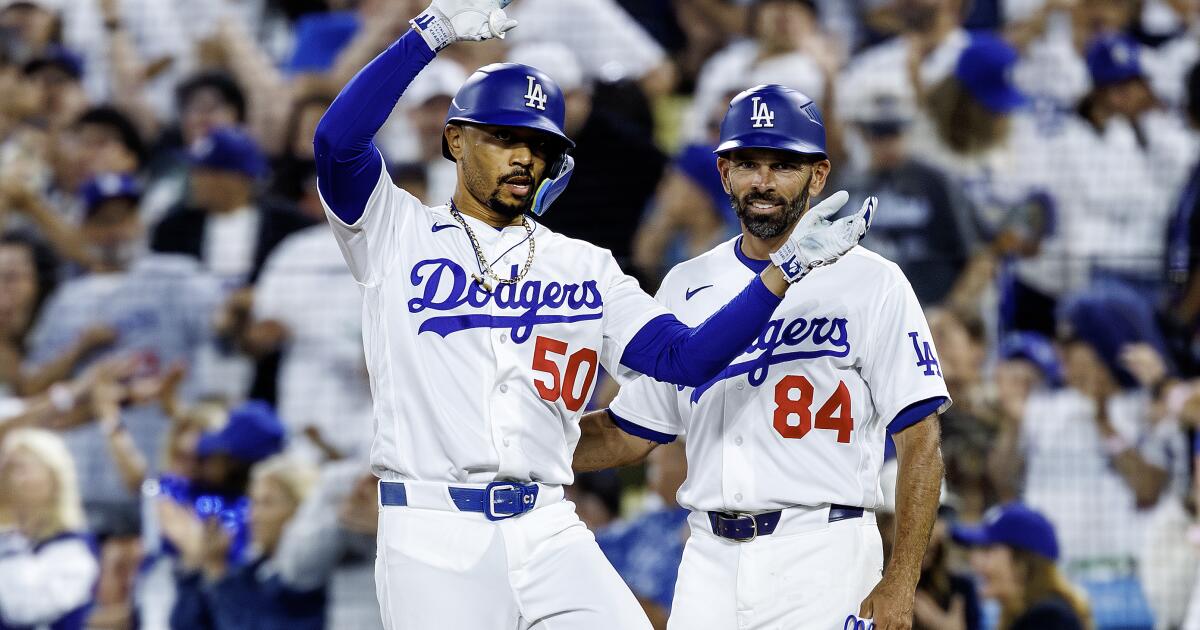
Mookie Betts’ eighth-inning single gives Dodgers the win over the Rockies
From sewers to swimming sites: how Europe's cities reclaim their rivers


Three more people charged with damaging Reflecting Pool after Trump’s multimillion-dollar restoration | CNN Politics


Loved ones search for missing 34-year-old Southern California woman


