Utah
Draft Utah ethnic studies recommendations lack specifics, conform to anti-DEI law

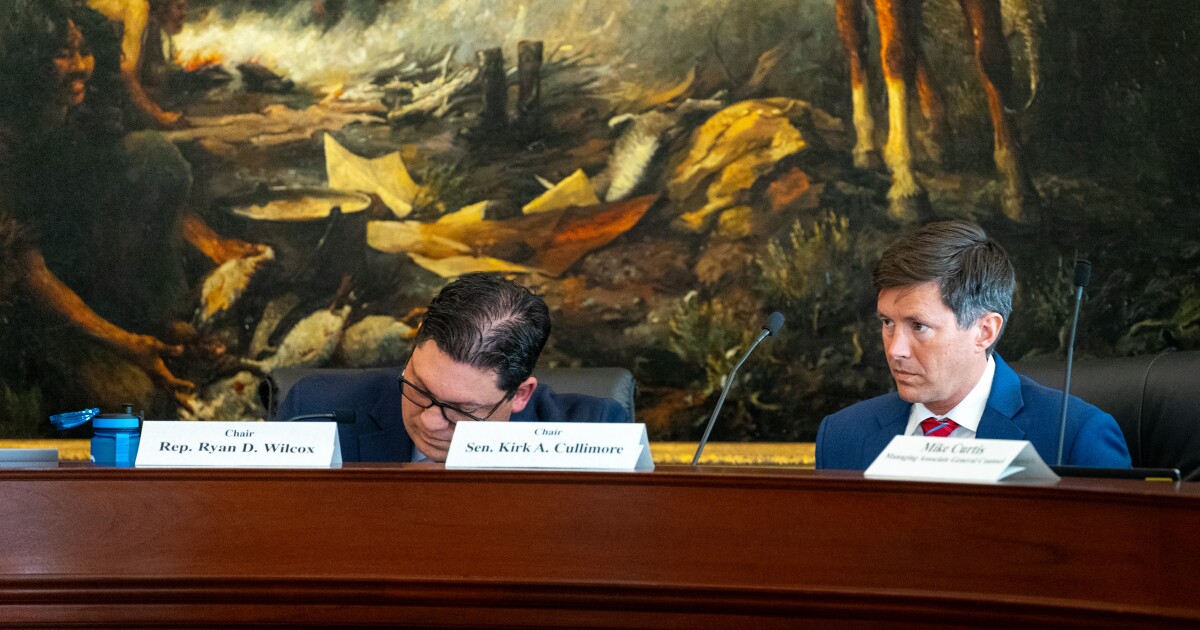
After almost two years of meetings and listening sessions, the Utah Legislature’s Ethnic Studies Commission drafted its first list of potential recommendations. The draft recommendations, however, don’t offer a lot of specifics.
Ethnic studies were required to be incorporated into Utah’s K-12 core standards by a 2022 law. However, the new proposed recommendations focus mainly on staying in line with HB 261, the state’s recent anti-diversity, equity and inclusion law. It prohibits DEI hiring practices and offices aligned with identity at state-run universities, public schools and government entities.
Beyond those impacts, it has also had a cooling effect on discussions of race and identity.
“The Utah State Board of Education should carefully consider the use of ethnic studies in core standards and curriculum to ensure a narrowly tailored incorporation of age-appropriate opportunities that naturally arise through education without pretextual effort in courses, programs, or activities where ethnic studies is not a primary focus,” reads the first suggestion to the state board, which will ultimately be in charge of incorporating ethnic studies in public school standards.
Some commission members said this means including ethnic studies in topics like history but not requiring it in subjects like math or science.
The second recommendation directs the public education system to “incorporate curriculum of people and cultures that reflect the state’s various demographics without commentary that seeks to violate the neutrality standard established in H.B. 261.”
The drafted guidance was presented at the group’s first public meeting of 2024 on Aug. 29. The commission will continue workshopping the recommendations and vote on them in the future, potentially at an October meeting.
Throughout the commission’s duration it has repeatedly struggled to cohesively define ethnic studies or a vision for how it should be incorporated in schools, and the anti-DEI law has complicated that further.
At the meeting, co-chair Republican Sen. Kirk Cullimore said the law put “parameters” on their work and “colors what those recommendations can be at this point.”
Rep. Ryan Wilcox, the other Republican co-chair, told KUER after the meeting that he doesn’t know if the law changed “what any of the recommendations would have ultimately been, because I think the commission was already headed that direction.”
Democratic commission members Reps. Angela Romero and Sandra Hollins both said they were confused by parts of the drafted list and what “neutrality” means in this context.
Wilcox said the short version is the curriculum shouldn’t say one race or ethnicity is better than another.
For Hollins, that further confused the issue, “because you’re saying that we’re not to promote one race over another. But if you have teachers who are not teaching any diversity because they are scared to, they are promoting one race over another because one race is being taught.”
Hollins said teachers are telling her “they’re scared to talk about anything, for lack of a better word, that’s not white.”
The draft was not uploaded where the public could see it before the meeting started, and while the co-chairs said the list was based on feedback from commission members, others said they hadn’t seen its full contents before the Aug. 29 meeting started.
The committee is also tasked with giving guidance to the Office of the Governor and the state Legislature, one of which suggests “The Legislature should continue to examine the neutrality standard in HB 261 to strengthen positive outcomes and address any unintended consequences.”
In 2022, Gov. Spencer Cox held a ceremonial signing to celebrate the passage of the law requiring ethnic studies to be taught in K-12 schools. The law created the committee to “consider and review” the contributions of diverse Utahns and figure out how to best incorporate ethnic studies into core standards.
School districts and charter schools had until Aug. 1, 2024, to select a curriculum for teaching ethnic studies. However, it became clear that the deadline would not be met since the state’s committee hadn’t even produced guidance to the board.
In a January email obtained by KUER through a public records request, Republican Rep. Candice Pierucci asked state school board member Jennie Earl for guidance on a new deadline.
Earl responded, “I would strike the time completely. The problem is [charter schools and school districts] are continually updating curriculum, but they may only purchase new curriculum for a specific subject every 5-7 years. We update standards every 7-10 years but never all at once. We just finished our English standards and are now starting math. Any date is unsustainable.”
In a 2024 education omnibus bill, lawmakers moved the curriculum selection deadline for districts and charters to Dec. 31, 2025.
Wilcox said they’ll adjust the timeline again in the future if necessary.

Utah
‘2.5 minutes of terror’: Passengers sue Delta, alleging crew flew into dangerous weather despite warnings, injuring dozens

Twenty passengers allege the airline ignored repeated weather warnings before the flight hit severe turbulence that sent dozens of people to hospitals
(Bethany Baker | The Salt Lake Tribune) A Delta airplane travels down the runway at Salt Lake City International Airport in Salt Lake City last March. Passengers on a Delta flight last July are suing the airline over injuries suffered because of violent turbulence.

SALT LAKE CITY — The Environmental Protection Agency awarded Utah and Salt Lake County a total of $3.5 million in grants to assess potentially polluted properties for eventual cleanup and redevelopment.
The agency announced a $2 million grant to Utah’s Department of Environmental Quality and $1.5 million to Salt Lake County to conduct environmental assessments and inventory brownfield sites for cleanup. Brownfields are sites that may be difficult to redevelop or expand because of “the presence or potential presence of a hazardous substance, pollutant or contaminant,” according to the agency.
“These brownfields grants will help Utah communities clean up contaminated sites and unlock opportunities for redevelopment and investment,” EPA Regional Administrator Cyrus Western said in a news release announcing the grants earlier this week. “By transforming underused properties into community assets, EPA is helping create healthier neighborhoods and stronger local economies.”
The two grants awarded to Utah and Salt Lake County are among more than $248 million awarded to nearly 200 communities nationwide for brownfield assessment and cleanup. Utah’s Department of Environmental Quality plans to focus the resources on several areas in Ogden, Heber City and Fillmore, among others, according to Bill Rees, who leads Utah’s brownfield cleanup program.
“What we do is work to secure the funding and then begin to reach out to our communities across the state, say, ‘Listen, there’s opportunity to do some assessment work in your community if you’re interested,’ and then work with our rural partners, work with our urban partners to see if there are sites that will fit that bill,” he told KSL.
The state has received similar grants in the past, and Rees said the money can help local governments determine what to do with ailing properties such as old schools, hospitals or private property that have gone to waste.
“Is there asbestos in it, or is there hazardous material in it? Or could there be something that’s impacting the soil or the groundwater, and a policymaker needs to make a decision?” asked Rees. “Knowledge allows you to make good decisions.”
The $1.5 million awarded to Salt Lake County is the largest brownfields assessment grant the county has ever received, according to a county press release.
“This grant is a real win for our communities,” said Mayor Jenny Wilson. “This funding will let us do vital environmental work on a larger scale and in more neighborhoods. It reflects exactly the kind of partnership between local and federal government that gets results for residents.”
The county grant funds will be used to help create cleanup plans in three areas, including a vehicle storage yard in Salt Lake City’s Ballpark Neighborhood, a 4.26-acre vacant lot in Millcreek and a small commercial building in Magna that was damaged during an earthquake in March 2020, according to the EPA.
Contributing: Don Brinkherhoff
The Key Takeaways for this article were generated with the assistance of large language models and reviewed by our editorial team. The article, itself, is solely human-written.

The National Weather Service in Salt Lake City issued red flag warning Friday morning as emergency workers continued to battle one of the state’s largest wildfires in its history.
The red flag warning, issued when critical fire warnings are occurring or imminent, was to be in place through midnight Saturday.
“This is the FIRST Particularly Dangerous Situation Red Flag Warning issued in NWS Salt Lake City history. This is an exceptionally rare event,” the federal agency said in its warning.
A map of the area under the warning covered much of central and southwest Utah, with an area of the southwest, central and southern mountains also outlined as “particularly dangerous red flag.”

The particularly dangerous area includes the Cottonwood Fire, near the town of Beaver, which started Monday and had grown to covering almost nearly 71,000 acres by Thursday, 15 News reported. The fire forced evacuations.
The NWS warned that gusty winds and dry conditions would lead to rapid fire growth.
Utah also was dealing with the Iron Fire, which started June 19, and nearly destroyed the town of Eureka. The fire was about 27% contained Friday morning.
The fire danger led Utah Gov. Spencer Cox to issue executive order restricting fireworks statewide during the July 4 holiday, which marks the nation’s 250th birthday this year. The ban is in effect through July 5.
“Nothing about this decision was easy,” Cox said in a statement issued by his office Thursday.
“This is unlike anything we’ve seen in recent memory. We’re seeing fires spread farther and faster under conditions that defy historical expectations” Jamie Barnes, Utah state forester and director of the Utah Division of Forestry, Fire and State Lands, added in the statement.
Cox allowed cities and local communities to set aside areas where fireworks could be safely used. The city of Provo announced it would enforce a citywide prohibition on fireworks and would not designate a safe area for fireworks.
“This year is different,” Provo Mayor Marsha Judkins said in a statement. “The wildfire danger facing our community is real, and protecting lives, homes, and our natural spaces must come first.”
-

 Arizona3 minutes ago
With water cuts looming in Arizona in US, locals fight data centres
-

 Arkansas6 minutes ago
Gubernatorial challengers talk ideas as Sanders skips debate – Arkansas Times
-

 California6 minutes ago
California GOP delegates on LGBT issues, LA decline, Medicaid fraud | Fox News Video
-

 Colorado18 minutes ago
What’s really killing a lot of cattle in Colorado? Hint: wolves aren’t the culprit (Opinion)
-

 Connecticut21 minutes ago
Person reported missing found dead in Brookfield
-

 Delaware26 minutes ago
Delaware ranks among top ice cream-loving states, study finds
-

 Florida33 minutes ago
Missing Florida diver found after multi-agency search
-

 Georgia36 minutes ago
Heat wave expected to bring potential dangerous conditions to South Georgia

