Seattle, WA
Seattle pet sitter, family of slain dog walker advocate for neighborhood security


Pet sitter, family of slain dog walker advocate for neighborhood security
A Seattle pet sitter injured in a hit-and-run says she knew Ruth Dalton, the beloved dogwalker who was killed in a carjacking last August. She’s calling for more security cameras in neighborhoods.
SEATTLE – A hit-and-run driver is still on the loose after seriously injuring a pet sitter on Christmas Day while she was out walking her cat near Seward Park in Seattle.
The crash came on the heels of the death of another dog walker this summer, Ruth Dalton, who died alongside her dog Prince, after Seattle Police say she was carjacked and run over by Jahmed Haynes.
“I have a lot of fractures that have to heal before I can learn to walk again,” said Karen Miely, still recovering from a hit-and-run from a care facility in Seattle.
Miely was just transferred to a long-term care facility recently after spending several days in the hospital.
“The biggest milestone would probably be getting the bar out of my pelvis,” said Miely.
She was hit at an intersection near her home while walking her cat Max, also known as Maximus Rex. He escaped unharmed and ran home.
Local perspective:
Miely also knew Ruth Dalton, another local dogwalker and pet caretaker, who was killed last August.
“Ruth used to walk five at a time,” said Miely.
Dalton died after Jahmed Haynes allegedly carjacked her and ran her over as she was caring for several dogs.
“It’s heartbreaking what happened to that family,” said Miely.
“When I heard the story she was hit on Christmas Day, I was like ‘What the heck?’ It’s like open season on dog walkers in Seattle,” said Melanie Roberts, Ruth Dalton’s granddaughter.
Years before the homicide, Dalton was also injured by a random driver, according to her granddaughter.
“She was starting into the crosswalk, and had seen a car a couple blocks away and she thought that they would have seen her in the crosswalk and it was an elderly woman, and she did not see grandma and she hit her in the crosswalk,” said Roberts.
Roberts says Dalton suffered knee injuries.
“My grandma was fortunate that the woman that hit her in 2009, she stopped and it was an honest to God accident, to hear that Karen was hit and left was disheartening,” said Roberts.
Miely wishes more security cameras were rolling where she was hit. Roberts believes Dalton would have advocated for that.
“Almost like neighborhood watch cameras. When she saw cameras around, she felt safer,” said Roberts.
Meantime, an online fundraiser is raising money for Miely’s recovery. She hopes to be home in April.
“I’m thinking, well, that’s around my birthday, I’d like to go home and see my cat. He’s patiently, he’s just being such a good boy,” said Miely.
She says investigators told her a car part was found in the area after the crash. However, it’s unclear if it’s related. FOX 13 reached out to Seattle Police for any updates. We are waiting to hear back.
Miely is continuing to ask anyone with security camera footage from around 7 p.m. on December 25 in the area of South Orcas Street and 51st or 52nd Avenue South to check their cameras and share footage with police if they haven’t done so already.
The Source: Information in this story is from Karen Miely, Melanie Roberts and Seattle Police.
BEST OF FOX 13 SEATTLE
Washington sees record eviction filings in 2024: ‘Not just an isolated incident’
New 2025 laws that are now in effect in WA
Good Samaritan saves mom from road rage incident in WA
Here’s when you’ll need REAL ID to go through US airport security
REI exits ‘Experiences’ businesses, laying off hundreds of employees
To get the best local news, weather and sports in Seattle for free, sign up for the daily FOX Seattle Newsletter.
Download the free FOX LOCAL app for mobile in the Apple App Store or Google Play Store for live Seattle news, top stories, weather updates and more local and national coverage, plus 24/7 streaming coverage from across the nation.



(Photo by James Bratsanos)
Here’s the Monday list of highlights, most (but not all) from our West Seattle Event Calendar:
PUBLIC HEARING ON UPZONING PROPOSAL: As previewed here, the City Council is holding an all-day public hearing, both in-person and online/phone, under way right now – the agenda explains how to participate.
FREE TAX HELP: The deadline’s nearing … If you need assistance, today from 11 am-4 pm, find drop-in help at Alki Masonic Center. (4736 40th SW)
BABY STORY TIME: Noon at Southwest Library (9010 35th SW). Free.
NO CITY COUNCIL BRIEFING MEETING: Regular 2 pm meeting is canceled today because of the aforementioned all-day hearing.
LONG-DISTANCE ADVOCACY: Write postcards to far-away voters with West Seattle Indivisible, 3:30-5:30 pm at West Seattle (Admiral) Library (2306 42nd SW)
HIGH-SCHOOL SPORTS: In baseball, West Seattle HS vs. Seattle Academy, 3:30 pm at Delridge Playfield (4501 Delridge Way SW); at 4 pm, the Chief Sealth IHS boys’ tennis team plays Rainier Beach at Nino Cantu SW Athletic Complex (2801 SW Thistle); also at 4 pm at NCSWAC vs. Rainier Beach, West Seattle HS plays softball.
FREE HOMEWORK HELP: Drop-in assistance for K-12 students at High Point Library (3411 SW Raymond), 4-5:45 pm.
‘BEFORE THE BADGE’: 5:30 pm, community conversation with SPD recruits, online; our calendar listing explains how to participate.
D&D: Long-running weekly D&D at 6:30 pm at Meeples Games (3727 California SW). All welcome, first-time players too!
‘LISTENING TO GRIEF’ SUPPORT GROUP: 6:30 pm, weekly group gathering for people experiencing grief – you can participate once, weekly, or occasionally. Fee. Before you go, RSVP/register here. (4034 California SW)
ALKI MEDITATION: Monday night meditation at Alki UCC, doors open at 6:45, meditation at 7. (6115 SW Hinds)
MONDAY NIGHT TRIVIA X 3: Three venues for trivia/quiz tonight! Music Quiz at Easy Street Records (4559 California SW), 6:30 and 7:30 pm … 7 pm at The Good Society (California/Lander) … and 7:30 pm with QuizFix at The Skylark (3803 Delridge Way SW).
POOL TOURNAMENT: If you play pool, you’re invited to enter The Corner Pocket‘s weekly tournament starting at 7 pm. $10 buy-in. (4302 SW Alaska)
FAUNTLEROY MEDITATION: Free weekly Zen sitting/meditation in the chapel at Fauntleroy UCC (9140 California SW), 7 pm-8:30 pm.
JAZZ AT THE ALLEY: Monday night music with The Westside Jazz Trio, 8 pm at The Alley (behind 4509 California SW), 21+, no cover.
KARAOKE AT TALARICO’S: 9 pm Mondays, karaoke at Talarico’s Pizzeria (4718 California SW).
Big thanks to everybody who sends info for our calendar; if you have something to add or cancel (or update), please send the info to westseattleblog@gmail.com – thank you!

Thanks for continuing to send West Seattle bird photos! We’ve gathered a few for this gallery. Above, Dan Ciske‘s view of Brant in the sunset; below, Robin Sinner photographed them earlier in the day:

Robin also shared this photo of a Barrow’s Goldeneye:
Leucistic (“caramel”) Crows turn up in West Seattle from time to time – Mark Rhea photographed this one:
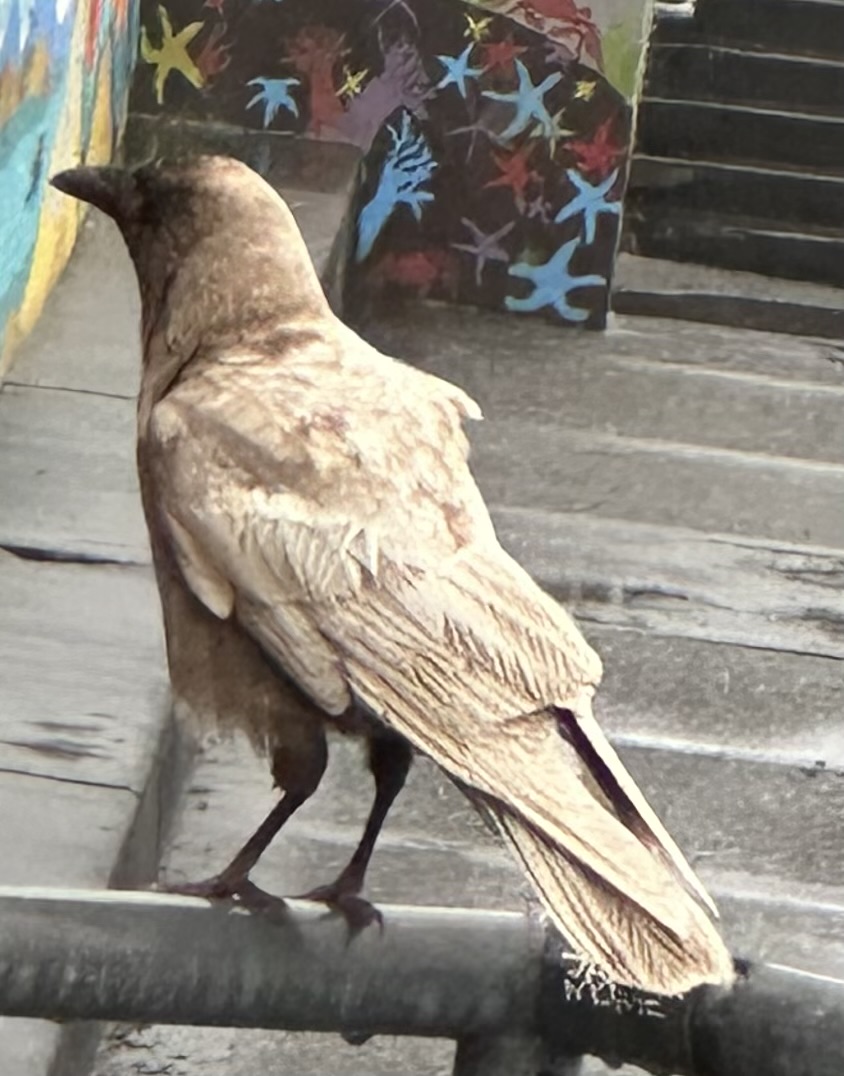
Here’s a more conventionally colored one, courtesy of K. Smith:
K. also sent this unidentified bird (do you recognize it?):
And we have more recent views of the baby Anna’s Hummingbirds that recently fledged at West Seattle Nursery (WSB sponsor) – from Suzanne Krom:
And from Jerry Simmons:

Again, huge thanks to everyone who shares photos, from birds to breaking news and beyond – westseattleblog@gmail.com or (when urgent) text 206-293-6302 – thank you!
Seattle, WA
Where to watch Seattle Mariners vs Los Angeles Angels: TV channel, start time, streaming for Apr. 5

What to know about MLB’s ABS robot umpire strike zone system
MLB launches ABS challenge system as players test robot umpire calls in a groundbreaking season.
Baseball is back and finding what channel your favorite team is playing on has become a little bit more confusing since MLB announced plans to produce and distribute broadcasts for nearly a third of the league.
We’re here to help. Here’s everything you need to know Sunday as the Seattle Mariners visit the Los Angeles Angels.
See USA TODAY’s sortable MLB schedule to filter by team or division.
What time is Seattle Mariners vs Los Angeles Angels?
First pitch between the Los Angeles Angels and Seattle Mariners is scheduled for 4:07 p.m. (ET) on Sunday, Apr. 5.
How to watch Seattle Mariners vs Los Angeles Angels on Sunday
All times Eastern and accurate as of Sunday, April 5, 2026, at 10:03 a.m.
- Matchup: SEA at LAA
- Date: Sunday, Apr. 5
- Time: 4:07 p.m. (ET)
- Venue: Angel Stadium of Anaheim
- Location: Anaheim, California
- TV: FanDuel Sports West and Mariners.TV
- Streaming: MLB.TV on Fubo
Watch MLB all season long with Fubo
MLB regional blackout restrictions apply
MLB scores, results
MLB scores for Apr. 5 games are available on usatoday.com . Here’s how to access today’s results:
See scores, results for all of today’s games.

VIDEO: World’s first wingsuit skydive through Alaska’s northern lights

Avoiding AC fire risks while staying cool in Arizona

Way-Too-Early Top 25: Ranking College Basketball’s Best for 2026-27

‘What was that?’: SpaceX rocket launch lights up Central California sky

Road to Mount Blue Sky expected to open Memorial Day weekend after 2024 closure, construction

Florida High School Football Rankings: Top 25 teams – Oct. 21

How old is Bo Nix? What to know about Oregon quarterback ahead of 2024 NFL Draft

Cleary's 21 help Le Moyne down Central Connecticut State 69-64 in OT

99th annual Pony Swim held in Virginia

Indiana Members Credit Union announced as new anchor tenant at Bottleworks District

Map: Minor Earthquake Strikes Near San Diego

Trump claims he’d win as the president of Venezuela — just needs to ‘quickly’ learn Spanish

US Supreme Court clears path for Steve Bannon criminal case dismissal

Trump reiterates threats to bomb Iran’s power plants and bridges

Trump threatens Iranian infrastructure over Strait of Hormuz | BBC News
-

 Atlanta, GA2 days ago
1 teenage girl killed, another injured in shooting at Piedmont Park, police say
-

 South-Carolina1 week ago
South Carolina vs TCU predictions for Elite Eight game in March Madness
-

 Vermont1 week ago
Skier dies after fall at Sugarbush Resort
-

 Movie Reviews5 days ago
Vaazha 2 first half review: Hashir anchors a lively, chaos-filled teen tale
-

 Politics1 week ago
Trump’s Ballroom Design Has Barely Been Scrutinized
-

 Politics1 week ago
JD Vance says he was ‘obsessed’ with UFOs, believes aliens are actually ‘demons’
-
 Entertainment5 days ago
Inside Ye’s first comeback show at SoFi Stadium
-

 Atlanta, GA1 week ago
Fetishist ‘No Kings’ protester in mask drags ‘Trump’ and ‘JD Vance’ behind her wheelchair