San Francisco, CA
So far, Mayor Lurie's fentanyl plan is missing just one thing: A plan


In the days leading up to Daniel Lurie’s swearing-in, political types about town said that, in order to be a successful mayor, he’d have to lead differently than he campaigned. As Mayor Lurie, rather than Candidate Lurie, it would no longer be enough to present broad and vague messaging. A mayor, at some point, has to say not just what they’re going to do but how they’re going to do it.
Last week saw the introduction of Lurie’s first piece of legislation, which ostensibly aims to combat fentanyl and mental illness on the streets, boost law-enforcement hiring and other laudable goals by speeding up contracting. But, beyond speeding up contracting, there are no specifics about how this plan would actually accomplish its underlying goals. As such, all this plan is missing — is a plan.
But there’s plenty of stuff in here about stripping away oversights of whatever it is the city chooses to spend money on. It was not until Board President Rafael Mandelman asked for it that the Board of Supervisors was given any say — at all — in the rapid-fire assignment of contracts worth scores of millions of dollars.
What’s that mean? It means that Lurie, who has never before worked in government and, prior to his swearing-in, had never held conventional employment, was calling for no oversight whatsoever for his department heads to enter into an unlimited number of no-bid contracts. You could call Lurie’s ask “audacious” — if you were generously inclined.
Of note, Mohammed Nuru, Tom Hui, Barbara Garcia and Sheryl Davis were all department heads in San Francisco. And now they aren’t. Nuru, of course, is in prison. It’s a bit mind-boggling that he’s the only one.
So, it’s all a bit on the nose, really: It’s exactly like Lurie’s campaign. Not only is it broad and vague, it’s expensive. The contracts he proposed to be ratified sans oversight could be for up to 10 years and up to $50 million; with this kind of money the city could re-sign Klay Thompson.
As a means of shedding oversight and allowing department heads to expediently enter into good-sized pacts or leases, this legislation is a great plan. It’s ingenious if I understand it correctly. It’s a Swiss watch. But you’d expect it to be: This is what you get when you have an experienced government savant like Ben Rosenfield on your mayoral transition team.
Rosenfield is great at what he does, but — and this is important — it wasn’t his job to specify where the money should go or, more fundamentally, where it’s going to come from. Yes, there are waivers in here that would allow Lurie et al. to privately fundraise, but that’s not likely to cover more than a sliver of the money needed to rapidly expand shelter beds, treat street drug-users or any of the other goals herein. San Francisco’s deficit is hovering a shade under $1 billion and, guess what? Donald Trump is getting sworn in today and could stiff San Francisco or claw back some $415 million in reimbursements for FEMA money that we’ve already spent.
Government-watchers with long institutional memories have told us that they can’t think of a precedent for a mayor to ask for significant new powers, as Lurie has done, without offering any specifics on what they will be used for.
But here’s the thing: They’ll be granted. It’s likely that Lurie will essentially get what he wants.
We’ll have to wait and see if the board, or anyone else, asks about the scant details that we do know. Thus far, they’ve brought about more questions than answers.
Bolstering law-enforcement hiring is a goal of the mayor’s legislation, but it’s not immediately clear what private fund-raising or no-bid contracting could do about that. It’s not as if the beaver fur top hat will be passed among the city’s wealthy elites to supplement cops’ salaries. The more intuitive steps would be outsourcing background checks or the hiring of recruiters — but the city already does this. In recent years, in fact, the city has done an awful lot and put significant resources into recruitment and retention. And yet, here we are: San Francisco has not quite 1,600 sworn officers and the most recent academy class graduated 11 officers of an initial 45 recruits — an alarming 75 percent attrition rate
(It warrants mentioning that the city’s crime rates are at near-historic lows. Also, accidental overdose death numbers are at a five-year low. But it seems nobody’s in the mood to hear about this.).
Lurie also wandered off the map when he last week told reporters that San Francisco could “add beds” to General Hospital — which left actual medical professionals at General Hospital gobsmacked. In fact, the Department of Public Health has already submitted half a dozen applications to get up to $140 million in state money for behavioral health beds. But adding these 180-odd beds — at half a dozen or more sites citywide, not just at the General — would require mounting significant procedural, logistical and political hurdles. And, also, it would require that money, from the state. That’s coming on the state’s dime and on the state’s time — that is, not fast.
These are all major challenges, which is why Lurie’s job is majorly challenging. Yet, barring unforeseen lunacy, his initial legislation will pass. And now all that remains is saying what he wants to do. And how he intends to do it.
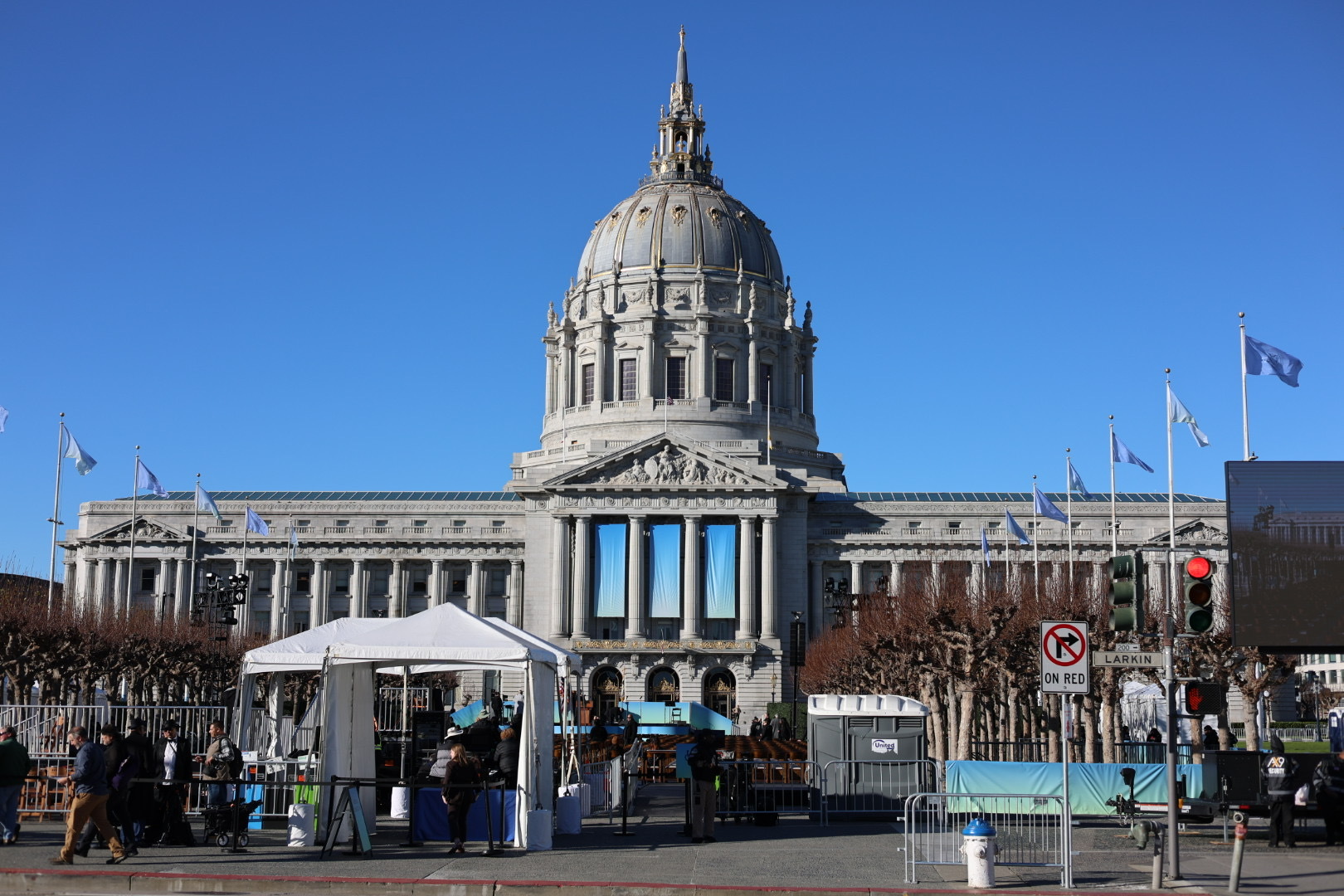
Following pushback, there is now a provision in here that the board has 45 days to review a potential contract and vote it up or down. Without that, the board had zero input. So the supes hve that going for them. Which is nice.
Truth be told, the board, which must approve city contracts of $10 million or more, does not spike all that many of them — or, for that matter, reject all that many mayoral appointments. But the oversight provision, in and of itself, can serve as a deterrent for corruption or ineptitude. Put another way: Does anyone think it’s a grand idea for the city to begin rapidly spending lots and lots of money while specifically telling all parties ahead of time that nobody is going to be doing any front-end oversight? Hopefully nobody who reads the news would say that.
So that’s kind of a big deal — and to cast that obligation to the wind would’ve been a wholesale abdication of the board’s responsibilities. Expect more pushback, starting at the Budget Committee. Expect board members to call for reductions in the 10 years and $50 million limits for the no-bid contracts.
But nobody is going to try to derail this. Nobody wants to open up the board to charges of obstructionism.
That seems wise, at least politically. With 45 days to review a contract, anything egregious ought to be bird-dogged by the supervisors. Concerns about abandoning competitive bidding are somewhat mitigated by the fact that the sorts of outfits that can minister to drug-users or oversee shelter beds are not great in number — and, more likely than not, are already here and already have city contracts. No one is pushing to bring Halliburton in to do this work.
The Department of Homelessness and Supportive Housing, meanwhile, already has license from the Board of Supervisors to ignore competitive bidding requirements on contracts regarding homeless services (A cynic would note “and here we are.”). Lurie’s legislation would expand that ability to other departments.
When all is said and done, the board will retain one of its core raisons d’être. If time and money limits are reduced, its members can claim they mitigated the potential damage if and when things go sideways. And Lurie can claim the political win after the board passes what he and his people continue to — unfortunately — refer to as a “state of emergency” ordinance.
But is this going to actually help solve the problems? Will this make things better? Those do seem to be the $50 million questions.



Streetsblog has migrated to a new comment system. New commenters can register directly in the comments section of any article. Returning commenters: your previous comments and display name have been preserved, but you’ll need to reclaim your account by clicking “Forgot your password?” on the sign-in form, entering your email, and following the verification link to set a new password — this is required because passwords could not be carried over during the migration. For questions, contact tips@streetsblog.org.
San Francisco, CA
Dozens of apparent shopping carts stuck in marsh along SF Bay: ‘How did they get there?!’

SOUTH SAN FRANCISCO, Calif. (KGO) — Dozens of apparent shopping carts are stuck in a marsh along the San Francisco Bay. And residents are puzzled as to how they got there.
“It’s crazy! Gross!” said Kim Avalos, who frequents the trail. “What is that?!”
The San Francisco Bay Trail in South San Francisco curves around the mouth of the Colma Creek marsh. It’s a popular walking and running trail, but local residents are starting to notice something in the water.
“Now that I’m looking at… wow…there’s actually so many shopping carts out here,” said Avalos. “There’s an extreme amount.”
Avalos works for a nearby garbage company. She says she walks the trail every day but has never seen anything like this.
“It’s actually kind of insane to think about how they even got there,” Avalos said.
It’s the same story for others who frequent the trail. At first glance, mistaking the debris for rocks until they actually stare at it.
“It kind of blends in,” said Hondres when we approached him on the trail. “I’ve never seen grocery carts out in the Bay like this… I don’t know, it’s kind of weird.”
“Have you noticed it before?” 7 On Your Side’s Stephanie Sierra asked another passer-by.
“Uh… no. This is kind of new,” he said. “Someone is being very stupid… I’ve seen them over the years. I don’t remember there being this many. There’s quite a few.”
Many people who frequent the trail said when it’s high tide it’s hard to notice anything.
“It does look like shopping carts, do you know if that’s what it is?”
It’s hard to say for sure. But at low tide, it certainly looks that way.
“It does look like shopping carts, amongst other things,” Save the Bay representative Josh Quigley said.

And there’s not just one or two, but there’s what appears to be dozens of them spanning the Colma Creek marsh adjacent to the bay.
“Have you ever seen this many shopping carts along the bay?” Stephanie Sierra asked.
“I have not, no,” Quigley said. “This is certainly the greater concentration that I’ve ever seen in one place.”
Quigley is the Senior Policy Manager for Save the Bay, an environmental nonprofit founded in 1961 to stop excessive filling of the San Francisco Bay.
“I think it’s really unfortunate… the bay is treated not as the jewel and resource that it should be, but as a dumping ground,” Quigley said.
So, where is it all coming from? That seems to be up for debate.
“It could be a big prank, if anything, but at this rate I have no idea,” said Alvin Lau, who visits the trail regularly.
“There’s often homeless people in the mobile RV vehicles,” said another. “There’s always a lot of trash here, not going to lie.”
“I don’t know, maybe Costco. They are our neighbors,” Kim Avalos said. “Could be because they do look bigger.”
A Costco Business Center is about a mile from Colma Marsh. 7 On Your Side reached out to Costco’s corporate office, and the South San Francisco Costco General Manager said: “We walk and clean the trail multiple times a week, in addition to checking for any carts that might end up in the bay.”
The goal now is to clean it out — and ensure it stays that way.
“Stop being dumb. There’s only one planet we got, so take care of it,” said Lau.
“It hurts me as an animal lover to see all these shopping carts in their place of habitat,” Avalos said.
“Save the Bay” says overall pollution is decreasing across the bay shoreline, but there are instances–like this one–where smaller pockets need to be addressed.
Locally, there are regulations in place to prevent this type of pollution.
7 On Your Side contacted the San Francisco Bay Regional Water Quality Control Board to further investigate and clean up the area.
Take a look at more stories and videos by 7 On Your Side.
7OYS’s consumer hotline is a free consumer mediation service for those in the San Francisco Bay Area. We assist individuals with consumer-related issues; we cannot assist on cases between businesses, or cases involving family law, criminal matters, landlord/tenant disputes, labor issues, or medical issues. Please review our FAQ here. As a part of our process in assisting you, it is necessary that we contact the company / agency you are writing about. If you do not wish us to contact them, please let us know right away, as it will affect our ability to work on your case. If we are able to assist you, we will reach back out.
Copyright © 2026 KGO-TV. All Rights Reserved.

SAN FRANCISCO (KRON) — San Francisco will celebrate the country’s 250th anniversary this July 4 with a rare fireworks show on the Golden Gate Bridge, the mayor’s office announced Monday. It will be the first time in 14 years, and the third time ever, that a fireworks display will be held on the iconic span.
“The Golden Gate Bridge is as iconic as any landmark in the United States, so it’s an ideal place to launch fireworks for our country’s 250th anniversary,” Mayor Daniel Lurie said in a news release announcing the event.
With the change of venue for the city’s annual July 4 fireworks show, the mayor’s office is providing guidance on where to watch, and where not to watch, this year’s Golden Gate Bridge display, set to begin at 9:30 p.m.
Recommended viewing locations:
- Crissy Field
- Marina Green
- Fisherman’s Wharf/Pier 39
The mayor’s office noted that “because this year’s fireworks will launch from the east side of the Golden Gate Bridge between its two towers, the best viewing areas are those with a clear northwest sightline toward the bridge.”
Locations that are not recommended for viewing the fireworks show due to obstructed views include Ocean Beach, the Ferry Building and the Embarcadero waterfront.

The Golden Gate Bridge will be completely shut down to vehicle and pedestrian traffic during the Independence Day show. Vehicles will be blocked from the bridge beginning around 8:30 p.m. until “shortly after the conclusion of the fireworks display,” officials said. The east and west sidewalks will be closed from 8 p.m. to 10 p.m.
The two previous fireworks displays were in 1987 and 2012, when the Golden Gate Bridge’s 50th and 75th anniversaries were celebrated.
-

 Los Angeles, Ca40 minutes ago
Suspicious item leads to closure of Metro station on Tuesday morning
-

 Detroit, MI1 hour ago
How to celebrate Juneteenth in Metro Detroit
-

 San Francisco, CA1 hour ago
Headlines, June 16 – Streetsblog San Francisco
-
Dallas, TX1 hour ago
Mailbag: Is Lawrence expected to start?
-

 Miami, FL1 hour ago
Naked man burglarized Miami Beach apartment and battered detective, cops say
-

 Boston, MA1 hour ago
Two Ex-Red Sox Are Suddenly Thriving Again After Leaving Boston
-

 Denver, CO2 hours ago
Denver police investigate early morning shooting in Capitol Hill neighborhood
-

 Seattle, WA2 hours ago
Seattle weather: Cooling down Tuesday, highs in the 70s


