San Francisco, CA
Year 1 of the Lurie era is done. Here’s how he kept — or whiffed — his biggest promises


On Jan. 8 of last year, San Francisco tried on its new mayor like a pair of Levi’s 501 jeans.
So far, it has liked the fit.
For 365 days, Mayor Daniel Lurie has taken swings at solving the city’s ills: scrambling to scrap the fentanyl scourge, working to house the homeless, and shaking his proverbial pompoms with enough vigor to cheerlead downtown back to life.
So is San Francisco all fixed now?
The eye test tells one story. The data tell another. But politics is more than paper gains and policy battles. It’s also a popularity contest — and Lurie has categorically been winning his, riding high on a stratospheric 71% approval rating.
Lurie’s rainbow-filled Instagram posts have gone a long way toward soothing locals’ doom-loop fears, but the political fortress he’s built over the past year could easily crumble.
After all, his predecessors as mayor, London Breed and the late Ed Lee, each enjoyed positive approval ratings (opens in new tab) in their first year in office. But the honeymoons lasted only about that long before voters gradually soured on their performance. Should San Franciscans’ adulation for Lurie similarly ebb, his policies might meet more resistance.
Still, if there’s one pattern with Lurie’s efforts in his freshman year, it’s this: While he hasn’t achieved all of his lofty goals, he has fundamentally changed how the city approaches many of its problems, potentially setting up success for future years.
As we enter Lurie: Year 2, here’s a rundown of where the mayor has delivered on his campaign promises, where he’s been stymied, and why voters may continue to give him the benefit of the doubt. At least, for now.
Misery on the streets
Headwinds: While Candidate Lurie promised to declare a fentanyl “state of emergency” on his first day in office, he quickly found it wasn’t legal to do so. (Per the city’s administrative codes, an emergency needs to be sudden and unforeseen; the fentanyl epidemic was neither.) Instead, the mayor asked the Board of Supervisors to grant him similar powers that an emergency declaration would have afforded him, and they agreed. But as Lurie touted his efforts to curb drug use on Sixth Street, all those drug dealers just moseyed on down to the Mission. The mayor’s first year in office ended with 588 drug overdose deaths, according to the office of the medical examiner (opens in new tab). That’s an improvement from the 635 in 2024, but it’s still an appalling body count — and December 2025 isn’t even part of the official tally yet.
Silver linings: The mayor employed his newfound powers to speed up approvals of initiatives, notching well-publicized wins, like fast-tracking the 822 Geary stabilization center, where police can place mentally ill folks instead of arresting them. It’s got a 25% better success rate at connecting patients to treatment than previous facilities, according to city data, part of a noted change for the better in the Tenderloin. And while some of the police’s high-profile drug busts didn’t net, you know, actual drug dealers, law-and-order-hungry San Franciscans were just happy to see batons fly.
Shelter-bed shuffle

Headwinds: On the campaign trail, Lurie talked a big game about his nonprofit experience, which he claimed had allowed him to cinch deals to create shelter that seasoned politicians had been too slow to enact. He even promised 1,500 treatment and recovery beds built for homeless folks in just six months. By midyear, he had backed off that promise. The real number of beds Lurie created in 2025 is about 500, and that’s after 12 months — twice the amount of time he gave himself.
Silver linings: Housed San Franciscans gauge success on homelessness with their eyeballs, not bureaucrats’ spreadsheets. By that measure, Lurie is succeeding. As of December, the city counted (opens in new tab) just 162 tents and similar structures, almost half as many as the previous year. (And as a stark counter to what some would call an achievement, for people on the streets, that can mean danger — without a thin layer of nylon to hide in, homeless women say they are experiencing more sexual assaults.) And drug markets haven’t vanished; they just moved to later hours. But are folks really getting help? Rudy Bakta, a man living on San Francisco’s streets, would tell you no, as he’s stuck in systemic limbo seeking a home. He’s just one of thousands.
Reviving the economy

Headwinds: Lurie asked for (opens in new tab) “18 to 24 months” to see downtown booming again, so we shouldn’t ding him for Market Street’s continued slow recovery. Foot traffic downtown has generally risen, reaching 80% of pre-pandemic levels by midyear, but slumped to roughly 70% as of November. While it doesn’t sound like much, that’s a reversal of the rising trend the city controller had projected. Office attendance is also slipping. It had risen past 45% of pre-pandemic occupancy in January 2025 but by the fall had slid below 40%.
Other economic indicators are wobbly too. Hotel occupancy “lost steam” in November, the controller wrote, nearing pre-pandemic levels in the summer but dipping below 2019 levels in the fall. The poster child for downtown’s troubles is undoubtedly the San Francisco Centre, the cavernous, and soon tenantless, shell of its former self. And while public employee unions are undoubtedly happy that promised layoffs were avoided, Lurie’s light hand in his first-ever budget pushed some even harder decisions to 2026’s budget season.
Silver linings: There’s a brighter story to tell outside the Financial District: Neighborhoods are where the action is nowadays. Just ask anyone dining at one of Stonestown Galleria’s 27 restaurants. This is where Lurie’s Instagram account (opens in new tab) truly has generated its own reality, crafting an image of a retail and restaurant renaissance. While that neighborhood vibrancy may lead some to shrug their shoulders concerning downtown’s continuing malaise, it’s worth noting that San Francisco’s coffers depend on taxes generated by the businesses nestled in those skyscrapers. There’s a reason we had a nearly $800 million budget deficit last year.
Fully staffing the SFPD

Headwinds: At first glance, Lurie appears on track to meet his campaign promise to staff up the city’s police force. “I’ve talked with current command staff and former command staff. We can recruit 425 officers in my first three years. We will get that done,” he said at a 2024 League of Women Voters forum. True to his word, the SFPD hired and rehired roughly 144 officers last year. There’s just one problem: The department recalculated the number of officers it needs in order to be fully staffed, raising the number to 691. And the police academy, which already struggled with graduating officers, might be hampered in the aftermath of a cadet’s death, after which top brass reassigned the academy’s leadership.
Silver linings: Crime is trending down, and that’s what voters care about, full stop. The reduction is part of a national trend (opens in new tab), yes, but San Francisco’s rates are experiencing an exceptional drop. Really, Lurie really should be sending Breed a thank-you card. Her March 2024 ballot measure Proposition E (opens in new tab) gave the SFPD carte blanche to unleash a bevy of technological tools to enable arrests, including drones and license plate readers, which have seen noted success. “Soon as you slide past that motherf—er with stolen plates, they’re gonna issue a warning to every SFPD station in that area, if not the entire city … and they start dispatching to that area,” rapper Dreamlife Rizzy said in a recent podcast, as reported by the New York Post (opens in new tab). That is music to any crime-fighting mayor’s ears.



(KRON) — A 32-year-old man has been missing in San Francisco for two days, police said. Gabriel Carreon was last seen at noon on July 7, when he left his home in the Castro neighborhood to go see a movie, the San Francisco Police Department said.
The following morning, a 911 caller told dispatchers that Carreon was missing.
Police described the missing man as Asian, 5’8’’ tall, and weighing 170 pounds. He has black hair dyed pink, and brown eyes.
Anyone who locates Carreon should call 911 and report his current location, police said. Anyone with information on his possible whereabouts should call the SFPD Missing Persons Unit Tip Line at 415-734-3070.

Sick of the TSA lines? Tired of playing musical chairs at the gate? Rather sit as far from your fellow airplane passengers for as long as possible, in the comfort of your own private, luxury airport terminal?
Soon you may get your wish. And San Francisco international airport wants to be your genie – for a fee.
The airport is hoping to build a brand-new terminal exclusively for passengers who pay a premium, gaining access to a luxurious airport experience complete with private security lines and valet service from terminal to tarmac. It will service commercial flights, not business or corporate jets, and the terminal will have its own Transportation Security Administration (TSA) lines as well as Customs and Border Protection (CBP) lines for international travel.
SFO is seeking bidders to take on the development, construction and operation of the private terminal, which is planned for a 75,000-sq-ft site located across the runway from all current public terminals. The airport will accept proposals between late September and early October, and is looking to award a contract by early December with hopes of opening the terminal in late 2028.
SFO’s interest in a luxury development comes from what airport spokesperson Doug Yakel called a “high level of demand” for “premium experiences” in travel, citing the popularity of existing credit card and premium lounges. A private terminal is essentially the next step up in exclusivity from those lounges – and the best chance at avoiding airport crowds entirely.
“Somebody that uses this product really wouldn’t see the other passengers they’re traveling with until they’re taken up the stairs of the jet bridge and onto the aircraft,” Yakel said.
Spending on “pay-to-play” luxury experiences at large is on the rise, according to a new report by Bain & Company and Altagamma. The airline industry has bought in, revamping lounge and onboard experiences with chef-designed menus and expanded premium seating for the highest-paying passengers.
Many see a market in San Francisco, where an AI-driven wealth boom is already agitating the local housing market, with homes sold at the fastest pace in five years and the single-family median home price clocking in at $2.2m.
Yakel said SFO felt now was the right time to enter the market of luxury travel.
“We see the level of interest that’s being invested onboard aircraft, inside terminals, around airports, and clearly this is something that other airports are rolling out,” Yakel said.
The price to pay for a private airport experience will be decided by whoever wins the bid for operations, and will be offered on a membership or per-use basis. The traffic experienced at public terminals likely won’t change, Yakel said.
Private terminals have become popular worldwide. London Heathrow and Paris-Charles de Gaulle airports in Europe have long operated luxury terminals, and São Paulo/Guarulhos international airport recently opened the first private terminal in Latin America.
If SFO is successful, it would become the next major American airport to open a luxury terminal. Los Angeles, Dallas Fort Worth, Miami and Hartsfield-Jackson Atlanta international airports all offer a private terminal through PS (formerly known as the Private Suite), a company owned by security firm Gavin de Becker and Associates. Multiple representatives from PS and Gavin de Becker and Associates attended a June conference hosted by SFO about the private terminal, and PS has said it hopes to open a private terminal at every major US airport by 2030.
Access to existing PS private terminals can cost passengers $1,295 for a one-time experience, or up to $4,850 for a yearly membership. Heathrow’s private terminal costs thousands of pounds per person.


San Francisco Giants pitchers say they don’t feel MLB discriminated
Three San Francisco Giants pitchers say they did not feel discriminated against after the DOJ announced an investigation into Major League Baseball.
The San Francisco Giants have a lot to consider at this juncture of the MLB season.
There were mid-level expectations for the Giants at the start of the season. On paper, it seemed like the Giants could battle for a wild card berth.
The Giants won’t meet those expectations.
A week before the All-Star break, San Francisco has the third-worst record in baseball at 38-54. The Giants lost 10-0 to the Toronto Blue Jays on July 8, held hitless through eight innings.
It’s becoming increasingly obvious that this team won’t be competitive down the stretch, which has many of the Giants faithful singing a NxWorries tune, wondering what to do and where to go from here.
It’s evident that a shake-up is needed. It’s simply a matter of where they start and what they can realistically do to change things in the dugout. But one thing’s for sure: the Giants are sellers heading into the trade deadline.
What should the Giants do now?
The Giants have to accept their fate. Entering the season, they looked like a team that could compete with anybody, but then the baseball games were played and that proved to not be the case. So now San Francisco has to look itself in the mirror and figure out what went wrong and how to make things right – well, better than they have been going, anyways.
Here are a few ideas:
Get aggressive in the trade market, sell high
It’s easier said than done, but the Giants have to get off the expensive contracts eating up their salary. Reason being, you won’t be able to get any talent, let alone invest in your prospects, if there isn’t enough dollars to go around by the time negotiations occur.
It’s also a matter of how aggressive they plan to be and who will be prioritized. Who is untouchable? ESPN’s Jeff Passan has Giants outfielder Jung Hoo Lee as a top-ranked trade candidate. He plays all throughout the outfield. Offensively, Lee ranks top 10 in MLB in batting average and strikeout rate.
Lee, 27, makes $22.83 million this season and next, before going down to $21.33 million in both 2028 and 2029. Although not a star, the Giants can sell teams on Lee being a promising, solid all-around player.
Move on from veteran players
With a record like San Francisco’s, the best thing you can do for the fans is give them something to be hopeful for. That’s not aging veterans.
Examine the market for your guys who are age 30 and up, or are occupying a ton of salary space.
Rafael Devers turns 30 in October. His age isn’t so much a problem, but his contract … combined with the lack of expected production. Devers has had a down year so far, batting .244, registering 86 hits and 18 homers. He’s under contract through 2033 at a hefty price tag.
Others to consider moving on from are Willy Adames and Matt Chapman. They’re fan favorites, but based on age and dollars it all makes sense. Adames is under contract through 2031 at over $31 million per season. Chapman is locked up through 2030 at over $25 million per year.
It’s hard to say goodbye, but in the best interest of the Giants, they have to find new homes for these guys. And honestly, it wouldn’t be surprising if Devers, Chapman and Adames wanted to find a new home if it meant playing for a contender and a chance at a World Series title.
Retain young talent, bring in fresh faces
There’s promise for the future in this squad with guys like Bryce Eldridge, Blade Tidwell and Drew Gilbert. It’s a start.
“The San Francisco Giants, who would love to trade two of their infielders at the trade deadline, need to clear space for power-hitter Bryce Eldridge. They realize it’s stunting his growth as an infielder to keep using him as a DH at the age of 21,” USA TODAY Sports’ Bob Nightengale wrote.
Eldridge has had plenty moments as a designated hitter but none bigger than his walk-off grand slam against the Washington Nationals on June 10.
Another intitiative San Francisco needs to focus on is hanging on to guys like Logan Webb, Heliot Ramos, Casey Schmitt and Landon Roupp. The best bet is to hang on to them to help usher in a new era. Years from now, when the team has a new look, you can decide whether to leverage them for additional assets.
However, in the interim, hold on to those guys for dear life because teams will come knocking as MLB gets closer to the trade deadline.
-

 Politics13 seconds ago
Israel shares intelligence warning Iran plotted new assassination attempt against Trump: report
-

 Health7 minutes ago
Parasitic infection causing ‘explosive’ stomach illness exceeds 1,000 cases in northern state
-

 Sports10 minutes ago
London descends into disorder as Morocco fans flood streets after World Cup elimination by France
-

 Technology15 minutes ago
Google turns old phones into cloud servers
-
 Business22 minutes ago
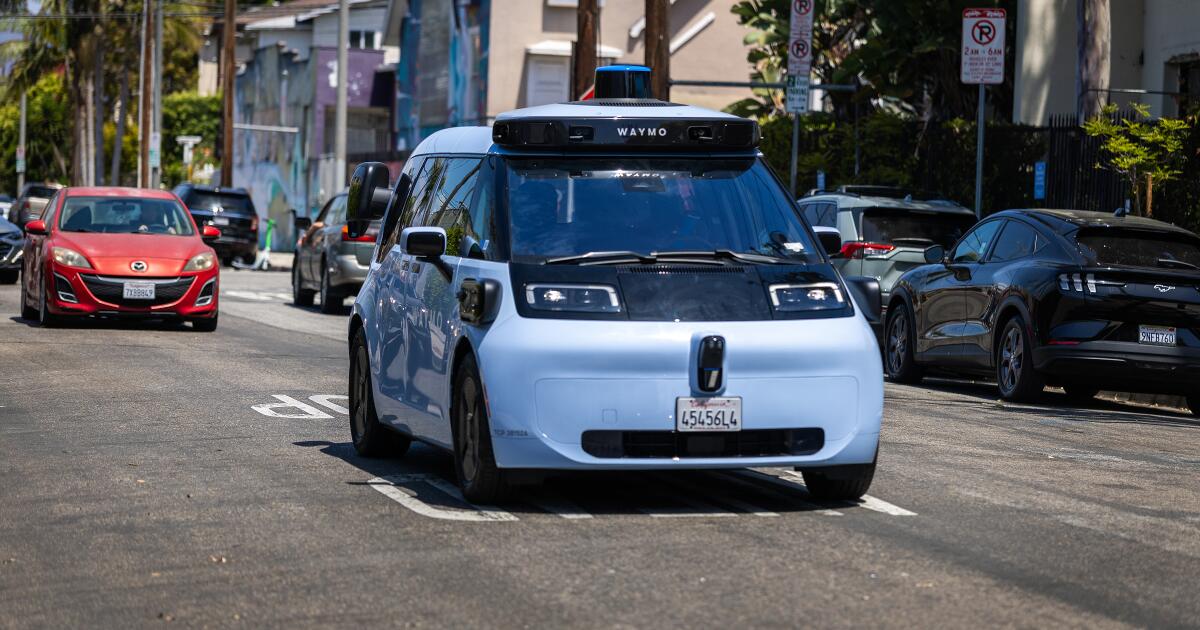
Waymo is starting robotaxi service in San Diego
-
 Entertainment25 minutes ago
‘Children of Blood and Bone’ author won’t see film after feud with star Amandla Stenberg
-
 Lifestyle30 minutes ago
After her son’s death, she found a new purpose. ‘He’s whispering: Mom, this is your path’
-
 Politics37 minutes ago
Iran ceasefire is ‘over,’ Trump says, and orders additional strikes

