San Francisco, CA
Meet the District 2 candidates: How should SFUSD students be assigned to schools?


Welcome back to our “Meet the Candidates” series, where District 2 supervisor candidates respond to a question in 100 words or fewer. Answers are published every Tuesday.
District 2 covers neighborhoods in the north of the city including the Presidio, the Marina, Cow Hollow, Pacific Heights, Presidio Heights, Anza Vista and portions of the Western Addition and North of the Panhandle.
Every year, confused parents of children entering San Francisco’s public schools have to confront the lottery.
The system is theoretically simple. Parents provide a ranked list of their top choice San Francisco Unified School District picks by late January. SFUSD runs a lottery, and a few months later the district tells parents where their kid is assigned.
But parents hate it.
Making the list of schools is time consuming and the wait is anxiety-inducing, parents say. Plus, the results can be disappointing — an assignment to a school they didn’t want, or one with a start or end time that is impossible to coordinate around work schedules.
So why have a lottery system? The lottery started in 2002 after a court case that prohibited the district from considering race when making school assignments. But SFUSD didn’t want to simply send students to their nearest school, which would result in schools segregated by class and race, mirroring the city itself. So, it started using a lottery.
In the end, though, SFUSD data showed that the lottery system exacerbated inequality in the school system.
So, in 2020, SFUSD’s Board of Education voted to move San Francisco back to a zone-based system of school assignments. The hope was that the new zone system would lead to more predictability, students enrolled in schools closer to home, and more diverse classrooms.
In reality, figuring out how to divide the city into zones that allow for all three of those factors — predictability, proximity, and diversity — is a tall order. Though the new zones were supposed to be implemented by the 2026-2027 school year, there is no current proposal for what the zones would look like and no timeline for SFUSD switching over.
This week’s question: How should SFUSD students be assigned to schools?
Lori Brooke
- Job: President, Cow Hollow Association
- Age: 62
- Residency: Homeowner, moved to the district 31 years ago
- Transportation: Driving and walking
- Education: Bachelor’s degree from the University of California, Santa Barbara
- Languages: English
When assigning schools to students, SFUSD should prioritize accessibility, strong education and ensure schools across the city are equally resourced.
I have heard complaints from many parents that they would like the option to walk their kids to school and not have to send them an hour across the city every day.
We can improve the selection process to ensure that students can choose a school in their neighborhood. Limiting travel time will also give kids one less thing to worry about and ensure that they are more focused on their education.
See Brooke’s full response here.
Endorsed by: Former District 2 Supervisor Michela Alioto-Pier, former State Senator and Supervisor Quentin Kopp, UESF, CA Working Families Party … read more here.
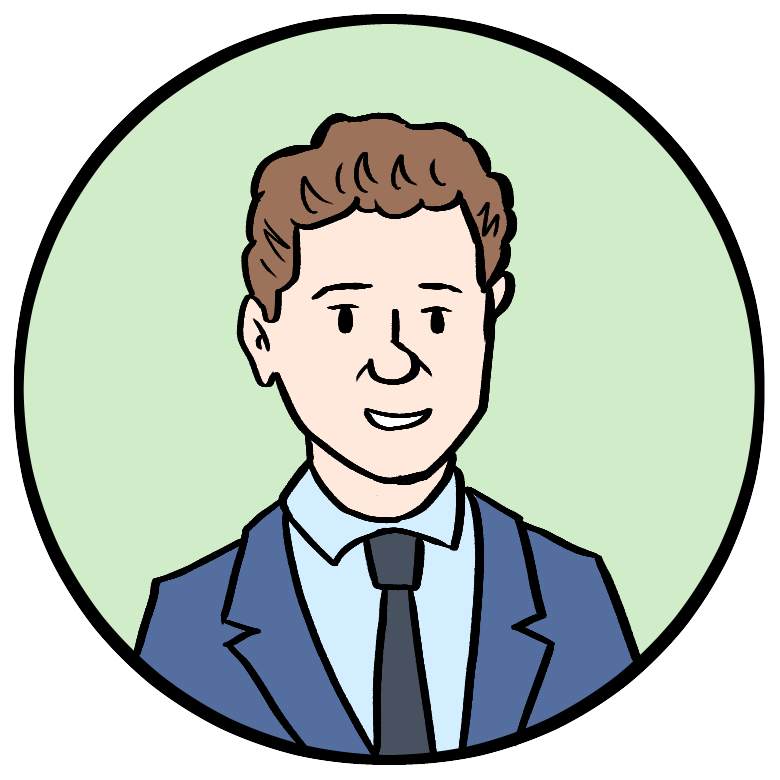
Stephen Sherrill
- Job: Appointed District 2 Supervisor
- Age: 39
- Residency: Homeowner, moved to the district 11 years ago
- Transportation: Driving, public transportation, biking
- Education: Bachelor’s degree from Yale University
- Languages: English
SFUSD should move to a simpler, more neighborhood-based assignment system. Families deserve a fair chance to attend a school closer to home, without a confusing citywide lottery or long commutes.
Assignment reform also has to be matched by a serious focus on school quality. In a district facing budget cuts and hard decisions about its footprint, resources should be concentrated so neighborhood schools can offer students the staffing, support, and academic programs they need. While the Board of Supervisors does not control SFUSD policy, I will continue to use this office to advocate for that approach.
See Sherrill’s full response here.
Endorsed by: Mayor Daniel Lurie, GrowSF, Nor Cal Carpenters Union, San Francisco Police Officers Association, SF YIMBY, Northern Neighbors … read more here.
Candidates are ordered alphabetically and rotated each week. Answers may be lightly edited for formatting, spelling, and grammar. If you have questions for the candidates, please let us know at io@missionlocal.com.
You can register to vote via the sf.gov website.



A San Francisco supervisor’s proposal aims to address supermarkets closing in the city and the price of groceries climbing.
Supervisor Bilal Mahmoud introduced the Affordable Groceries Act at Tuesday’s San Francisco Board of Supervisors meeting. The proposal borrows an idea from New York’s mayor, but with a local flavor.
“It could be partnering with a food bank to take over one of these vacant lots,” Mahmoud said of his proposal. “Or it could be buying the property and giving it to a grocery, at lower market, which is what Mamdani is doing in New York.”
Inflation has pushed supermarket prices up by about 3% compared to last year.
Adding to the affordability issues are new rules implemented in April by the Trump administration for SNAP, which is called CalFresh in the Bay Area. Many are expected not to qualify under the new rules.
Meanwhile, a combination of factors have prompted some big name grocers to close their doors in San Francisco.
Safeway in the Fillmore neighborhood closed in February of last year. In November, the Lucky Supermarket in the Bayview neighborhood shuttered.
There are community activists who said the two closures have created a bit of a food desert in those neighborhoods.
Mahmoud’s proposal would address the two problems by incentivizing grocers and pharmacy operators to open new outlets in the city through streamlining the approval process. It would also penalize outlets that close stores by taxing operators that shutter them and still hand on to the leases, which keeps new operators from moving in.
The proposal would then use those funds to open city-backed grocery stores.
Mahmoud said he has modeled his proposal with local markets that also accept vouchers from EatSF in mind. The whole idea is to provide access to all residents — regardless of income — to healthy food in their neighborhoods.
Tanis Crosby, executive director of the San Francisco-Marin Food Bank, said food insecurity is worse now than during the pandemic.
“The reality is that here in the Bay Area, cost of living is really high,” Crosby said. “So it’s really important that we look towards what are the solutions we can take. Because it’s not about insufficient food that creates insecurity, it’s policy.”
If the proposal is passed by the Board of Supervisors, it would be put on November’s general election ballot.
Voters would have to approve the streamlining and tax idea, and the fund for city-backed grocers.

Streetsblog has migrated to a new comment system. New commenters can register directly in the comments section of any article. Returning commenters: your previous comments and display name have been preserved, but you’ll need to reclaim your account by clicking “Forgot your password?” on the sign-in form, entering your email, and following the verification link to set a new password — this is required because passwords could not be carried over during the migration. For questions, contact tips@streetsblog.org.
San Francisco, CA
Dozens of apparent shopping carts stuck in marsh along SF Bay: ‘How did they get there?!’

SOUTH SAN FRANCISCO, Calif. (KGO) — Dozens of apparent shopping carts are stuck in a marsh along the San Francisco Bay. And residents are puzzled as to how they got there.
“It’s crazy! Gross!” said Kim Avalos, who frequents the trail. “What is that?!”
The San Francisco Bay Trail in South San Francisco curves around the mouth of the Colma Creek marsh. It’s a popular walking and running trail, but local residents are starting to notice something in the water.
“Now that I’m looking at… wow…there’s actually so many shopping carts out here,” said Avalos. “There’s an extreme amount.”
Avalos works for a nearby garbage company. She says she walks the trail every day but has never seen anything like this.
“It’s actually kind of insane to think about how they even got there,” Avalos said.
It’s the same story for others who frequent the trail. At first glance, mistaking the debris for rocks until they actually stare at it.
“It kind of blends in,” said Hondres when we approached him on the trail. “I’ve never seen grocery carts out in the Bay like this… I don’t know, it’s kind of weird.”
“Have you noticed it before?” 7 On Your Side’s Stephanie Sierra asked another passer-by.
“Uh… no. This is kind of new,” he said. “Someone is being very stupid… I’ve seen them over the years. I don’t remember there being this many. There’s quite a few.”
Many people who frequent the trail said when it’s high tide it’s hard to notice anything.
“It does look like shopping carts, do you know if that’s what it is?”
It’s hard to say for sure. But at low tide, it certainly looks that way.
“It does look like shopping carts, amongst other things,” Save the Bay representative Josh Quigley said.

And there’s not just one or two, but there’s what appears to be dozens of them spanning the Colma Creek marsh adjacent to the bay.
“Have you ever seen this many shopping carts along the bay?” Stephanie Sierra asked.
“I have not, no,” Quigley said. “This is certainly the greater concentration that I’ve ever seen in one place.”
Quigley is the Senior Policy Manager for Save the Bay, an environmental nonprofit founded in 1961 to stop excessive filling of the San Francisco Bay.
“I think it’s really unfortunate… the bay is treated not as the jewel and resource that it should be, but as a dumping ground,” Quigley said.
So, where is it all coming from? That seems to be up for debate.
“It could be a big prank, if anything, but at this rate I have no idea,” said Alvin Lau, who visits the trail regularly.
“There’s often homeless people in the mobile RV vehicles,” said another. “There’s always a lot of trash here, not going to lie.”
“I don’t know, maybe Costco. They are our neighbors,” Kim Avalos said. “Could be because they do look bigger.”
A Costco Business Center is about a mile from Colma Marsh. 7 On Your Side reached out to Costco’s corporate office, and the South San Francisco Costco General Manager said: “We walk and clean the trail multiple times a week, in addition to checking for any carts that might end up in the bay.”
The goal now is to clean it out — and ensure it stays that way.
“Stop being dumb. There’s only one planet we got, so take care of it,” said Lau.
“It hurts me as an animal lover to see all these shopping carts in their place of habitat,” Avalos said.
“Save the Bay” says overall pollution is decreasing across the bay shoreline, but there are instances–like this one–where smaller pockets need to be addressed.
Locally, there are regulations in place to prevent this type of pollution.
7 On Your Side contacted the San Francisco Bay Regional Water Quality Control Board to further investigate and clean up the area.
Take a look at more stories and videos by 7 On Your Side.
7OYS’s consumer hotline is a free consumer mediation service for those in the San Francisco Bay Area. We assist individuals with consumer-related issues; we cannot assist on cases between businesses, or cases involving family law, criminal matters, landlord/tenant disputes, labor issues, or medical issues. Please review our FAQ here. As a part of our process in assisting you, it is necessary that we contact the company / agency you are writing about. If you do not wish us to contact them, please let us know right away, as it will affect our ability to work on your case. If we are able to assist you, we will reach back out.
Copyright © 2026 KGO-TV. All Rights Reserved.
-

 Crypto3 minutes ago
Cryptocurrency banking, stablecoins regulation proposed – North Carolina – The Black Chronicle
-

 Finance10 minutes ago
Key Equipment Finance Adds Foley to Bank Channel Team in Chicago
-

 Fitness13 minutes ago
An expert personal trainer says this practical exercise boosts core strength and upper-body stability more than planks
-

 Movie Reviews28 minutes ago
‘Find Your Friends’ Movie Review: Helena Howard Standout Performance Nearly Saves Shudder Misfire – Deepest Dream
-

 World40 minutes ago
Video: Among Mexico’s World Cup Fans: Merlin the Duck
-
 Lifestyle1 hour ago
DMV artist turns belts into a conversation about discipline
-

 Technology1 hour ago
The Complete Calvin and Hobbes is a great last-minute Father’s Day gift
-

 World2 hours ago
Anti-G7 protest turns violent as demonstrators torch Tesla and smash UN office windows

